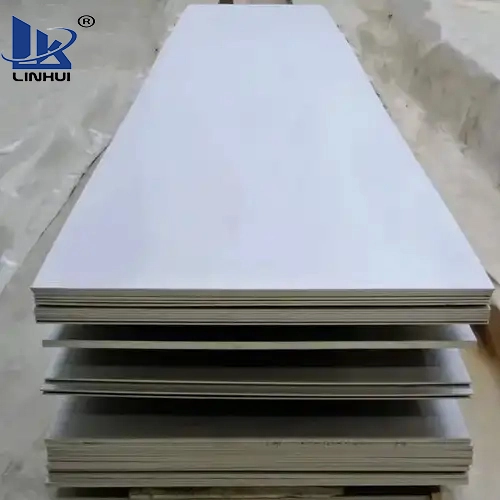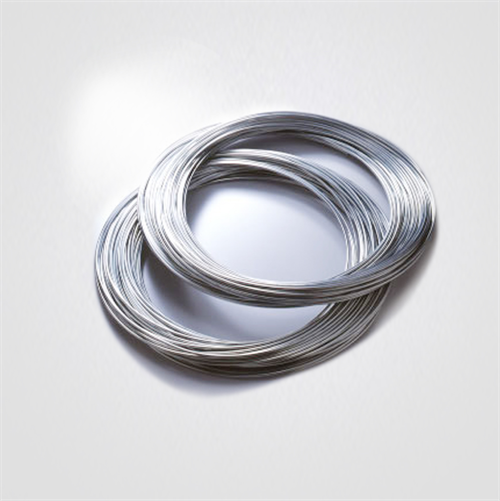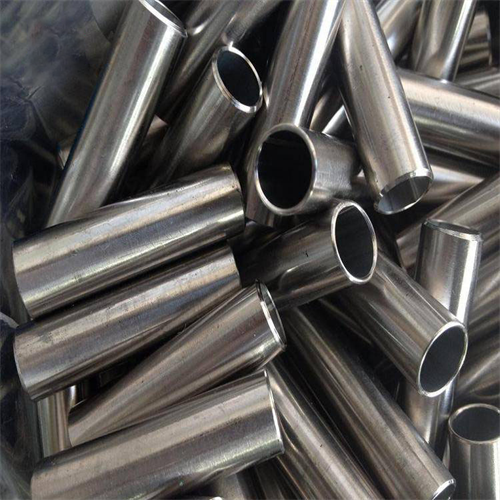
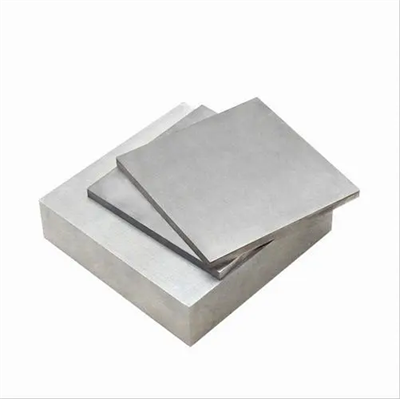
Niobium plate
Product name: Niobium plate(
Brand: RO4200-1RO4210-2(
Implementation standard: GB/T14842-2007(
ASTM B392-98(
Application material: niobium alloy series






Niobium Plate - High-Performance Refractory Metal for Extreme Environments
LINHUI TITANIUM supplies precision-engineered Niobium plate conforming to ASTM B392-98 and GB/T14842-2007 standards. Our RO4200-1 (Reactor Grade) and RO4210-2 (Commercial Grade) niobium alloy series deliver exceptional performance in temperatures exceeding 1400°C and corrosive environments where titanium fails.
With thickness tolerance controlled within ±0.03mm through advanced cold rolling, our plates feature RRR values >300 for superconducting applications and oxygen content <10 ppm. Each product undergoes 100% ultrasonic testing and comes with full EN 10204 3.1 traceability. Stock delivery available in 5-7 days with MOQ from 50kg.
Key Features & Benefits
· Superior Corrosion Resistance: Outperforms titanium in reducing acids (HCl, H₂SO₄) and liquid metal environments
· High-Temperature Stability: Retains mechanical properties at 1400°C+ without oxidation under inert atmosphere
· Superconducting Properties: RRR >300 for SRF cavity fabrication in particle accelerators
· Low Neutron Cross-Section: RO4200 grade ideal for nuclear reactor applications
Specifications
Parameter | RO4200-1 | RO4210-2 |
Purity | ≥99.95% | ≥99.8% |
Thickness | 0.5-50mm | 0.8-60mm |
Width | 50-600mm | 100-800mm |
Length | 500-3000mm | Custom |
Surface Finish | Polished / Pickled | As-rolled / Machined |
Chemical Composition
Element | RO4200-1 (%) | RO4210-2 (%) |
Nb | ≥99.95 | ≥99.8 |
Ta | ≤0.02 | ≤0.1 |
O | ≤0.001 | ≤0.003 |
C | ≤0.002 | ≤0.005 |
N | ≤0.001 | ≤0.002 |
Manufacturing Process
Step 1: Vacuum Arc Melting
High-purity niobium ingots are produced through triple vacuum arc remelting (VAR) to eliminate inclusions.
Step 2: Hot Rolling
Performed at 1100-1200°C in protective atmosphere to achieve desired thickness reduction.
Step 3: Cold Rolling
Multi-pass cold rolling with intermediate annealing ensures tight dimensional tolerance and smooth surface finish.
Step 4: Stress Relief Annealing
High-vacuum heat treatment at 1000-1200°C (10⁻⁴ Torr) restores ductility after heavy forming.
Quality Inspection
· Interstitial Gas Analysis (IGA): LECO testing verifies O, N, C, H content
· Ultrasonic Testing (UT): Detects internal laminations and voids
· RRR Measurement: Electrical resistivity ratio testing at 300K vs 4.2K
· Metallographic Inspection: ASTM E112 grain size analysis prevents surface defects
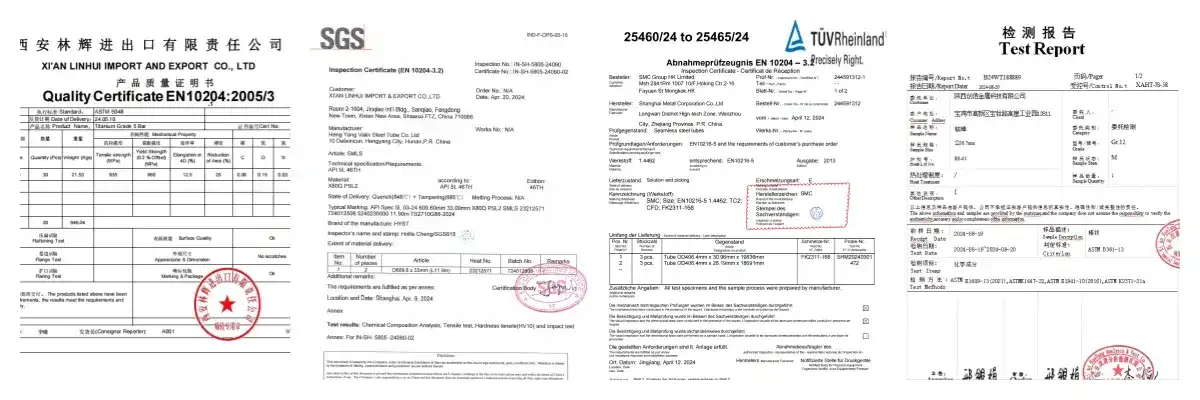
· Third-Party Certification: SGS, TÜV, BV inspection available
Applications
Manufactured Precious stone Manufacturing
Used as control glasses in HPHT forms, withstanding 5-6 GPa weight and 1400°C+ temperatures.
Superconducting RF Cavities
High-purity product shapes SRF cavities for CERN and Fermilab molecule accelerators.
Chemical Preparing Equipment
Heat exchanger liners and tubesheets in hot concentrated corrosive reactors.
Nuclear Reactor Components
Fuel cladding and basic bolsters in fluid metal cooled reactors due to moo neutron retention.
Export Markets
Our Niobium plate is exported to 40+ countries including:
· North America: USA, Canada
· Europe: Germany, France, UK
· Asia: Japan, South Korea, Singapore
Why Choose Us?
Direct Mill Supply – Factory pricing with no middlemen, ensuring cost efficiency
200+ Tons Stock Inventory – Immediate shipment for urgent projects
Engineering Support – In-house metallurgists provide material selection consultation
Flexible MOQ – Trial orders from 50kg supported
Global Partnerships – Trusted by CEFC, PTT, PETRONAS, LUKOIL
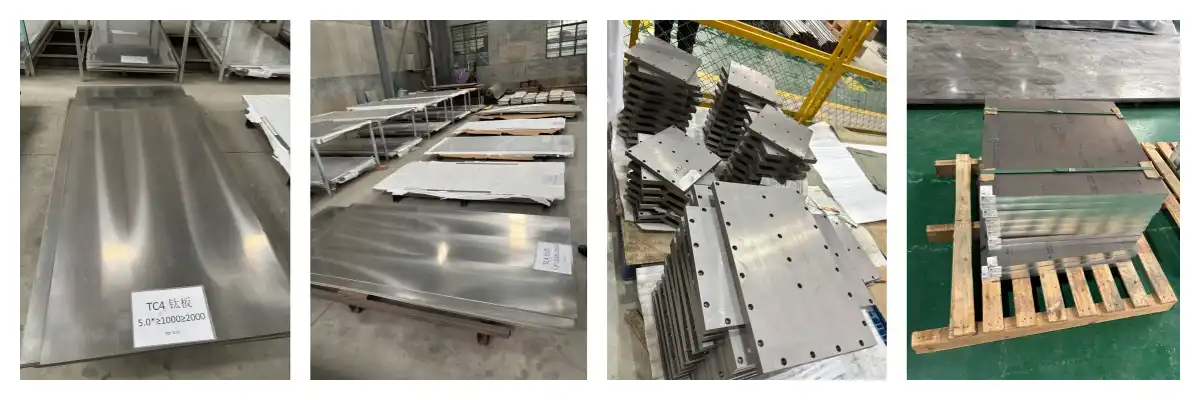
Packaging & Shipping
· Inner Layer: Moisture-proof paper + VCI anti-rust film
· Outer Layer: Wooden crates or steel frames for sea/air freight
· Marking: Heat number, grade, dimensions laser-engraved per customer requirements
· Standard Lead Time: Stock orders 5-7 days; custom production 25-40 days
FAQ
Q: Can the item be welded in open air?
A: No. Welding must happen in vacuum EB chambers or dormant gas glove boxes to anticipate oxygen embrittlement over 200°C.
Q: What's the distinction between RO4200 and RO4210?
A: RO4200 is Reactor Review with strict tantalum limits for atomic utilize; RO4210 is Commercial Review for common mechanical applications.
Q: How to machine niobium without galling?
A: Utilize HSS devices with sharp rake points, water-soluble coolants, and moderate cutting speeds to anticipate apparatus adhesion.
Q: Is warm treatment required after forming?
A: Yes, if cold working surpasses 90% diminishment. Vacuum tempering at 1000-1200°C reestablishes ductility.
Q: Why is RRR esteem important?
A: RRR measures virtue for superconducting apps. Higher RRR (>300) demonstrates moo warm precariousness hazard at cryogenic temperatures.
Request a Quote
Need custom dimensions or technical consultation with Niobium plate? Contact our engineering team at linhui@lhtitanium.com for quotation within 4 hours.