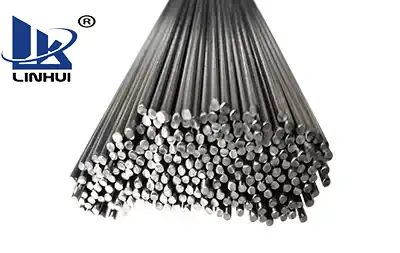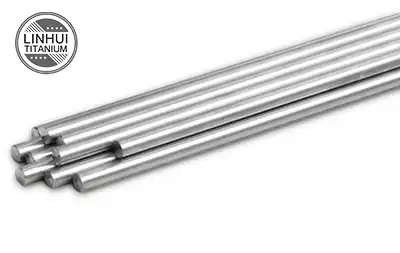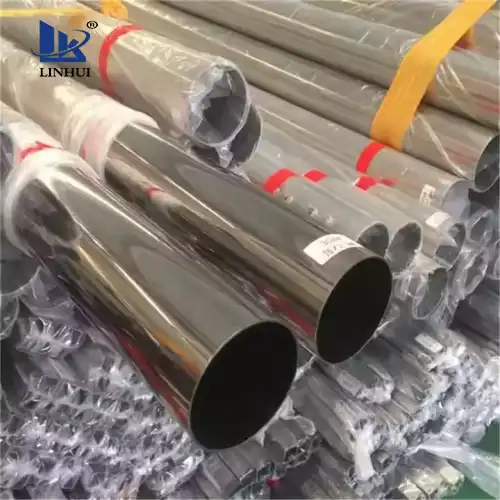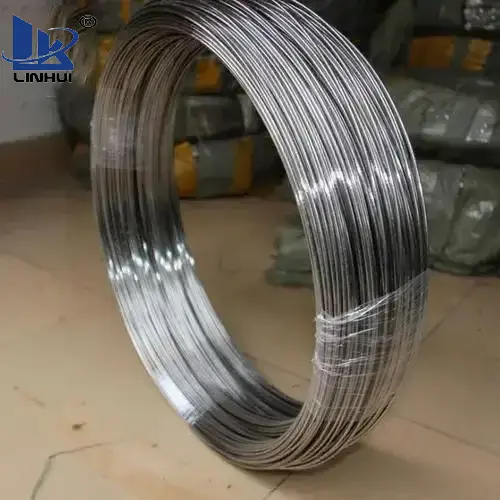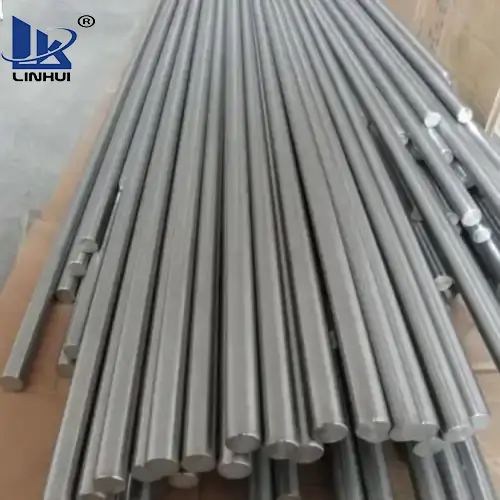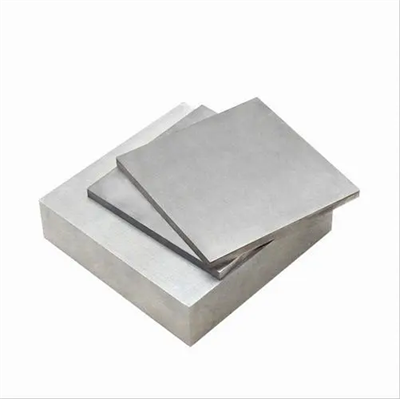
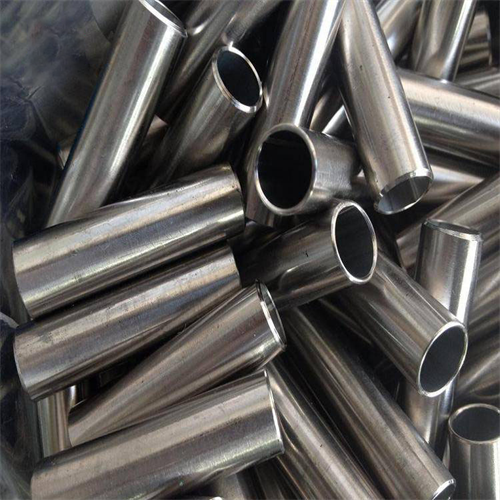
Niobium tube
Standard: ASTM B394
Grade:R04210 / R04200
Outer Diameter:2.0 – 100 mm
Wall Thickness:0.2 – 5.0 mm
Delivery Condition: Annealed / Cold-worked






Niobium Tube – High-Performance Refractory Metal Tubing
LINHUI TITANIUM supplies precision-engineered Niobium tube manufactured to ASTM B394 standards, available in grades R04200, R04210, R04251, and R04261. Our tubes feature outside diameters from 1.0 mm to 100 mm, wall thickness ranging 0.05 mm to 5.0 mm, and customizable lengths up to 8000 mm.
Both seamless and welded manufacturing methods are offered, with temper options including as-drawn and annealed conditions. With controlled cold rolling, thickness tolerance is maintained within ±0.05 mm for superior forming performance. Each product undergoes 100% NDT inspection, ensuring zero-defect delivery for your critical applications in corrosive acid environments and high-temperature vacuum systems.
Key Features & Benefits
Our tubes provide exceptional corrosion resistance to hot mineral acids, including hydrochloric and sulfuric acids below 150°C. The passive oxide film formation ensures immunity to nitric acid and organic acids.
Superior ductility allows complex bending and flaring operations without embrittlement. Low thermal neutron cross-section makes these tubes ideal for nuclear reactor applications.
Cost-effective alternative to tantalum—approximately half the density and one-third the cost—while maintaining comparable acid resistance in most industrial conditions.
Specification
| Ingredients % | ||||||||||||
| brand | Main ingredients | |||||||||||
| Nb | Fe | Si | Ni | W | Mo | Ti | Ta | O | C | H | N | |
| Nb1 | surplus | 0.004 | 0.004 | 0.002 | 0.005 | 0.005 | 0.002 | 0.05 | 0.012 | 0.0035 | 0.0012 | 0.003 |
| Nb2 | surplus | 0.01 | 0.01 | 0.005 | 0.02 | 0.01 | 0.004 | 0.07 | 0.015 | 0.0050 | 0.0015 | 0.005 |
| If the user has special requirements, the two sides specifically agreed | ||||||||||||
| Standard | Tensile Strength, Min Max lbs/in2 (MPa) | Yield Strength (0.2% Residual Deformation) Minimum, lbs/in2 (MPa) | Elongation, min, % 1 inch (25.4 mm) gauge length |
| RO4200-1 RO4210-2 | 18000 (125) | 8500(59) | 25 |
Chemical Composition
Chemical analysis is verified via ICP-OES or GDMS to ensure interstitial impurities remain within strict limits. For R04200, oxygen content is maintained below 150 ppm to preserve ductility.
Carbon, nitrogen, and hydrogen levels are tightly controlled according to ASTM B394 requirements. Full traceability documentation with heat number tracking accompanies every shipment.
Manufacturing Process
Consistent tubes are delivered through expulsion and cold drawing, advertising predominant weight appraisals and microstructural homogeneity for vacuum applications.
Welded tubes are shaped from precision-rolled strip with TIG welding—no filler metal is utilized, guaranteeing the weld zone holds base metal erosion resistance. Thorough weld assessment conventions are applied.
Controlled cold rolling and different tempering cycles accomplish grain estimate of ASTM E112 No. 6 or better, with recrystallization surpassing 90% for completely strengthened products.
Quality Inspection
Chemical Composition Examination: ICP-OES confirmation guarantees pollution limits are met.
100% Non-Destructive Testing: Ultrasonic Testing (UT) recognizes longitudinal and transverse surrenders; Vortex Current Testing (ET) distinguishes surface cracks.
Mechanical Testing: Ductile quality, surrender quality, and prolongation tests on longitudinal tests; required flaring tests affirm extension capability without splitting.
Hydrostatic Testing: Approves weight resistance without spillage. Microstructure examination looks at grain estimate and recrystallization rate.
Applications
· Chemical Processing: Heat exchangers and reactors handling hydrochloric, sulfuric, and nitric acids
· Aerospace: High-temperature vacuum furnace components and rocket nozzle structures
· Nuclear Industry: Reactor components benefiting from low neutron absorption
· Superconducting Systems: Radiofrequency cavities for particle accelerators
· Semiconductor Manufacturing: Wet etching and acid handling equipment
· Medical Devices: MRI magnets and biocompatible implant fabrication
Export Markets
LINHUI TITANIUM has exported hundreds of thousands of tons to over 60 countries and regions. Key markets include North America, South America, the Middle East, Africa, CIS, and Southeast Asia.
We maintain long-term partnerships with globally recognized enterprises such as CEFC, PTT, PDVSA, PETROECUADOR, PETRONAS, LUKOIL, and PEMEX.
Why Choose Us?
Direct Mill Supply: Factory-direct pricing eliminates middlemen, ensuring cost efficiency and consistent quality control.
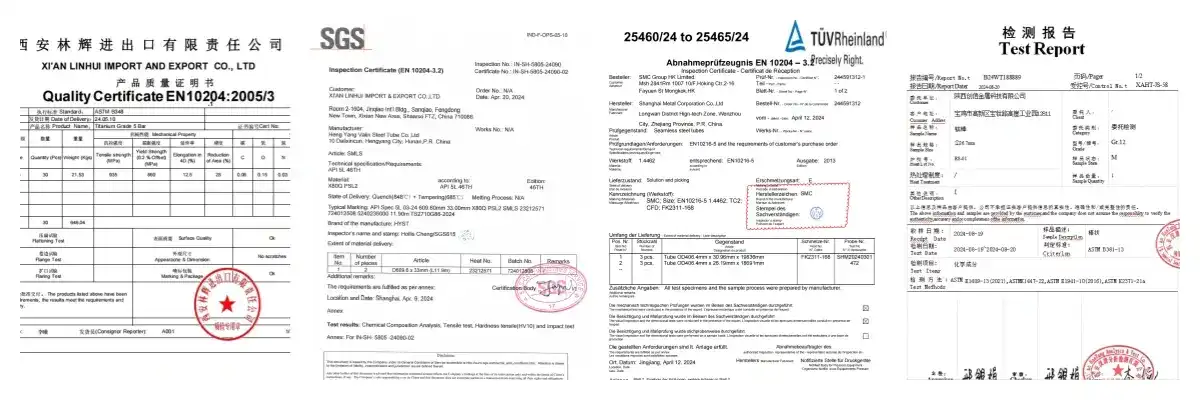
Full Traceability: Every Niobium tube includes heat number tracking with EN 10204 3.1/3.2 certificates and complete MTC documentation.
Rapid Response: Quotations within 4 hours, drawing review in 24 hours, stock delivery in 3–7 days, and standard production within 15–25 days.
200+ Tons Stock Inventory: Immediate shipment capability for urgent requirements.
Engineering Support: In-house metallurgists provide technical consultation and material selection guidance for your specific application.
Flexible MOQ: Small trial orders supported; stock orders start from 100 kg.
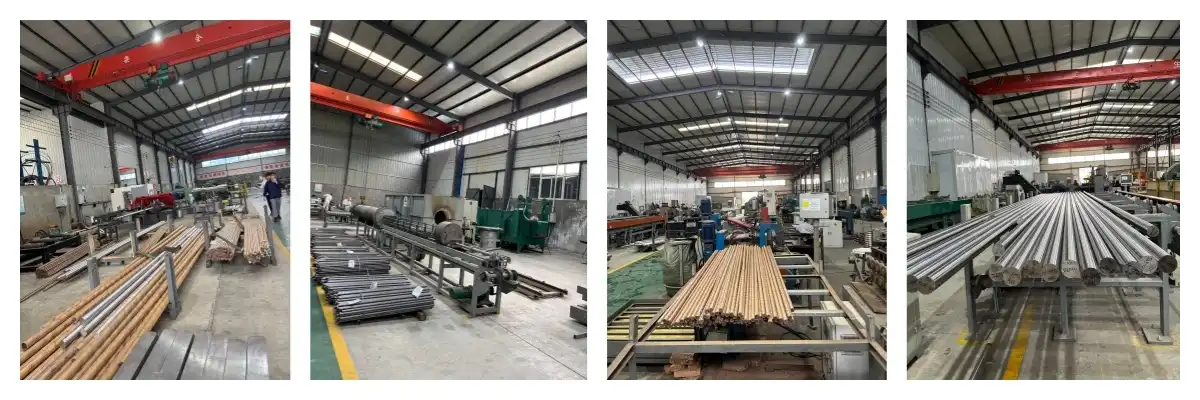
Packaging & Shipping
Tubes are exclusively wrapped in anti-corrosion film and pressed in plywood cases for universal shipping. Custom bundling is accessible upon request.
All shipments comply with REACH and RoHS controls. We orchestrate coordinations by means of ocean, discuss, or express messenger to meet your conveyance timeline.
FAQ
Q: What is the contrast between consistent and welded options?
A: Consistent tubes offer higher weight evaluations and homogeneity for vacuum utilize. Welded tubes are more cost-effective and experience thorough weld inspection.
Q: Can these tubes work in discuss at tall temperatures?
A: No. Over 200°C, niobium responds with oxygen and nitrogen, causing embrittlement. Utilize requires vacuum, dormant gas, or defensive coating environments.
Q: How does niobium compare to tantalum tubing?
A: Niobium weighs half as much and costs one-third of tantalum. Whereas tantalum stands up to higher corrosive temperatures, niobium is the value-engineered arrangement for acids underneath 150°C.
Q: Is machining difficult?
A: Yes, its delicate and pliable nature causes rankling. High-speed steel devices, tall grease, and particular geometries avoid instrument welding.
Q: What is RRR and why does it matter?
A: Residual Resistance Ratio indicates purity. Industrial grade is RRR ~30; scientific grades for accelerators require RRR >300 through multiple electron beam melting steps.
Request a Quote
Need a custom specification or technical consultation with Niobium tube? Contact our engineering team at linhui@lhtitanium.com for a detailed quotation within 4 hours.