
Titanium and its alloys have revolutionized various industries due to their exceptional properties, including a high strength-to-weight ratio, excellent corrosion resistance, and biocompatibility. Among the many titanium alloys available, Ti-6Al-4V stands out as one of the most widely used and versatile. However, it's essential to understand the key differences between Ti-6Al-4V and pure titanium to make informed decisions when selecting materials for specific applications. This blog post will delve into the unique characteristics, advantages, and applications of Ti-6Al-4V compared to pure titanium, exploring how the addition of alloying elements enhances the properties of this remarkable material. By understanding these differences, engineers, designers, and manufacturers can optimize their material selection process and leverage the full potential of titanium and its alloys in their respective fields.
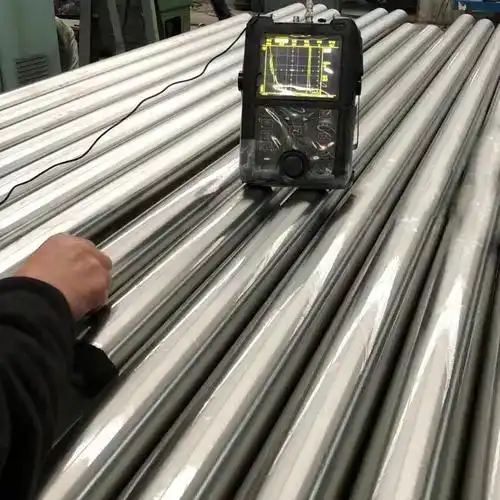
What are the key properties that distinguish Ti-6Al-4V from pure titanium?
Mechanical strength and hardness
Ti-6Al-4V, and this corresponds to Grade 5 titanium, is much more powerful and durable when it comes to dynamics than pure titanium. When aluminum and vanadium are incorporated into the mix, a two-phase framework appears, resulting in the element being stronger. The tensile strength of Ti-6Al-4V generally falls between 895 and 1000 MPa. That's nearly three times as high as the tensile strength of Grade 2 titanium, which is within 345 and 480 MPa. With regard to its high strength, Ti-6Al-4V is a great choice for uses that need to support a lot of baggage and not modify the configuration. Ti-6Al-4V has been employed in a lot of parts that perform well by Topak, a significant maker of titanium merchandise, because it has with the value outstanding mechanical characteristics. The much greater hardness of Ti-6Al-4V means it does more at fighting wear, thus rendering it useful for uses in which parts rub against each other.
Corrosion resistance and chemical stability
Both Ti-6Al-4V and titanium alone resist corrosion extremely well, but there are minor differences in how these materials work in various environments. Pure titanium produces a steady, protective oxide layer that shields it from rusting in most places. Ti-6Al-4V, on the other hand, has similar corrosion resistance, though this depends on the specific type of corrosive object. Generally speaking, Ti-6Al-4V performs more effectively at resisting stress corrosion cracking than pure titanium, thereby rendering it a better choice for use in harsh applications. Topak's Ti-6Al-4V products have been put by means of a lot of tests and have proven that they work well in difficult environments, including in the sea and in chemical processing. The Ti-6Al-4V alloying elements additionally make it better at preventing oxidation at high temperatures. This suggests that it is an ideal option for applications where pure titanium may not be appropriate as well.
Biocompatibility and medical applications
Ti-6Al-4V and pure titanium are both highly biocompatible, which explains why they are frequently found in medical and dental applications. The truth is, Ti-6Al-4V has some advantages in certain healthcare applications because of its better mechanical characteristics. Because Ti-6Al-4V is more durable and less susceptible to fatigue, it is a good candidate for load-bearing implants like knee and hip replacements. Topak has made special Ti-6Al-4V substances for medical implants that perform well and last a long time in the human body. People more often use pure titanium in implantable teeth and smaller medical devices, where the extra strength of Ti-6Al-4V isn't really essential, given that it's still compatible with the internal organs. Alloying elements in the body could cause long-term effects, which are still being explored. This has led to the fabrication of new titanium alloys intended exclusively for medical use.
How does the manufacturing process differ between Ti-6Al-4V and pure titanium?
Melting and alloying techniques
Ti-6Al-4V has been produced using more involved melting and alloying technologies than pure titanium. The Kroll method of mixing and then vacuum arc remelting (VAR) furnace melting can be used to make pure titanium. To make Ti-6Al-4V, however, extra steps have to be taken to ensure that it has been properly mixed and regular throughout the process. Ti-6Al-4V typically forms in several melting processes, starting with vacuum induction melting (VIM) and then either VAR or electron beam melting (EBM). These processes make sure that the alloying elements are evenly distributed and that there are simply a few impurities. To make high-quality Ti-6Al-4V ingots with the same properties repeatedly, Topak uses the most advanced equipment in its melting plants. Ti-6Al-4V's microstructure and physical properties depend on how and when elements of alloying are added to the metallic substance while it is melting.
Thermomechanical processing
The two-phase microstructure of Ti-6Al-4V makes thermomechanical output more difficult and essential than it is for pure titanium. Pure titanium can be shaped and further processed with heat using traditional techniques, but the alloy composed of Ti-6 Al-4V needs to have its processing factors carefully controlled to enable to brought out the best in its properties. Hot working of Ti-6Al-4V commonly occurs in the alpha-beta phase field. After that, specific heat treatments are used to get the right mix of strength and ductility. Topak's comprehension of thermomechanical processing ensures that their Ti-6Al-4V goods are of high quality. The way that Ti-6Al-4V gets processed can have a big effect on how it turns out in the end, giving it a microstructure that is precisely right for what it was meant to do. On the contrary hand, pure titanium's single-phase structure usually indicates that less complex processing is needed to get the ideal outcomes.
Machining and fabrication challenges
Ti-6Al-4V is more durable and powerful than pure titanium, so it is more challenging to shape and manufacture. When Ti-6Al-4V is turned out, the more intense wear on the tools and built-up heat suggest that special cutting tools, coolants, and machining techniques need to be used. Topak has come to develop high-tech grinding procedures that can make complicated Ti-6Al-4V parts swiftly and precisely. Welding Ti-6Al-4V also requires careful control of parameters in order to prevent embrittlement and keep the properties of the alloy in the heat-affected zone. Because it is softer and more ductile, pure titanium may typically be processed and produced more easily. However, it still has to be protected from contamination and corrosion-resistant properties. Ti-6Al-4V is often difficult to process, but its better mechanical properties make it the most common selection for many high-performance uses.
What are the key application areas where Ti-6Al-4V outperforms pure titanium?
Aerospace and defense industries
Because of its exceptional strength-to-weight ratio along with its capacity to work efficiently in high-temperature situations, Ti-6Al-4V is now the most popular material for aerospace and defense usage. Ti-6Al-4V is widely used in plane structures for highly significant parts like the engine, landing gear, and airframe. It is perfect for these challenging uses since the material is better at resisting tiredness and is capable of handling significant amounts of stress. Topak helps prominent aerospace organizations achieve success in designing lighter and more fuel-efficient planes by providing them with Ti-6Al-4V parts. On the opposing side, pure titanium is only used in a few aerospace uses, mostly in places where it needs to resist corrosion but doesn't need to be very strong. Ti-6Al-4V is more appropriate than pure titanium for parts of missiles and supersonic flights because it can keep its properties at high temperatures.
Automotive and motorsports applications
Ti-6Al-4V is becoming used more and more in the automobile industry, especially in high-performance and racing applications, because of its exceptional properties. Ti-6Al-4V is very durable but not very heavy, and that helps make automotive components like valves, connecting rods, and turbocharger impellers better at doing their jobs and more productive overall. Ti-6Al-4V products from Topak are used in a lot of motorsports uses where the parts must be both strong and lightweight. As a contrast, pure titanium isn't frequently used in the fabrication of cars because it isn't as strong, but it can be found in exhaust systems, where the resistance against corrosion is most important. Ti-6Al-4V is also a great choice for suspension parts and other pieces that undergo a lot of stress in high-speed cars. Pure titanium would not be satisfactory in those places.
Marine and offshore applications
In ship and offshore environments, Ti-6Al-4V performs far better than pure titanium for undertakings that need to be both very durable and impermeable to corrosion. Because Ti-6Al-4V can handle high pressures and corrosive saltwater environments, it is used in critical components of offshore oil and gas platforms, like risers, exchangers for heat, and underwater equipment. The metal alloy Ti-6Al-4V has been shown to work very well in difficult situations, such as when the Topak family used it for many naval projects. While pure titanium is also resistant to corrosion from seawater, it isn't as strong as titanium alloy, which limits its use in high-stress marine uses. Because titanium aluminum-4 volt is both strong and resistant to corrosion, it is particularly beneficial for deep-sea research and underwater robots, where the equipment must be portable and resistant to damage. The alloy is additionally better than pure titanium for naval use because it doesn't break down in adverse circumstances when there are a lot of chlorides present.
Conclusion
In conclusion, while both Ti-6Al-4V and pure titanium offer exceptional properties, Ti-6Al-4V stands out as a superior choice in applications requiring high strength, fatigue resistance, and performance in demanding environments. The alloying elements in Ti-6Al-4V significantly enhance its mechanical properties, making it the preferred material in aerospace, automotive, and marine industries. However, pure titanium still maintains its importance in applications where extreme corrosion resistance and biocompatibility are the primary concerns. Understanding the differences between these materials is crucial for engineers and designers to make informed decisions, optimizing performance and cost-effectiveness in various applications. As technology advances, both Ti-6Al-4V and pure titanium will continue to play vital roles in pushing the boundaries of material science and engineering.
FAQ
Q: What is the main difference in strength between Ti-6Al-4V and pure titanium?
A: Ti-6Al-4V has nearly double the tensile strength of pure titanium, typically ranging from 895 to 1000 MPa compared to 345 to 480 MPa for pure titanium (Grade 2).
Q: Is Ti-6Al-4V more corrosion-resistant than pure titanium?
A: Both materials have excellent corrosion resistance, but Ti-6Al-4V generally offers superior resistance to stress corrosion cracking in harsh environments.
Q: Which material is better for medical implants?
A: Both are biocompatible, but Ti-6Al-4V is often preferred for load-bearing implants due to its higher strength and fatigue resistance.
Q: How does the manufacturing process differ between Ti-6Al-4V and pure titanium?
A: Ti-6Al-4V requires more complex melting, alloying, and thermomechanical processing techniques to achieve its optimal properties compared to pure titanium.
Q: In which industries does Ti-6Al-4V outperform pure titanium?
A: Ti-6Al-4V excels in aerospace, defense, high-performance automotive, and marine applications where high strength and fatigue resistance are crucial.
Q: Is Ti-6Al-4V more difficult to machine than pure titanium?
A: Yes, Ti-6Al-4V is generally more challenging to machine due to its higher strength and hardness, requiring specialized tools and techniques.
LINHUI TITANIUM: Your Trusted Global Partner for High-End Titanium Solutions
LINHUI TITANIUM, founded in 2000 and headquartered in Xi'an, China, is a leading manufacturer and supplier of titanium and titanium alloys. With a commitment to creating value for customers and adhering to a strategy of "supplying high-end products, establishing world-renowned enterprise," LINHUI TITANIUM has become one of the largest TITANIUM PRODUCTS SUPERMARKETS globally. Our extensive range of high-quality products, including Ti-6Al-4V and pure titanium, is exported to over 60 countries, serving renowned companies in various industries. We pride ourselves on our international certifications, including ISO 9001:2015, OHSAS 18001:2007, and approvals from major inspection agencies. LINHUI TITANIUM's expertise in titanium alloys, combined with our customer-centric approach, positions us as your ideal partner for all titanium-related needs. For more information, please contact us at linhui@lhtitanium.com.
References
1. Lutjering, G., & Williams, J. C. (2007). Titanium (2nd ed.). Springer-Verlag Berlin Heidelberg.
2. Peters, M., Kumpfert, J., Ward, C. H., & Leyens, C. (2003). Titanium alloys for aerospace applications. Advanced Engineering Materials, 5(6), 419-427.
3. Donachie, M. J. (2000). Titanium: A Technical Guide (2nd ed.). ASM International.
4. Boyer, R. R. (1996). An overview of the use of titanium in the aerospace industry. Materials Science and Engineering: A, 213(1-2), 103-114.
5. Rack, H. J., & Qazi, J. I. (2006). Titanium alloys for biomedical applications. Materials Science and Engineering: C, 26(8), 1269-1277.
6. Inagaki, I., Takechi, T., Shirai, Y., & Ariyasu, N. (2014). Application and features of titanium for the aerospace industry. Nippon Steel & Sumitomo Metal Technical Report, 106, 22-27.









