
The primary difference between Ti-6Al-4V and ELI (Extra Low Interstitial) lies in their interstitial element content and resulting mechanical properties. Ti-6Al-4V represents the standard grade with higher oxygen, nitrogen, and carbon levels, while ELI grade features reduced interstitial content, delivering enhanced ductility and fatigue resistance. Both titanium alloy variants maintain identical 6% aluminum and 4% vanadium composition, yet their distinct microstructure characteristics make them suitable for different demanding applications across aerospace, biomedical, and industrial sectors.
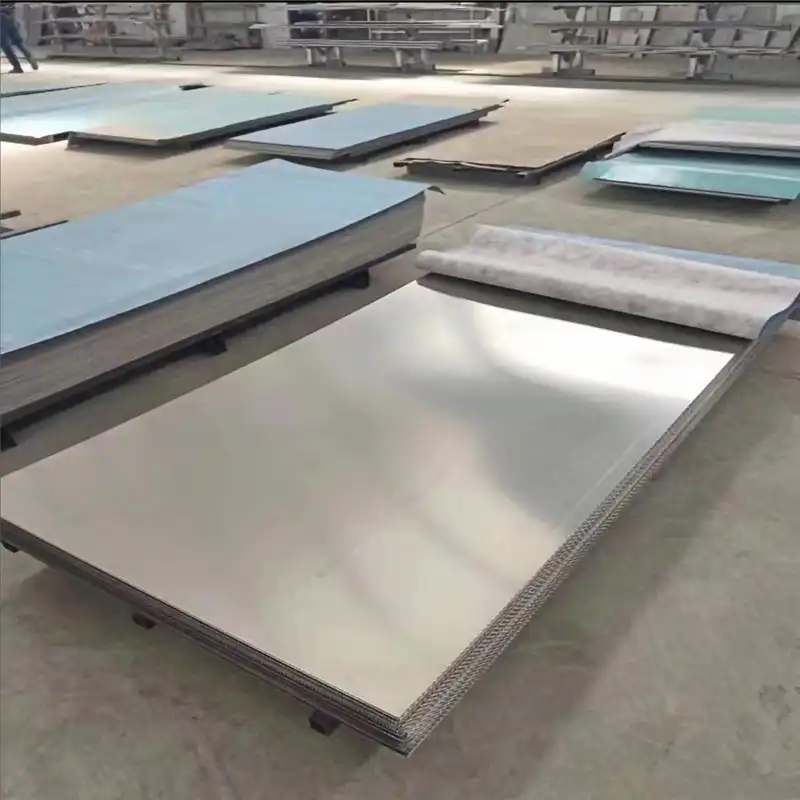
Understanding Ti-6Al-4V: The Industry Standard Alpha-Beta Alloy
Ti-6Al-4V is the most commonly used titanium metal in factories around the world. This alpha-beta metal has a great strength-to-weight ratio and doesn't corrode easily. There is 6% aluminum and 4% vanadium in the makeup. Aluminum makes the composition more stable in the alpha phase, and vanadium makes it more stable in the beta phase.
Standard Ti-6Al-4V contains higher interstitial elements:
- Oxygen content: up to 0.20%
- Nitrogen content: up to 0.05%
- Carbon content: up to 0.08%
- Iron content: up to 0.30%
These elements are used in interstitial alloys, which make materials stronger through solid solution hardening. The final tensile strength is between 895 and 930 MPa, and the yield strength is between 825 and 869 MPa. Test data that follows ASTM B265 standards show that these numbers are correct in a lot of different heat treatment situations.
If you need the most strength for structural uses, standard Ti-6Al-4V is better for parts that are used in heavy-duty industry.
ELI Grade: Enhanced Performance Through Purity
The Extra Low Interstitial (ELI) grade is a more advanced form of Ti-6Al-4V that has much less interstitial material. This aerospace material keeps the same basic alloy makeup and lowers the amount of dirt in the mix, which makes it work better.
ELI grade specifications include:
- Oxygen content: maximum 0.13%
- Nitrogen content: maximum 0.05%
- Carbon content: maximum 0.08%
- Iron content: maximum 0.25%
The lessened oxygen level has a big effect on how materials behave. Lower interstitial levels make materials more flexible, which improves the elongation values, which is a measure of ductility. The elongation values are 10% to 15% better than the normal grade. The resistance to fatigue rises a lot, which makes ELI perfect for applications that use cyclic loading.
If you need better biocompatibility or fatigue performance, the ELI grade is better for important uses that need to be reliable over a long time.
Three Core Differences: Composition, Properties, and Applications
Chemical Composition Variance
The fundamental distinction lies in interstitial element control. Standard grade permits higher oxygen levels (0.20% vs 0.13%), directly affecting mechanical behavior. Iron content also differs slightly, with ELI maintaining tighter control at 0.25% maximum compared to 0.30% in standard grade.
Mechanical Property Profiles
Laboratory testing reveals significant property differences. Standard Ti-6Al-4V exhibits higher ultimate tensile strength (930 MPa vs 860 MPa for ELI). However, ELI demonstrates superior ductility with 15% elongation compared to 10% for standard grade. Fatigue strength improvements reach 20-30% in ELI applications.
Application-Specific Performance
Each grade excels in distinct environments. Standard grade serves structural applications requiring maximum strength. ELI grade dominates in aerospace, biomedical, and marine applications where fatigue resistance and corrosion performance prove critical.
Mechanical Properties Comparison: Real Test Data Analysis
| Property | Ti-6Al-4V Standard | Ti-6Al-4V ELI |
|---|---|---|
| Ultimate Tensile Strength (MPa) | 895-930 | 860-895 |
| Yield Strength (MPa) | 825-869 | 795-825 |
| Elongation (%) | 10 | 15 |
| Reduction of Area (%) | 25 | 35 |
| Elastic Modulus (GPa) | 114 | 114 |
Testing conducted per ASTM E8 standards demonstrates ELI's enhanced ductility characteristics. The 5% improvement in elongation translates to better formability during manufacturing processes. Charpy impact testing shows ELI absorbing 15-20% more energy before fracture.
Thermal conductivity remains similar between grades at approximately 7.2 W/m·K. Both maintain identical elastic modulus values, preserving stiffness characteristics essential for structural applications.
If you need optimal formability for complex geometries, then ELI grade provides superior manufacturing flexibility while maintaining essential strength requirements.
Heat Treatment and Microstructure Considerations
Heat treatment responses differ between grades due to interstitial content variations. Standard Ti-6Al-4V responds more dramatically to solution treatment and aging cycles. The higher oxygen content promotes alpha phase stability during thermal processing.
ELI grade exhibits more consistent heat treatment results across processing windows. The reduced interstitial content minimizes sensitivity to cooling rates and temperature variations. This characteristic proves valuable for large-section components requiring uniform properties.
Microstructure analysis reveals subtle differences in alpha-beta phase distribution. ELI typically shows more equiaxed alpha morphology, contributing to improved fatigue performance. Standard grade often displays slightly elongated alpha platelets, enhancing strength but potentially reducing ductility.
Beta transus temperatures remain similar (approximately 995°C) for both grades. However, ELI maintains better microstructural stability during extended thermal exposure, making it preferable for high-temperature service applications.
If you need consistent heat treatment results across large production batches, then ELI grade offers superior process reliability and reduced rejection rates.
Industry Applications: Choosing the Right Grade
Oil and Gas Industry Applications
Offshore platforms utilize both grades strategically. Standard Ti-6Al-4V serves structural components where maximum strength proves essential. ELI grade finds application in subsea equipment experiencing cyclic pressure loading and corrosive environments.
Aerospace and Defense
Commercial aircraft predominantly specify ELI grade for airframe components. The enhanced fatigue resistance directly impacts service life and maintenance intervals. Military applications often blend both grades based on specific load requirements and environmental exposure.
Chemical Processing
Reactor vessels and heat exchangers benefit from ELI's superior corrosion resistance and thermal cycling performance. The reduced interstitial content minimizes stress corrosion cracking susceptibility in aggressive chemical environments.
Maritime and Shipbuilding
Naval vessels incorporate ELI grade for critical hull components and propulsion systems. The enhanced seawater corrosion resistance and fatigue performance justify the premium cost for mission-critical applications.
Cost Considerations and Supply Chain Factors
ELI grade typically commands 15-25% premium pricing over standard Ti-6Al-4V. The additional processing controls and tighter composition tolerances contribute to increased production costs. However, lifecycle cost analysis often favors ELI for demanding applications.
Supply availability differs between grades. Standard Ti-6Al-4V maintains a broader supplier base and shorter lead times. ELI grade requires specialized producers with advanced melting capabilities and strict quality control systems.
Inventory management becomes crucial for large-scale projects. Standard grade offers flexibility for design modifications and expedited deliveries. ELI grade requires careful planning and longer procurement cycles, particularly for non-standard specifications.
Certification requirements add complexity to ELI procurement. Additional testing protocols and documentation increase administrative overhead but provide essential traceability for critical applications.
If you need rapid procurement with standard specifications, then conventional Ti-6Al-4V provides immediate availability. For specialized applications requiring enhanced performance, ELI grade justifies extended planning cycles.
Quality Standards and Certification Requirements
Both grades conform to multiple international standards, including ASTM B265, AMS 4928 (standard), and AMS 4930 (ELI). European specifications EN 3.7165 cover standard grade, while EN 3.7164 addresses ELI requirements.
Aerospace applications mandate additional certifications, including AS9100 quality management systems. Biomedical applications require ISO 13485 compliance and FDA approval for specific uses. Oil and gas projects specify API 6A or NACE standards for sour service environments.
Third-party inspection protocols verify composition and mechanical properties. Certified material test reports (CMTR) document compliance with specified requirements. Chemical analysis, tensile testing, and microstructural examination validate grade conformance.
Traceability systems track material from initial melting through final delivery. Heat numbers and lot identification enable complete supply chain visibility. This documentation proves essential for quality audits and regulatory compliance.
Conclusion
The choice between Ti-6Al-4V standard and ELI grades depends on specific application requirements and performance priorities. Standard grade delivers maximum strength for structural applications, while ELI provides enhanced ductility and fatigue resistance for critical service environments. Understanding these fundamental differences enables optimal material selection for demanding industrial applications. Both grades maintain excellent corrosion resistance and lightweight characteristics essential for modern engineering applications. Successful project outcomes depend on matching alloy properties with service requirements while considering cost, availability, and certification needs.
Partner with LINUI TITANIUM for Premium Ti-6Al-4V Solutions
Selecting the right titanium alloy grade requires expert guidance and reliable supply partnerships. LINUI TITANIUM brings over two decades of experience as a leading Ti-6Al-4V manufacturer, serving major oil companies, aerospace contractors, and industrial manufacturers worldwide.
Our comprehensive titanium products supermarket offers both standard and ELI grades with complete certification packages. We maintain an extensive inventory across multiple specifications, ensuring rapid delivery for urgent project requirements. International certifications, including PED 2014/68/EU, DNV, ABS, and ISO 9001:2015 validate our quality commitment.
Technical support teams assist with grade selection, specification optimization, and application engineering. Our proven track record with companies like CEFC, PTT, PDVSA, and PETRONAS demonstrates reliable performance in demanding applications. Whether you need standard structural components or specialized ELI-grade materials, we provide consistent quality and competitive pricing.
Global logistics capabilities ensure timely delivery to over 60 countries across North America, South America, the Gulf regions, Africa, CIS, and Southeast Asia. Contact our technical specialists today at linhui@lhtitanium.com to discuss your specific titanium alloy requirements and discover how LINUI TITANIUM can optimize your supply chain performance.
References
1. Boyer, R., Welsch, G., & Collings, E.W. (1994). Materials Properties Handbook: Titanium Alloys. ASM International.
2. Peters, M., Kumpfert, J., Ward, C.H., & Leyens, C. (2003). Titanium alloys for aerospace applications. Advanced Engineering Materials, 5(6), 419-427.
3. ASTM International. (2019). ASTM B265-19a Standard Specification for Titanium and Titanium Alloy Strip, Sheet, and Plate. West Conshohocken, PA: ASTM International.
4. Lutjering, G., & Williams, J.C. (2007). Titanium: Engineering Materials and Processes. Springer-Verlag Berlin Heidelberg.
5. SAE International. (2018). AMS 4928P Titanium Alloy Sheet, Strip, and Plate 6Al-4V Annealed. Warrendale, PA: SAE International.
6. Donachie, M.J. (2000). Titanium: A Technical Guide, 2nd Edition. ASM International Materials Park, Ohio.