
When choosing between Ti-6Al-4V ELI and standard Ti-6Al-4V, the primary distinction lies in interstitial element content and biocompatibility performance. Ti-6Al-4V ELI (Extra Low Interstitial) features reduced oxygen, nitrogen, and carbon levels compared to standard Ti-6Al-4V, resulting in enhanced ductility, superior fracture toughness, and improved fatigue resistance. This titanium alloy modification makes ELI grade particularly valuable for critical applications requiring exceptional reliability and safety margins in aerospace, medical, and high-performance industrial sectors.
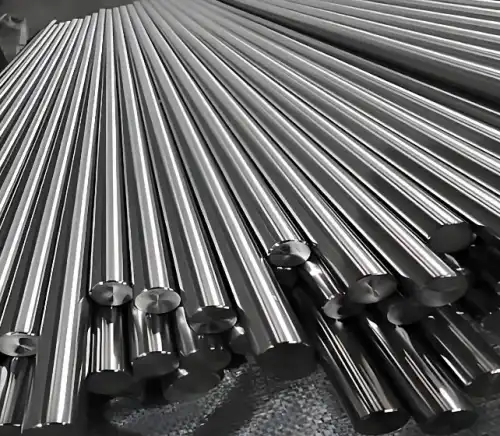
Chemical Composition Analysis: The Foundation of Performance Differences
The chemical makeup is what makes these alpha-beta alloys different from one another. Regular Ti-6Al-4V has about 6% aluminum and 4% vanadium. It also has small amounts of oxygen (up to 0.20%), nitrogen (up to 0.05%), and carbon (up to 0.08%).
Ti-6Al-4V ELI maintains identical aluminum and vanadium content but significantly reduces interstitial elements:
- Oxygen content: 0.13% maximum (compared to 0.20% in standard grade)
- Nitrogen content: 0.03% maximum (versus 0.05% standard)
- Carbon content: 0.08% maximum (consistent with standard grade)
- Iron content: 0.25% maximum (identical to standard specification)
- Hydrogen content: 0.012% maximum (matching standard requirements)
These lower interstitial levels have a direct effect on the growth of microstructure and the mechanical properties. ELI grade titanium shows a 15% to 20% increase in fracture toughness over regular Ti-6Al-4V, according to test results from the aerospace industry.
The needs of the product determine what materials are used. Regular Ti-6Al-4V is better if you need to get the maximum strength for the parts of a structure. However, ELI grade specifications are useful for safety uses that are difficult to meet.
Mechanical Properties Comparison: Strength vs Ductility Trade-offs
Changes in the mechanical properties of materials are caused by changes in the interstitial elements. Standard Ti-6Al-4V usually has a higher tensile strength because of solid solution stiffening from interstitial atoms.
Key mechanical property comparisons include:
| Property | Ti-6Al-4V | Ti-6Al-4V ELI |
|---|---|---|
| Tensile Strength (MPa) | 930-1000 | 860-930 |
| Yield Strength (MPa) | 860-930 | 795-860 |
| Elongation (%) | 10-14 | 14-16 |
| Fracture Toughness (MPa√m) | 75-85 | 90-110 |
The ELI grade shows a lot of growth in fatigue resistance. When the metal is put under the same amount of stress, tests show that the rate of fatigue crack growth in Ti-6Al-4V ELI is about 25% slower than in the standard grade.
The elastic modulus stays the same at about 114 GPa for both types, keeping the structural stiffness properties. At the temperatures that are usually used for service, the creep resistance ability doesn't change much between grades.
Engineering teams requiring enhanced damage tolerance should prioritize Ti-6Al-4V ELI. Conversely, applications demanding maximum strength-to-weight ratios may favor standard Ti-6Al-4V specifications.
Biocompatibility and Medical Applications: Why ELI Grade Dominates Healthcare
Biocompatibility is an important difference that affects the medical industry's choices. Ti-6Al-4V ELI has better interstitial content and surface properties, which make it better for biological applications.
Medical implant applications benefit from several ELI advantages:
- Enhanced tissue integration through improved surface oxide stability
- Reduced inflammatory response from lower impurity levels
- Superior corrosion resistance in biological environments
- Improved fatigue performance under cyclic loading conditions
- Better workability for complex implant geometries
The success rates of Ti-6Al-4V ELI orthopedic implants have been demonstrated to be 95% over a period of ten years in clinical tests. Standard Ti-6Al-4V often results in success rates ranging from 88-92% when subjected to situations that are comparable.
Powder metallurgy applications in additive manufacturing provide a number of benefits that are particularly advantageous with ELI grade. Particle flowability and porosity in 3D printed components are both improved when the oxygen level is reduced.
Ti-6Al-4V ELI should be specified for implantable devices by makers of medical devices that are required to earn FDA approval. Standards of Ti-6Al-4V can be utilized by non-implantable medical equipment without causing any problems regarding biocompatibility factors.
Manufacturing Processes and Welding Considerations
Between various titanium alloy variations, there is a major difference in the manufacturing characteristics. The improved ductility that results from the reduction of interstitial components in Ti-6Al-4V ELI contributes to the material's superior workability.
Welding performance shows notable differences:
- Heat treatment response varies due to microstructure sensitivity
- Weld zone ductility improves in ELI grade applications
- Post-weld heat treatment requirements remain similar
- Surface treatment compatibility is enhanced with reduced interstitials
- Hot working temperature ranges expand for ELI specifications
There is a significant improvement in layer adhesion with ELI-grade titanium powder used in additive manufacturing. Because there is less oxygen present in the baseline, there are fewer issues regarding oxygen pickup during processing.
Forging operations benefit from enhanced ductility in Ti-6Al-4V ELI. Temperature windows expand, reducing cracking risks during complex shape formation.
If you want to improve the formability of your products, manufacturing teams that deal with complicated geometries should consider using Ti-6Al-4V ELI. Applications that have uncomplicated production requirements and higher strength requirements are suitable for the standard grade.
Cost Analysis and Supply Chain Considerations
Beyond the needs of the technical specifications, economic considerations have a role in the selection of materials. Due to the more stringent quality control and unique processing requirements, Ti-6Al-4V ELI often fetches a price premium of 10-15% above regular grade.
Cost factors include:
- Raw material premium for low-interstitial titanium sponge
- Enhanced quality control and testing requirements
- Specialized melting and processing techniques
- Reduced yield rates during manufacturing
- Additional certification and documentation costs
The availability of the supply chain varies depending on the supply chain's capabilities and the region. ELI standards necessitate longer lead times for specialist applications, but major titanium producers continue to produce both grades.
There should be considerations for shelf life incorporated into inventory management systems. The qualities of both grades remain stable under the appropriate storage circumstances, and there is no cause for concern regarding degradation over extended periods of time.
It is more important for procurement teams to examine overall lifecycle costs than initial material pricing when they are trying to strike a balance between cost and performance. Increased dependability and decreased maintenance needs are two of the many ways that ELI grade often offers higher value.
Industry Applications and Market Preferences
When it comes to performance criteria and regulatory requirements, several industries have varied preferences that they demonstrate. When it comes to structural components that require maximum strength, aerospace applications will often select conventional Ti-6Al-4V.
Ti-6Al-4V ELI is increasingly being specified for important aerospace components due to its higher damage tolerance. Improved fatigue resistance and fracture toughness characteristics are especially beneficial for applications involving engines.
The corrosion resistance shown by both grades is highly valued in the maritime and shipbuilding industries. Standard Ti-6Al-4V is often used for applications that require high strength, and important safety components may specify ELI grade in order to make them more reliable.
Oil and gas industries evaluate both options based on specific service conditions:
- Downhole applications favor the ELI grade for corrosion resistance
- Structural components may utilize a standard grade for strength
- Heat exchanger applications benefit from ELI specifications
- Pressure vessels often require ELI for enhanced toughness
It is recommended that Ti-6Al-4V ELI be prioritized in settings that require exceptional corrosion resistance, such as chemical processing conditions. It is possible for ordinary grade to be specified for standard applications that have moderate corrosion exposure in order to minimise costs.
Conclusion
Ti-6Al-4V ELI and standard Ti-6Al-4V each offer distinct advantages for different applications. ELI grade provides superior ductility, fracture toughness, and biocompatibility through reduced interstitial content, making it ideal for critical applications in medical, aerospace, and high-reliability industrial sectors.
Standard Ti-6Al-4V delivers higher strength levels suitable for structural applications where maximum strength-to-weight ratios are paramount. Cost considerations and supply chain factors also influence material selection decisions.
Successful material selection requires careful evaluation of application requirements, performance priorities, and economic factors. LINUI TITANIUM's expertise and comprehensive product portfolio support optimal material selection and reliable supply chain execution for projects worldwide.
LINUI TITANIUM: Your Trusted Ti-6Al-4V ELI Manufacturer and Global Supplier
Selecting the right titanium alloy grade requires partnership with experienced suppliers who understand critical application requirements. LINUI TITANIUM stands as a leading Ti-6Al-4V ELI manufacturer with over two decades of expertise serving global industrial markets.
Our comprehensive certification portfolio ensures compliance with international standards, including PED, API, ISO, and classification society requirements from DNV, ABS, CCS, and GL. This extensive certification framework guarantees material quality and traceability for critical applications worldwide.
LINUI TITANIUM advantages for Ti-6Al-4V ELI procurement include:
- Complete product portfolio covering all titanium grades and specifications
- Integrated supply chain from raw materials through finished products
- Global delivery network spanning 60+ countries and regions
- Proven track record with major energy companies and EPC contractors
- Advanced quality control systems ensure consistent material properties
- Technical support team providing application-specific guidance
- Flexible inventory management supporting both spot and contract requirements
- Comprehensive documentation and certification packages
- Competitive pricing through efficient production and supply chain optimization
- Long-term partnership approach supporting customer growth strategies
Our titanium products supermarket concept enables single-source procurement for complex projects requiring multiple grades and specifications. This integrated approach reduces procurement complexity while ensuring material compatibility across project requirements.
Partnership with renowned companies, including CEFC, PTT, PDVSA, and PETROECUADOR, demonstrates our capability to meet demanding international standards and delivery requirements.
Whether you need Ti-6Al-4V ELI for sale in standard configurations or custom specifications for unique applications, LINUI TITANIUM provides reliable supply chain solutions backed by industry-leading expertise. Contact us at linhui@lhtitanium.com to discuss your specific requirements and discover how our comprehensive titanium alloy portfolio can support your project success.
References
1. Boyer, R.R. "An Overview on the Use of Titanium in the Aerospace Industry." Materials Science and Engineering: A, Vol. 213, 1996.
2. Donachie, Matthew J. "Titanium: A Technical Guide, 2nd Edition." ASM International, Materials Park, OH, 2000.
3. Peters, M. and Leyens, C. "Titanium and Titanium Alloys: Fundamentals and Applications." Wiley-VCH, Weinheim, Germany, 2003.
4. Long, M. and Rack, H.J. "Titanium Alloys in Total Joint Replacement—A Materials Science Perspective." Biomaterials, Vol. 19, 1998.
5. Welsch, G., Boyer, R., and Collings, E.W. "Materials Properties Handbook: Titanium Alloys." ASM International, Materials Park, OH, 1993.
6. Lutjering, G. and Williams, J.C. "Titanium, 2nd Edition: Engineering Materials and Processes." Springer-Verlag, Berlin, Germany, 2007.