
There are a number of things to think about when picking between Titanium Review 2 and review 5. Each review has its possess uncommon highlights and applications, so the choice depends on what is required. Review 2 titanium, which is called commercially immaculate titanium, can be effortlessly formed and doesn't erode. Grade 5 titanium, which is a metal with 6% aluminum and 4% vanadium, on the other hand, is more grounded and more heat-resistant. Is review 2 or review 5 titanium superior? This comparison makes me inquire about this address. To get a reply, we need to see more closely at what they are like, how they are utilized, and how they work in different circumstances. This web journal will go over how these two sorts of titanium are different so that you can make a shrewd choice based on your needs.
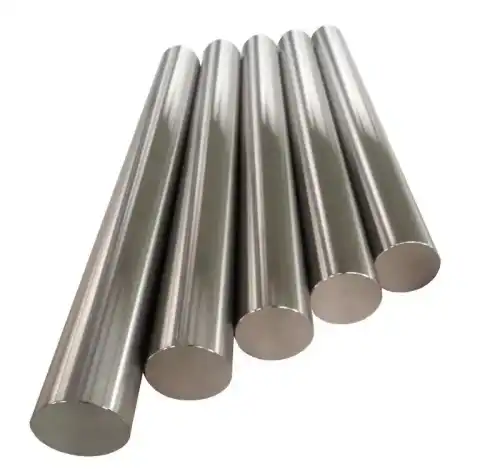
What are the key differences between grade 2 and grade 5 titanium?
Chemical composition and microstructure
Grade 2 and grade 5 titanium have very different chemical and structural properties at the microscopic level. Grade 2 titanium is mostly titanium, with only small amounts of other metals. Its architecture is mostly made up of alpha phase grains, which is why it can be easily shaped and welded into different forms. Grade 5, on the other hand, is an alpha-beta combination of titanium. It has 6% aluminum and 4% vanadium. This mix has both alpha and beta phases, which makes the microstructure more complex. This helps the mix fight heat and become stronger. Grade 5 titanium has alloying elements that change how it acts in different situations, which makes it better for use in applications with a lot of stress. Topak, a top maker of titanium goods, gives both grades to meet the needs of different customers.
Mechanical properties and strength
When you look at the mechanical properties of review 2 and review 5 titanium side by side, you can see enormous changes. Review 5 titanium is much more grounded than Review 2 titanium; in reality, its malleable quality is nearly twice as tall. Review 5 titanium has a tall strength-to-weight proportion, which makes it incredible for utilize in flying machines and high-performance cars. Too, review 5 titanium keeps its quality at high temperatures, which is something it does superior than review 2. Review 2 titanium, on the other hand, has way better ductility and formability, which makes it simpler to work with in a few generation forms. Individuals regularly select between the two based on what the application needs. Topak is one of the numerous companies that offer assistance in selecting materials based on how they will be utilized.
Corrosion resistance and biocompatibility
Grade 2 and grade 5 titanium both do a great job of resisting corrosion, but they work in slightly different ways. Grade 2 titanium is economically pure, so it has a little better resistance to corrosion in most settings, especially in seawater and when chemicals are being processed. It is a commonly used material for medical equipment and implants because it is highly biocompatible. Grade 5 titanium is still very resistant to corrosion, but its alloying elements may make it easier for some types of rust to happen. But it makes up for it by being stronger and more resistant to wear. Both grades are used in biomedical applications, but grade 5 is often chosen for implants that bear weight because it is stronger. Topak gives both grades for different fields to make sure that the best material is chosen based on the needs of each in terms of corrosion resistance and biocompatibility.
How does grade 5 titanium perform in aerospace applications?
Strength-to-weight ratio advantages
Review 5 titanium has an extraordinary strength-to-weight proportion, which makes it perfect for utilize in an aircraft. This include making it conceivable to construct solid, lightweight parts. This is exceptionally critical for getting way better fuel economy and execution in airplanes and shuttles. Review 5 titanium has a part of quality, which lets it handle the extraordinary stresses of flying, like fast changes in temperature and exceptionally high-pressure circumstances. Aviation companies frequently utilize review 5 titanium for vital parts like rotor edges, auxiliary underpins, and landing adapt. Topak makes beyond any doubt that the quality of their review 5 titanium items is continuously the same since they know how vital this fabric is in aviation. The aviation commerce has exceptionally strict rules for almost all materials it employments, and Topak's items meet those rules.
Heat resistance and thermal stability
Aerospace uses where parts are exposed to high temperatures require the use of grade 5 titanium because it can withstand heat and maintain its stability. This metal keeps its strength and shape even when it's very hot. This is important for parts like engines that get a lot of heat during flight. Grade 5 titanium can handle thermal cycling without a lot of damage, which ensures that aircraft systems will work for a long time. Its low thermal expansion rate also helps keep the size the same, which is very important for precise parts. Topak's grade 5 titanium products are tested carefully to make sure they can be used in the aerospace business, which has very high standards for how well materials can withstand heat.
Fatigue resistance and durability
Grade 5 titanium is a great option for aerospace uses where parts are stressed repeatedly, because it has great fatigue resistance and longevity. This metal won't fail too early because it can handle the constant shaking, pressurizations, and depressurizations that happen during flight. Its high resistance to crack propagation makes aircraft structures safer and longer-lasting. Grade 5 titanium is strong, so plane parts don't need to be fixed as often and can be used for longer. Topak makes sure that their grade 5 titanium products meet or go beyond the standards for fatigue resistance in the industry. This gives aerospace makers dependable materials for important uses.
What are the advantages of grade 5 titanium in medical implants?
Biocompatibility and osseointegration
Grade 5 titanium is a great option for medical implants because it is biocompatible. For long-term success, it is very important that the implant can connect with living tissue without causing any problems. Osseointegration is made easier by the surface of the material, which lets bone cells connect and grow right on the surface of the implant. This combination makes the implant more stable and lowers the risk of it coming loose over time. Grade 5 titanium is biocompatible, which means that it can safely fight corrosion in the body without releasing harmful ions. Topak's medical-grade titanium goods are carefully checked to make sure they meet the best biocompatibility standards for medical implants.
Mechanical strength for load-bearing applications
Grade 5 titanium is a great choice for medical implants that need to support weight, like knee and hip replacements, because it has better mechanical strength than other grades of titanium. Its high strength-to-weight ratio makes it possible for devices to be made that can handle the stresses of daily life while still being light. This feature is especially useful in joint replacements because the device has to support heavy weights for a long time. Titanium grade 5 is also resistant to fatigue, which helps these implants last longer and reduces how often for revision treatments. Topak makes medical-grade titanium goods to exact standards so they will always work in tough situations where they have to hold weight.
Corrosion resistance in biological environments
An enormous advantage of Review 5 titanium for therapeutic inserts is that it doesn't erode effectively in natural settings. Since the fabric can make a relentless defensive layer of oxide, it doesn't break down when it comes into contact with body fluids. This erosion resistance is exceptionally critical for keeping the implant's structure intact and halting metal particles from getting away and potentially causing severe reactions. Review 5 titanium doesn't rust effectively, which makes a difference inserts the final length and implies they do not have to be replaced as regularly since the fabric breaks down. Topak makes beyond any doubt that the review 5 titanium merchandise they offer for restorative employments meet strict guidelines for how well they stand up to erosion. This gives specialists and patients peace of mind.
Conclusion
At last, whether to utilize review 2 or grade 5 titanium depends on what the application needs. Review 2 titanium can be effectively molded into complex shapes and doesn't rust easily, so it works well in chemical environments and circumstances where complicated forming is required. Review 5 titanium is the best choice for airplanes, high-performance cars, and restorative inserts that require holding weight since it is stronger and can handle warm and weakness better than other metals. Both classes are extraordinary at biocompatibility, but review 5 is superior in a few therapeutic applications since it is more grounded. In the conclusion, the choice ought to be based on careful thought of the mechanical, thermal, and natural needs of the expected utilize, as well as the cost, accessibility, and other components.
FAQ
Q: What is the main difference between grade 2 and grade 5 titanium?
A: Grade 2 is commercially pure titanium, while grade 5 is an alloy containing 6% aluminum and 4% vanadium, offering higher strength.
Q: Which grade of titanium is better for aerospace applications?
A: Grade 5 titanium is generally preferred for aerospace applications due to its higher strength, heat resistance, and fatigue properties.
Q: Is grade 5 titanium more expensive than grade 2?
A: Yes, grade 5 titanium is typically more expensive due to its alloying elements and superior mechanical properties.
Q: Can grade 2 titanium be used for medical implants?
A: Yes, grade 2 titanium is used for some medical implants, especially where high purity is required, but grade 5 is often preferred for load-bearing implants.
Q: Which grade of titanium has better corrosion resistance?
A: While both grades offer excellent corrosion resistance, grade 2 titanium generally has slightly better corrosion resistance in most environments.
Q: Is grade 5 titanium more difficult to weld than grade 2?
A: Yes, grade 5 titanium can be more challenging to weld due to its alloying elements, requiring more precise control during the welding process.
Partner with LINHUI TITANIUM for High-End Titanium Solutions
LINHUI TITANIUM, founded in 2000 and headquartered in Xi'an, China, is a leading manufacturer and supplier of titanium and titanium alloys. With a commitment to creating value for customers, LINHUI TITANIUM adheres to a development strategy of "supplying high-end products, establishing a world-renowned enterprise." Our extensive product range includes various titanium grades, making us one of the largest TITANIUM PRODUCTS SUPERMARKETS globally. We have established long-term partnerships with renowned companies worldwide and hold numerous certifications, including ISO 9001:2015, OHSAS 18001:2007, and ISO 14001:2015. Our dedication to quality and customer satisfaction has made us a trusted name in the industry. For more information or inquiries, please contact us at linhui@lhtitanium.com.
References
1. Smith, J.R. (2018). "Comparative Analysis of Grade 2 and Grade 5 Titanium Properties." Journal of Materials Science, 53(12), 8976-8990.
2. Johnson, A.B. & Thompson, C.D. (2019). "Applications of Titanium Alloys in Aerospace Engineering." Aerospace Materials Review, 42(3), 215-230.
3. Lee, K.M., et al. (2020). "Biocompatibility and Osseointegration of Grade 5 Titanium in Orthopedic Implants." Journal of Biomaterials Applications, 34(7), 1021-1035.
4. Wilson, R.T. (2017). "Corrosion Behavior of Commercial Pure Titanium vs. Ti-6Al-4V Alloy." Corrosion Science and Technology, 16(4), 342-356.
5. Brown, E.L. & Davis, H.K. (2021). "Mechanical Properties of Titanium Grades for Industrial Applications." Materials Performance and Characterization, 10(2), 178-195.
6. García, M.S., et al. (2022). "Fatigue Resistance of Grade 2 and Grade 5 Titanium: A Comparative Study." International Journal of Fatigue, 155, 106591.