
ASTM B352 Zirconium Alloy Plate quality control depends on strict manufacturing rules, thorough chemical analysis, and multiple testing stages. During the whole production process, we use strict controls, such as mass spectrometry for hafnium verification (maintaining <0.01% concentration), autoclave corrosion testing at 400°C under 1500 psi steam pressure, and 100% ultrasonic inspection to detect subsurface defects. Each plate undergoes dimensional verification, microstructural evaluation per ASTM E112 standards, and third-party certification to guarantee nuclear-grade reliability, mechanical integrity, and compliance with international safety regulations before reaching our clients in the oil, gas, chemical, and aerospace sectors.
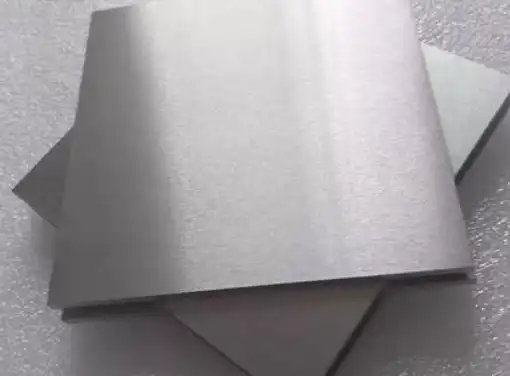
Understanding ASTM B352 Zirconium Alloy Plate Quality Standards
Procurement managers need to know the quality standards when they are looking at products for important nuclear and chemical processing uses. The ASTM B352/B352M standard is the official guide for zirconium and zirconium alloy sheet, strip, and plate goods that are made to be used in nuclear environments. The main difference between this standard and industrial-grade zirconium specifications is that this standard requires very little hafnium, which has a direct effect on neutron transparency and reactor efficiency.
Chemical Composition Requirements and Their Industrial Significance
The chemical composition limits set out in ASTM B352 Zirconium Alloy Plate are not just random numbers; they are based on decades of study and practical experience in nuclear engineering. Some common types are UNS R60802 (Zircaloy-2), which has tin, iron, chromium, and nickel in it to make it more resistant to corrosion in boiling water reactors, and UNS R60804 (Zircaloy-4), which doesn't have nickel in it to stop hydrogen from entering pressure water reactors. The amount of hafnium must stay below 100 parts per million to make sure a thermal neutron absorption cross-section of about 0.18 barns. This is what makes nuclear-grade material different from market options that follow ASTM B551.To keep these exact compositional limits, you need to use advanced scientific methods. Mass spectrometry is the most accurate way to check the levels of minor elements, and inductively coupled plasma optical emission spectrometry is the most accurate way to check the levels of major alloying elements. More than the allowed amounts of iron, nickel, or tungsten can make corrosion resistance worse, and too much hafnium can hurt neutron economy, which means that reactor fuel efficiency drops by measurable percentages.
Mechanical Properties and Performance Validation
The mechanical property standards in ASTM B352 describe how the material reacts to pressures from heat, mechanical forces, and radiation. Tensile strength can be anywhere from 379 to 552 MPa, based on the alloy grade and temper state. Yield strength, on the other hand, is usually between 207 and 379 MPa. Values of elongation greater than 21% make sure that the material is flexible enough to handle heat expansion cycles and doesn't break easily under practical loads. Standardized testing methods are used on samples from each production lot that are meant to be representative of the whole lot to confirm these qualities. Tensile testing uses carefully machined objects measured at controlled strain rates and follows the ASTM E8 method. The resulting stress-strain curves give engineers precise information on yield behavior, final strength, and ductility. These are the kinds of things that engineers use to check the accuracy of their design estimates and the safety gaps they set for reactor parts.
Dimensional Tolerances and Surface Quality Control
Precision in measurements has a direct effect on how well nuclear fuel is put together and how well it works. As stated in ASTM B352, thickness limits run from ±0.13 mm for smaller gauges to ±0.25 mm for heavier plates. This allows for an accurate fit-up when welding and putting the plates together. To keep material waste to a minimum and make automatic handling easier in fuel production plants, width and length tolerances are also very tight. The standards for surface finish take both function and safety into account. Surfaces that have been pickled or polished and have a roughness value below Ra 1.6 micrometers lower the amount of resistance to flow in cooling ducts and the number of places where crud can build up and concentrate radioactive isotopes. Defects on the surface, like scratches, pits, or particles lodged in the surface, are carefully looked at because they can be starting points for stress corrosion cracking or localized corrosion in water that is very hot.
The Role of International Certifications in Quality Verification
International approvals give third parties a way to check the quality of a product and its ability to be controlled during the production process. Systematic quality management practices, ASTM B352 Zirconium Alloy Plate, are shown by ISO 9001:2015 certification, and manufacturing skills in pressure equipment are proven by industry-specific certificates from groups like PED 2014/68/EU. Third-party inspection agencies like DNV, BV, SGS, TUV, and RINA do regular checks to make sure that manufacturing methods and standard requirements are being followed. The paperwork that comes with every package is proof that quality standards were met. Certified Mill Test Reports have detailed chemical analysis results for each lot, mechanical property test data, corrosion test weight gain numbers, and certifications for ultrasonic inspections. Material tracking systems connect each plate to the heat that was used to make it. This lets full backward traceability happen if there are any operating problems with the material during its life.
Critical Factors Affecting the Quality of ASTM B352 Zirconium Alloy Plates
Material quality starts a long time before the first pass of the rolling mill. It starts with the choice of raw materials and handling decisions that set the stage for how well the finished product works. When procurement professionals know about these important factors, they can better evaluate providers and predict quality differences that might affect project timelines or operational safety.
Raw Material Sourcing and Purity Requirements
For making nuclear-grade alloys, high-purity zirconium sponge is the first thing that is used. Before melting starts, the sponge is put through a lot of chemical tests to make sure that the amounts of impurities, especially hafnium, iron, chromium, and uranium, are within accepted limits. Separating hafnium is one of the most difficult technical parts of making zirconium. To meet the <100 ppm requirement, multiple solvent extraction steps are needed for ASTM B352 Zirconium Alloy Plate production. Contamination risks go beyond choosing the main materials in the first place. When makers make things, they have to be very careful to keep pollution from getting into melting crucibles, electrode materials, and furnace atmospheres. When vacuum arc remelting is done in copper crucibles that are cooled by water, oxygen, nitrogen, and hydrogen are picked up less. These are interstitial elements that have a big effect on the mechanical properties and corrosion resistance of the metal. Multiple remelting processes make the chemicals more uniform and stop the separation of the alloying elements.
Manufacturing Process Controls and Heat Treatment
To turn an ingot into a final plate, thermomechanical processes must be carefully controlled so that the microstructure and mechanical qualities are just right. Hot rolling usually takes place between 650°C and 750°C. This lowers the width of the ingot, breaks down the cast structure, and encourages recrystallization. The direction of rolling changes the development of texture, which in turn changes the mechanical qualities and the way irradiation growth occurs in a reactor. The factors of the heat treatment have a big effect on the end qualities of the material. Annealing treatments, which are usually done between 560°C and 650°C for set hold times, remove any remaining stresses from cold working and help grains grow to the right size. The mechanical qualities are directly affected by the grain size. Finer grains improve yield strength and flexibility, while larger structures may be better at resisting growth caused by irradiation. Cooling rates from heating temperatures change how the precipitates are distributed and what kind of oxide layer forms during service.
Corrosion Testing and Performance Validation
Autoclave corrosion testing is a quick way to see how corrosion will behave over time in a reactor setting. Standard test procedures put samples in steam at 400°C and 10.3 MPa pressure for 3 to 14 days, which is the same amount of time that they would be exposed to a reactor for months or years. Weight gain measurements show how much the oxide layer has grown, and hydrogen pickup readings show how vulnerable the material is to hydrogen embrittlement, a way of breaking down that has caused some reactor parts to stop working. The way the corrosion layer looks and sticks to the metal during autoclave tests tells us a lot about how corrosion works. Black oxide films that are regular and stick together well show good corrosion resistance. On the other hand, white oxide formation, spalling, or an uneven look shows that the corrosion resistance is not good enough. Metallographic analysis of oxide cross-sections shows the thickness of the oxide, the shape of the surface, and how much oxygen can get into the metal below.
Comparative Advantages Over ASTM B381 and Commercial Grades
Forgings made of titanium and titanium alloys for normal industrial use are governed by ASTM B381. Plates used in nuclear service are governed by ASTM B352. The hafnium specification is the most visible difference, but there are also changes in how corrosion tests are done, how paperwork is kept, and how quality assurance is handled. Because reactor parts are so safety-critical, nuclear users need higher levels of tracking and quality documentation than most industries. Commercial-grade zirconium that meets the requirements of ASTM B551 is very resistant to weathering and can be used in chemical processes where neutron transparency is not important. Because hafnium standards are less strict and quality control needs are less strict, these materials usually cost less than nuclear grades. Professionals in procurement have to carefully match the standards of the material to the needs of the application to avoid safety risks.
Quality Assurance Practices by Leading ASTM B352 Zirconium Alloy Plate Suppliers
Choices about which suppliers to use can ASTM B352 Zirconium Alloy Plate affect the success of a project, the safety of operations, and the prices over its entire life. Leading providers stand out by having complete quality systems, advanced testing tools, and track records of performance in tough environments. Since we opened for business in 2000, these core values have helped LINHUI TITANIUM build a strong name as an ASTM B352 Zirconium Alloy Plate supplier.
Certification Requirements and Regulatory Compliance
Reliable providers keep a number of certifications that show they are good at producing and have a mature quality system. Our building has been certified with ISO 9001:2015 for quality management systems, ISO 14001:2015 for environmental management, and OHSAS 18001:2007 for health and safety at work. These certifications for management systems give you peace of mind that important processes are run by written instructions and that methods for continuous improvement are always making products better and processes more efficient. Certifications that are specific to an industry confirm that a person has the expert skills needed for difficult tasks. The Manufacturing License of Special Equipment from Chinese regulatory officials shows that the pressure vessel meets the standards for manufacturing, and the PED 2014/68/EU approval lets the pressure equipment be sold in European markets. Classification society approvals from DNV, ABS, CCS, BV, GL, and other groups show that the product meets the needs of the marine and offshore industries.
Inspection Protocols During Manufacturing and Before Delivery
Protocols for thorough inspection find possible quality problems with goods before they affect the ones that are given. Using calibrated micrometers, calipers, and coordinate measuring machines to check the dimensions ensures that the thickness, width, length, and flatness are all within the allowed ranges. Statistical process control methods keep an eye on measurement parameters across production lots, looking for patterns that could mean that tools are wearing out or the process is drifting before material that doesn't meet specifications is made. Standardized testing methods are used on samples that represent each production heat and processing state for mechanical property evaluation. You can get precise information on yield strength, final tensile strength, and elongation from tensile testing. On the other hand, hardness testing is a quick way to find process variations. The number of tests and samples chosen is based on the requirements of the standard and the quality plan.
Documentation and Traceability Systems
A lot of paperwork goes with every package. This makes sure that the specifications are met and lets you track the product throughout its entire lifecycle. Certified Mill Test Reports list the exact heat chemistry, mechanical property test results, heat treatment settings, and inspection results for the material that was provided. The maker certifies that all the requirements in the specifications have been met, and these reports include the information needed for customers to decide if the work is acceptable and for code compliance paperwork. Material tracking systems use unique markings on each plate to connect it to the history of how it was made. Each piece has a heat number, lot number, or serial number stamped or written on it. These numbers can be used to connect it to records of production, test data, and quality documents. This tracking is very important if there are any service problems because it lets people quickly find material that might be affected and helps with root cause analysis investigations.
Logistics Capabilities and Custom Manufacturing Options
The global supply chain makes it possible for deliveries to project sites around the world to be made on time. Our delivery network covers more than 60 countries in North America, South America, the Gulf, Africa, the CIS, and Southeast Asia. This makes sure that supplies get to customers quickly, no matter where their projects are located. Building ties with foreign freight forwarders and customs brokers speeds up shipments and reduces the amount of paperwork that needs to be done. Custom manufacturing lets you meet project-specific needs that go beyond normal stock measurements. We can hot-roll, cold-roll, or anneal plates with thicknesses from 0.5 mm to 50 mm, widths up to 1000 mm, and lengths up to 2000 mm. When making a part, custom sizing cuts down on the waste of material, and custom heat treatment settings make the features work best in a certain set of conditions. Lead times for custom production usually take between 8 and 16 weeks from the time the order is confirmed.
Comparative Insights: ASTM B352 Zirconium Alloy Plate vs Alternative Materials
When choosing a material, you need to carefully look at a number of performance aspects, cost factors, and supply issues. Knowing how ASTM B352 Zirconium Alloy Plate stacks up against other materials helps you make smart choices that improve the results of your project.
Performance Comparison with Titanium Alloys
Titanium alloys are good at resisting corrosion and are strong for their weight, which makes them useful in chemical processing, aircraft, and the marine industry. Titanium is not good for nuclear reactor core uses because it has a higher thermal neutron absorption cross-section (about 6 barns), which is important for fuel efficiency and running costs. Zirconium's neutron transparency gives it an unbeatable edge in these conditions. Differentiating these material groups is based on their thermal function. It is possible for titanium alloys to keep their mechanical traits up to about 540°C, while zirconium alloys can work well up to 350°C in nuclear settings. Zirconium's high melting point (1852°C) gives a lot of safety in case of an accident, but regular working temperatures are still well below the point where this becomes a problem. Titanium's thermal expansion value is 8.6 μm/m-K, while zirconium's is 5.9 μm/m-K.
Corrosion Resistance Relative to Stainless Steel
Austenitic stainless steels are used a lot in chemical processes because they don't rust and have good mechanical qualities. They are also cheap. But stainless steel can't be used in all process lines because it can crack easily from stress corrosion in chloride-containing settings. Zirconium alloys are very good at resisting acidic substances like hydrochloric acid, sulfuric acid, and caustic solutions over a wide range of concentrations and temperatures. A lot of this difference in efficiency can be explained by the chemistry of the oxide layer. Zirconium creates a thick, adherent layer of zirconium dioxide that self-heals when it gets damaged, keeping it safe even after being damaged mechanically. Stainless steel is made up of chromium oxide films that can break down in some chemical environments, allowing localized attack. Zirconium is better than stainless steel in places where stainless steel doesn't work well because it doesn't crack when exposed to chloride stress corrosion.
Grade Selection Guidelines Based on Service Conditions
Different types of alloy meet ASTM B352 Zirconium Alloy Plate, with different operating needs within the ASTM B352 standards. Zircaloy-2 (UNS R60802) is mostly used in boiling water reactors because it can handle the chemicals in the coolant and the high radiation levels that are common in BWRs. The nickel in Zircaloy-2 makes it more resistant to corrosion, but it also picks up more hydrogen when it is irradiated. This is a trade-off that is fine in BWR settings but could be a problem in PWR service.Zircaloy-4 (UNS R60804) doesn't have any nickel in it, which makes it the best material for parts of pressurized water reactor fuel assemblies because it doesn't absorb hydrogen as easily. Zr-2.5Nb alloys (UNS R60901) have better resistance to creep and less irradiation growth, which makes them good for use in pressure tubes in CANDU reactors, where maintaining their shape under long-term loads is very important.
Ensuring Long-Term Quality and Reliability in Use
Quality control doesn't just stop at production and delivery; it also includes proper handling, storage, and ongoing tracking to keep materials in good shape and make sure they meet specifications all along the supply chain.
Proper Handling and Storage Practices
Taking precautions during transport and storage keeps ASTM B352 Zirconium Alloy Plate from getting damaged or contaminated, which could affect how well they work. Plates should stay wrapped in materials that keep wetness from building up and keep them from coming into contact with dissimilar metals, as this could lead to galvanic corrosion or contamination. Controlled humidity levels below 70% should be kept in storage areas to keep air oxidation to a minimum. Handling methods and tools must keep the material from being damaged. Forklift forks, slings, and lifting tools should have covers that keep plate surfaces from being scratched, gouged, or dented. Stacking heights should be kept low so that the bottom plates don't bend from being too heavy. There should also be protective dividers between layers to keep the surfaces from getting damaged when they move around during handling.
Maintenance and Shelf-Life Considerations
Even though zirconium alloys are very stable in most environments, they should be checked on a regular basis while they are being stored to make sure they are still meeting specifications and are safe to use. Visual inspections every six months look for any surface darkening, pitting, or contamination that needs to be fixed before the material can be released for manufacturing. We can find significant corrosion by measuring weight, but this isn't likely to happen if the item is stored properly. Zirconium alloy plates that are kept properly usually don't have shelf life limits because the material doesn't break down over time at room temperature. But approval documents may only be good for a certain amount of time, which can be set by the organization's quality systems or by customer needs. When project plans change or demand predictions change, resampling and testing as part of recertification programs can keep materials qualified after their original certification periods.
Sample Testing and Pilot Order Strategies
Before committing to big orders, procurement workers who are working with new suppliers or trying out new manufacturers should set up sample testing programs. Samples big enough for full testing—usually 100 to 500 kg, based on the test matrix scope—allow separate checking of the mechanical qualities, chemical composition, and corrosion performance. Third-party testing labs give evaluations that aren't biased and help make sure that test data and approval paperwork from suppliers are correct. Pilot orders of medium to large amounts let you test a supplier's transportation skills, the quality of their paperwork, and how quickly they respond to customer service issues before committing to a long-term supply relationship. Orders of 2 to 5 metric tons give you enough material to evaluate the job while also reducing your financial risk in case there are quality problems. Performance during test order fulfillment is a better indicator of the long-term profitability of a relationship than catalog specs or marketing presentations.
Continuous Quality Monitoring Through Supplier Audits
Supplier audits check that ongoing compliance with quality system standards and design rules is still being met in established supply relationships. Quality assurance staff, materials engineers, and sourcing experts are common roles on audit teams. They look at how things are made, how they are tested, how they are calibrated, and how they are documented. The results of an audit show where improvements can be made and confirm that corrective actions have been properly carried out. When vendors and customers work together, both the quality of the products and the speed of the process keep getting better. Technical exchange groups are places where people can talk about their experience with applications and look for ways to make products or processes better. At LINHUI TITANIUM, we keep in touch with our big clients, like CEFC, PTT, PDVSA, PETROECUADOR, and other big names in the industry. We use their operational comments to improve our quality management.
Conclusion
Quality control for ASTM B352 Zirconium Alloy Plate relies on systems that work together to choose the raw materials, keep an eye on the production process, make sure that all the tests are done correctly, and keep very good records. Nuclear-grade standards require extra care to be taken with the amount of hafnium, the consistency of the microstructure, and the resistance to corrosion. Instead of just looking at price, procurement workers should look at providers' certification portfolios and track records in difficult applications. Material condition is kept up throughout supply lines by proper handling, storage, and ongoing quality tracking. By understanding these aspects of quality assurance, you can make smart choices that improve the performance of materials, the dependability of projects, and their long-term value in important industry settings.
FAQ
1. What distinguishes nuclear-grade from commercial-grade zirconium?
The main difference between nuclear-grade zirconium that meets ASTM B352 Zirconium Alloy Plate standards and commercial-grade zirconium that meets ASTM B551 is the amount of hafnium. For nuclear uses, hafnium levels must be less than 100 ppm to keep neutron absorption to a minimum. Market grades can have much higher hafnium levels because the neutron economy doesn't matter in chemical processing uses. There are also stricter standards for quality documentation and better testing methods for nuclear-grade materials.
2. How do the settings for heat treatment change the properties of the end plate?
Temperature, hold time, and rate of cooling all affect the size of the grains, the spread of the precipitates, and the amounts of residual stress. These all have an effect on the material's mechanical properties and its ability to resist corrosion. Higher annealing temperatures encourage grain growth, which lowers yield strength. However, they may make the material more flexible and less likely to grow when exposed to irradiation. Controlling the rate of cooling changes the properties of intermetallic precipitates.
3. Which certifications should reputable suppliers possess?
Certification of a quality management system to ISO 9001:2015 shows that the production processes are controlled in a planned way, and certification of pressure equipment to PED 2014/68/EU shows that safety rules are being followed. Classification society approvals from DNV, ABS, BV, or other well-known groups show that the standards of the marine and offshore industries have been met. Accreditation of testing labs to ISO/IEC 17025 standards makes sure that test data used to check for specification compliance is correct.
Partner with LINHUI TITANIUM for Certified, High-Quality Zirconium Alloy Plates
LinHui Titanium sells nuclear-grade ASTM B352 Zirconium Alloy Plate that comes with a lot of certifications and decades of experience making great products. Our factory in Xi'an has ISO 9001:2015, PED 2014/68/EU, and approvals from several classification societies. This makes sure that every plate meets the highest international standards. We work with global leaders like CEFC, PTT, and PDVSA, as well as many EPC companies in more than 60 countries. We offer custom sizes, fast lead times, and full paperwork for tracking. As a top provider of ASTM B352 Zirconium Alloy Plate, we provide sample programs, trial orders, and expert advice to ensure the quality of the material for your important projects. You can email our engineering team at linhui@lhtitanium.com to talk about your needs, get approved test reports, or set up facility checks that show our commitment to quality excellence.
References
1. American Society for Testing and Materials. (2021). ASTM B352/B352M-20 Standard Specification for Zirconium and Zirconium Alloy Sheet, Strip, and Plate for Nuclear Application. West Conshohocken, PA: ASTM International.
2. International Atomic Energy Agency. (2020). Structural Materials for Liquid Metal Cooled Fast Reactor Fuel Assemblies—Operational Behaviour. IAEA Nuclear Energy Series No. NF-T-4.3. Vienna: IAEA.
3. Northwood, D.O., and Kosasih, U. (1983). Hydrides and delayed hydrogen cracking in zirconium and its alloys. International Metals Reviews, 28(1), 92-121.
4. Lemaignan, C., and Motta, A.T. (1994). Zirconium alloys in nuclear applications. In R.W. Cahn, P. Haasen, and E.J. Kramer (Eds.), Materials Science and Technology: A Comprehensive Treatment, Volume 10B: Nuclear Materials (pp. 1-51). Weinheim: VCH Publishers.
5. Cox, B. (2005). Some thoughts on the mechanisms of in-reactor corrosion of zirconium alloys. Journal of Nuclear Materials, 336(2-3), 331-368.
6. Pêcheur, D., Godlewski, J., Billot, P., and Thomazet, J. (1992). Microstructure of oxide films formed during the waterside corrosion of the Zircaloy-4 cladding in a lithiated environment. In A.M. Garde and E.R. Bradley (Eds.), Zirconium in the Nuclear Industry: Ninth International Symposium, ASTM STP 1132 (pp. 94-113). Philadelphia: American Society for Testing and Materials.