
Due to the unique qualities of titanium, bending titanium tubing offers its own set of difficulties, but with the right tools and knowledge, it's completely possible. Titanium is complicated because it has a high strength-to-weight ratio, a lot of springback, and is easily contaminated during processing. Titanium is very flexible, but because it has a lower elastic stiffness than steel, it needs special tools and careful process control to get uniform results without compromising the structure. Titanium tubing is highly valued for its high strength-to-weight ratio, resistance to corrosion, and long life. This makes it a popular choice in many business-to-business areas, including aircraft, automobile, medical, and chemical processing. For buying and engineering teams, knowing how to bend titanium tube correctly is important for making sure the material works well and the project is a success, as well as avoiding mistakes that cost a lot of money. This detailed guide talks about the difficulties, ways to bend titanium tubing, differences between materials, and things to think about when choosing a provider that are important for choosing and making titanium tubing that meets strict industry standards.
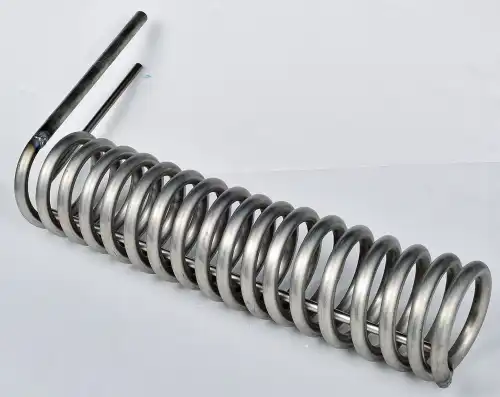
Understanding the Challenges of Bending Titanium Tubing
Titanium is a unique material because it has high strength, great ductility, and resistance to corrosion. These qualities directly affect how bendable it is and need to be carefully thought out during manufacturing. The main problem is that titanium has an elastic stiffness of about 105–120 GPa, which is about half that of steel. This makes forming processes very difficult because titanium has a lot of springback. Because of this, the tools used must be made to over-bend the material by 15 to 25 percent to account for its springy rebound.
Material Properties Affecting Bend Quality
Choosing between commercially pure types and titanium alloys has a big effect on how hard it is to bend. Grade 2 titanium can be cold shaped very well and can stretch by about 20%, so it can be used for tight radius bends without being heated. On the other hand, Grade 5 (Ti-6Al-4V) usually needs to be bent while hot to keep it from stiffening during deformation and breaking.
Another big problem when bending titanium tubes is that the surface can get dirty. Titanium is very reactive with air, nitrogen, and iron, which can cause problems with corrosion or weakening if the right steps are not taken. To keep the material's performance, the inactive oxide layer that gives titanium its high rust resistance must be kept in place during the bending process.
Common Pitfalls in Titanium Tube Bending
Too sharp of turn angles can often make the wall thinner on the outside and possibly buckle on the inside. For normal uses, industry standards say to keep the center line radius between 2D and 3D, which is equal to 2 to 3 times the outside diameter of the tube. However, with the right mandrel support and special methods, it is possible to get bends as small as 1.5D.
When you cool something down quickly after hot bending it, it can leave behind stresses that make it less flexible. Controlled cooling rates and the right number of annealing processes help keep the material's mechanical qualities and stop cracks caused by stress from happening during later operations or service conditions.
Titanium Tubing Bending Techniques and Best Practices
To keep the quality of the titanium tube, it is important to choose the right bending method (cold or hot bending) and the right tools for it. When working with widely pure grades and thin-walled sections, cold-bending methods work very well. However, hot bending is needed for high-strength alloys and heavy-wall uses where room temperature ductility is not enough.
Cold Bending Applications and Advantages
There are many benefits to cold bending, such as a better surface finish, more accurate measurements, and no need for heat treatment. This method works especially well with Grade 2 titanium tubing when the bend angle is mild and the radius is more than 2.5 times the tube diameter. The process keeps the mechanical properties and surface state of the material as it was received. This makes it perfect for medical and food processing uses where surface quality is very important.
Rotary draw bending is the most common way to do cold forming. Diets and mandrels that are carefully made hold the tube in place while it deforms. This method gives you great control over changes in wall thickness and keeps thin-walled parts from collapsing or getting wrinkled.
Hot Bending for Complex Geometries
When working with high-strength titanium metals or making complicated three-dimensional forms, hot bending is a must. Titanium that has been heated to between 650°C and 750°C loses some of its yield strength and gains more flexibility. This lets it be bent more tightly and in more complex shapes without breaking.
Bending Titanium Tubings through hot forming requires careful temperature control, and safe atmospheres are needed. Inert gas environments or vacuum tanks keep the surface quality high during operations at high temperatures, making sure the final product meets standards for the medical and aircraft industries.
Specialized Tooling and Equipment Requirements
Picking the right mandrel is a very important part of getting perfect turns. When steel tools are used, they can cause galling and surface contamination. Bronze mandrels keep the tube from collapsing by giving it enough support. To keep the surface from getting damaged during the bending process, wiper dies and pressure dies need to be carefully placed and oiled.
When compared to manual processes, CNC-controlled bending machines are more accurate and repeatable, which is especially important for high-volume production or uses with tight tolerances. These systems can instantly fix springback problems and keep the quality the same from one production run to the next.
Comparing Titanium Bending to Other Metals: What Procurement Needs to Know
People who make decisions about purchases need to know how bending titanium compares to other options like stainless steel and aluminum. Titanium's better corrosion protection and strength-to-weight ratio often make it a better long-term value in demanding situations, even though stainless steel costs less and is easier to work with at first.
Cost Considerations and Material Longevity
Aluminum is easier to shape and costs less than other metals, but it doesn't hold up well in high temperatures or against rust, which are important qualities for many commercial uses. When it comes to marine settings, chemical processes, and high-temperature uses where material replacement costs and downtime have a big effect on operating economics, titanium is often the better choice.
Due to the need for specialty tooling, slower processing speeds, and quality control measures required to avoid contamination, processing costs for Bending Titanium Tubings are usually two to three times higher than those for stainless steel. But the lack of protective coatings, lower upkeep needs, and longer service life often make the original investment worth it.
Manual Versus Automated Bending Methods
Working with prototypes and small amounts of metal is easy when you bend it by hand, but it's not accurate or consistent enough for medical and aircraft uses. Automated CNC bending systems offer accurate angles (±0.1°) and even wall thickness distribution, which are necessary for high-performance uses.
The choice between manual and automated processes is based on the amount of work that needs to be done, the tolerances that need to be met, and the need for quality approval. Statistical process control and recording are often needed in aerospace uses, and these can only be done effectively by automated systems.
Sourcing and Procurement Insights for Custom Bent Titanium Tubings
To find trustworthy providers of custom-bent titanium tubing, you need to look closely at their qualifications, certifications, and portfolios or client reviews that show how well they've done in the past. To do good procurement, you need to look at more than just prices when comparing providers. You should look at their professional skills, quality systems, and experience with similar projects.
Supplier Qualification and Assessment
Material tracking is an important condition for companies that bend titanium tubes. Certifications for raw materials must show that they meet certain standards, like ASTM B338, AMS 4943, or DIN 17861, based on what they will be used for. Suppliers should keep detailed records that connect produced goods to the heat numbers and processing factors of the raw materials they use.
Quality management systems that are certified to ISO 9001, AS9100, or ISO 13485 make sure that methods and paperwork are always done the same way. These certificates show that providers have put in place systematic ways to control quality and make improvements all the time, which is necessary for making reliable bent titanium parts.
Technical Capabilities and Equipment
Processing skills should match the needs of the project in terms of bend radius, accuracy, and output volume. A wider range of uses and design needs can be met by suppliers who have rotary draw bending machines, induction bending skills, and the right heat treatment facilities.
Design for Manufacturing (DFM) support helps make sure that component designs are made in a way that makes them easy to manufacture and doesn't cost too much. Suppliers with a lot of experience can offer changes that will keep the design purpose but make the part easier to shape, lower the cost of making the tool, or improve its performance.
Trustworthy Titanium Tubing Bending Service Providers: What to Look For
Working with well-known, approved service providers for Titanium tube bending lowers the risks of buying and boosts project trust. Leaders in the field show what they can do by getting a lot of certifications, having a history of success with big clients, and investing in new processing tools and quality control systems.
Certification and Compliance Standards
International approvals like PED 2014/68/EU, ASME, and different classification society approvals show that providers can meet strict quality and safety standards. These certifications need to be checked on a regular basis to show that they meet known engineering standards that are needed for important uses.
Inspection approvals from third parties like DNV, Lloyd's, ABS, and TUV give buyers even more faith in the supplier's abilities. As part of these approvals, witnesses are often tested, documents are looked over, and the facility is inspected to make sure that the real performance matches the stated capabilities.
Industry Experience and References
Successful completion of similar tasks is the best way to tell if a provider is qualified. References from companies that make airplane parts, handle chemicals, or do remote engineering show that the person has real-world experience with difficult tasks and strict technical requirements.
These traits are shown by LINHUI TITANIUM's long-term partnerships with big energy companies like CEFC, PTT, PDVSA, and PETROECUADOR. As part of our Bending Titanium Tubings solutions, we use Grade 5 (Ti-6Al-4V) and Grade 2 titanium to make bends that are as accurate as 0.1° at angles up to 1.5 times the tube diameter. These solutions meet aerospace standards AMS 4928 and MIL-T-9047, medical standards ASTM F67 and ISO 13485, and energy standards ASTM B338 and NACE MR0175.
Conclusion
Bending Titanium Tubings is challenging because of material properties like springback, work hardening propensities, and contamination sensitivity, rather than because of basic technical limits. Titanium tubing can be successfully shaped into complicated shapes that meet strict military, medical, and industrial needs as long as the right tools are used by skilled workers and the process is properly managed. Understanding the properties of the material, choosing the right bending methods, and working with skilled suppliers who have the right certifications, experience, and technical skills to produce reliable results are all important for success.
FAQ
What is the minimum bend radius for titanium tubing?
The tube width, wall thickness, and grade of titanium all affect the smallest bend radius that can be made. Most of the time, 2D to 3D (2–3 times the outside width) is what is recommended. 1.5D bends can be made with special methods and a frame, but the process needs to be carefully controlled to avoid mistakes.
Does hot bending affect titanium's corrosion resistance?
When done correctly, hot bending of titanium keeps its resistance to rust when done in safe atmospheres. After bending, acid pickling or passivation gets rid of any dirt on the surface and returns the even oxide layer that protects against rust.
How do you prevent springback during titanium tube bending?
To account for springback, the tube has to be bent 15 to 25 percent past the goal position. CNC bending machines can figure out and use springback compensation instantly based on the properties of the material, the shape of the tube, and the characteristics of the bend.
What tooling materials work best for Bending Titanium Tubings?
The best results come from using bronze mandrels and dies made of hardened tool steel that have been properly treated on the outside. Bronze keeps things from galling and getting dirty, and it's strong enough for mold uses. When you use chlorine-free lubricants correctly, you can keep the border layers in place and stop glue wear.
Can titanium tubes be bent without annealing?
Because they are so flexible, commercially pure grades (Grade 1 and 2) can often be cold bent without being annealed. For complicated shapes or small bend radii, higher strength metals like Grade 5 (Ti-6Al-4V) may need stress relief annealing to keep them from breaking and keep their flexibility.
Partner with LINHUI TITANIUM for Superior Bending Solutions
As a reliable provider of Bending Titanium Tubings, LINHUI TITANIUM has been working with aircraft, energy, and industry markets around the world for more than twenty years. Precision-bent titanium parts for airplane hydraulic systems, surgical robots, EV battery cooling, and offshore platforms are made by us using advanced processing techniques. We ensure their performance and dependability. We offer full design for production support, strictly follow international standards such as AMS, ASTM, and ISO guidelines, and provide emergency replacement programs 24 hours a day, 7 days a week, backed by our 12-month guarantee against material flaws. Contact our technical team at linhui@lhtitanium.com to discuss your custom bending requirements and receive competitive quotations with flexible EXW, FOB, or CIF delivery terms.
References
1. Boyer, R., Welsch, G., & Collings, E.W. "Materials Properties Handbook: Titanium Alloys." ASM International, 1994.
2. Donachie, Matthew J. "Titanium: A Technical Guide, 2nd Edition." ASM International, 2000.
3. Peters, M., Hemptenmacher, J., Kumpfert, J., & Leyens, C. "Structure and Properties of Titanium and Titanium Alloys." Titanium and Titanium Alloys: Fundamentals and Applications, 2003.
4. Lutjering, G. & Williams, J.C. "Titanium: Engineering Materials and Processes." Springer-Verlag Berlin Heidelberg, 2007.
5. American Society for Testing and Materials. "ASTM B338 Standard Specification for Seamless and Welded Titanium and Titanium Alloy Tubes for Condensers and Heat Exchangers." ASTM International, 2019.
6. SAE International. "AMS 4928 Titanium Alloy Tubing 6Al-4V Annealed." Aerospace Material Specification, 2018.