
When procurement directors and engineers look for advanced materials that combine extraordinary quality, biocompatibility, and unwavering quality, Review 23 titanium reliably rises as the favoured arrangement. This Additional Moo Interstitial (ELI) variation of the Ti-6Al-4V amalgam conveys prevalent break durability and ductility compared to standard titanium combinations, making Ti-6Al-4V ELI titanium sheet the go-to fabric for basic applications over therapeutic inserts, aviation structures, and high-stress chemical preparing hardware. Understanding the microstructure and handling characteristics of this amalgam helps decision-makers choose materials that meet both performance requirements and regulatory compliance measures. At LINHUI TITANIUM, we've provided hundreds of thousands of tons of premium-grade titanium items to vitality monsters, EPC temporary workers, and therapeutic gadget producers around the world since 2000, winning recognition from organisations like CEFC, PTT, PDVSA, and PETROECUADOR through our immovable commitment to quality and traceability.
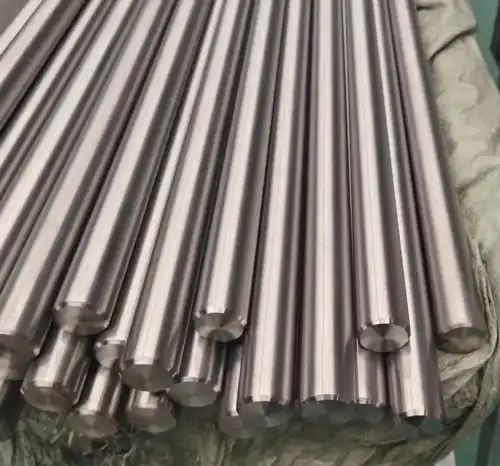
Understanding Grade 23 Titanium: Microstructure and Composition
The ELI Advantage in Chemical Purity
Grade 23 titanium, formally designated Ti-6Al-4V ELI per ASTM F136 and ISO 5832-3 standards, distinguishes itself through stringent control of interstitial elements. The chemical composition maintains aluminium content between 5.5-6.75% and vanadium between 3.5-4.5%, while critically limiting oxygen to a maximum of 0.13% (compared to 0.20% in standard Grade 5), iron to 0.25% maximum, carbon below 0.08%, and nitrogen under 0.05%. These reduced interstitial levels directly translate to improved ductility and enhanced resistance to crack propagation, particularly in cryogenic environments down to -253°C, where liquid hydrogen storage systems operate. The terminology "extra low interstitial" isn't marketing language—it represents measurable improvements in fracture toughness (K₁c values) that medical device manufacturers and aerospace engineers rely upon for life-critical components.
Microstructural Phases and Their Performance Impact
The microstructure of Review 23 titanium comprises essentially two stages: alpha (α) and beta (β). The alpha stage, stabilised by aluminium, shows a hexagonal close-packed (HCP) gem structure that gives amazing crawl resistance and direct quality. The beta stage, stabilised by vanadium, has a body-centred cubic (BCC) structure, contributing to making strides in ductility and formability. At room temperature, appropriately strengthened Ti-6Al-4V ELI sheets of titanium regularly show an equiaxed alpha microstructure with held beta at grain boundaries, accomplishing an ideal adjustment between quality (extreme pliable quality ≥ 860 MPa) and elongation (≥ 10%). The beta transus temperature—approximately 975°C ± 15°C—serves as the basic edge amid warm treatment where the combination completely changes to the beta stage, empowering consequent microstructural building through controlled cooling rates.
Density and Thermal Characteristics
With a density of approximately 4.43 g/cm³ (0.160 lb/in³), Grade 23 titanium offers a strength-to-weight ratio superior to both 316 stainless steel and aluminium alloys. This physical characteristic proves invaluable for aerospace applications where every kilogram saved translates to fuel efficiency gains and increased payload capacity. The modulus of elasticity (113.8 GPa) closely matches human cortical bone, minimising stress shielding effects in orthopaedic implants—a critical advantage over stainless steel alternatives that can cause bone resorption over time. Thermal expansion properties remain stable across operational temperature ranges, supporting reliable performance in both cryogenic LNG infrastructure and elevated-temperature chemical reactors operating up to 400°C.
Mechanical and Physical Properties of Ti-6Al-4V ELI Titanium Sheets
Strength and Ductility Performance Metrics
The mechanical properties of the Ti-6Al-4V ELI titanium sheet meet rigorous specifications defined by ASTM F136 and AMS 4907 standards. Typical room-temperature performance includes an ultimate tensile strength of 895-930 MPa (130-135 ksi), a yield strength (0.2% offset) of 828-860 MPa (120-125 ksi), and elongation percentages ranging from 10 to 15% depending on sheet thickness and processing history. What sets this alloy apart from standard Grade 5 material isn't just absolute strength values, but rather the combination of strength with enhanced toughness. Charpy impact testing consistently demonstrates superior energy absorption capacity, while fatigue testing under cyclic loading conditions reveals extended component life compared to commercially pure titanium grades. These attributes are essential for medical implants that go through millions of loading cycles and aerospace components that experience vibration-induced stress.
Corrosion Resistance in Harsh Environments
The passive oxide film that forms instantly on titanium surfaces provides exceptional corrosion resistance across diverse environments. Unlike 316 stainless steel, which suffers pitting and crevice corrosion in chloride-rich seawater, Grade 23 titanium maintains integrity in offshore oil platforms, subsea manifolds, and marine heat exchangers. Chemical processing facilities handling oxidising acids, hypochlorite solutions, and wet chlorine gas environments benefit from titanium's immunity to stress corrosion cracking—a failure mode that plagues many ferrous and nickel-based alloys. Our company's products have demonstrated decades of service in PETRONAS and PDO facilities, where corrosive hydrocarbons and hydrogen sulphide concentrations would rapidly degrade alternative materials.
Heat Treatment and Property Optimisation
Toughening forms altogether impact the final properties of titanium sheet items. Heat treatment at temperatures between 760-850°C, followed by gas cooling, creates a completely recrystallised microstructure that optimises ductility while maintaining quality requirements. Process tempering expels remaining stresses from earlier cold working operations and kills the delicate alpha case layer shaped amid elevated-temperature processing—a basic step guaranteeing machinability and weldability. Precipitation medications stay unprecedented with this combination composition since the alpha-beta stage structure normally gives the desired property adjustment. Understanding these warm handling windows empowers producers to tailor fabric characteristics for particular end-use necessities, whether prioritising maximum wear life or improved formability.
Processing and Manufacturing Guide for Grade 23 Titanium Sheets
Primary Production and Quality Control
Fabricating high-quality Review 23 titanium sheets starts with vacuum circular segment remelting (VAR) or electron bar cold hearth dissolving (EBCHM) methods that guarantee chemical homogeneity and minimise deformity considerations. Our generation's offices utilise different remelting cycles to accomplish the tight compositional resiliences requested by ASTM F136 certification, with full traceability kept up through warm number following from ingot to wrapped-up sheet. The manufacturing and hot rolling operations that change ingots into sheet items happen inside carefully controlled temperature windows that anticipate alpha case arrangement, while accomplishing a uniform grain structure. Cold rolling passes with halfway toughening cycles slowly diminish thickness to the last measurements, keeping up accuracy resiliences of ±0.02 mm that dispense with exorbitant auxiliary machining operations for numerous applications.
Throughout fabrication, we execute comprehensive review conventions, including ultrasonic testing for inside abendons, chemical examination confirmation, mechanical property affirmation through malleable testing, and microstructural examination. Each Ti-6Al-4V ELI titanium sheet shipment from LINHUI TITANIUM incorporates total process test reports recording all chemical and mechanical information, microstructure examination reports affirming grain measure and stage conveyance, and ultrasonic test reports for basic applications. These quality certifications, which are provided at no extra cost, meet the documentation requirements for FDA therapeutic device entries, PED weight equipment mandates, and aviation AS9100D quality management systems.
Fabrication Techniques and Common Challenges
Cutting and shaping operations with Review 23 titanium require specialised approaches due to the alloy's tall quality and low thermal conductivity. Waterjet cutting, electrical discharge machining (EDM), and laser cutting give clean edges without actuating intemperate heat-affected zones. Ordinary machining remains doable utilising sharp carbide or polycrystalline diamond (PCD) tooling with liberal coolant application to anticipate rankling and work hardening. Cold shaping is demonstrated to be challenging due to noteworthy springback and constrained room-temperature ductility, making hot shaping at elevated temperatures (ordinarily 650-800°C) or superplastic shaping procedures best for complex geometries.
Welding Ti-6Al-4V ELI titanium sheets requires fastidious natural control to avoid oxygen and nitrogen contamination that would compromise the ELI properties. Gas tungsten arc welding (GTAW) and laser welding performed inside argon-purged, walled-in areas or trailing shield courses of action keep up the ideal environment vital for sound welds. Electron beam welding (EBW) conducted in a tall vacuum disposes of barometrical defilement dangers totally, creating welds with quality drawing nearer base metal properties. Our specialised group gives manufacturing direction to clients around the world, guaranteeing welding strategies keep up ASTM F136 compliance for biomedical applications and meet DNV, ABS, and Lloyd's Register necessities for sea and offshore structures.
Surface Finishing Options
Surface finish requirements vary dramatically across application sectors. Medical implant manufacturers specify polished surfaces with Ra values below 0.4 μm to minimise bacterial adhesion and optimise tissue integration. Aerospace components may require satin or bead-blasted finishes that enhance adhesive bonding or paint adhesion. Chemical processing equipment often utilises pickled surfaces that remove any residual alpha case while maintaining dimensional accuracy. LINHUI TITANIUM offers multiple finishing options tailored to customer specifications, with all processes validated to preserve the underlying material properties and corrosion resistance that make Grade 23 titanium the preferred choice.
Comparing Ti-6Al-4V ELI with Other Materials for Strategic Procurement
Performance Advantages Over Standard Ti-6Al-4V
When procurement teams evaluate material specifications, the distinction between standard Grade 5 (Ti-6Al-4V) and Grade 23 ELI variants often determines project success. While both alloys share similar nominal composition, the reduced interstitial content in Grade 23 yields measurably superior fracture toughness—critical for medical devices where brittle fracture could result in patient harm or aerospace applications where unexpected component failure jeopardises safety. The enhanced ductility enables more aggressive forming operations during manufacturing, potentially reducing production costs despite higher raw material pricing. For cryogenic applications involving LNG transfer systems or liquid hydrogen storage, Grade 23 maintains ductility at temperatures where standard Grade 5 becomes unacceptably brittle.
Comparison with Stainless Steel and Commercially Pure Titanium
Relative to 316L stainless steel, the Ti-6Al-4V ELI titanium sheet delivers equivalent or superior corrosion resistance at approximately 60% of the density, enabling substantial weight savings in mobile equipment and aerospace structures. The non-magnetic properties prove essential for MRI-compatible surgical instruments and satellite hardware where magnetic interference disrupts sensitive electronics. Compared to commercially pure titanium grades (1, 2, and 4), Grade 23 provides dramatically higher strength levels—nearly double the yield strength—while accepting only modest reductions in ultimate corrosion resistance and formability. This strength advantage allows designers to specify thinner sections, offsetting the higher per-kilogram material cost through reduced total material consumption.
Cost-Benefit Analysis for Long-Term Projects
Material selection decisions extend beyond initial purchase price to encompass lifecycle costs, including maintenance, replacement frequency, and operational efficiency. Grade 23 titanium's immunity to corrosion eliminates the protective coating expenses and scheduled replacement intervals that burden carbon steel and stainless steel installations in marine and chemical processing environments. The extended fatigue life reduces unplanned downtime and catastrophic failure risks, which is particularly valuable in offshore oil platforms where component replacement requires expensive vessel mobilisation. Our partnerships with major EPC contractors like PEMEX and LUKOIL demonstrate how specifying premium-grade titanium products reduces the total cost of ownership despite a higher initial investment, delivering a return on investment through decades of reliable service.
Procurement Insights: Sourcing Ti-6Al-4V ELI Titanium Sheets Globally
Evaluating Supplier Credentials and Certifications
Sourcing decisions for critical materials such as Ti-6AL-4V ELI Titanium Sheet demand thorough supplier vetting to ensure product authenticity and regulatory compliance. Reputable manufacturers maintain current certifications, including ISO 9001:2015 quality management systems, ISO 13485:2016 medical device manufacturing standards, and AS9100D aerospace quality requirements. Manufacturing licences for pressure equipment (PED 2014/68/EU) and third-party approvals from classification societies (DNV, ABS, Lloyd's Register, Bureau Veritas) validate production capabilities and adherence to international standards. LINHUI TITANIUM holds comprehensive certifications, including TUV Nord AD2000-W0 approval and registrations with CCS, GL, BSI, RINA, KR, and NKK, demonstrating our commitment to meeting the most stringent global requirements.
Traceability documentation separates professional suppliers from opportunistic distributors. Every heat of material should include verifiable mill test reports linking chemical composition, mechanical properties, and processing history to specific ingot numbers. This traceability enables root cause analysis if quality issues emerge and satisfies regulatory agency audit requirements for medical devices and nuclear applications. Our material certificates undergo verification by independent inspection agencies, including SGS, Moody's, TUV, AIB-Vinçotte, and CCSI, providing customers with confidence that documented properties accurately represent delivered products.
Minimum Order Quantities and Lead Time Optimisation
Industrial buyers balancing inventory costs against production scheduling requirements appreciate suppliers offering flexible order quantities and predictable delivery timelines. Our integrated "Titanium Products Supermarket" model keeps a large stock of common Ti-6Al-4V ELI titanium sheet sizes, allowing us to quickly meet urgent needs without the long lead times that usually come with mill-direct orders. Custom specifications, including non-standard thicknesses, specialised surface finishes, and customer-specific dimensional tolerances, remain readily accommodated through our established production partnerships and in-house processing capabilities.
Geographic proximity to major shipping hubs in Xi'an—the strategic starting point of both historical and modern Belt and Road trade routes—facilitates efficient logistics to customers across North America, South America, the Gulf region, Africa, CIS countries, and Southeast Asia. Having delivered to over 60 countries, we've refined documentation procedures for seamless customs clearance and developed relationships with freight forwarders specialising in hazardous material handling where applicable. This global distribution network ensures your titanium sheet arrives on schedule, properly packaged to prevent damage, and accompanied by all necessary export documentation and material certificates.
Why Choose Our Ti-6Al-4V ELI Titanium Sheet?
Our implant-grade material meets ASTM F136 and EN ISO 5832-3 standards with complete documentation supporting medical device regulatory submissions. The extra-low interstitial composition delivers enhanced ductility and fracture toughness essential for demanding applications. We provide full traceability through mill test reports containing heat numbers, chemical analysis, and mechanical property data.
Multiple surface finishes accommodate diverse requirements: polished surfaces achieving Ra 0.4 μm for medical implants, satin finishes for aerospace bonding applications, and bead-blasted textures for chemical equipment. Precision tolerances of ±0.02mm thickness accuracy eliminate secondary processing steps, reducing your total manufacturing costs. Quality certifications included at no additional charge encompass ASTM F136 certification, EN ISO 5832-3 compliance, comprehensive Mill Test Reports, Microstructure Analysis Reports, and Ultrasonic Test Reports for critical applications.
Our facility maintains ISO 13485:2016 registration for medical device manufacturing and AS9100D certification for aerospace quality systems, validating our capability to serve the most demanding industries. The applications served by our products span medical implants, including orthopaedic devices, dental implants, surgical instruments, and spinal fixation systems; aerospace components, encompassing aircraft structural parts, engine components, satellite hardware, and defence systems; plus speciality industrial applications in chemical processing equipment, marine components, and high-performance automotive sectors.
These comprehensive capabilities reflect our two-decade commitment to supplying high-end products and establishing LINHUI TITANIUM as a world-renowned enterprise trusted by global industry leaders.
Conclusion
Grade 23 titanium represents the culmination of metallurgical engineering aimed at delivering maximum reliability for critical applications. The extra-low interstitial composition, optimised microstructure, and stringent processing controls combine to produce Ti-6Al-4V ELI titanium sheet that consistently outperforms alternative materials in strength-to-weight ratio, corrosion resistance, and biocompatibility. Procurement professionals navigating complex material selection decisions benefit from understanding the technical distinctions separating this premium alloy from standard titanium grades and competing materials. Organisations ensure material quality supports project success and long-term operational reliability by partnering with established suppliers who maintain comprehensive certifications, full traceability, and proven track records across aerospace, medical, and industrial sectors.
FAQ
What distinguishes Grade 23 from standard Grade 5 titanium?
Grade 23 maintains lower oxygen content (maximum 0.13% versus 0.20%) and reduced iron levels (maximum 0.25% versus 0.40%), producing significantly improved ductility and fracture toughness. This extra-low interstitial designation makes Grade 23 the mandated choice for surgical implants and cryogenic applications where standard Grade 5 would prove inadequate.
Can Ti-6Al-4V ELI be welded reliably?
Welding remains feasible but requires strict environmental controls. Inert gas shielding with argon or helium prevents oxygen contamination that would negate the ELI properties. Electron beam welding and laser welding under proper atmospheric controls produce high-quality joints, maintaining base metal properties and ASTM F136 compliance.
What temperature limitations apply to Grade 23 titanium?
Effective service extends to 400°C (750°F) for extended-duration applications. Above this threshold, oxidation rates increase, and creep deformation becomes significant. Cryogenic performance remains excellent down to -253°C, supporting liquid hydrogen and LNG applications where alternative materials embrittle.
Why specify ASTM F136 instead of ASTM B265 for medical applications?
ASTM F136 imposes tighter microstructural controls, more stringent defect limits, and enhanced mechanical testing requirements specifically addressing biomedical implant needs. Regulatory agencies, such as the FDA, require F136 or an equivalent ISO 5832-3 standard for implantable devices, so this specification is essential for medical applications.
Partner with LINHUI TITANIUM for Your Material Requirements
As a leading Ti-6Al-4V ELI titanium sheet supplier with over two decades of experience serving energy giants, aerospace manufacturers, and medical device producers worldwide, LINHUI TITANIUM delivers the quality, certifications, and reliability your projects demand. Our comprehensive inventory spans multiple grades and specifications, backed by ASTM F136, ISO 13485:2016, and AS9100D certifications that satisfy the most rigorous industry standards. Contact our technical sales team at linhui@lhtitanium.com to discuss your specific requirements, request detailed mill test reports, or obtain competitive quotations for immediate or scheduled deliveries. We stand ready to become your trusted partner, providing the same exceptional service that earned long-term relationships with PETRONAS, KNPC, PetroVietnam, and other internationally recognised organisations across more than 60 countries.
References
1. Boyer, R., Welsch, G., and Collings, E.W. (1994). Materials Properties Handbook: Titanium Alloys. ASM International, Materials Park, Ohio.
2. Donachie, M.J. (2000). Titanium: A Technical Guide, 2nd Edition. ASM International, Materials Park, Ohio.
3. Peters, M., Kumpfert, J., Ward, C.H., and Leyens, C. (2003). "Titanium Alloys for Aerospace Applications," Advanced Engineering Materials, Volume 5, Issue 6, pp. 419-427.
4. Brunette, D.M., Tengvall, P., Textor, M., and Thomsen, P. (2001). Titanium in Medicine: Material Science, Surface Science, Engineering, Biological Responses and Medical Applications. Springer-Verlag, Berlin.
5. ASTM International (2023). ASTM F136-13: Standard Specification for Wrought Titanium-6Aluminum-4Vanadium ELI (Extra Low Interstitial) Alloy for Surgical Implant Applications. West Conshohocken, Pennsylvania.
6. Lütjering, G. and Williams, J.C. (2007). Titanium, 2nd Edition. Springer-Verlag, Berlin Heidelberg.