
The Gr5 titanium tube is the best example of engineering greatness in today's tough industrial world. It combines extreme rust resistance with lightweight strength in a way that changes how industries handle important applications. These tubes, which are made from a Ti-6Al-4V alloy, work better than any other material in conditions where other materials fail. This makes them the first choice in the energy, naval, and aircraft industries around the world.
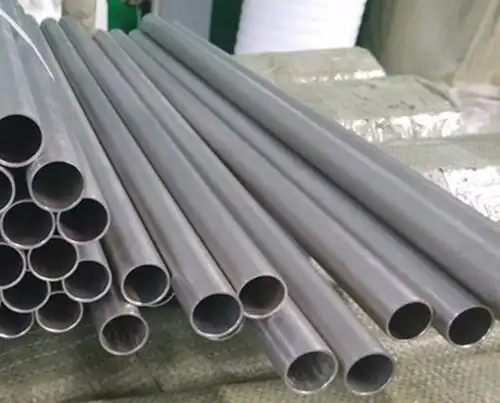
Understanding Gr5 Titanium Tube: Properties and Specifications
The unique properties of these tubes come from the Ti-6Al-4V metal that makes them. This carefully designed material has 6% aluminum and 4% vanadium in it. Together, they make an alpha-beta titanium alloy with excellent mechanical qualities that can be used in a wide range of situations.
Chemical Composition and Mechanical Excellence
The exact mix of chemicals in Gr5 titanium makes it work exceptionally well. These tubes are stronger than many other materials because their tensile strength is between 895 and 1020 MPa, and their yield strength is between 825 and 895 MPa. They are also lighter than steel, measuring only 4.43 g/cm³. This amazing strength-to-weight ratio changes the way designs can be made in many fields. Temperature resistance is another important benefit; the product can work at temperatures up to 400°C (752°F) without losing its structural integrity. The modulus of elasticity of the material is 113.8 GPa, which gives it great toughness properties that keep its shape even in tough situations.
Corrosion Resistance Mechanisms
Titanium is very resistant to rusting because it naturally forms a protective oxide layer when it comes in contact with air. If this inactive layer gets broken, it heals itself automatically. It protects against corrosive conditions like seawater, acids, and alkaline solutions. Because the tubes don't rust or pit like stainless steel does in saltwater settings, this feature is especially useful for marine uses. Chemical processing plants use these qualities to deal with harsh media while keeping long-term dependability and cutting down on repair costs.
Heat Treatment Optimization
The natural qualities of Ti-6Al-4V alloy tubes are improved by strategic heat treatment methods. Solution treatment and aging processes make the microstructure better by finding the right balance between strength and flexibility for each application. Because of this, makers can change the qualities to fit specific needs, like making biocompatible medical devices or high-strength aircraft parts.
Comparing Gr5 Titanium Tube with Alternative Materials
When buying, Gr5 titanium tubes teams know how Ti-6Al-4V tubes stack up against other materials, they can make smart choices based on performance needs and lifecycle costs.
Gr5 Titanium vs. Stainless Steel
Stainless steel is good at resisting rust and has a well-established supply chain. However, Gr5 titanium works better in serious situations. Just the fact that it's about 43% lighter than stainless steel means that it saves a lot of fuel in aircraft uses and makes things easier to handle in industrial settings. When you compare corrosion protection, you can see big differences. Chloride-rich conditions can weaken the chromium content in stainless steel, which makes it less durable. Titanium's passive oxide layer protects better against a wider range of chemicals, even at high temperatures, where stainless steel breaks down due to oxidation.
Performance Against Aluminum Alloys
Ti-6Al-4V is stronger and more resistant to weathering than aluminum alloys, even though aluminum alloys are lighter. Titanium tubes are a good alternative to aluminum tubes when high-stress situations need both lightweight and structural strength. Titanium has a much longer service life than metal options because it is less likely to wear down over time.
Comparison with Other Titanium Grades
Grade 2 pure titanium that is sold in stores is very resistant to rust, but not as strong as Grade 5. It costs more, but Grade 23 (Ti-6Al-4V ELI) is better for medical uses because it can be bent more easily. Gr5 titanium is the best choice for most industry uses because it is available, performs well, and doesn't cost too much. High-performance metals, such as Inconel, have great qualities at high temperatures, but they are much more expensive and heavier. A cost-performance study usually picks titanium for uses that can handle the temperatures it can handle.
How to Choose and Procure Gr5 Titanium Tubes for Your Business Needs
To buy titanium tubes successfully, you need to know the technical requirements, the supplier's skills, and the quality control procedures that will make sure the project is completed successfully.
Dimensional and Specification Requirements
Before choosing a tube, you need to be clear about its exact dimensions, such as its length, outer diameter, and wall thickness. The outside width of standard sizes ranges from 6.35 mm to 152.4 mm, and the wall thickness ranges from 0.5 mm to 25.4 mm. Specialized manufacturing methods are used to make custom dimensions that meet the needs of each job. The requirements for mechanical properties must match the needs of the product. Some examples of standard specs are ASTM B338, ASTM B861, and AMS 4928. Each one lists different property levels and testing requirements. Knowing these standards will help you choose the right materials for the jobs you want to do.
Supplier Evaluation Criteria
Credibility of the supplier is the key to good buying. Certification portfolios (ISO 9001, AS9100, and API certifications), manufacturing capacity, and track record with Gr5 titanium tubes related uses are some of the most important things that are looked at. Third-party approvals from groups like DNV, ABS, and Lloyd's Register show that established providers always provide high-quality products. As part of evaluating a company's manufacturing skills, you should look at its production capacity, wait times, and value-added services like custom packaging, cutting, and bending. Suppliers whose manufacturing methods are combined often offer better quality control and faster delivery times.
Procurement Strategy Considerations
Pricing patterns change a lot depending on the size of the order, the specifics, and the state of the market. Minimum order numbers are usually between 100 kg and 1000 kg, and discounts are given for bigger orders. Lead times are usually between 4 and 8 weeks for normal sizes and 8 to 12 weeks for special sizes. Strategies for global sourcing should take into account the strengths of area providers. Asian manufacturers often have low prices and can make a lot of things at once. Western suppliers, on the other hand, may offer better expert help and faster delivery for urgent needs.
Advantages of Using Gr5 Titanium Tubes in B2B Industrial Applications
Using titanium tubes has practical benefits that go far beyond the initial properties of the material. They improve efficiency, reduce repair costs, and lower lifecycle costs.
Operational Cost Benefits
Corrosion resistance directly leads to fewer upkeep tasks and longer equipment life. Marine uses expect it to last 30 years, while stainless steel options only last 10 to 15 years. This makes it cheaper to change parts and cuts down on downtime, which is very important for businesses that use continuous processes. The benefits of losing weight are compounded across apps. Aerospace installations save money on fuel because they make planes lighter, and ocean platforms save money on structure support costs and make installation easier. Handling benefits during installation and upkeep cuts down on the cost of labor and the risk of accidents.
Performance in Harsh Environments
Normal materials are hard to work with in chemical processing settings because of rough media, changing temperatures, and changes in pressure. Titanium tubes don't break down in acidic or basic environments (1–14 pH), but stainless steel and other metals do. This trustworthiness makes sure that the process settings and product quality stay the same. Titanium's resistance to rust and strength make it useful in high-temperature settings. Titanium stays useful up to 400°C, while aluminum alloys lose their strength quickly above 150°C. This means that heat exchanges and pressure tanks can be designed in more ways.
Enhanced Equipment Performance
When strength Gr5 titanium tubes and corrosion protection are combined, thinner wall shapes are possible, which makes heat movement more efficient in heat exchangers. Although it has lower thermal conductivity than aluminum, it works well and lasts longer in places that are prone to corrosion. In repeated loading uses, better fatigue resistance makes parts last longer. Better fatigue qualities make it less likely that hydraulic systems in spacecraft, car suspension parts, and naval equipment will break down and need repairs.
Manufacturing Process and Quality Assurance of Gr5 Titanium Tubes
When youunderstand how things are made, you can figure out the quality factors that affect how well they work and how reliable they are in serious situations.
Fabrication Methods and Processes
Either rotating cutting or extrusion is used to make seamless tubes, and each has its own benefits. Rotary drilling makes tubes with a smooth surface and accurate measurements, which makes them perfect for high-pressure uses. Extrusion methods can handle bigger diameters and more complicated wall thickness patterns. Through cold drawing, exact dimensional limits and a better surface finish can be achieved. Work hardening is a secondary process that improves mechanical qualities while keeping the corrosion protection that is needed for tough uses. Final measurements are reached through multiple drawing passes, with normal errors of ±0.05mm for diameter and ±5% for wall thickness.
Heat Treatment and Surface Finishing
Solution treatment and age processes make the microstructure work best for certain uses. Solution treatment at 955°C and then controlled cooling sets the balance of the alpha and beta phases. Aging at 540°C then forms the strengthening phases. This two-step process finds the right mix between strength and flexibility based on the needs of the product. Pickling, passivation, and mechanical grinding are all types of surface finishing. Acid cleaning gets rid of surface dirt and oxide scales, and passivation processes help the natural oxide layer form. For clean uses, mechanical grinding can get the surface roughness down to less than 0.4 μm Ra.
Quality Control and Certification
Quality standards set by the industry make sure that all production lots work the same way. Astm B338 standards spell out the limits for chemical makeup, mechanical qualities, Gr5 titanium tubes, and tests for tubes that are either seamless or welded. AMS 4928 lists standards that are specific to aircraft, such as extra tests for fatigue and fracture toughness. Some non-destructive testing methods are ultrasound checking for even wall thickness, eddy current testing for surface flaws, and hydrostatic pressure testing to make sure there are no leaks. These thorough testing methods find any problems before they are shipped, making sure they work well in serious situations. Organizations like DNV, Bureau Veritas, and SGS offer third-party inspection services that check the properties of materials and the standard of production on their own. This monitoring makes people more confident in the performance of materials and helps end users with quality assurance systems.
Conclusion
Gr5 titanium tubes are the best choice for businesses that need unwavering performance in harsh and high-stress conditions. Many industries, including aircraft, marine, energy, and medicine, can't do without these tubes because they are strong, lightweight, and resistant to rust. With the right selection criteria and skilled suppliers, companies can use titanium's benefits to improve the performance of their equipment, lower the cost of upkeep, and make it last longer. Investing in high-quality titanium materials pays off in the form of higher dependability and lower lifetime costs.
FAQ
1. What factors influence Gr5 titanium tube pricing?
The price is based on a number of important factors, such as the cost of the raw materials, the size and thickness of the tubes, the amount bought, and any certificates that are needed. Titanium prices change on the market based on supply and demand around the world. Specialized sizes or close standards also make it more expensive to make things out of titanium. People who buy a lot of something usually get big discounts. Prices drop at 500 kg, 1000 kg, and 5000 kg amounts.
2. How does Gr5 titanium compare to stainless steel in marine environments?
Ti-6Al-4V is better at resisting rust in saltwater than other types of stainless steel because it doesn't form pits or crevices that let corrosion happen. The inactive oxide layer protects itself, which makes it last 30 years or more instead of the 10 to 15 years that marine-grade stainless steel does. Even though the original costs are higher, the longer life and lower upkeep costs make the investment worth it.
3. What certifications are essential for critical applications?
Some important certificates are ASTM B338 for general tube specs, AMS 4928 for aircraft uses, and ASME Section II for pressure vessel uses. Certifications like ASTM F136 or ISO 5832-3 are needed for medical devices. For more quality guarantee in challenging situations, third-party inspection certificates from DNV, ABS, or Lloyd's Register are available.
4. Can Gr5 titanium tubes be welded or machined?
Yes, Ti-6Al-4V tubes can be properly welded using either TIG or electron beam methods as long as the right inert gas protection is used to keep the welds clean. To keep the work from getting too hard, machining needs the right cutting speeds and sharp tools. However, normal manufacturing tasks like cutting, drilling, and bending are easy to do if you know how to do them right.
Partner with LINHUI TITANIUM for Premium Gr5 Titanium Tube Solutions
LINHUI TITANIUM is ready to meet your needs for titanium tubes. They have been making them for over 20 years and have strong relationships with global players in the industry. Our wide range of certifications, such as ISO 9001, PED, and approvals from multiple classification societies, guarantees consistent quality for even the toughest uses. With 30 production lines that can make 800 tons of goods a year, we can provide solid supply chain solutions for projects of any size.
Get in touch with our knowledgeable staff at linhui@lhtitanium.com to talk about your unique needs and find out how our Ti-6Al-4V tube options can help your project run better. As a reliable company that makes Gr5 titanium tubes, we offer full technical support, reasonable pricing, and a variety of delivery choices, such as fast shipping through DHL and FedEx for urgent needs.
References
1. Boyer, R., Welsch, G., & Collings, E.W. "Materials Properties Handbook: Titanium Alloys." ASM International, Materials Park, Ohio, 1994.
2. Donachie, Matthew J. "Titanium: A Technical Guide, 2nd Edition." ASM International, Materials Park, Ohio, 2000.
3. Lutjering, G., & Williams, J.C. "Titanium Engineering Materials and Processes." Springer-Verlag Berlin Heidelberg, 2007.
4. Peters, M., Kumpfert, J., Ward, C.H., & Leyens, C. "Titanium Alloys for Aerospace Applications." Advanced Engineering Materials, Volume 5, Issue 6, 2003.
5. Rack, H.J., & Qazi, J.I. "Titanium alloys for biomedical applications." Materials Science and Engineering: C, Volume 26, Issues 8, 2006.
6. Schutz, R.W., & Watkins, H.B. "Recent developments in titanium alloy application in the energy industry." Materials Science and Engineering: A, Volume 243, Issues 1-2, 1998.