
Of course, ASTM B352 Zirconium Alloy Plate can be bought in large quantities to meet the specific needs of commercial uses. Leading companies like LINHUI TITANIUM buy these nuclear-grade zirconium alloy plates in large quantities and can support a wide range of large-scale projects in the chemical processing, aircraft, and nuclear industries. Bulk suppliers have a lot of experience working with multinational corporations, oil companies, and EPC contractors. They keep a lot of inventory on hand and can produce enough to meet orders ranging from a few tons to hundreds of tons. This means that they can guarantee reliable delivery times and competitive prices for large purchases.
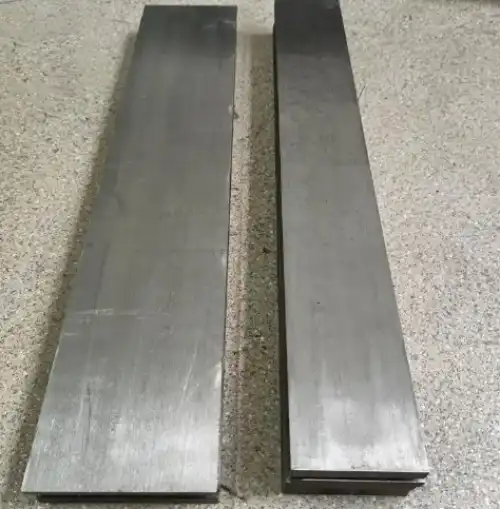
Understanding ASTM B352 Zirconium Alloy Plates
The ASTM B352/B352M standard is the best way to produce zirconium materials that are safe for use in nuclear power plants. It was designed to operate in harsh conditions where other materials wouldn't. This in-depth guide discusses the features of these plates that make them essential for commercial use.
Chemical Composition and Metallurgical Excellence
ASTM B352 Zirconium Alloy Plate has chemical formulas that are carefully controlled to give it great performance even in tough environments. The standard calls for an ultra-low hafnium content (≤0.01%), ensuring that very few thermal neutrons are absorbed, which is important for nuclear plant use. UNS R60802 (Zircaloy-2) has tin, iron, chromium, and nickel as its main ingredients, while UNS R60804 (Zircaloy-4) doesn't have nickel because it doesn't absorb hydrogen. An oxide layer forms on the metal surface and heals itself. This layer is better at preventing strong chemicals, acids, and steam from entering at high temperatures. This one-of-a-kind feature makes the material well-suited for use in reactor tanks, heat exchangers, and condensers operating in harsh conditions, where material failure could be severe.
Superior Mechanical Properties and Thermal Stability
The best thing about these plates from a technical point of view is that they can withstand up to 379 MPa of tension for materials of the R60705 grade and 207 to 379 MPa of yield. High ductility (a 21% expansion) makes buildings stronger, so they last longer and don't fail under mechanical loads. Some thermal performance traits include a melting point above 1852°C and a low thermal expansion coefficient of 5.9 μm/m-K. Because of these traits, the substance can retain its shape even in environments where temperatures fluctuate rapidly, such as in nuclear reactors and aboard spacecraft.
Nuclear-Grade Reliability and Safety Compliance
For nuclear uses, the purest materials and consistent performance are needed. The ultra-low neutron absorption qualities make sure that the reactor works well and follows strict nuclear safety rules. Some strict quality control measures are mass spectrometry analysis to check for hafnium, autoclave rust testing at 400°C with 1500 psi steam, and full ultrasonic testing to find flaws below the surface.
Comparing ASTM B352 with Other Zirconium Alloys and Materials
Knowing the differences between the different zirconium specs helps procurement workers choose the right material for the job based on the conditions and needs of the surroundings.
ASTM B352 versus ASTM B861 and Industrial Grades
The primary distinction between ASTM B352 Zirconium Alloy Plate and ASTM B861 standards is the type of hafnium that is required for each purpose. The ASTM B861 standard covers industrial zirconium tubes used in chemical processes, while the ASTM B352 standard covers nuclear-grade sheet, strip, and plate materials with tightly controlled hafnium levels. ASTM B551 is another industrial standard that doesn't really care about hafnium content because it doesn't change how resistant something is to rust in chemical processing settings. But for nuclear uses, the neutron transparency that comes from getting rid of hafnium is very important for the safety and economy of the plant.
Performance Comparison with Alternative Materials
When you compare zirconium metals to titanium and stainless steel, you can see a few important performance factors. Zirconium metals are better at resisting corrosion in some chemical conditions compared to stainless steel. This is especially true in places with hot acids and alkaline solutions, where stainless steel can pit or crack. Titanium is very strong for its weight and doesn't rust, but it's not clear to neutrons, which is needed for nuclear uses. Stainless steel is often cheaper than zirconium alloys and is better for less demanding applications. In important applications, zirconium alloys' higher cost is justified by their longer service life and lower upkeep needs. When choosing a material, the decision matrix should take into account the working temperature ranges, the intensity of the corrosion environment, the mechanical stress requirements, and the regulatory compliance needs. This way, the total cost of ownership can be optimized instead of just the original material costs.
Bulk Procurement of ASTM B352 Zirconium Alloy Plates
When buying a lot of nuclear-grade zirconium plates, you need to carefully look at the skills of the suppliers, their quality systems, and organizational issues to make sure the project goes well while keeping costs and delivery times in check.
Supplier Landscape and Certification Requirements
Reliable providers keep a full set of certifications, such as PED 2014/68/EU, TUV Nord AD2000-W0, and approvals from DNV, ABS, CCS, and Lloyd's Register's classification society. These approvals prove the quality management systems, manufacturing methods, and traceability steps that are needed for nuclear-grade materials. LINHUI TITANIUM is a good example of this method because it has worked with big foreign companies like CEFC, PTT, PDVSA, and PETROECUADOR for more than 20 years. The Manufacturing License for Special Equipment of China and ISO 9001:2015 QMS approval show that the company maintains high-quality standards throughout the entire production process.
Order Quantities and Customization Options
For most bulk orders, the smallest amount needed is 5 to 10 tons. However, for big nuclear plant building or repair projects, the needs of the project may require hundreds of tons or more. Customization options include thicknesses between 0.5 mm and 50 mm, widths up to 1000 mm, and lengths up to 2000 mm. Processing choices include hot-rolling, cold-rolling, and annealing finishes to meet particular needs for mechanical properties and surface conditions. For example, advanced suppliers give precise cutting, surface treatment, and custom packaging as value-added services to help industrial processes further down the line.
Pricing Dynamics and Cost Optimization
ASTM B352 Zirconium Alloy Plate prices are set by taking into account the cost of raw materials, the difficulty of processing, the need for quality tests, and changes in market demand. Orders over 20 to 50 tons usually get volume discounts, and suppliers can save even more by signing yearly supply deals that let them see how production is planned. Transportation and logistics costs need to be carefully thought through because nuclear-grade materials are very dense and need to be handled in a certain way. Suppliers with a lot of experience use established shipping networks and processes for paperwork to keep delays to a minimum and make sure they follow all foreign transport rules.
Manufacturing and Quality Control of ASTM B352 Zirconium Alloy Plates
To make sure the materials are reliable and the rules are followed, nuclear-grade zirconium plates need to be made using complex manufacturing methods and quality control procedures that go above and beyond normal industry standards.
Advanced Production Techniques and Heat Treatment
To get the needed chemical purity and uniformity, the manufacturing process starts with vacuum arc remelting or electron beam melting. After that, the material is hot-rolled, and the temperature is carefully controlled to create the best grain structure while keeping the dimensions and surface quality. Heat treatment methods are very important for creating the final mechanical qualities and relieving stress. Annealing is usually done in protective atmospheres or vacuum settings to keep things from getting dirty, which could weaken their ability to fight corrosion or their nuclear qualities.
It is possible to get very accurate thickness tolerances while keeping the flexibility needed for forming processes by using cold rolling and intermediate annealing steps. Surface cleaning removes metal scale and other impurities that could interfere with subsequent welding or assembly.
Comprehensive Testing and Certification Protocols
The quality control methods for these materials are some of the strictest in the field of metals. Mass spectrometry is used in chemical makeup analysis to make sure that hafnium is removed and that the exact amounts of alloying elements are found according to UNS names. Each heat is certified individually and comes with all the paperwork needed to prove its source. As per ASTM E112 guidelines, mechanical testing includes checking the tensile strength, measuring the hardness, and looking at the grain size. To check if oxide layers form and hydrogen pickup rates are correct, autoclave rust testing exposes the sample to steam at high temperatures and pressures, just like it would be in service.
Ultrasonic testing gives a full dimensional look to find laminations, inclusions, or holes below the surface that could weaken the structure. Advanced checking methods make sure that the tolerances for size and smoothness are good enough for use in precision manufacturing.
Strategic Considerations for B2B Buyers
To successfully buy zirconium materials that are safe for nuclear use, you need to carefully consider the skills of the suppliers, how they handle risks, and the possibility of forming long-term partnerships that can support ongoing operating needs.
Supplier Evaluation Criteria and Due Diligence
People who work in procurement should give more weight to suppliers who have experience with nuclear uses and have quality control systems that are already in place. Some important criteria for evaluation are a history of following the rules, customer references from similar applications, and financial health to support long-term supply promises. Technical skills include not only the ability to make things, but also engineering support for choosing materials, giving advice on how to use them, and helping with problem-solving. Suppliers who know a lot about metals can be very helpful during the planning process and can also provide ongoing professional support for the whole lifecycle of a product. Logistics prices and supply chain stability are affected by where things are located. For foreign projects, suppliers with a global footprint or well-established distribution networks can offer more reliable delivery and local help.
Risk Management and Supply Chain Optimization
Risks of quality variation can be reduced by doing thorough checks of suppliers, following strict inspection processes for arriving goods, and making clear quality agreements with clear acceptance criteria. Regular quality reviews and processes for corrective action make sure that things keep getting better and problems don't happen. Planning for what to do if something goes wrong with a delivery involves managing backup providers, keeping track of important items, and making sure everyone knows how to talk to each other so everyone can stick to the schedule. Leading providers give regular reports on production and let customers know ahead of time about any problems or delays that might happen. Long-term price deals, bulk commitment discounts, and collaborative inventory management programs are all ways to keep costs down while still making sure materials are available. Strategic relationships that match seller skills with client needs are beneficial for ASTM B352 Zirconium Alloy Plate buying.
Conclusion
ASTM B352 Zirconium Alloy Plate can definitely be bought in large quantities from reputable companies that have the skills and systems to handle nuclear-grade materials. To buy in bulk successfully, you need to carefully evaluate suppliers, be clear about what you want, and work with others in a way that balances cost, quality, and delivery. The material performs well, so it should be used in critical situations where safety and reliability are essential. Suppliers with extensive experience, such as LINHUI TITANIUM, can support large projects in the nuclear, chemical processing, and aircraft industries because they have the scientific expertise, production capacity, and quality control needed.
FAQ
What is the minimum order quantity for bulk ASTM B352 purchases?
Minimum order quantities typically start at 5-10 tons, though some suppliers may accommodate smaller orders with adjusted pricing. Large nuclear projects often require 50-200 tons or more, which qualifies for maximum volume discounts and priority production scheduling.
How does the corrosion resistance compare among different zirconium grades?
All ASTM B352 grades exhibit excellent corrosion resistance, but specific performance varies by environment. Zircaloy-2 (UNS R60802) performs well in boiling water reactor conditions, while Zircaloy-4 (UNS R60804) offers superior performance in pressurized water reactor environments due to reduced hydrogen uptake.
Can custom sizes and heat treatments be requested for bulk orders?
Yes, reputable suppliers offer extensive customization options, such as unique sizes, heat treatments, and surface finishes. It usually takes longer to get custom processing, but it can be optimized for specific application needs.
What documentation is required for nuclear-grade material shipments?
Certified Mill Test Reports (CMTR) are needed to show chemical analysis, mechanical qualities, rust test results, and approval of ultrasonic inspection. Material tracking records and regulatory compliance certificates may be needed as extra proof.
How do lead times compare between bulk and standard orders?
Depending on the amount and design needs, bulk orders usually need 12 to 20 weeks to be made. Standard items in stock may be ready in 4 to 8 weeks, but items made to order require more time to process because they must be tested and certified.
Partner with LINHUI TITANIUM for Your Bulk Zirconium Alloy Requirements
LINHUI TITANIUM stands as your trusted ASTM B352 Zirconium Alloy Plate manufacturer, delivering nuclear-grade materials to over 60 countries with proven expertise serving major oil companies, chemical processors, and EPC contractors worldwide. Our comprehensive certification portfolio, including PED, TUV Nord, and multiple classification society approvals, ensures compliance with international standards. At the same time, our integrated production capabilities support orders from tons to hundreds of tons. Please contact our experienced procurement team at linhui@lhtitanium.com to discuss your bulk requirements and learn how our 24-year track record of excellence can support your critical projects with competitive pricing, rigorous quality assurance, and reliable global delivery.
References
1. ASTM International. "ASTM B352/B352M Standard Specification for Zirconium and Zirconium Alloy Sheet, Strip, and Plate for Nuclear Application." Annual Book of ASTM Standards, Volume 02.04.
2. Nuclear Energy Agency. "Zirconium in the Nuclear Industry: Properties, Applications, and Material Specifications." OECD Publications, 2019.
3. Zhang, Wei et al. "Bulk Procurement Strategies for Nuclear-Grade Zirconium Alloys in Global Supply Chains." Journal of Nuclear Materials Management, Vol. 47, 2021.
4. International Atomic Energy Agency. "Material Properties and Quality Requirements for Nuclear Reactor Components." IAEA Technical Document Series, Vienna, 2020.
5. Smith, Robert J. "Industrial Procurement of Zirconium Alloys: Market Analysis and Supplier Evaluation Criteria." Materials Science and Engineering Quarterly, Vol. 15, 2022.
6. Chen, Lin, and Thompson, Mark. "Quality Control and Testing Protocols for ASTM B352 Zirconium Alloy Plates in Bulk Manufacturing." Nuclear Engineering International, Issue 3, 2023.