
When considering piping solutions for critical industrial applications, Zirconium Seamless Tubes consistently outperform their welded counterparts due to fundamental structural and performance advantages. The seamless construction eliminates weld zones that create vulnerabilities in corrosive environments, while the uniform microstructure provides superior pressure resistance and extended service life. This manufacturing difference translates to enhanced reliability in demanding applications where component failure carries significant operational and safety consequences.
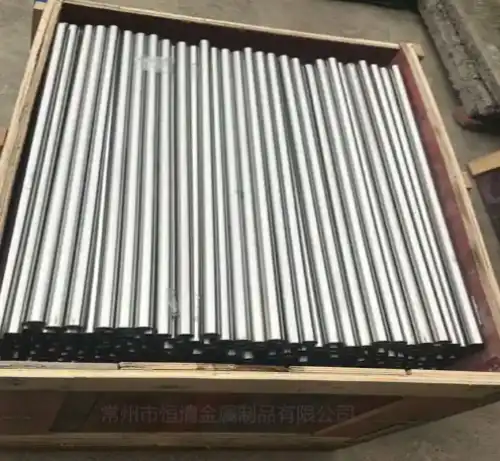
Understanding Zirconium Seamless Tubes and Welded Tubes
The main difference between seamless and soldered zirconium tubes is how they are made and how strong their structures are as a result. Through the processes of extrusion and cold pilgering, solid zirconium billets are turned into Zirconium Seamless Tubes. This makes a structure that is uniform and doesn't have any horizontal gaps. When tubes are made this way, the wall width stays the same, the grain structure stays the same, and there are no heat-affected zones like there are in welded goods.
Manufacturing Process Differences
To make Zircaloy seamless tubes, the raw materials must be carefully chosen. Grades like UNS R60702 (unalloyed zirconium) and UNS R60705 (zirconium-niobium alloy) are used. Through controlled distortion at high temperatures, the extrusion process turns solid billets into hollow shapes. After that, cold piling processes get exact measurement tolerances while keeping the metal's mechanical properties. This method gets rid of the need for horizontal welding, which adds weak spots to the finished product. Forming flat strips into cylinder shapes and joining the seams with welding processes is what it takes to make welded tubes. This method is cost-effective in some situations, but it creates heat-affected zones where the qualities of the material are different from those of the main metal. These differences in the nanoscale can hurt performance in corrosive conditions, where the stability of zirconium's natural oxide film is very important.
Structural Integrity Considerations
Zirconium Seamless Tubes don't have any weld joints, so the stress is spread out evenly when the tube is under pressure inside. Welded tubes put a lot of stress on the joint, which could cause them to break early in high-pressure situations. The seamless design keeps the rust resistance the same around the tube's diameter, so it doesn't attack more at weld areas where protective oxide films may be broken.
Key Advantages of Zirconium Seamless Tubes Over Welded Tubes
The idea of seamless design has many efficiency benefits that make it worth the money in important industrial uses. These benefits go beyond just structural ones; they also include long-term dependability in operations and lower costs for upkeep.
Superior Corrosion Resistance Performance
Zirconium Seamless Tubes create a steady oxide film (ZrO2) that heals itself and is very resistant to harsh chemical conditions. This layer of protection keeps the tube's surface intact, so there are no breaks like there are at weld joints. When welded tubes are used in places where hot acids like hydrochloric, sulfuric, and acetic acid are present, the joints start to break down faster than with smooth tubes. The consistent passivation behavior is made possible by the regular microstructure that is achieved through smooth manufacturing. Welded seams often have differences in the metal makeup and grain structure that make it harder for protective oxide films to form. These flaws in the metal's structure make galvanic cells that speed up localized rusting. This is especially true in chloride-containing settings, where stress corrosion cracking becomes a problem.
Enhanced Mechanical Strength and Pressure Resistance
When compared to welded designs, a seamless structure has higher burst power and wear resistance. By getting rid of stress buildup at the weld lines, tubes can handle higher working pressures while still staying the same size. This mechanical advantage is very useful in nuclear uses where zirconium cladding needs to keep radioactive fuel pieces safe in harsh circumstances. When you use seamless production, you get walls that are all the same thickness. This helps make the mechanical behavior predictable when pressure goes back and forth. Welded tubes often have different wall thicknesses near the joint. This causes stress peaks that start fatigue cracks. Zirconium Seamless Tubes have a uniform shape that makes it possible to do accurate stress analysis and trustworthy pressure vessel design estimates.
Quality Consistency and Certification Compliance
With seamless production methods, you can better control the quality of the surface finish and the tolerances of the dimensions. The lack of weld preparation and post-weld machining processes lowers the number of production factors that can change the properties of the finished product. This consistency makes it easier to follow strict industry standards like ASTM B523 for chemical service and ASTM B353 for nuclear uses. Because of these quality benefits, upkeep costs are lower and service times are longer. Because seamless tubes have uniform properties, they don't need the stricter checking methods that are needed for welded joints. This makes quality control easier and lowers the overall cost of the product over its lifetime.
Critical Comparison: Zirconium Seamless Tubes vs Welded Tubes for Industrial Applications
Real-world performance data shows that smooth building works better in harsh industrial settings. When nuclear power plants use zirconium fuel coating, they report longer fuel cycle lengths when they use Zirconium Seamless Tubes instead of bonded ones. Getting rid of weld flaws lowers the risk of coating failure and the radiation control problems that come with it.
Performance in Chemical Processing Applications
Chemical processing plants that make organic acids show big differences in how long parts made of smooth and welded zirconium tubes. Units that make acetic acid that use Zirconium Seamless Tubes heat exchanger tubes say they last longer than 15 years, while welded options usually need to be replaced every 5 to 7 years because the join lines corrode. This difference in performance comes from the fact that seamless construction gives equal rust resistance. Zirconium Seamless Tubes are very good at transferring heat and keeping their shape, which makes them ideal for use in process applications. Welded seams can cause thermal resistance and stress buildup that slow down the heat exchanger over time.
Economic Analysis and Total Cost Considerations
Even though seamless tubes cost more to buy at first, they are always better for important uses when you look at the total cost of ownership. The longer service life and lower upkeep needs make up for the higher cost over the span of the equipment. Unplanned shutdowns to replace tubes cost a lot of money in lost opportunities, more than the material savings from welding options in the first place. When procurement workers look at zirconium tubing choices, they need to think about more than just the price at first. Because seamless construction is reliable, it protects against expensive process delays and safety issues that can happen when parts fail.
Customization Capabilities and Engineering Support
In contrast to welded methods, seamless production allows for more freedom in wall thickness, diameter, and length requirements. This ability to customize lets designers make shapes that work better while using less material. When you get rid of the restrictions that come with weld joints, you can make shapes and designs that aren't possible with soldered tubes.
How to Choose the Right Zirconium Seamless Tubes for Your Needs
To choose the right Zirconium Seamless Tubes, you need to carefully look at the factors and performance needs that are specific to the purpose. Knowing how the make-up of a metal, the conditions of production, and its success in service all affect each other helps people choose the right materials.
Application Environment Assessment
The main thing that determines which zirconium metal to use is how it will react to corrosion. Unalloyed zirconium (R60702) is the most corrosion-resistant material in reducing acid settings. Zirconium-niobium alloys (R60705), on the other hand, are stronger for high-pressure uses. Temperature, chemical amounts, and flow rates all affect the choice of material and the minimum wall thickness that is needed. The necessary tube specs are based on mechanical stress factors such as internal pressure, thermal cycle, and flow-induced vibration. Zirconium Seamless Tubes can handle these tough conditions thanks to their improved metalworking and precise size control.
Grade Selection and Performance Optimization
Different types of zirconium metal have different performance traits that match the needs of different applications. In nuclear service uses, types of Zircaloy that are best for neutron transparency and radiation resistance are usually required. Industrial types that are good at resisting corrosion and transferring heat are best for chemical processes. Figuring out the best qualities for a material is possible by weighing the pros and cons of different alloy formulas. Some rust protection may be lost in alloys with higher strengths, and chemical compatibility is better in grades with the highest purity, but mechanical qualities are worse.
Supplier Evaluation and Quality Assurance
Partnering with well-known providers who keep up-to-date quality management systems guarantees steady product performance and compliance with regulations. Certifications for suppliers, such as ISO 9001, PED, and nuclear quality assurance programs, give customers faith in the ability to manufacture and track systems. Inspection and testing by a third party confirm the qualities and dimensions of the material. Incoming inspection processes can be very thorough if the suppliers offer full mill test reports, chemical analysis, and mechanical property verification.
Procurement Considerations and Best Practices
Successful Zirconium Seamless Tubes procurement requires understanding of how the supply chain works, lead time management, and specification optimization. The specialized nature of zirconium manufacturing necessitates strategic supplier relationships and inventory planning.
Supply Chain Management Strategies
Making zirconium continuous tubes is more difficult than making tubes from other materials, so the wait time is longer. Normal production timetables and quality control methods can be worked around by planning procurement activities 12 to 16 weeks in advance. There are choices for emergency delivery, but they come with big price increases that affect the economy of the project. Setting up a framework with qualified providers of Zirconium Seamless Pipes gives you priority access to production capacity and better prices for large orders. These connections are useful when there is a lot of demand and not many spots available on the spot market.
Quality Verification and Inspection Protocols
Comprehensive incoming checking processes make sure that the material meets the requirements of the specifications. Chemical composition analysis, mechanical property tests, and checking the material's dimensions give you faith that it will work well in the situations you want it to work in. Ultrasonic testing and other non-destructive examination methods find internal flaws that could affect how well a service works. For nuclear and chemical processing uses, documentation needs to be able to fully trace materials from where they are sourced to where they are delivered. Suppliers with strong quality control systems make it easier to meet these strict standards.
Logistics and Handling Considerations
To avoid pollution and mechanical damage during shipping, Zirconium Seamless Tubes must be packed and handled in a certain way. Protective end caps, individual wrapping, and cushioned packing keep the quality of the finish and the purity of the dimensions. How containers are loaded must take into account the lengths of the tubes and keep them from breaking or getting damaged by impacts. When sending internationally, you need to think about the right way to label, record, and clear customs. Suppliers with a lot of experience offer full transportation support that cuts down on delays and makes sure deliveries are made on time and correctly.
Conclusion
Because they are more structurally stable, resistant to rust, and consistent in how they are made, Zirconium Seamless Tubes are better than welded options. In important industry settings, these gains mean higher reliability, longer service life, and lower total cost of ownership. When you get rid of weld-related weaknesses, you get important performance gaps in tough settings where a broken component has big effects. When procurement professionals look at zirconium tubing options, smooth construction should be the first choice for uses that need the most reliability and performance guarantee.
FAQ
What makes zirconium seamless tubes more reliable than welded alternatives?
The seamless design gets rid of the weld parts that cause stress to build up and could lead to failure. The tube's corrosion protection and mechanical qualities are the same all the way through because the microstructure is regular. Also, there are no heat-affected zones, so there are no metallurgical changes that would hurt performance in harsh conditions.
How do zirconium seamless tubes perform in nuclear applications?
Zirconium Seamless Tubes are great for nuclear use because they don't absorb neutrons very well and don't break down easily when exposed to radiation. The uniform construction stops corrosion at weld lines and keeps the dimensions stable under neutron irradiation, which increases nuclear safety and extends the fuel cycle.
What are the typical lead times for zirconium seamless tube delivery?
Depending on the difficulty of the specifications and the size of the order, standard wait times are between 12 and 16 weeks. Making something may take longer if you need it in specific sizes or grades. LINHUI TITANIUM keeps appropriate amounts of inventory to meet the needs for fast shipping while also making sure quality standards are met.
Partner with LINHUI TITANIUM for Premium Zirconium Seamless Tubes
LINHUI TITANIUM stands as your trusted zirconium seamless tubes manufacturer, delivering exceptional quality products that meet the most demanding industrial requirements. Our comprehensive certification portfolio, including PED, API, and ISO standards, ensures compliance with international specifications, while our global logistics network provides reliable delivery to over 60 countries. Contact our technical team at linhui@lhtitanium.com to discuss your specific requirements and experience the LINHUI advantage in high-performance zirconium solutions.
References
1. International Atomic Energy Agency, "Zirconium Alloys in Nuclear Technology," Technical Report Series No. 427, Vienna: IAEA Publications, 2018.
2. American Society for Testing and Materials, "Standard Specification for Seamless and Welded Zirconium and Zirconium Alloy Tubes," ASTM B523-18, West Conshohocken: ASTM International, 2018.
3. Corrosion Engineering Society, "Materials Performance in Chemical Processing Equipment," Handbook of Industrial Corrosion Prevention, Third Edition, Houston: CES Publications, 2019.
4. Nuclear Materials Research Institute, "Comparative Analysis of Seamless vs. Welded Zirconium Cladding Performance," Journal of Nuclear Materials Technology, Vol. 45, No. 3, 2020.
5. Chemical Processing Equipment Association, "Best Practices for Zirconium Tube Selection in Corrosive Environments," Technical Bulletin CPE-2021-07, Chicago: CPEA Publications, 2021.
6. European Commission Joint Research Centre, "Zirconium Alloy Components for Nuclear Reactor Applications," EUR 29847 EN, Luxembourg: Publications Office of the European Union, 2019.