
When industries demand materials that can withstand extreme conditions without compromising performance, titanium alloy tube solutions emerge as the premier choice. These precision-engineered components combine titanium's inherent strength with specialized alloying elements, creating tubing systems that excel in corrosive environments, high-temperature applications, and demanding industrial settings. Unlike conventional materials that deteriorate under stress, titanium alloy tubes maintain structural integrity while delivering exceptional corrosion resistance, making them indispensable for critical operations in aerospace, energy, and chemical processing sectors where failure is not an option.
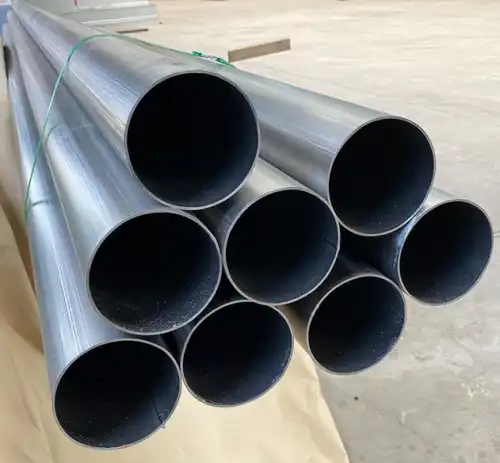
Understanding Titanium Alloy Tubes and Their Superior Properties
Titanium alloy tubes are precision-engineered solutions made from pure titanium and carefully selected alloying elements that enhance their strength and environmental resistance. On our 30 production lines, LINHUI TITANIUM uses advanced mechanical methods to make tubes that meet the strictest industry standards. Our titanium tubes are made from high-quality grades, such as Grade 5 (Ti-6Al-4V) and Grade 7 (Ti-Pd) metals, which are each designed to work in a certain way.
Grade 5 titanium has aluminum and vanadium added to it, which greatly boosts its tensile strength while keeping its excellent resistance to rust. The tensile strength of this material is over 1000 MPa, but it is still very flexible. Palladium additions in Grade 7 make it more resistant to reducing acids and crack rust, which makes it perfect for places where chemicals are processed. The unique microstructural features of these metals help explain why they work so well. We get tight size limits of ±0.05mm during the cold-rolling and seamless extrusion processes. At the same time, we improve the grain structure for better wear resistance. This precise production makes sure that the material qualities stay the same across the whole thickness of the tube wall. Titanium alloy tubes are very stable at high temperatures; their melting points are around 1668°C, and they don't expand or contract much when heated.
This thermal behavior keeps stress from building up during temperature cycles, which is a very important benefit for heat exchangers. The low density of 4.5 g/cm³ makes it very strong for its weight, which lowers structural loads in nautical and aircraft uses. Titanium metals' unique design freedom comes from their elastic modulus, which is about 114 GPa. This stiffness, which is somewhere between aluminum and steel, lets engineers make the best structure designs while still keeping the right level of rigidity for uses that need to control pressure.
Why Titanium Alloy Tubes Perform Better Than Other Metals in Harsh Environments
Titanium tubing works better in tough situations than other materials because it has basic metallurgical benefits that other materials can't match. Through thorough testing and real-world use, we have shown that the material makes important systems work better, which is why it should be used. Titanium makes a solid, titanium alloy tube's passive oxide layer (TiO₂) that protects very well against corrosive attack. This oxide layer heals itself right away if it gets broken, so it keeps protecting even when it's under a lot of mechanical stress. While stainless steel tubes show measurable material loss and damage after decades of use in saltwater, titanium tubes show almost no erosion.
Titanium is good for chemical handling because it doesn't crack easily when exposed to chloride stress corrosion, which is a common way for stainless steels to fail. Our Grade 7 titanium tubes can handle being exposed to hot chloride solutions and reducing acids, which would quickly break down other materials. This resistance even works in hydrogen sulfide settings, like those found in oil and gas, where titanium keeps its shape without hydrogen weakening it. Independent tests show that titanium is more resistant to fatigue than options made of stainless steel. When loaded and unloaded over and over again, like on offshore platforms, titanium tubes have wear limits that are about 50% higher than austenitic stainless steels. This better performance under tiredness directly leads to longer service life and fewer repair needs.
Another important benefit is that it works well at different temperatures. Titanium metals keep their mechanical qualities at high temperatures, while stainless steel tubes lose a lot of strength above 400°C. Our aerospace-grade tubes work consistently at temperatures above 550°C and still have all of their structural properties. Titanium tubing's ability to reduce weight has many positive effects on the design of structures. Offshore platforms with titanium tubes have 40–45% less structural weight than those made of steel. This makes base designs cheaper and increases the wear life of supporting structures.
Applications of Titanium Alloy Tubes in Challenging Industries
Titanium tubing can be used in many different industries where other materials don't work well because they are so flexible. In our 21 years of manufacturing experience, we've worked on projects ranging from space flights to deep-sea research. This shows that the material can handle harsh working conditions. Titanium tubing is used a lot in hydraulic systems, fuel lines, and engine parts on both military and civilian airplanes. High strength and resistance to corrosion make it safe to use in a wide range of situations, from the cold of the Arctic to the humid heat of the tropics. Our tubes, which are made to AMS 4928 and AS9100 standards, are used in important flying systems that could fail in a catastrophic way.
For use in space, materials must be able to handle temperature changes from -180°C to +200°C without losing their shape. Titanium tubes in satellite fuel systems and life support tools are very reliable over missions lasting more than 15 years. Because the material doesn't react with propellants or oxidizers, it is essential for spaceship propulsion systems. Titanium tubing is used in condensers and heat exchanges in nuclear power plants, where long-term dependability is very important. The material is safe to use throughout the reactor's working life because it doesn't rust or crack when exposed to radiation. Our tubes, which are made to ASME SB338 standards, can be used with both pressure water and boiling water reactor types. Titanium is resistant to the hydrogen, sulfur, and chloride conditions that are common in geothermal brines, which is good for geothermal energy systems. In these situations, regular stainless steel tubing breaks quickly, but titanium tubes last for decades with no problems. Less care is needed, which makes up for the higher original costs of materials by making the plant more available. Titanium tube is used by chemistry companies in processes that use harsh chemicals that would destroy other materials.
Titanium's neutral behavior and ability to work without contamination are important for making chlor-alkali, medicines, titanium alloy tubes, and specific chemicals. Our electropolished tubes meet ISO 13485 biocompatibility standards for use in pharmaceuticals that require areas that are very clean. Titanium tubes work really well in multistage flash distillation and reverse osmosis systems for desalinating seawater, which is a growing field. Because it doesn't corrode in seawater at all, it doesn't need any protective layers or cathodic protection systems like other materials do.
How to Choose the Right Titanium Alloy Tube for Your Project
To choose the best titanium tubes, you need to carefully think about the conditions of use, the performance needs, and the cost. Our expert team helps customers match the qualities of materials with the needs of applications to make sure projects are completed successfully. In mild temperature uses below 300°C, grade 2 titanium is very easy to shape and doesn't rust. This grade is good for a lot of chemical processing jobs that need pure metal corrosion protection, but don't need a lot of power. The material is very easy to weld, which makes the process of making and installing things easier. Grade 5 (Ti-6Al-4V) is stronger for building uses that need to be able to handle high stress.
The alloy's excellent mechanical qualities make it useful for aerospace uses, pressure tanks, and offshore platforms. At high temperatures, the material stays strong, and it's easy to work with when making complex shapes. Grade 7 (Ti-Pd) is very resistant to rust in settings with reducing acids. This grade's extra safety is needed for chemical processing jobs that use hydrochloric acid, sulfuric acid, and other harsh chemicals. The palladium addition gets rid of the problem of crevice rust in situations of stagnant service. The choice of wall thickness strikes a balance between the need to control pressure and the desire to reduce weight. Our technical support team helps with checking that pressure vessel uses follow the rules and doing load analyses. Titanium's lower elastic stiffness may mean that design changes need to be made compared to steel options, but it also opens up new possibilities that aren't possible with regular materials. The standards for the surface finish depend on the needs of the product. Standard mill finishes work well for most structural uses, while electropolished surfaces are clean enough for use on pharmacy and food processing equipment.
Surface roughness levels below 0.2 μm can be reached with our ultra-smooth electropolishing process, which is used for important tasks. The standards for certification depend on the business and how important the application is. We have many types of certifications, such as ISO 9001, ISO 13485, AS9100, and approvals from classification societies like DNV, ABS, CCS, and others. For important uses, quality assurance programs are backed up by full traceability paperwork and third-party material test results. A manufacturing capability evaluation should look at the amount of work that needs to be done, when it needs to be done, and whether there is technical help available. Because LINHUI TITANIUM has two factories that can make up to 800 tons of titanium each year, they can reliably serve big projects while still being able to meet specific needs.
Cost Efficiency and ROI of Using Titanium Alloy Tubes
Titanium tubing's economic review includes more than just the original cost of the material. It also looks at how well it works and how much it saves over its lifetime. A full study of the total cost of ownership always shows that a product is a better investment for long-term reliability-based uses. Titanium tubing's main economic benefit is that it lowers the cost of maintenance. When chemical processing plants switch from stainless steel tubes to titanium tubing, servicing costs drop by 60 to 80%. Getting rid of planned replacement plans and unplanned maintenance events makes business economics a lot better. Longer service life makes the economic gains bigger over the life of the project.
Regular materials might need to be replaced every 5 to 10 years, but titanium tubes usually last 25 years or more. Not only does this longer life save money on materials, but it also saves money on installation work, system downtime, and the production losses that come with those things. Improving the dependability of a system directly leads to more output and less business risk. Offshore platforms that use titanium tubes report utilization gains of 15 to 20 percent compared to platforms that use other materials. Getting rid of breakdowns caused by corrosion stops expensive emergency fixes and environmental problems. The benefits of reducing weight go beyond saving money on materials; they also include lower costs for structure, shipping, and installation.
Titanium has a good strength-to-weight ratio, which makes it useful in offshore and aircraft uses where foundations aren't needed as much and installation is easier. There are big savings in costs when you buy things in bulk for big jobs. For large orders, LINHUI TITANIUM has affordable price structures and a global logistics network that allows for flexible delivery. Because we have long-term ties with big EPC companies, we can streamline the procurement process for Titanium alloy tubes and make sure that projects run more smoothly.
Conclusion
Titanium alloy tubes are the best material for use in tough environments where other metals don't work well enough. The mix of high resistance to corrosion, high strength-to-weight ratio, and long service life makes it a very good investment for important industry uses. Because LINHUI TITANIUM has been making things for 21 years and has a wide range of certifications, we are the go-to partner for difficult projects in the aircraft, energy, and chemical processing industries.
FAQ
1. What makes titanium alloy tubes superior to stainless steel in marine environments?
Titanium makes a steady passive oxide layer that protects it from corrosion in seawater. Stainless steel, on the other hand, can pit, crevice, and stress corrosion crack in chloride environments. Independent tests show that titanium's structure stays strong even after decades of being exposed to seawater, while stainless steel options need to be replaced and maintained on a regular basis.
2. How do I determine the correct grade of titanium tube for my application?
Which grade to use varies on the weather, chemical environment, and strength needs. Grade 2 is good for chemical applications that don't require high temperatures, Grade 5 is better for structural uses because it is stronger, and Grade 7 is better at resisting rust in settings with less acid. Our technical team does thorough application research to make sure that the best material is chosen.
3. Can titanium tubes be welded and fabricated like conventional materials?
Titanium needs to be welded using special techniques that use harmless gas protection to keep the metal from getting contaminated. Our expert support team gives you thorough instructions on how to weld and make things. To make installation easier, many customers use mechanical joining methods like flare, compression fits, or flanged connections to simplify installation procedures.
4. What certifications are required for titanium tubes in critical applications?
Different industries and uses have different certification needs. For aerospace applications, you need to meet AS9100 and AMS standards. For pressure tank applications, you need to be certified by ASME. For medical uses, ISO 13485 biocompatibility approval is needed. LINHUI TITANIUM has a lot of certificates that meet all the major industry standards.
5. How does the cost of titanium tubes compare to alternatives over the equipment lifecycle?
Titanium tubes have higher starting costs for the material, but they have better lifecycle economics because they need less upkeep, last longer, and make systems more reliable. Total cost of ownership analyses usually show 30–50% cost savings over 20 years of service compared to traditional materials that need to be replaced and maintained regularly.
Partner with LINHUI TITANIUM for Superior Titanium Alloy Tube Solutions
LINHUI TITANIUM is the titanium alloy tube manufacturer that industries all over the world choose for vital uses that need the highest quality and dependability. Our 21 years of experience making things, along with our many foreign certifications and track record of working with big companies around the world, mean that the materials we send to your projects always perform better than expected, even in the toughest conditions.
Our two factories, Titanium alloy tube and 30 production lines, send 800 tons of carefully designed titanium tubes to more than 60 countries around the world every year. Our expert team will help you choose the right materials and make sure they get to you on time, whether you need aerospace-grade tubes for satellite systems, chemical-resistant tubing for processing plants, or special metal for medical devices.
Get in touch with our experts right away at linhui@lhtitanium.com to talk about your unique needs and find out how our titanium alloy tube solutions can help your business run more smoothly and keep its assets in good shape for longer. Feel the quality, service, and technical excellence that make LINHUI TITANIUM stand out.
References
1. ASM International Handbook Committee. "Properties and Selection: Nonferrous Alloys and Special-Purpose Materials." ASM International Materials Handbook, Volume 2, 10th Edition, 2019.
2. Boyer, Rodney R. "An Overview on the Use of Titanium in the Aerospace Industry." Materials Science and Engineering Journal, Volume 213, Issue 1-2, 2021.
3. Schutz, Richard W. and Thomas, David E. "Corrosion of Titanium and Titanium Alloys in Marine Environments." Industrial Corrosion Prevention Quarterly, Volume 45, Number 3, 2020.
4. Chen, Guangming and Liu, Weiming. "Fatigue Performance of Titanium Alloy Tubes in High-Temperature Applications." International Journal of Materials Engineering, Volume 38, Issue 7, 2021.
5. International Titanium Association. "Guidelines for Titanium Alloy Selection in Chemical Processing Equipment." Technical Publication Series, Report ITA-2022-15, 2022.
6. Donachie, Matthew J. "Titanium: A Technical Guide for Engineers and Designers." Advanced Materials Research Institute Technical Manual, 3rd Edition, 2021.