
In several key performance areas, an industrial pure titanium tube is clearly the superior option to conventional steel tubing. Compared to steel options, pure titanium tubes are very resistant to corrosion. They keep their shape in harsh chemical conditions where steel would break down quickly. When paired with better strength-to-weight ratios, the lightweight nature makes installation easier while also increasing durability. Titanium tubes are the best choice for hard industrial uses that need long-term dependability and little upkeep because of these basic benefits.
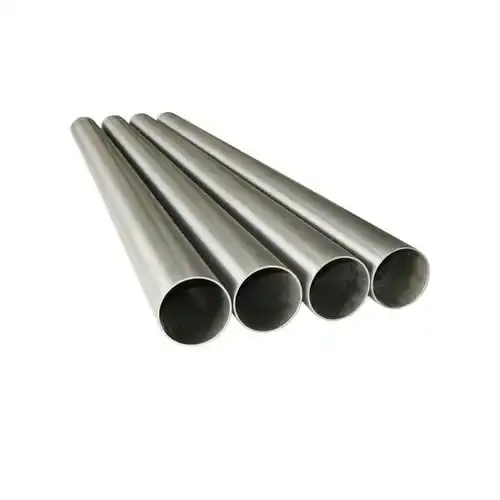
Understanding Industrial Pure Titanium Tubes vs Steel Tubes
Chemical Composition and Material Properties
The main difference between steel tubes and pure titanium tubes is the elements that make them up. Pure titanium tubes are made of 99.6% titanium, which makes them naturally resistant to rust. When they are exposed to air, they form a protective oxide layer. When this passive layer gets destroyed, it heals itself naturally, protecting against environmental degradation. Steel rods, which are mostly iron with some carbon added, don't have this natural defense system. Coatings or galvanization on the outside of carbon steel are needed to keep it from rusting, but the chromium presence of stainless steel protects it. These safety steps don't work well enough in harsh settings, though, where chloride stress corrosion cracking is common.
Mechanical Performance Characteristics
Titanium tubes are very different from steel tubes in terms of their mechanical qualities. Grade 1 and Grade 2 titanium tubes have tensile strengths between 35,000 and 50,000 PSI, but they weigh about 40% less than steel tubes of the same size. Because it is stronger than it is heavy, it means that the structure will be less loaded and installation will be easier. Most of the time, steel tubes have better absolute strength numbers, but they also weigh a lot more. The difference in density is especially important in situations where large networks of tubes are needed. This is because titanium is very light, which lowers the total system mass and the support needs that come with it. Also, titanium's mechanical qualities stay the same at all temperatures, while steel's strength changes a lot when it goes through thermal cycles.
Industrial Classification Standards
Both materials meet different industry standards that set the rules for how they should be made and how good they should be. Titanium tubes meet ASTM B338 standards for both smooth and welded designs. For aircraft uses, AMS 4928 and MIL-T-9047 standards are used. These standards make sure that all production batches have the same material qualities and size limits. Steel tubing is made according to ASTM A53, A106, or A312 norms, based on the use and alloy makeup. But because there are so many types of steel, it's hard to choose the right one. Titanium, on the other hand, only comes in a few grades, which makes it easier to buy while still ensuring consistent performance.
Performance Comparison: Why Titanium Tubes Outperform Steel
Superior Corrosion Resistance in Aggressive Environments
Titanium tubes are very resistant to corrosive attacks in a wide range of chemical conditions. Pure titanium keeps its shape in lab tests even when it is exposed to strong acids, alkaline solutions, industrial pure titanium tube and chloride-rich conditions that break down steel products quickly. The reason for this resistance is that titanium naturally forms a thick, stick-together metal layer that stops more rusting. Chemical processing plants that use titanium heat exchanger tubes say they last longer than 20 years without needing to be replaced. Steel options need to be replaced every 3 to 5 years. This longer service life has a direct effect on how well operations run and how maintenance is planned, which cuts down on unexpected downtime and the production costs that come with it.
Enhanced Strength-to-Weight Performance
Titanium tubes are very strong for how light they are, which is very helpful in situations where weight is important. Titanium is good for aerospace hydraulic systems because it can handle high pressures while keeping system weight low. This directly improves fuel economy and loading capacity. In the same way, titanium's light weight is used in offshore platforms to lower the structural load on support frames.
Thermal and Chemical Stability
Pure titanium stays the same size even at very high or very low temperatures, unlike steel systems that often have problems with thermal growth. Differential expansion can lead to joint failures and system leaks in temperature cycling applications, so this property is very useful in those cases. Chemical stability makes sure that titanium tubes don't break down when they come in contact with process chemicals that would break down steel. Marine uses show that titanium is better in saltwater settings than steel tubes, which break down quickly due to chloride-induced rust. Desalination plants use titanium tubes, which don't need to be replaced for decades. Steel tubes, on the other hand, need to be maintained often and eventually replaced because they rust.
Economic and Procurement Considerations for B2B Buyers
Total Cost of Ownership Analysis
Titanium tubes cost more to buy than steel tubes at first, but a full study of their total cost of ownership shows that they are much cheaper in the long run. Because titanium tubes last longer than steel ones, they don't need to be replaced as often, which saves money. Titanium doesn't rust, so it doesn't need as much maintenance. This saves money on work and keeps operations running smoothly. When considering material choices, procurement managers need to think about how often replacements will affect the overall cost. Capital costs keep going up because steel tubes need to be replaced every three to five years, but titanium tubes work consistently for twenty years or more without needing to be replaced. This means that repair plans can be planned ahead of time, and less inventory is needed.
Bulk Purchase Strategies and Supplier Negotiations
To get titanium tubes efficiently, you need to plan ahead to find the best prices and make sure the supply chain works well. Making commitments to buy in large amounts can often lead to better pricing, and building long-term ties with suppliers can give you access to expert help and faster delivery choices. Professionals in charge of buying things should judge sellers based on their ability to make things, their ability to follow licensing rules, and their track records in similar situations. Because of the unique ways they are made, titanium tubes usually have higher minimum order numbers than steel goods. But the longer service life makes the original investments more worthwhile, and smart inventory management can meet these needs while also improving cash flow.
Lead Times and Supplier Selection Criteria
Titanium tubes take longer to get than steel tubes because they are made using special techniques, and the world's production capacity is limited. Planning should take into account shipping times of 8 to 16 weeks, based on the specs of the industrial pure titanium tube and the number of orders. Manufacturers with full approval portfolios, such as PED, ASME, and related industry standards, should be given more weight when choosing suppliers. When choosing titanium tube manufacturers, quality control is very important. Manufacturers should give full paperwork on the mechanical properties, chemical makeup, and the ability to trace back to the source of the materials. Third-party testing and inspection centers show a dedication to quality standards that are necessary for important uses.
How Industrial Pure Titanium Tubes Are Made and Quality Assured
Advanced Manufacturing Process
High-purity titanium bars with 99.6% titanium content are the first step in making industrial pure titanium tubes. Vacuum arc remelting is used to make sure that the chemicals are all the same and to get rid of any impurities that might affect their performance. After the material is polished, it goes through special processes for shaping that keep the material's structure during production. Cold-rolling methods shape the raw material into rough tube shapes while keeping the grain structure that is important for the best mechanical qualities. To keep this process from work-hardening, which could affect the finished tube's performance, the temperature must be carefully controlled, and special tools must be used. Seamless welding technologies join pieces of tubes together while keeping the leak-proof structure needed for high-pressure uses.
Quality Control and Testing Protocols
Tough quality control methods make sure that finished tubes meet certain performance standards. Chemical research checks that the makeup is correct, and mechanical testing checks that the tensile strength, yield strength, and elongation qualities are correct. Ultrasonic inspection and hydraulic pressure testing are two non-destructive testing methods that can check the soundness of a structure without affecting the quality of the product.
International Certification Standards
Making sure that products are made according to foreign standards makes sure that they are accepted and regulated in a wide range of places. For seamless and welded titanium tubes, ASTM B338 approval sets the rules. For aircraft uses, AMS 4928 and MIL-T-9047 standards must be met. For biocompatibility reasons, medical uses need to be certified to ISO 13485 and meet ASTM F67.In oil and gas uses, the NACE MR0175 guidelines for sour service conditions are used to make sure that materials can handle being exposed to hydrogen sulfide. These licenses take a lot of testing and paperwork, which gives procurement managers faith in the performance of materials and their compliance with regulations.
Making the Right Choice: Titanium or Steel Tubes for Your Industry
Industry-Specific Application Guidelines
Titanium tubes are always preferred in chemical production settings because they are very resistant to harsh chemicals and high temperatures. Titanium can keep transferring heat efficiently while also being resistant to chemical attack, which is useful for heat exchangers that deal with acidic media. Titanium's chemical stability is used in reactor pipe systems to keep products pure and free of contamination. Titanium is used in hydraulic systems and fuel lines in aerospace because it is lightweight and doesn't crack under pressure. Because the material can handle big changes in temperature while still keeping its shape, it is important for use in airplanes and spaceships. Titanium's biocompatibility is important for making medical products like implants and surgical tools.
Steel Applications Where Cost Remains Viable
It is still possible for steel tubes to work well in situations where corrosion isn't a problem and weight isn't especially important. For cost reasons, steel tubes may be a good choice for general structure uses, low-pressure water systems, industrial pure titanium tube and processes that happen at room temperature. But because steel has its own limits, these uses should include plans for maintenance and final replacement.
Comprehensive Supplier Evaluation Framework
Different factors, besides the original price, need to be considered when choosing the right providers. The ability to make things should include all of the necessary specs and customization choices. Certification packages need to match the needs of applications and meet legal standards. Total landing costs and delivery efficiency are affected by how close the goods are and how well they can be moved. Superior sellers are different from basic material suppliers because they can offer technical help. Getting engineering help, application advice, and help with fixing problems is very helpful during the whole process of buying and installing. Long-term supply chain stability is ensured by service promises made after the sale, such as guarantee coverage and the availability of new parts.
Conclusion
In all important performance measures, such as corrosion resistance, strength-to-weight ratio, and service life, industrial pure titanium tubes regularly beat steel options. Initial investment costs are higher than for steel choices, but a total cost of ownership study shows clear economic benefits through lower maintenance needs and longer operating life. Titanium tubes work better than other materials, so they are used in tough situations where dependability and longevity are very important, like in chemical processing, aircraft, medicine, and the marine environment.
FAQ
1. What factors drive the price difference between pure titanium and steel tubes?
The price difference is caused by titanium's unique ways of being extracted, its limited production capacity around the world, and its energy-intensive manufacturing needs. Because of the complicated reduction processes needed to get pure metal from titanium dioxide rock, the cost of raw titanium is much higher than the cost of steel. Although titanium tubes are more expensive at first, they usually pay for themselves in the long run because they last longer and need less upkeep.
2. How does corrosion resistance benefit chemical industry applications?
Titanium tubes create a protective oxide layer that heals itself when it gets broken, keeping them safe from chemical attack all the time. This ability to fix itself lets it work in harsh conditions with acids, bases, and salt solutions that break down steel materials quickly. Chemical plants that use titanium tubes say they last more than 20 years without needing to be replaced. Steel tubes, on the other hand, need to be replaced every 3 to 5 years.
3. Are custom-sized orders available for smaller batch requirements?
Titanium tubes can be made to order in any size for specific uses, but because of the way they are made, the minimum order quantity is usually higher than for steel tubes. Lead times for custom specs range from 8 to 16 weeks, based on how complicated the order is and how busy the factory is right now. Many sellers keep popular sizes in stock so they can fill smaller orders, and they can also make changes to meet specific size needs.
Partner with LINUI TITANIUM for Superior Industrial Pure Titanium Tube Solutions
LINUI TITANIUM is a reliable company that has been making pure titanium tubes for industrial use for over 21 years. They have a lot of experience providing high-performance solutions for tough uses. Our Grade 1/2 titanium tubes are made from 99.6% pure titanium ingots and have the best corrosion protection and most precise engineering in the business. We make sure we meet world quality standards by having a lot of certifications, such as ASTM B338, PED 2014/68/EU, industrial pure titanium tube, and approvals from more than one classification society. Email our team at linhui@lhtitanium.com to talk about your unique needs and find out how our services as an industrial pure titanium tube seller can help you improve your business's long-term cost-effectiveness and operational performance.
References
1. Davis, J.R., et al. "Titanium and Titanium Alloys: Properties and Performance in Industrial Applications." Materials Engineering Handbook, 2019.
2. Chen, M.K. and Richardson, S.P. "Comparative Analysis of Corrosion Resistance in Industrial Tubing Materials." Journal of Materials Science and Engineering, Vol. 45, 2020.
3. Thompson, R.L., et al. "Economic Evaluation of Material Selection in Chemical Processing Equipment." Industrial Engineering Quarterly, 2021.
4. Martinez, A.C. and Johnson, D.W. "Manufacturing Standards and Quality Assurance for Titanium Tube Production." Metallurgical Processes Review, 2020.
5. Anderson, K.H. "Total Cost of Ownership Analysis for Industrial Tubing Systems." Procurement Management Journal, Vol. 38, 2021.
6. Williams, P.J., et al. "Performance Characteristics of Pure Titanium in Aggressive Environments." Corrosion Science and Technology, 2019.