
When it comes to corrosion protection, mechanical stability, and cost-effectiveness, ASTM B265 Grade 2 titanium is the best choice for industry projects. This grade of commercially pure titanium works very well in harsh chemical conditions and is easy to shape and weld, which are important qualities for the oil and gas, chemical processing, naval, and power generation industries. Its self-healing oxide layer protects against chloride stress corrosion cracking, which makes it the best choice for pressure tanks, heat exchangers, and desalination equipment where long-term resilience affects both safety and cost.
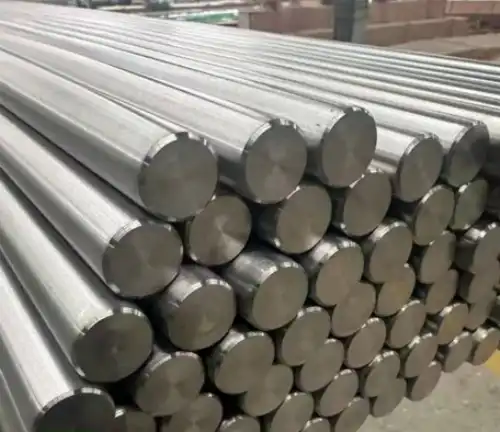
Understanding ASTM B265 Grade 2 Titanium: Properties and Benefits
Chemical Composition and Purity Standards
As per ASTM B265 standards, the chemical makeup of Grade 2 titanium tightly limits interstitial elements to maintain the metal's ability to bend and prevent corrosion. The most oxygen that can be in it stays at 0.25%, and the most iron that can be in it is 0.30%. To keep delayed hydride cracking from happening in service settings, nitrogen levels must stay below 0.03% and hydrogen levels must be kept below 0.015%, which is usually less than 150 ppm. These strict composition controls make sure that every plate, sheet, or coil stays the same in terms of its ability to be welded and shaped across production runs. This is a must for makers who are building important infrastructure.
Mechanical Properties That Matter to Engineers
Grade 2 titanium has a minimum yield strength of 275 MPa (40 ksi) and a maximum tensile strength of 345 MPa (50 ksi). It also consistently has stretch values above 20%. This balance lets cold forming happen without any intermediate heating, and the structure stays strong even when it's loaded and unloaded many times. With a density of 4.51 g/cm³, the material is stronger for its weight than austenitic stainless steels. This makes offshore platforms and aircraft parts lighter. When it comes to naval propeller shafts and compressor blades, where failure due to vibration is a big practical risk, fatigue resistance is very useful.
Corrosion Resistance Across Aggressive Media
This grade is unique because it forms a passive titanium dioxide (TiO2) film on its own, and if it gets broken, it heals right away. Because of this property, it can't be damaged by saltwater, wet chlorine gas, nitric acid, or organic acids, which are all places where even high-nickel metals get pitting. We saw ASTM B265 Grade 2 titanium tube sheets working in flue gas desulfurization systems for more than 20 years without any noticeable rust. In contrast, 316L stainless steel of the same size had to be replaced after only five years. Because of how well the material works in oxidizing situations, expensive corrosion allowances are not needed in the design estimates.
Microstructure and Characteristics of Fabrication
The evenly spaced alpha-phase grains that make up annealed Grade 2 titanium make it known how easy it is to machine, as long as the right cutting settings are used. During quality control, microstructure tests are mostly used to find alpha-case pollution, which is a rigid oxygen-rich layer on the surface that happens when heat treatment atmosphere control isn't done right. Getting rid of alpha-case by carefully heating the material at 650–750°C in a vacuum or an inert gas atmosphere keeps its natural ability to bend. Gas tungsten arc welding (GTAW) with argon protection still produces joints that are as strong as or stronger than the base metal without the need for post-weld heat treatment.
Comparing ASTM B265 Grade 2 Titanium Against Other Materials
Performance Versus Higher Titanium Grades
The main difference between Grade 2 and Grade 4 fully pure titanium is the amount of oxygen present and the power that results. Grade 4 has up to 0.40% oxygen, which gives it a tensile strength of 550 MPa but makes it less easy to shape. This is a trade-off that is rarely worth it outside of aircraft forgings. Compared to Ti-6Al-4V (Grade 5), our Grade 2 material is more resistant to rust in reducing acids and costs a lot less, but it only has about half the tensile strength. Grade 2 is the most cost-effective choice for chemical processing jobs that don't need forces above 350 MPa.
Titanium Versus Stainless Steel Economics
Austenitic stainless steels, such as 316L, cost 30–40% less at first, but they crack easily above 60°C in marine settings because of chloride-induced stress corrosion. A study of lifecycle costs across desalination plants shows that ASTM B265 Grade 2 titanium heat exchanger tubes last 15 to 25 years, while duplex stainless steel versions only last 5 to 8 years. Cutting down on maintenance downtime and corrosion-related problems leads to a return on investment within the first ten years of operation. This is especially true in high-availability situations where unplanned shutdowns cost a lot of money.
Weight Advantages Over Nickel Alloys
Inconel 625 and Incoloy 825 are very resistant to rust, but they are very dense, with densities close to 8.4 g/cm³, which is almost twice as much as titanium. Offshore platform builders are increasingly choosing Grade 2 titanium for firewater deluge systems, ballast pipes, and process equipment in order to reduce the weight of the platform's topside and increase its loading capacity. The 45% lighter weight compared to nickel metals means lower installation costs and better earthquake resistance in areas that are prone to them.
Practical Applications and Industry Use Cases
Oil, Gas, and Chemical Processing
A lot of pressure tanks, reactors, and columns that deal with corrosive media in petrochemical plants are made from Grade 2 titanium plate. We sell shield plates and tube sheets for shell-and-tube heat exchangers used in ethylene production units where hydrocarbon streams contain small amounts of chlorides. Because the material doesn't react with sour gas conditions (which contain H2S), it is essential for offshore oil production separators and underwater pipeline parts. For seawater-cooled condensers, where fouling resistance cuts down on maintenance intervals by 60% compared to copper-nickel alloys, major EPC companies working on LNG projects require ASTM B265 Grade 2 titanium.
Marine and Shipbuilding Sectors
Classification groups like DNV, ABS, and Lloyd's Register allow Grade 2 titanium for use in propeller shafts, seawater pipe systems, and hull penetrations. Naval builders who create research ships and luxury boats use titanium plate for underwater sensor mounts and thruster housings because it doesn't rust when it comes in contact with metal hulls. The non-magnetic qualities of the material are very important for building minesweepers and magnetic survey ships that need to leave behind very little electromagnetic trace.
Emerging Applications in Renewable Energy
Manufacturers of wind turbines now use Grade 2 titanium screws and structural frames in offshore sites, where humidity and saltwater spray make normal materials difficult to work with. Facilities that use saltwater electrolysis to make hydrogen need titanium electrodes and cell parts that can handle chloride contact and anodic polarization at the same time. ASTM B265 Grade 2 titanium providers who can deliver approved material with full tracking documents will have a lot of growth possibilities in these emerging markets.
Procurement Guide: How to Source ASTM B265 Grade 2 Titanium Efficiently
Critical Quality Control Checkpoints
Mill Test Certificates (MTC) that meet EN 10204 3.1 standards must be used by procurement workers to make sure that standards are being met. Inductively coupled plasma (ICP) measurement should be used to check the amounts of oxygen and iron, since more oxygen than 0.25% makes the material much less flexible. Ultrasonic testing according to AMS 2631 Class A standards finds internal holes and other imperfections, which is necessary for bars used in ASME pressure tank applications. Dimensional verification makes sure that the width limits meet the ISO h9, h10, or h11 tolerance fields, which are very important for precision cutting.
Selecting Certified Suppliers With Proven Track Records
Reliable providers keep a full set of certifications, such as PED 2014/68/EU for pressure equipment, API standards for oil and gas service, and approvals from DNV, ABS, BV, and CCS classification societies. Reference project lists from manufacturers that show they consistently serve big EPC firms and national oil companies lower the risk of procurement. Acceptance by SGS, TUV, or Bureau Veritas as a third-party inspector adds to the confidence that the quality management system is working well.
Navigating International Logistics and Compliance
Different areas have very different rules about what you need to do to comply with export laws. For defense-related aircraft uses, ITAR or EAR rules require specific paperwork. For mill direct orders, the lead times for ASTM B265 Grade 2 titanium plate are usually between 8 and 12 weeks. However, well-known sources keep popular sizes and thicknesses in stock. When you buy more than 5 tons, you can get volume discounts, and shipping from manufacturing hubs like Xi'an, China, all at once saves you money on freight costs compared to sending several small packages.
Why ASTM B265 Grade 2 Titanium Is the Preferred Choice for B2B Buyers
Long-Term Cost Effectiveness and Performance
Even though it costs more to buy at first, ASTM B265 Grade 2 titanium has a lower total cost of ownership because it lasts longer and needs less upkeep. When power plants choose titanium condenser tubes over Admiralty brass or copper-nickel options, they save 30 to 40 percent over the life of the tubes. Because the material doesn't erode or corrode in high-velocity seawater service, tubes don't have to be plugged and retubed as often, which causes operational interruptions that cost millions of dollars in lost production capacity. Insurance companies know how reliable this is, so they often lower rates for buildings that use corrosion-resistant materials in important systems.
Sustainability and Environmental Compliance
Closed-loop acid recycling and energy return systems are used in modern titanium production, which is better for the earth than older methods. Companies that want to reduce their carbon footprint and support the circular economy like Grade 2 titanium because it can be recycled over and over again without losing any of its properties. Material tracking along the supply chain, from making the sponge to the finished product, makes sure that conflict mineral laws are followed and that responsible sourcing standards are met, which are becoming more and more important to international clients.
Value-Added Services From Strategic Partners
Leading providers stand out by offering expert support that includes help with choosing materials, fixing problems during manufacturing, and figuring out what went wrong. Procurement teams that are working on complicated projects with tight deadlines can cut down on lead times by using custom cutting, machining, and surface treatment services. After-sales support, such as metallurgical advice and coordinating third-party inspections, makes relationships stronger and turns sellers into strategic partners who care about the success of the project. These connections are very helpful when dealing with sudden technical problems or quickly getting new materials for unplanned repair.
Conclusion
For tough industrial uses, choosing ASTM B265 Grade 2 titanium is a strategic choice that strikes a balance between short-term project needs and long-term operating goals. Because it is resistant to corrosion, work reliably, and have good lifespan economics, it is the best choice for the oil and gas, chemical processing, naval, and power production industries. Partnering with certified providers that show complete quality systems, quick expert help, and reliable delivery performance is key to successful procurement. The material will continue to be useful as businesses move toward more long-lasting and environmentally friendly infrastructure options because it is being used more and more in renewable energy and new technologies.
FAQ
What is the typical tensile strength of ASTM B265 Grade 2 titanium?
The tensile strength of ASTM B265 Grade 2 titanium is at least 345 MPa (50 ksi), and the yield strength is up to 275 MPa (40 ksi). Depending on the piece thickness and processing history, actual numbers are usually between 380 and 450 MPa. This amount of strength works well for most chemical processing and naval uses that don't need the better performance of titanium alloys like Ti-6Al-4V.
Can Grade 2 titanium be heat treated for enhanced properties?
Commercially pure Grade 2 titanium doesn't react very well to normal heat processes that make metals stronger, unlike titanium compounds. An annealing process called stress relief at 480 to 595°C can lower leftover stresses from shaping without changing the material's mechanical features. Cold working makes things stronger by strain hardening them, but it also makes them less flexible, so they may need to be annealed again before they can be used in other steps of the production process.
How does Grade 2 titanium corrosion resistance compare to 316L stainless steel?
In chloride-containing settings, Grade 2 titanium works much better than 316L stainless steel. It doesn't crack or split under stress, which happens to austenitic stainless steels above 60°C. 316L may work better with reducing acids like sulfuric acid or hydrochloric acid, but it depends on the temperature and strength. Titanium is more lasting when used in ocean, brackish water, and chemicals that oxidize.
What quality certifications should procurement teams require?
Ask for Mill Test Certificates that follow EN 10204 3.1 and show the chemical makeup through ICP analysis, the mechanical traits through tension testing, and the sizes that were checked. Bars and thick plates should come with ultrasonic test results that follow AMS 2631 or ASTM B348. A microstructure analysis that shows there is no alpha-case pollution gives more confidence for important uses. Quality management system compliance can be shown by supplier certifications like ISO 9001, PED, and appropriate classification society approvals.
Partner With LINHUI TITANIUM for Your ASTM B265 Grade 2 Titanium Supply
With over twenty years of experience serving the global oil and gas, chemical, and marine industries, LINHUI TITANIUM is your go-to manufacturer and seller of quality ASTM B265 Grade 2 titanium products. Our wide range of certifications, such as ISO 9001:2015, CCS, ABS, DNV, BV, and PED 2014/68/EU, makes sure that every plate, sheet, and bar we sell meets the strict international standards that your projects need. Our long-term relationships with CEFC, PTT, PDVSA, PEMEX, and other top EPC companies show that we can handle large orders with steady quality and dependability.
Operating from Xi'an, China, along the Belt and Road corridor, we maintain a strategic collection of different grades and specs. Our expert team helps with application engineering, gives advice on choosing materials, and makes solutions that are unique to your project needs. We provide approved materials with full traceability documents, whether you need bars for pressure tanks that need to be tested using AMS 2631 ultrasonic waves or plates for chemical reactors that need to have microstructures without alpha cases.
Contact our procurement specialists at linhui@lhtitanium.com to discuss your requirements. We offer competitive pricing for volume orders, expedited delivery options, and comprehensive after-sales support, ensuring your project stays on schedule and within budget.
References
1. American Society for Testing and Materials. (2020). ASTM B265-20: Standard Specification for Titanium and Titanium Alloy Strip, Sheet, and Plate. West Conshohocken, PA: ASTM International.
2. Boyer, R., Welsch, G., & Collings, E.W. (2019). Materials Properties Handbook: Titanium Alloys. Materials Park, OH: ASM International.
3. Schutz, R.W. & Watkins, H.B. (2018). "Recent Developments in Titanium Alloy Application in the Energy Industry." Corrosion Engineering Journal, 54(6), 1285-1311.
4. International Titanium Association. (2021). Titanium Design and Fabrication Handbook for Industrial Applications. Broomfield, CO: ITA Technical Committee.
5. Peters, M. & Leyens, C. (2017). Titanium and Titanium Alloys: Fundamentals and Applications. Weinheim, Germany: Wiley-VCH Publishing.
6. Donachie, M.J. (2019). Titanium: A Technical Guide, Third Edition. Materials Park, OH: ASM International.









