
When it comes to tough industrial uses, the choice between titanium and steel pipes can make or break the project. A 3-inch titanium pipe is the best because it has the best strength-to-weight ratio, the best resistance to rust, and the best longevity. Steel pipes rust, break down chemically, and need to be kept up often. Titanium pipes, on the other hand, don't rust and stay physically sound even after decades of use in harsh environments like chemical processing plants and offshore oil platforms.
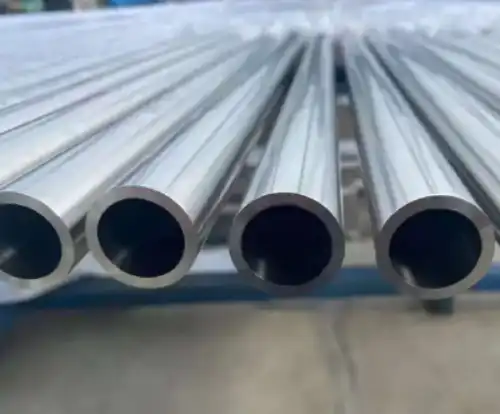
Understanding the Core Differences Between 3 Inch Titanium and Steel Pipes
Titanium and steel pipes are not just made of different materials; they are also very different in many other ways. There are changes in molecular structure, the way alloys are made, and how well they work, all of which have a direct impact on industrial processes.
Material Composition and Alloy Variations
Titanium pipes are better in many ways than carbon steel, stainless steel, or alloy steel pipes. They are made of pure titanium grades (Grade 1-4) or titanium alloys (Grade 5, Grade 7, Grade 12). For industry use, grade 2 titanium is most often used. It is 99.2% pure titanium and has very little iron, oxygen, or nitrogen. This mix makes an oxide layer that is not active and fixes itself when it breaks. This layer always stops rust. This is true for steel pipes made of carbon steel (ASTM A106) or stainless steel (316L, 304). The chromium in them or the coatings that cover them keep them from rusting. But when things get rough, these shields might not work, leaving the material below open to oxidation and structure breakdown.
Corrosion Resistance Capabilities
It is better for titanium pipes not to rust than for steel pipes in almost all tough situations. Steel rusts at a rate of 0.127 mm per year, but titanium rusts at a rate of less than 0.0025 mm per year. Titanium works great in salt water. Titanium stays strong when hydrochloric acid, sulfuric acid, and chlorine compounds are used in chemical processing. Steel, on the other hand, needs to be changed often, or expensive safety measures need to be taken. Titanium pipe systems have been used in the ocean for over 30 years without any major erosion. Because they are near the water, steel options generally need to be changed every 10 to 15 years.
Weight Considerations and Installation Benefits
Titanium is about 45% lighter than steel for pipes of the same size. Steel weighs 7.85 g/cm³, while titanium weighs only 4.5 g/cm³. This advantage in weight saves money on shipping, makes it easier to put together a 3-inch titanium pipe, and reduces the need for support structures. A 3-inch titanium pipe weighs about 40% less than a 3-inch steel pipe of the same length and width. That makes it easier to work with while it's being built and makes the whole project run more smoothly.
Performance and Application Benefits of 3 Inch Titanium Pipes
Titanium pipes work better than other materials when used in tough industrial settings where stability and durability are key.
Strength and Pressure Rating Advantages
Titanium metal pipes have an amazing mechanical strength. Titanium grade 2 can be pulled apart at least 345 MPa, but it is still very bendable. The weakest point of Grade 5 titanium metal (Ti-6Al-4V) is 895 MPa, which is stronger than many types of steel and still better at keeping rust away. Because they are stronger than they are heavy, titanium pipes can handle higher working pressures with thinner walls than steel pipes. It lowers the cost of materials while still having the safety gaps needed for oil and gas processes that use high pressure.
Chemical and Environmental Resistance
Titanium can stand up to chemicals very well, which is why it is used when steel wouldn't work. When titanium pipes come into contact with bad gas that has hydrogen sulfide in it, they don't break as steel pipes do. That means it can be used in more cases than steel because it stays strong in temperatures from very cold to 600°C. Case studies from chemical plants show that titanium doesn't break easily when it comes into contact with chloride stress corrosion, which is a popular way for stainless steel systems to fail. The company PETRONAS says that the tough chemicals in underwater gas processing units quickly break down other materials. That's why they use titanium lines there.
Thermal and Electrical Properties
Titanium is useful in heat exchanges and other processes that need to keep a certain temperature because it moves heat around well. Titanium doesn't carry heat as well as steel does, but it stays steady at a lot of different temperatures. This means that it doesn't break down under thermal stress like steel systems do when they are heated and cooled many times. Because they are safe and not magnetic, titanium pipes are needed in pharmaceutical processes and the making of medical tools, where steel contamination could hurt the quality of the goods.
Cost Analysis and Procurement Considerations
Titanium pipes cost more than steel pipes of the same size at first, but a full lifetime cost study shows that they are much cheaper in the long run, so smart procurement workers should spend the extra money.
Total Cost of Ownership Analysis
Steel pipe systems cost more to fix, replace, and waste time that could have been used for output. Titanium pipe systems usually pay for themselves in 5 to 10 years. When it comes to steel systems, they need safe coats, cathodic protection systems, 3-inch titanium pipe, and regular checks. But silicone pipes don't need any of those things. Titanium doesn't rust, so there's no need for regular covering maintenance, chemical inhibitor treatments, or replacement cycles that happen too soon. This means that maintenance costs for titanium pipe systems are often cut by 60–80%. If you keep these saves up, titanium devices will last you 30 to 50 years.
Supplier Selection and Quality Assurance
To find good titanium pipe suppliers, you should look at how well they can make pipes, what certifications they need, and how they ensure the quality of their work. LINHUI TITANIUM is the leader in its field, with 21 years of experience, ISO/SGS/TUV certifications, and a track record of working on big projects around the world.
Some important things to look at when choosing a seller are:
- What an industrial company can do and how much it can make
- Approval from other countries (ASME, ASTM, and API standards)
- The steps for quality control include being able to find things
- Lead times and being able to meet deadlines
People who work in procurement should make sure that providers can meet specific needs, meet minimum order amounts, and offer expert advice at all stages of a project's lifecycle.
Bulk Purchasing and Project Coordination
You can get the best deals on prices by planning your purchases ahead of time, scheduling shipping times, and buying in bulk. The fact that LINHUI TITANIUM can produce 800 tons of titanium every year and has a world transportation network makes it easy to manage the supply chain for big projects. To source things, some good ideas are to make framework deals for multiple projects, plan supply times with building plans, and buy in bulk to get better price terms.
Making the Decision: Titanium vs Other Alternative Materials
Titanium needs to be weighed against all other materials in order to find the best one for the job while also meeting performance requirements and staying within budget.
Titanium vs Stainless Steel Comparison
When it comes to rust, titanium pipes are better than stainless steel pipes. However, stainless steel pipes don't work well in tough environments, while titanium pipes do. It is still a big problem for stainless steel in chemical and sea environments, as chloride can cause stress corrosion cracks. If the temperature goes above 300°C, titanium works better than stainless steel because stainless steel's technical properties start to break down. Titanium does not contain nickel, 3-inch titanium pipe so it does not cause allergic reactions. This is important for use in the food and medicine industries.
Alternative Material Limitations
Copper lines can sometimes last a long time without rusting. But they aren't very strong mechanically, and they can break when things go fast. While aluminum pipes are lighter than pipes made of other materials, they aren't strong enough or immune to rust enough for industries that use high pressure. Metal pipes are needed in industrial areas because they can handle high temperatures, high pressures, and high dynamic loads. Plastic and hybrid pipes don't rust, but they can't handle those things either.
Environmental and Sustainability Considerations
Titanium lasts a long time, which helps with environmentally friendly buying because it cuts down on the number of times things need to be changed and the damage they cause over their longer useful lives. The material can be recycled, which helps the circular economy and makes sure that the value is returned at the end of its life. Lifecycle studies show that titanium pipe systems are better for the environment than steel ones when you consider how they are made, transported, maintained, and thrown away over the course of their 30+ year useful lives.
How to Correctly Measure and Specify 3 Inch Titanium Pipes for Your Projects
Very specific rules for measurements and specifications make sure that titanium pipes are bought properly and that they don't have problems fitting or working well.
Dimensional Accuracy and Tolerance Requirements
Because theoretical 3-inch titanium pipes are important, it's important to pay close attention to their real sizes, the thickness standards for their walls, and the length needed. Industry rules say that the outside width of smooth pipes must be within ±0.5mm and the outside width of welded pipes must be within ±0.8mm. Before you choose a wall thickness, you should think about things like the required pressure, the maximum amount of corrosion, and the output margins. LINHUI TITANIUM can achieve a limit of 0.1 mm thanks to advanced production methods. This means that links won't leak and the product will work well.
Grade Selection and Material Properties
To pick the correct titanium grades, you need to match the material's properties to the task at hand:
For most business uses, grade 2 titanium is best because it doesn't rust and is simple to shape and join. This grade works well in general chemistry processes, at sea, and for other tasks that don't need high temperatures. For cases with a lot of pressure that need better material, Grade 5 (Ti-6Al-4V) is better. This metal is strong enough for use in aircraft and is good for tough jobs that need to be light but strong.
Manufacturing Process and Quality Control
It's smart to know how 3-inch titanium pipes are made so you can choose the right one and be sure of its quality. Pipes made of metal that are smooth and made by hot extrusion or pilgering work better mechanically than pipes that are attached. Ultrasonic tests and vacuum-arc remelted (VAR) bars with less than 0.15% oxygen are used by LINHUI TITANIUM to make sure there are no flaws in the inclusions. It is promised that the materials will be strong and that every lot of the goods will work the same way.
Conclusion
If you compare titanium pipes to steel pipes and look at their performance, care, and total owning costs, you can see that titanium pipes are clearly better. Titanium never rusts, is very strong for its weight, and lasts for decades, so it is highly suggested for use in important industries. It costs more than steel options at first, but in the long run, it's much better because it doesn't need to be maintained as often, lasts longer, and works reliably. If procurement workers want the best pipes for tough environments, titanium pipes are the only way to go. Steel pipes can't compare to their performance.
FAQ
1. What is the typical lifespan of a 3-inch titanium pipe compared to steel?
Outside, titanium pipes can last up to 50 years, but steel lines need to be changed every 10 to 15 years. Tin is not easily rusted like steel is, so it does not break down over time as steel does. Due to this, titanium is a great long-term purchase that can be used in important ways.
2. How do I determine if titanium piping is cost-effective for my project?
Find out how much it will cost to own the item for 20 years, including how much it costs to buy, how much it will cost to install, how much it will cost to maintain, and how many times it will need to be updated. Titanium usually pays for itself in 5 to 10 years because it doesn't need as much maintenance and lasts longer. This is especially true in places where steel often needs to be fixed because it rusts.
3. What certifications should I look for when purchasing titanium pipes?
It is important to meet ASTM B338 standards for seamless lines, API standards for oil and gas service, and ASME compliance standards for pressure tanks. A good source will have Mill Test papers (EN 10204 3.1), paperwork that shows where the products came from, and inspection papers from well-known companies like DNV, SGS, or TUV.
Partner with LINHUI TITANIUM for Superior Piping Solutions
LINHUI TITANIUM has been making titanium pipes for 21 years and is known for always making high-quality products. They have worked with major companies around the world. To make titanium pipes that meet the tightest standards for use in oil, gas, chemicals, 3-inch titanium pipe and ships, our plants are ISO/SGS/TUV certified. With two specialized plants and 30 production lines that can handle 800 tons of steel a year, we can safely work on projects of any scale. Send an email to linhui@lhtitanium.com with your wants for a 3-inch titanium pipe source. You'll get a custom price in 24 hours.
References
1. American Society for Testing and Materials. "Standard Specification for Seamless and Welded Titanium and Titanium Alloy Pipes." ASTM B338-18, 2018.
2. Schutz, R.W. "Titanium in the Chemical Process Industries." Journal of Materials Engineering and Performance, Vol. 15, No. 6, 2006.
3. International Titanium Association. "Guidelines for Design and Fabrication of Titanium Process Equipment." Technical Report ITA-2019-001, 2019.
4. Peters, M., Kumpfert, J., Ward, C.H., Leyens, C. "Titanium Alloys for Aerospace Applications." Advanced Engineering Materials, Vol. 5, No. 6, 2003.
5. Boyer, R., Welsch, G., Collings, E.W. "Materials Properties Handbook: Titanium Alloys." ASM International, Materials Park, Ohio, 1994.
6. National Association of Corrosion Engineers. "Titanium in Oil and Gas Applications." NACE Technical Publication 35110, 2010.