
When projects need high-quality materials quickly, it's very important to find dependable sources for industrial pure titanium tubes. The best way to do things is to work with well-known makers who have complete inventory systems, certified quality control methods, and fast shipping options. LINHUI TITANIUM is a top seller that offers Grade 1/2 titanium tubes that meet ASTM B338 standards. They have been making these tubes for more than 21 years and can ship them to over 60 countries, with door-to-door shipping and real-time tracking.
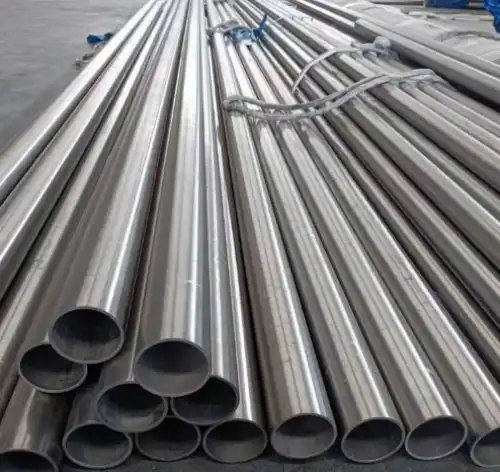
Understanding Industrial Pure Titanium Tubes — Key Properties and Standards
Industrial pure titanium tubes are unique parts that are made to work in harsh conditions where regular materials don't work. With 99.6% pure titanium, these tubes are very resistant to rust, biocompatible, and have better strength-to-weight ratios than other options. Pure titanium doesn't react with chemicals and has the right material qualities for a wide range of uses, unlike titanium alloys that add other elements to make them stronger.
Material Classification and Grading Systems
Standardized grading methods tell us what chemicals are in pure titanium tubes and what their mechanical properties are. With a tensile strength of about 35,000 psi, grade 1 titanium is the most flexible and easiest to shape. This makes it ideal for uses that need complicated shaping. At 50,000 psi, grade 2 titanium is stronger and more resistant to rust than grade 1. This is the grade most often used in industrial settings. It is important to know the difference between pure titanium and titanium that has been alloyed when choosing a material. Pure titanium is better at resisting rust in oxidizing settings, while Grade 5 (Ti-6Al-4V) titanium alloys are stronger but not as resistant to chemicals. By knowing these differences, procurement experts can choose the right products that will give the best performance and value for money.
Compliance with International Standards
When making titanium tubes, they have to follow strict international rules about their chemical makeup, mechanical qualities, and size limits. ASTM B338 is the main standard for both smooth and welded titanium tubes. It spells out the requirements for uses in aircraft, chemical processing, and other industries. This standard covers grades 1, 2, 7, 9, 11, 12, 16, and 18. Each grade is designed for a different type of service.AMS 4928 is an additional standard for aircraft uses, ISO 13485 is for medical devices, and NACE MR0175 is for oil and gas settings. These certificates make sure that materials can be tracked, that quality is always the same, and that they meet the standards of their business. Teams in charge of buying things should check the certifications of suppliers and ask for test reports on materials to make sure they meet certain standards.
Comparing Titanium Tubes — Why Choose Pure Titanium Over Alternatives?
Choosing the right materials has a big effect on the success of a project, its running costs, and its service life in tough situations. Pure titanium tubes have special benefits that make their high price worth it because they work better and last longer than tubes made of other materials.
Performance Metrics and Durability Analysis
Pure titanium is better than options like stainless steel, aluminum, industrial pure titanium tubes, and copper because it doesn't rust. Titanium makes a stable oxide layer that heals itself when it gets damaged. This protects it in chloride-rich settings where stainless steel gets pitted and corroded in cracks. This quality is very useful in chemical processes, marine uses, and oil plant work. Titanium's strength-to-weight ratio is about 40% higher than steel's. This means that titanium can be used in aircraft and cars to reduce weight without affecting the strength of the structure. Pure titanium keeps its mechanical qualities at high temperatures up to 600°F, while aluminum blends lose a lot of their strength above 300°F.
Cost-Benefit Analysis and Return on Investment
Even though pure titanium tubes cost more at first than stainless steel or aluminum tubes, their cheaper total cost of ownership is usually due to their longer service life and lower upkeep needs. In corrosive work, titanium heat exchangers last 10 to 20 years in chemical processing plants, while stainless steel versions only last 3 to 5 years. Because pure titanium is biocompatible, there are no worries about metal ions leaching in medicinal and food processing uses. This lowers the risk of contamination and makes it easier to follow the rules. This trait is especially useful when making ultra-pure semiconductors, since small amounts of metal pollution can lower product results.
Application-Specific Requirements and Real-World Performance
Materials that can handle changing temperatures, pressure differences, and chemicals from fuel and hydraulic fluids are needed in aerospace applications. Pure titanium Grade 2 tubes work great in these conditions because they don't leak and can withstand thousands of temperature cycles. They also don't crack from stress rust as aluminum and steel parts do. To make medical devices, you need materials that can mix with human flesh without causing problems. Pure titanium shows osseointegration qualities in orthopedic devices and keeps its chemical stability in operating rooms. The stiffness of flexibility is very close to that of human bone, which lowers the stress shielding effects that make implants weaken over time.
Where to Source Industrial Pure Titanium Tubes with Fast Delivery?
To find trusted providers who can deliver quickly, you need to know about global manufacturing hubs, transportation, and quality control systems. The titanium business is mostly based in a few key areas that have good facilities and technical know-how.
Leading Manufacturing Regions and Supplier Profiles
China makes most of the titanium in the world because it has the most modern factories and the most affordable prices. LINHUI TITANIUM is a great example of the Chinese industry. It is based in Xi'an and uses cutting-edge tools and strict quality control systems to make its products. The company keeps smart amounts of inventory in a variety of grades and sizes, which lets them quickly fill urgent orders. North American sellers focus on high-quality goods for specific uses and often keep lead times short for local customers by using regional warehouse networks. Precision engineering and aerospace-grade materials are important to European makers, who make products for tough jobs that have strict quality standards.
Supplier Evaluation Criteria and Selection Process
For supplier relationships to work, technical skills, quality processes, industrial pure titanium tubes, and service performance must all be carefully looked at. Manufacturing licenses (ISO 9001, AS9100), third-party approvals (DNV, ABS, SGS), and written quality processes that cover handling, testing, and tracking of materials are some of the most important things that are used to judge a product. A supplier's ability to handle different order amounts and customization needs depends on their production capacity and flexibility. Manufacturers who handle everything themselves, from freezing the ingot to finishing the tube, have a better handle on quality and delivery times than wholesalers or secondary makers. Customer examples and case studies show how reliable a provider is and how well they can solve problems. Partnerships that work well with big oil companies, rocket makers, and chemical processors show that the technology can handle tough tasks.
Modern Procurement Channels and Ordering Systems
Through a real-time view of inventory, technical specs, and price data, digital buying tools make the sourcing process easier. A lot of providers now have online configurators that let customers choose sizes, grades, and quantities while getting quotes and shipping figures right away. Direct relationships with manufacturers often lead to better prices, professional help, and delivery times than dealing through distributors. But distributors may be better for small sales or getting specific goods from more than one producer.
Ensuring Quality and Compliance in Your Titanium Tube Procurement
When buying titanium tubes, quality control is very important because differences in the material can affect performance and safety in serious situations. To be good at quality control, you need to know how things are made, how to test them, and what paperwork is needed.
Manufacturing Process Excellence and Quality Control
Advanced manufacturing methods have a big effect on the quality and performance of the end product. When compared to hot-forming methods, cold-rolling techniques produce a better surface finish and more accurate measurements. Seamless welding, on the other hand, eliminates any possible leak paths in pressure applications. Post-process heating removes any remaining stresses and improves the microstructure to make the material more flexible and resistant to rust. To make sure that the mechanical features of each production lot are the same, the right heat treatment factors must be controlled and written down. Inspection of incoming materials, tracking of work in progress, and final testing procedures should all be part of quality control systems. Manufacturers with a good reputation keep statistical process control data and give thorough test results that include information on chemical composition, mechanical qualities, and size confirmation.
Certification Requirements and Documentation Standards
Material approvals are the basis for quality assurance because they show where the raw materials came from, all the way to the final review. Mill test records need to have heat numbers, chemical analysis results, mechanical test data, and measures of different sizes that show the product meets certain standards. Third-party inspection services check the standard of materials and production methods without being involved in the process. Witnessing testing and certification services from companies like DNV, SGS, and Moody International boosts trust in suppliers and the quality of their products. Documentation systems should keep full records of the history of materials, how they were processed, and the results of any inspections. Digital record-keeping makes it easy to find good data quickly and helps businesses that have to follow rules do so.
Supplier Qualification and Audit Processes
As part of fully qualifying a provider, the manufacturing facilities, quality systems, industrial pure titanium tubes, and specialized skills must be inspected on-site. Protocols for audits should check the condition of tools, the training of operators, the processes for calibration, and the documentation of control systems. Performance measures that track delivery, quality, and response are used to keep an eye on suppliers and make sure that the relationship continues to be successful. Regular reviews of a business give people a chance to talk about problems and find ways to make things better that are good for everyone.
Practical Tips to Optimize Your Procurement Process for Industrial Pure Titanium Tubes
Cost optimization, quality assurance, and reliable delivery are all important parts of good buying strategies. To make complete buying plans, it's important to understand how the market works, what suppliers can do, and what your own needs are.
Strategic Sourcing and Supplier Relationship Management
Transactional buying has many problems, but building long-term relationships with qualified sellers has many solutions. When you have established relationships, you can communicate more clearly, get things done faster during times of high demand, and work together to solve technology problems. When you combine volumes from several projects, you can get better prices and service from your providers. Annual supply deals with planned releases let sellers see what materials buyers need and make sure they are always available. Diversification tactics for suppliers find a balance between managing risk and building relationships. Having qualified backup sources on hand stops supply problems and stops the growth of too many suppliers, which lowers the buying power.
Inventory Management and Demand Planning
Strategically placing supplies, industrial pure titanium tubes, cuts down on wait times and makes sure that materials are available in case of sudden needs. Setting up consignment agreements with providers can help keep carrying costs low while still allowing local product access. Accurately predicting demand has a direct effect on how well buying works and how much it costs. Planning together with internal customers and suppliers makes predictions more accurate and lets you control capacity proactively. Standardization efforts for materials make stocking simpler while also boosting economies of scale. Putting together standards for popular grades and sizes makes buying easier and improves quality control.
Conclusion
To getan industrial pure titanium tube quickly, you need to form smart partnerships with qualified makers who can show they have technical know-how, high-quality standards, and reliable logistics. To be successful, you need to know how the materials work, check out the skills of the suppliers, and use complete buying plans that balance the needs for cost, quality, and delivery. There are many places to get titanium in the world. Well-known companies like LINHUI TITANIUM have been making titanium for a long time and can meet the needs of demanding uses in the aircraft, chemical processing, and industrial markets.
FAQ
1. What are typical delivery times for industrial pure titanium tubes?
Delivery times for popular grades and sizes are between 2 and 4 weeks, but this depends on how much the seller stocks and how many items are ordered. For urgent needs, faster shipping choices can cut lead times to 7–10 days, but there may be extra fees. Due to manufacturing schedule needs, custom standards or non-standard dimensions usually take 4 to 6 weeks.
2. Can industrial pure titanium tubes be customized for specific applications?
Yes, reliable makers do offer a wide range of customization options, such as changing the size or shape of the product, treating the surface, or meeting specific testing needs. You can change the grade, wall thickness, length, and end preparation to fit the needs of your application. Advanced makers keep technical support staff on hand to help with developing specifications and finding the best ways to use their products.
3. How does pure titanium compare to stainless steel in corrosive environments?
Pure titanium is more resistant to rust than stainless steel, especially in places with a lot of salt, where stainless steel gets pitting and crevice corrosion. Titanium is chemically stable in high temperatures and acids that oxidize metals, which is not possible with stainless steel grades. This speed benefit usually makes up for the higher original cost by making the service last longer and needing less maintenance.
Partner with LINHUI TITANIUM for Premium Industrial Pure Titanium Tube Solutions
LINHUI TITANIUM has more than 21 years of experience as a leader in the production of high-performance titanium tubes and has received world standards such as ASTM B338, PED, industrial pure titanium tubes, and ISO 9001. Our large inventory system lets us ship quickly to more than 60 countries, and our modern production methods make sure that the quality is always the same and that we meet all international standards. Email our technical experts at linhui@lhtitanium.com to talk about your unique needs and get cheap quotes. As a reliable provider of industrial pure titanium tubes, we offer help 24 hours a day, seven days a week, full test paperwork, and extensive guarantees that make sure projects go smoothly.
References
1. American Society for Testing and Materials. "Standard Specification for Seamless and Welded Titanium and Titanium Alloy Tubes for Condensers and Heat Exchangers." ASTM B338-21, West Conshohocken, PA: ASTM International, 2021.
2. Boyer, Rodney R., Gerhard Welsch, and E.W. Collings. "Materials Properties Handbook: Titanium Alloys." Materials Park, OH: ASM International, 1994.
3. Donachie, Matthew J. "Titanium: A Technical Guide, 2nd Edition." Materials Park, OH: ASM International, 2000.
4. Lutjering, Gerd and James C. Williams. "Titanium: Engineering Materials and Processes." Berlin: Springer-Verlag, 2007.
5. National Association of Corrosion Engineers. "Materials Requirements for Sulfide Stress Cracking Resistant Metallic Materials for Oilfield Equipment." NACE MR0175/ISO 15156, Houston, TX: NACE International, 2015.
6. Schutz, Robert W. and Henry B. Watkins. "Recent Developments in Titanium Alloy Application in the Energy Industry." Materials Science and Engineering A213, no. 1-2 (1996): 128-137.