
Procurement managers typically look for well-known companies that have all the necessary licenses and a track record of reliable supply chains when buying wholesale medical grade titanium wire in bulk. Medical-grade titanium materials can be bought from reputable sources who offer commercially pure titanium (Grades 1-4) and alloys like Ti-6Al-4V ELI (Grade 23), which are made following strict quality control rules. These providers follow the biocompatibility guidelines set by ASTM F67, ASTM F136, and ISO 10993. This makes sure that materials are traceable and of good quality. By working directly with approved makers, buyers can get better prices, make sure they have enough stock for big projects, and build long-lasting relationships that are essential for making medical devices.
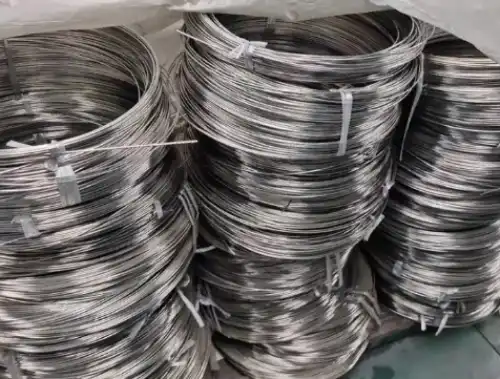
Understanding Medical Grade Titanium Wire: Properties and Benefits
For implantable medical equipment and surgical uses, medical grade titanium wire is a special kind of biocompatible metal that was made just for those uses. Unlike industrial-grade options, this wire goes through strict vacuum arc remelting and precise drawing steps to get to a very high level of purity that stops cytotoxic reactions in the body.
Defining Characteristics of Medical Grade Titanium Wire
The main part of the material is either commercially pure titanium or titanium alloys that have been carefully managed. This grade of titanium is the most flexible and weakest, so it can be used for things that need to be shaped a lot. Grade 2 is the most frequently stated commercially pure grade because it has a good balance of strength and formability. Ti-6Al-4V ELI (Grade 23) has better mechanical qualities and extra-low interstitial elements. It was designed to be especially strong for load-bearing implants where fracture hardness is important. The amounts of oxygen, nitrogen, and carbon in these types are strictly controlled to make sure that they will behave mechanically and biologically in an expected way.
Superior Biocompatibility and Corrosion Resistance
The material quickly forms a self-healing titanium dioxide passivation layer that makes it very resistant to electrical breakdown in body fluids. This protective oxide film stops the release of poisonous ions that often happens with cobalt-chrome or stainless steel options. Titanium wire is the best material for joint fixation devices and tooth implants because it is bio-inert, which means it can directly integrate with flesh through osseointegration processes. There is clinical proof that implants stay stable over time with little to no inflammation. This solves the main problem of cellular rejection that other metallic biomaterials have.
Mechanical Advantages for Medical Applications
Titanium wire has a Young's Modulus of about 110 GPa, which is very close to the mechanical qualities of human bone. This solves the stress-shielding problem, which happens when implants are too stiff and cause bone to break down. The high strength-to-weight ratio of the material lets thinner wire shapes be used without affecting the structure's stability. This means that tissue disruption during insertion is less likely to happen. Excellent wear resistance under cyclic loading conditions ensures dependability in cardiovascular stents and cerclage wire uses that are stressed mechanically over and over again.
Because of these basic qualities, medical grade titanium wire is the best choice for makers who care about patient safety, following the rules, and long-term implant performance. Better products come from purchasing things based on a knowledge of these detailed differences.
Key Considerations When Buying Wholesale Medical Grade Titanium Wire
When you buy a lot of wholesale medical grade titanium wire, you need to carefully consider a lot of technical and business factors to make sure you get the best deal and the best quality. Professionals in procurement have to deal with complicated requirements and build relationships with suppliers that allow industrial operations to grow.
Wire Gauge Specifications and Tolerance Requirements
Choosing the right diameter specifications has a direct effect on how well the end gadget works and how efficiently it is made. For precise tasks like catheter reinforcement, tolerances of ±0.002mm are needed. For general orthopedic tasks, however, normal market tolerances of ±0.01mm to ±0.03mm may be fine. The level of precision that can be reached depends on the cold-drawing process, and centerless cutting operations improve the regularity of the dimensions. Buyers should be clear about the surface finish they need, such as acid-etched for bone ingrowth or polished for cardiovascular guidewires, so that the product can be used in the right way. By understanding the connection between wire thickness and tensile strength, you can get the most out of your materials without making parts that are too complicated.
Certification Verification and Compliance Documentation
Quality licenses are the basis for getting finished medical products approved by the government. Suppliers should give EN 10204 3.1 Mill Test Certificates that show the chemical make-up, mechanical qualities, and batch tracking. As long as you meet the basic standards set by ASTM F136 (for Ti-6Al-4V ELI) or ASTM F67 (for commercially pure titanium), the maker is still responsible for the final biocompatibility validation required by ISO 10993. Material conformance is checked by independent third-party testing bodies like SGS, DNV, or TUV. Purchasing teams should ask for heat lot traceability paperwork that lets them track the history of a material all the way through the production chain.
Pricing Structure and Volume Considerations
There are big economies of scale at work in bulk pricing, and orders of more than 500 tons usually get better prices. Customization needs, like specific wire lengths, tempering conditions, or surface treatments, affect unit costs by requiring more tools and making the process more difficult. Because freight prices and import taxes are affected by where the goods are sourced, it is important to figure out the total cost of ownership. Long-term supply deals often keep prices stable when the market for titanium sponge changes, and they also make sure that priority placement is given when supply is limited.
Minimum Order Quantities and Lead Time Planning
Depending on the wire diameter and grade requirements, reputable wholesale medical grade titanium wire makers usually require minimum orders of 100 to 500 kilograms. Standard product configurations ship in 4 to 6 weeks, but wait times for special specs may be 8 to 12 weeks, taking into account the time it takes to process materials and check them for quality. Buyers should plan their cycles with extra inventory to account for validation testing, cleaning processes, and changes in production schedules.
Strategic procurement weighs the need for instant materials against the security of the supply chain over the long term. This is because quality control cannot be compromised in medical uses in order to save money in the short term.
Where to Buy Wholesale Medical Grade Titanium Wire in Bulk: Trusted Suppliers and Brands
Finding reputable providers is the most important buying choice for making sure that quality is always met and that regulations are followed. There are specialized producers around the world with production lines made just for medical products and full certification histories.
Leading Global Manufacturers and Regional Specialists
With numerous foreign approvals, LINHUI TITANIUM is one of the well-known manufacturers of wholesale medical grade titanium wire. The company was started in 2000 and is based in Xi'an, China, which is strategically placed along the Belt and Road initiative. It has many manufacturing licenses, such as PED 2014/68/EU certification, as well as ISO 9001:2015 quality management systems and certifications from CCS, ABS, DNV, BV, BSI, LLOYD'S, and GL. Their combined "Titanium Products Supermarket" model lets you get different grade specs from a single source, which makes managing the supply chain easier for buying things for multiple projects. The company has worked with big names in the energy industry, like PEMEX, PETRONAS, and LUKOIL, showing that it can handle large-scale industrial projects with strict quality standards.
European providers usually focus on pharmaceutical and implantable device uses. They keep their production areas clean and can make a lot of changes to fit your needs. North American wholesalers offer regional inventory and technical help, but because their supply lines are shorter, they often charge more. Asian makers can offer lower prices because they are vertically integrated and can make specific amounts of goods, especially for business uses that need a lot of them.
Supplier Vetting and Due Diligence Processes
Certification audit paperwork is the first step in a good supplier review. Buyers should check that both the material-specific ASTM compliance and the present validity of ISO 13485 medical device quality systems. If you do a site check yourself or hire a third-party inspection service, you can be sure that the production capabilities, cleanroom standards, and traceability systems are all correct. Checking with current medical device OEMs for client references gives useful information about delivery reliability, how quickly technical support responds, and how consistent batches are with each other.
Assessing providers' production ability makes sure they can keep up with rising demand without lowering quality. Companies that make more than 200 tons of medical-grade titanium products every year show that they have invested in infrastructure and gotten good at their processes, which helps build stable long-term relationships. The lab's ability to test mechanical features, do chemical analyses, and look for pollution shows a dedication to quality assurance that goes beyond just meeting licensing requirements.
Direct Factory Sourcing Versus Distributor Networks
When you buy straight from makers, you can get better prices and work more closely with them to make sure your needs are met. Because they are connected directly, they can work together to improve wire properties, packing layouts, and quality paperwork that is specific to the uses of each device. When working with foreign providers, it's important to think carefully about how to communicate and protect intellectual property. However, established companies that serve global markets usually have English-speaking technical teams and strict privacy rules.
Distributor networks offer lower minimum orders, faster shipping from local stock, and easier buying methods that work well for making prototypes or small batches of products. The higher price is because of extra services that add value, like testing materials, repackaging, and legal advice for smaller medical device businesses that don't have their own procurement staff.
Strategic supplier selection balances technical capabilities, certification compliance, commercial terms, and operational compatibility. Building ties with qualified partners is important for navigating the complicated rules that guide making medical devices.
Applications and Use Cases of Medical Grade Titanium Wire in Bulk
Medical grade titanium wire is used in many different medical fields and is very important. Buying it in bulk makes it possible to make a lot of different types of devices at a low cost.
Orthopedic Fixation and Surgical Applications
When it comes to wholesale medical grade titanium wire, orthopedic surgery is the biggest user. Cerclage wiring uses wires with a width of 0.6mm to 1.2mm to fix fractures and stabilize bone fragments. It needs Grade 2 titanium that is flexible and can handle being knotted without breaking. Spinal instrumentation systems use wires in pedicle screw assemblies and posterior anchoring designs, which need Ti-6Al-4V ELI for better tensile strength in load-bearing situations. To close the sternum after heart surgery, bent wire designs are used, which benefit from titanium's resistance to rust in the harsh physiological environment. Large orthopedic implant makers use many tons of materials every year, which is why they should buy in bulk, which lowers the cost of each unit by 15 to 25 percent compared to buying in small lots.
Dental Implantology and Maxillofacial Reconstruction
Precision-drawn titanium wire is used as the raw material for CNC machining processes on dental implant abutments and custom prosthesis frames. The radiolucency of the material makes it possible to get clear images after surgery without any artifacts getting in the way. This is clinically better than radiopaque options. Utilizing titanium's ability to encourage cell adhesion and vascularization, maxillofacial repair plates have wire mesh designs for supporting bone grafts. For orthodontic uses, smaller wire sizes (0.2mm to 0.4mm) are used in springs and retention devices. However, nickel-titanium alloys are often better for requirements that need to remember their shape.
Cardiovascular and Minimally Invasive Devices
A lot of ultra-fine medical grade titanium wire (0.05mm to 0.15mm thickness) is used to make cardiovascular stents. This wire is cut with a laser and polished with electricity. The biocompatibility and hemocompatibility of the material lower the chance of thrombogenesis in situations where it comes into contact with blood. Titanium wire cores are used in catheter guidewires to give the column strength and power transfer while moving through the vascular anatomy. Wire parts are used in minimally invasive surgery tools for things like articulating mechanisms, grabbing forceps, and release systems. These parts need to be able to fight corrosion and work with MRI machines.
ASTM and ISO Standards Compliance
Following globally accepted standards makes sure that the material can be used in medical devices and speeds up the clearance process for all markets around the world.
Technical Specifications and Quality Standards to Check Before Buying
ASTM F136 lays out the rules for the Ti-6Al-4V ELI (Extra Low Interstitial) alloy that is used in surgical implants. It says how much aluminum (5.5–6.75%) and vanadium (3.5–4.5%) is allowed, and it's important that the oxygen level stays below 0.13% to make the alloy more flexible and hard to break. As per ASTM F67, there are four grades of unalloyed titanium. The grades are separated by the amount of oxygen they contain, which ranges from 0.18% (Grade 1) to 0.40% (Grade 4). The amount of oxygen has a direct effect on the mechanical strength and formability of the titanium. European versions are ISO 5832-2 and ISO 5832-3, though there are some small differences in the specifications. Materials approved to ASTM standards usually meet ISO requirements. Specifications for purchases should clearly list any relevant standards and ask for proof of compliance through approval documents from recognized testing labs.
Heat Treatment and Mechanical Property Optimization
Annealing methods have a big effect on the mechanical qualities and machinability of wire. Solution treatment and aging heat cycles make Ti-6Al-4V alloys with the best mix of strength and flexibility. The cooling rates and temperature profiles are carefully controlled to get the microstructural properties that are wanted. Cold-working conditions raise the tensile strength by making the material harder under stress, but they also make it harder to shape. Stress-relief annealing at 480–595°C gets rid of leftover stresses from drawing without changing the strength levels much. Buyers should specify the temper conditions (annealed, quarter-hard, half-hard, full-hard) that work with the manufacturing processes they want to use. They should also be aware that controlled atmosphere furnaces may be needed for post-processing heat treatment to avoid surface oxidation and alpha-case formation, which are bad for fatigue performance.
Packaging and Handling Protocols
Biocompatibility approval is directly affected by how well contamination is kept out during storage and shipping. Medical-grade titanium wire should be shipped in covered, moisture-barrier wrapping that has desiccant inside to keep the surface from oxidizing and particles from sticking to it. For spool winding or coil shapes, protective wrapping is needed to keep the wires from touching each other, which could damage the surface or harden the work at the contact points. Clean-room packed material costs more, but it doesn't need to be cleaned again before it can be used to make an implantable device. With every shipment, there must be paperwork that includes a heat lot number, material test results, and handling suggestions. This makes sure that the goods can be tracked all the way through the device production cycle.
Including these technical factors in procurement specs makes quality demands clear and gives objective acceptance criteria for inspecting incoming materials. This lowers the risk of production delays or problems with following regulations.
Conclusion
Technical requirements, certification compliance, source dependability, and business needs must all be balanced when purchasing wholesale medical-grade titanium wire in large quantities. The choice of material between available pure grades and Ti-6Al-4V alloys rests on the expected mechanical and biological performance. Verified agreement with ASTM and ISO standards, backed up by detailed mill test records, is what regulatory approval paths are built on. For long-term success in medical device manufacturing, it's important to build relationships with certified makers who can offer scalable production capacity, regular quality, and the ability to work together technically. Strategic bulk purchasing saves a lot of money and keeps the supply chain stable, which is important for meeting production plans and market needs.
FAQ
Is medical grade titanium wire safe for permanent implantation?
When used for stable placement, medical-grade titanium wire has great long-term biocompatibility. Over many decades of clinical data, limited inflammatory reaction, no toxic ion release, and stable osseointegration traits have all been proven. The titanium dioxide layer on the surface of the material stops rusting in physiological settings, so the structure stays strong throughout the implant's lifetime. The FDA and the European Medicines Agency are two regulatory groups that say titanium metals that meet ASTM F136 and ASTM F67 standards can be used for permanent implantable devices.
How does medical grade titanium wire differ from Nitinol wire?
Medical grade titanium wire and Nitinol (a nickel-titanium metal) are used for different things because of how they are made. Titanium wire is better for biocompatibility and has almost no nickel in it, so it doesn't cause allergy problems for the 10–15 percent of the population that is sensitive to nickel. Nitinol has special properties like being superelastic and remembering its shape, which make it useful for self-expanding tubes and dental uses. However, it is harder to make and costs more than other materials. Titanium wire is better for stable load-bearing implants because it has a higher strength-to-weight ratio and doesn't corrode as easily in body fluids that are high in chlorine.
What verification steps ensure quality before purchasing bulk medical grade titanium wire?
To start checking the quality, you should ask for certified mill test records that list the chemical make-up and mechanical properties of each output lot. Independent lab tests on the material by a third party show that the tensile strength, yield strength, elongation percentage, and chemical analysis meet the standards of the specification. Visual analysis finds flaws on the surface, contamination, or bad packing. Dimensional tolerances and surface finish quality are checked by testing samples with example wire pieces. There is more faith in the quality management and process controls when there are supplier audit reports from well-known inspection agencies.
Partner with LINHUI TITANIUM for Premium Medical Grade Titanium Wire Supply
For businesses that need wholesale medical grade titanium wire with verifiable certifications and scalable supply capacity, LINHUI TITANIUM provides complete options. We can make a lot of different types and grades of titanium, and we have approvals from foreign classification societies like DNV, ABS, and Lloyd's, as well as PED 2014/68/EU and ISO 9001:2015. We've sent hundreds of thousands of tons to big companies in more than 60 countries, so we know how important it is for medical device manufacturers to make sure that their materials are consistent, that they follow all the rules, and that they can count on us to send them on time. Our expert team works directly with clients to find the best wire specs for each application, whether it's for orthopedic implants, dental devices, or heart instruments. People in charge of buying things can ask for customized quotes that take into account their specific needs and technical requirements when looking for a reliable wholesale medical-grade titanium wire seller. Get in touch with our global sales team at linhui@lhtitanium.com to talk about your project needs and find out how our "Titanium Products Supermarket" model makes managing the supply chain easier and offers low prices for large orders.
References
1. American Society for Testing and Materials. (2021). Standard Specification for Wrought Titanium-6Aluminum-4Vanadium ELI (Extra Low Interstitial) Alloy for Surgical Implant Applications (UNS R56401). ASTM International, West Conshohocken, PA.
2. International Organization for Standardization. (2020). Implants for Surgery — Metallic Materials — Part 3: Wrought Titanium 6-Aluminum 4-Vanadium Alloy. ISO 5832-3:2016, Geneva, Switzerland.
3. Niinomi, M., & Nakai, M. (2019). Titanium-Based Biomaterials for Preventing Stress Shielding Between Implant Devices and Bone. International Journal of Biomaterials, Volume 2019, Article ID 2320534.
4. Rack, H.J., & Qazi, J.I. (2006). Titanium Alloys for Biomedical Applications. Materials Science and Engineering C, 26(8), 1269-1277.
5. Geetha, M., Singh, A.K., Asokamani, R., & Gogia, A.K. (2009). Ti-based Biomaterials, the Ultimate Choice for Orthopedic Implants – A Review. Progress in Materials Science, 54(3), 397-425.
6. Elias, C.N., Lima, J.H.C., Valiev, R., & Meyers, M.A. (2008). Biomedical Applications of Titanium and its Alloys. Journal of the Minerals, Metals and Materials Society, 60(3), 46-49.