
The primary difference between Grade 2 and Grade 4 titanium lies in their strength and application suitability. Grade 2 offers excellent corrosion resistance with moderate strength (minimum tensile strength of 345 MPa), making it ideal for chemical processing equipment. Grade 4 titanium provides significantly higher strength (minimum tensile strength of 550 MPa) while maintaining excellent biocompatibility, making it perfect for demanding applications like aerospace components and medical implants. Both are commercially pure titanium grades, but Grade 4 delivers superior mechanical properties for high-stress environments.
Understanding Commercially Pure Titanium Classifications
Commercially available pure titanium comes in four different kinds, each one made for a certain type of industry use. The titanium material grade system sorts these metals by how much oxygen, nitrogen, carbon, and iron they have.
Grade 1 represents the softest and most ductile option, containing the lowest interstitial element content. Grade 2 follows as the most commonly used variant, offering balanced properties for general applications. Grade 3 provides intermediate strength characteristics, while grade 4 titanium delivers the highest strength among commercially pure grades.
As students move from Grade 1 to Grade 4, they show more and more strength as they learn how to safely add new elements to their work. With this step-by-step method, experts can choose the best titanium alloy for their needs.
Grade 1 or 2 is better if you need the most formability and protection from corrosion. If you need more strength while still being biocompatible, Grade 4 is better.
Mechanical Properties Comparison: Three Core Differences
The mechanical features show that there are big differences between these grades of titanium. It is very important to know these differences in order to choose the right material for very important uses.
Three core mechanical differences:
- Tensile Strength: Grade 2 exhibits 345-483 MPa tensile strength, while grade 4 titanium achieves 550-750 MPa
- Yield Strength: Grade 2 provides 275 MPa minimum yield strength compared to Grade 4's 483 MPa minimum
- Elongation: Grade 2 offers 20% minimum elongation versus Grade 4's 15% minimum
Test results from ASTM B348 standards show that these performance characteristics are correct. For both types, the density of titanium stays the same at about 4.51 g/cm³, which means that the weights will be similar.
The grade four titanium metal is better at resisting fatigue, which makes it perfect for uses that involve cyclical loading. The stronger material is made by carefully raising the oxygen level, usually by 0.18% to 0.40% by weight.
Grade 4 is better if you need parts that are exposed to heavy stress or fatigue loading. Grade 2 is a better choice if you care most about formability and only need middling strength.
Chemical Composition and Corrosion Performance
Grade 4 titanium has higher amounts of interstitial elements than grade 2 titanium does. Grade 4 has an oxygen level of 0.18% to 0.40% on average, while Grade 2 has 0.10% to 0.25% oxygen.
Both grades have excellent titanium corrosion protection in a wide range of settings. Grade 2 does very well in low-oxygen settings and places with chloride solutions, which is why it is the most popular choice for chemical processing equipment. Grade 4 has the same rust resistance but better performance in terms of mechanics.
The highest iron content allowed is 0.50% for Grade 4 and 0.30% for Grade 2. Both types have less than 0.10% carbon, which makes them tougher and more flexible.
Consistent material qualities are guaranteed by nitrogen content limits. Grade 4 allows more nitrogen than Grade 2. Grade 4 lets nitrogen up to 0.05%, while Grade 2 only allows up to 0.03%. This is one of the reasons why these grades vary in strength.
Grade 2 is a better choice if you need parts that will be exposed to harsh chemicals in high-stress situations. If you need something that's hard, won't break, and is also resistant to rust, then Grade 4 is the best choice.
Applications and Industry Usage Patterns
Grade 2 titanium is the most common type used in chemical processing, marine hardware, and architectural uses. Because it can be easily shaped, complicated designs can be made with it at a low cost.
Grade 4 titanium is used in aerospace fasteners, medical gadgets, and high-performance car parts. The biomedical titanium industry really likes Grade 4 for making surgery tools and implants that need to be very strong.
Grade 4 is often used in titanium tooth implants because it has the best combination of biocompatibility and mechanical performance. The aircraft industry demands Grade 4 for important parts of the structure, where saving weight and dependability are still the most important things.
Choosing an industrial titanium grade relies on what the application needs. Grade 4 is a tough place that requires higher fatigue resistance and load-bearing powers.
Grade 2 is a better fit if you need parts for chemical processing or marine uses. Grade 4 is a better fit if you need something for military, medical, or high-performance uses.
Manufacturing Considerations and Processing Methods
When welding Grade 4 titanium, careful control of heat input is needed to keep the qualities of the material. Compared to Grade 2 applications, better strength levels require specialized welding methods.
The different types of titanium are treated with heat in different ways. Stress reduction annealing at 480–650 °C is usually needed for Grade 2, but Grade 4 gets better property development from annealing at 650–750 °C.
The machining features of each grade are very different. The lower strength levels of Grade 2 allow for higher cutting speeds and feed rates, making it easier to work with. Grade 4 allows for a better surface finish, but it needs more careful cutting settings.
Cold working skills are a plus for complex forming processes, using grade 2. Cold forming isn't possible with Grade 4 due to its higher strength, but it works very well for hot working in specific settings.
Grade 2 is a better fit if you need to do a lot of cold forming or complex cutting. If you can handle specialized processing so that the end qualities are better, then Grade 4 is better.
Product Forms and Availability Considerations
Titanium sheets of grade 4 are sold in a wide range of widths, from 0.5 mm to 50 mm. The standard size for sheets is useful for a wide range of production needs in many different fields.
The grade 4 titanium plates that are available range from thin to heavy, with some being more than 100 mm thick. These items are used to build things that need to be very strong compared to their weight.
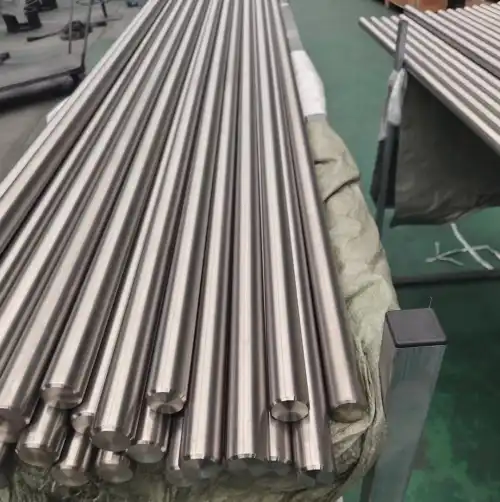
The width of grade 4 titanium bars and rods can be anywhere from 3 mm to 300 mm. Some types of shapes are needed for certain uses, and these are met by cross-sections that are round, square, or hexagonal.
Seamless and welded tubes can be used in pressure vessels and heat exchangers. The walls can be anywhere from thin to thick.
Grade 2 is a better fit if you need common product types that are easy to get. Grade 4 is a better fit if you need specific forms with better properties.
Cost Analysis and Economic Factors
Grade 4 titanium has to be processed in a more complicated way and has better qualities, so it usually costs 15 to 25 percent more than Grade 2. The raw materials prices are a result of the specialized production methods and controlled chemistry.
Total cost of ownership factors often point to Grade 4 as the best choice for applications with high demands. In important uses, longer service life and less maintenance make up for the higher starting costs of materials.
If you buy a lot, you can get volume price benefits. Established companies like LINHUI TITANIUM have low prices for both grades because they can make different things in one factory.
The processing costs depend on the unique needs of the manufacturing process. Grade 4's greater strength may mean that components don't have to be as thick, which might make up for the difference in material costs.
Grade 2 is a better fit if you want to lower the amount you spend first, while getting acceptable results. Grade 4 is a better choice if you need the best value and ability over a long period of time.
Conclusion
The choice between Grade 2 and Grade 4 titanium ultimately depends on your specific application requirements. Grade 2 excels in corrosion-resistant applications requiring good formability and moderate strength. Grade 4 titanium provides superior mechanical properties for demanding environments requiring enhanced strength and fatigue resistance. Both grades maintain excellent biocompatibility and corrosion resistance, making them suitable for diverse industrial applications. Understanding these fundamental differences enables informed material selection decisions that optimize performance while controlling costs. LINHUI TITANIUM's comprehensive product portfolio and technical expertise ensure the successful implementation of either grade for your critical applications.
LINHUI TITANIUM: Your Trusted Grade 4 Titanium Supplier
LINHUI TITANIUM stands as a leading grade 4 titanium manufacturer with over two decades of expertise serving global industries. Our comprehensive certification portfolio includes PED 2014/68/EU, DNV, ABS, CCS, and ISO 9001:2015, ensuring consistent quality and compliance.
LINHUI TITANIUM Grade 4 Titanium Advantages:
- Comprehensive Product Portfolio: Complete range of grade 4 titanium products, including sheets, plates, bars, rods, tubes, and custom fabrications meeting diverse application requirements
- Superior Quality Control: Advanced testing facilities with spectroscopic analysis, mechanical testing, and non-destructive evaluation, ensuring consistent material properties
- Global Certification Network: Extensive approvals from DNV, ABS, CCS, GL, BV, BSI, LLOYD'S, and other international classification societies
- Proven Track Record: Successful delivery of hundreds of thousands of tons to renowned companies, including CEFC, PTT, PDVSA, PETROECUADOR, and PEMEX
- Titanium Products Supermarket: Integrated supply chain offering multiple grades, specifications, and product forms from a single reliable source
- Technical Expertise: Dedicated engineering support for material selection, specification development, and application optimization
- Global Logistics Network: Efficient delivery capabilities to over 60 countries and regions with reliable shipping partnerships
- Customization Capabilities: Specialized processing, including precision cutting, machining, and surface treatment services
- Quality Assurance: Third-party inspection approval from SGS, TUV, Moody's, and other internationally recognized agencies
- Long-term Partnership Approach: Stable supply relationships with flexible contract terms and strategic inventory management
- Competitive Pricing: Direct manufacturer pricing with volume discounts and transparent cost structures
- Technical Documentation: Comprehensive material certificates, test reports, and traceability documentation for every shipment
- Rapid Response: Efficient quotation processing and technical support with dedicated customer service teams
- Environmental Compliance: ISO 14001:2015 certification ensuring sustainable manufacturing practices and environmental responsibility
- Safety Standards: OHSAS 18001:2007 certification demonstrating commitment to workplace safety and operational excellence
Our Xi'an headquarters, strategically located at the starting point of the Belt and Road initiative, enables efficient global distribution. Whether you require standard grade 4 titanium products or specialized solutions, LINHUI TITANIUM delivers consistent quality and reliable service.
Ready to source premium grade 4 titanium for your next project? Our technical team stands ready to assist with material selection, specification development, and supply chain optimization. Contact us at linhui@lhtitanium.com for detailed quotations and technical support.
References
1. Boyer, R., Welsch, G., & Collings, E.W. (1994). Materials Properties Handbook: Titanium Alloys. ASM International.
2. Donachie, M.J. (2000). Titanium: A Technical Guide, 2nd Edition. ASM International.
4. ASTM International. (2019). ASTM B348-19 Standard Specification for Titanium and Titanium Alloy Bars and Billets. ASTM International.
5. Lutjering, G., & Williams, J.C. (2007). Titanium, 2nd Edition. Springer-Verlag Berlin Heidelberg.
6. Peters, M., Kumpfert, J., Ward, C.H., & Leyens, C. (2003). Titanium Alloys for Aerospace Applications. Advanced Engineering Materials, 5(6), 419-427.
7. Rack, H.J., & Qazi, J.I. (2006). Titanium alloys for biomedical applications. Materials Science and Engineering: C, 26(8), 1269-1277.