
Ti-6Al-4V, also known as Grade 5 titanium, is a high-strength titanium alloy that has gained significant popularity in various industries due to its exceptional properties. This material is composed of titanium (Ti) as the base element, with 6% aluminum (Al) and 4% vanadium (V) added to enhance its performance characteristics. Ti-6Al-4V is renowned for its remarkable combination of strength, light weight, and corrosion resistance, making it an ideal choice for demanding applications across aerospace, automotive, medical, and marine sectors. Its unique composition allows for excellent mechanical properties, including high tensile strength, good fatigue resistance, and outstanding temperature performance. As a result, Ti-6Al-4V has become the go-to material for engineers and designers seeking to create high-performance components that can withstand extreme conditions while maintaining structural integrity and longevity.
What are the key properties of Ti-6Al-4V?
Mechanical Strength and Durability
Ti-6Al-4V is renowned for its exceptional mechanical properties, making it a preferred choice in numerous industrial applications. This titanium alloy boasts an impressive strength-to-weight ratio, surpassing many other metals and alloys. With a tensile strength ranging from 900 to 1,200 MPa, Ti-6Al-4V offers superior load-bearing capabilities while maintaining relatively low density. This unique combination allows for the creation of lightweight yet robust components, crucial in the aerospace and automotive industries. Moreover, Ti-6Al-4V exhibits excellent fatigue resistance, ensuring long-term reliability under cyclic loading conditions. Its high fracture toughness further enhances its durability, making it resistant to crack propagation and sudden failure. These properties make Ti-6Al-4V an ideal material for critical structural components in aircraft, such as engine parts and airframe structures. Topak, a leading manufacturer of titanium products, utilizes Ti-6Al-4V in its high-performance aerospace components, ensuring optimal strength and longevity.
Corrosion Resistance and Chemical Stability
One of the standout features of Ti-6Al-4V is its exceptional corrosion resistance, which stems from its ability to form a stable, protective oxide layer on its surface. This natural passivation process makes the alloy highly resistant to various corrosive environments, including saltwater, acids, and industrial chemicals. The corrosion resistance of Ti-6Al-4V is superior to that of many stainless steels, making it an excellent choice for marine applications and chemical processing equipment. Additionally, Ti-6Al-4V demonstrates remarkable chemical stability, maintaining its properties even when exposed to aggressive substances. This characteristic is particularly valuable in the medical field, where the alloy is widely used for implants and surgical instruments due to its biocompatibility and resistance to bodily fluids. Topak's Ti-6Al-4V products are extensively used in the medical industry, providing reliable and long-lasting solutions for orthopedic implants and dental prosthetics.
Thermal and Electrical Properties
Ti-6Al-4V exhibits unique thermal and electrical properties that further expand its range of applications. The alloy has a relatively low thermal conductivity compared to other metals, making it an excellent choice for heat-sensitive applications. This property is particularly beneficial in aerospace components, where thermal management is crucial for maintaining structural integrity and performance. Ti-6Al-4V also maintains its strength at elevated temperatures, with a maximum service temperature of around 400°C (752°F). In terms of electrical properties, Ti-6Al-4V is considered a poor conductor of electricity, which can be advantageous in certain applications where electrical insulation is required. These characteristics make Ti-6Al-4V suitable for use in various industries, including power generation and electronics. Topak's Ti-6Al-4V components are widely utilized in the energy sector, providing reliable solutions for turbine blades and other high-temperature applications.
How is Ti-6Al-4V manufactured and processed?
Raw Material Production and Alloying
The production of Ti-6Al-4V begins with the extraction of titanium from its ores, primarily rutile and ilmenite. The Kroll process is commonly used to produce pure titanium sponge, which is then melted and alloyed with aluminum and vanadium to create Ti-6Al-4V. This alloying process is typically carried out in vacuum arc remelting (VAR) furnaces to ensure high purity and homogeneity of the final material. The precise control of composition and melting conditions is crucial for achieving the desired mechanical and physical properties of Ti-6Al-4V. Once the alloy is produced, it can be cast into ingots or billets for further processing. Topak employs state-of-the-art VAR furnaces to produce high-quality Ti-6Al-4V ingots, ensuring consistent composition and properties throughout their product range.
Forming and Shaping Techniques
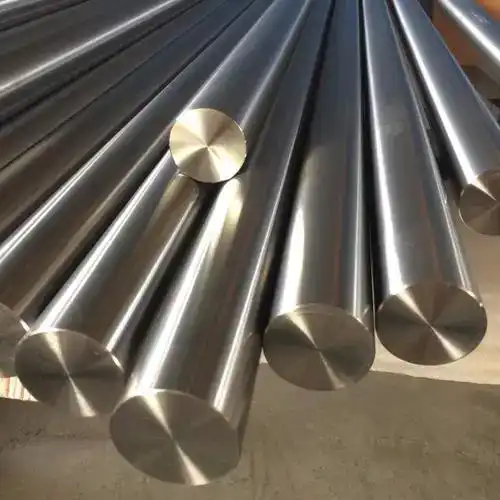
Ti-6Al-4V can be formed and shaped using various techniques, depending on the desired final product and its intended application. Hot working is a common method for shaping Ti-6Al-4V, as the alloy's formability improves at elevated temperatures. Forging, rolling, and extrusion are frequently employed to create semi-finished products such as bars, plates, and tubes. For more complex shapes, precision casting techniques like investment casting can be used. Machining of Ti-6Al-4V requires special considerations due to its high strength and low thermal conductivity. Advanced cutting tools and coolants are often necessary to achieve efficient and precise material removal. Additive manufacturing, particularly powder bed fusion techniques, has gained popularity for producing complex Ti-6Al-4V components with minimal material waste. Topak utilizes a combination of traditional and cutting-edge forming techniques to offer a wide range of Ti-6Al-4V products, from simple sheets to intricate aerospace components.
Heat Treatment and Surface Finishing
Heat treatment plays a crucial role in optimizing the properties of Ti-6Al-4V for specific applications. The most common heat treatment for this alloy is solution treatment and aging (STA), which involves heating the material to a high temperature, quenching, and then aging at a lower temperature. This process enhances the strength and hardness of Ti-6Al-4V while maintaining good ductility. Other heat treatments, such as stress relieving and annealing, can be employed to tailor the material's properties for specific requirements. Surface finishing techniques for Ti-6Al-4V include mechanical polishing, chemical etching, and anodizing. These processes not only improve the appearance of the material but also enhance its corrosion resistance and wear properties. Topak offers a range of heat treatment and surface finishing options for their Ti-6Al-4V products, allowing customers to specify the exact properties needed for their applications.
What are the main applications of Ti-6Al-4V?
Aerospace and Defense Industries
Ti-6Al-4V has found extensive use in the aerospace and defense industries due to its exceptional strength-to-weight ratio and high-temperature performance. In aircraft manufacturing, this alloy is utilized for critical components such as engine parts, landing gear, and structural elements of the airframe. Its ability to withstand high stresses and resist fatigue makes it ideal for jet engine components like fan blades, compressor discs, and turbine blades. In the space industry, Ti-6Al-4V is used in satellite structures, rocket engines, and spacecraft components, where weight savings and reliability are paramount. The defense sector also relies heavily on Ti-6Al-4V for armor plating, missile casings, and other military hardware that requires high strength and impact resistance. Topak supplies Ti-6Al-4V components to leading aerospace manufacturers, contributing to the development of lighter, more fuel-efficient aircraft and advanced defense systems.
Medical and Biomedical Applications
The biocompatibility and corrosion resistance of Ti-6Al-4V make it an excellent material for medical and biomedical applications. It is widely used in the production of orthopedic implants, such as hip and knee replacements, due to its ability to integrate with bone tissue and resist wear over time. Dental implants and prosthetics also benefit from the properties of Ti-6Al-4V, offering patients durable and biocompatible solutions. In the field of surgical instruments, this alloy is preferred for its strength, light weight, and resistance to repeated sterilization processes. Ti-6Al-4V is also employed in the manufacturing of medical devices like pacemaker casings and artificial heart valves, where long-term reliability is crucial. Topak's medical-grade Ti-6Al-4V products undergo rigorous quality control to ensure they meet the stringent requirements of the healthcare industry, providing patients with safe and effective medical solutions.
Automotive and Marine Industries
The automotive industry has increasingly turned to Ti-6Al-4V to address the growing demand for lighter, more fuel-efficient vehicles. This alloy is used in various automotive components, including engine valves, connecting rods, and suspension springs, where its high strength-to-weight ratio offers significant performance advantages. In high-performance and racing vehicles, Ti-6Al-4V is employed in exhaust systems, brake components, and even chassis parts to reduce weight and improve overall performance. The marine industry also benefits from the corrosion resistance of Ti-6Al-4V, particularly in saltwater environments. It is used in the construction of boat propellers, shafts, and other underwater components that require resistance to marine corrosion. Additionally, Ti-6Al-4V finds applications in offshore oil and gas platforms, where its durability and resistance to harsh environmental conditions are highly valued. Topak supplies Ti-6Al-4V components to leading automotive manufacturers and marine engineering firms, contributing to the development of more efficient and durable vehicles and marine structures.
Conclusion
Ti-6Al-4V stands as a remarkable material that has revolutionized numerous industries with its exceptional combination of properties. From aerospace and medical applications to automotive and marine uses, this titanium alloy continues to push the boundaries of what's possible in material science. Its high strength-to-weight ratio, excellent corrosion resistance, and biocompatibility make it an invaluable resource for engineers and designers seeking to create cutting-edge products. As research and development in Ti-6Al-4V processing and applications continue, we can expect to see even more innovative uses for this versatile material in the future, further cementing its position as a crucial alloy in modern manufacturing and engineering.
LINHUI TITANIUM, established in 2000 and headquartered in Xi'an, China, is a leading manufacturer and supplier of Titanium and Titanium Alloys. With a commitment to creating value for customers, LINHUI TITANIUM adheres to the development strategy of "supplying high-end products, establishing a world-renowned enterprise." Our extensive product range and global reach have made us one of the biggest TITANIUM PRODUCTS SUPERMARKETS, exporting to over 60 countries and regions worldwide. We pride ourselves on our long-standing relationships with renowned companies and our comprehensive certifications, including ISO 9001:2015, OHSAS 18001:2007, and ISO 14001:2015. Our dedication to quality and customer satisfaction sets us apart in the industry. For inquiries, please contact us at linhui@lhtitanium.com.
FAQ
Q: What makes Ti-6Al-4V different from pure titanium?
A: Ti-6Al-4V is an alloy containing 6% aluminum and 4% vanadium, which enhances its strength, durability, and heat resistance compared to pure titanium.
Q: Can Ti-6Al-4V be welded?
A: Yes, Ti-6Al-4V can be welded using various techniques, including TIG welding and electron beam welding, but it requires special precautions to prevent contamination.
Q: Is Ti-6Al-4V magnetic?
A: No, Ti-6Al-4V is not magnetic. Like pure titanium, it is paramagnetic, meaning it does not exhibit strong magnetic properties.
Q: What is the melting point of Ti-6Al-4V?
A: The melting point of Ti-6Al-4V is approximately 1,604-1,660°C (2,919-3,020°F).
Q: Is Ti-6Al-4V more expensive than other metals?
A: Yes, Ti-6Al-4V is generally more expensive than many common metals due to its complex production process and superior properties.
References
1. Lutjering, G., & Williams, J. C. (2007). Titanium (2nd ed.). Springer-Verlag Berlin Heidelberg.
2. Peters, M., Kumpfert, J., Ward, C. H., & Leyens, C. (2003). Titanium alloys for aerospace applications. Advanced Engineering Materials, 5(6), 419-427.
3. Rack, H. J., & Qazi, J. I. (2006). Titanium alloys for biomedical applications. Materials Science and Engineering: C, 26(8), 1269-1277.
4. Boyer, R. R. (1996). An overview of the use of titanium in the aerospace industry. Materials Science and Engineering: A, 213(1-2), 103-114.
5. Donachie, M. J. (2000). Titanium: A Technical Guide (2nd ed.). ASM International.
6. Veiga, C., Davim, J. P., & Loureiro, A. J. R. (2012). Properties and applications of titanium alloys: A brief review. Reviews on Advanced Materials Science, 32(2), 133-148.