
Titanium is a versatile metal known for its exceptional strength-to-weight ratio, corrosion resistance, and biocompatibility. Among the various grades of titanium available, Grade 2 and Grade 3 are two commonly used commercially pure (CP) titanium grades. While they share many similarities, there are notable differences between these two grades that affect their properties and applications. Understanding these differences is crucial for engineers, manufacturers, and consumers alike when selecting the most suitable titanium grade for specific projects or products. In this blog post, we'll explore the key distinctions between Grade 2 titanium and Grade 3 titanium, delving into their composition, mechanical properties, and typical uses. By examining these factors, we aim to provide a comprehensive comparison that will help you make informed decisions when choosing between these two titanium grades for your particular needs.
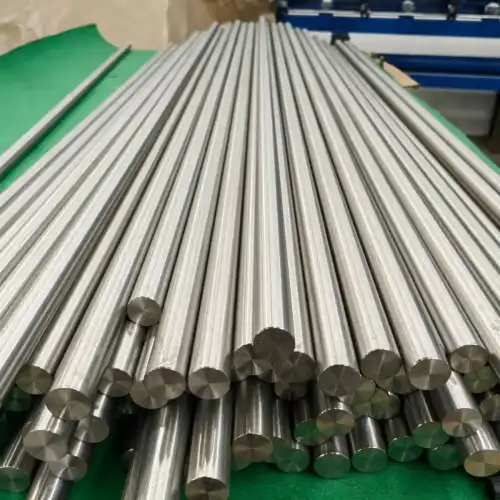
What are the mechanical properties of Grade 2 titanium?
Strength and Hardness
Grade 2 titanium, also known as commercially pure (CP) titanium, is renowned for its excellent balance of strength and ductility. It offers a yield strength of approximately 275-450 MPa and a tensile strength ranging from 345-550 MPa. The hardness of Grade 2 titanium typically falls between 145 and 265 Brinell. These mechanical properties make it suitable for a wide range of applications, from industrial equipment to medical implants. Topak, a leading manufacturer of titanium products, utilizes Grade 2 titanium in various components due to its reliable strength-to-weight ratio and versatility.
Ductility and Formability
One of the standout features of Grade 2 titanium is its exceptional ductility and formability. With an elongation of 20-30%, it can be easily shaped and formed into complex geometries without compromising its structural integrity. This characteristic makes it highly desirable in industries where intricate designs are required, such as aerospace and automotive. Topak's engineers often recommend Grade 2 titanium for projects that demand both strength and formability, as it allows for greater design flexibility and cost-effective manufacturing processes.
Corrosion Resistance
Grade 2 titanium boasts excellent corrosion resistance, particularly in oxidizing environments. It forms a stable, protective oxide layer on its surface, which provides exceptional resistance to various corrosive media, including seawater, organic compounds, and many industrial chemicals. This property makes it an ideal choice for marine applications, chemical processing equipment, and heat exchangers. Topak's Grade 2 titanium products have been successfully deployed in harsh environments, demonstrating long-term durability and minimal maintenance requirements, which translates to significant cost savings for their clients over the lifespan of the equipment.
How does Grade 3 titanium compare to Grade 2 in terms of performance?
Strength Comparison
Grade 3 titanium generally exhibits higher strength compared to Grade 2 titanium. It typically has a yield strength of 380-550 MPa and a tensile strength of 450-650 MPa, which is notably higher than Grade 2. This increased strength is attributed to the slightly higher oxygen content in Grade 3 titanium. However, it's important to note that while Grade 3 offers enhanced strength, it may sacrifice some ductility compared to Grade 2. Topak's material specialists often recommend Grade 3 titanium for applications that require higher strength without significantly increasing weight, such as in certain aerospace components or high-pressure vessels.
Corrosion Resistance Differences
Both Grade 2 and Grade 3 titanium offer excellent corrosion resistance, but there are subtle differences in their performance. Grade 3 titanium, due to its slightly higher oxygen content, may form a marginally thicker oxide layer, potentially providing enhanced protection in some corrosive environments. However, in most practical applications, the difference in corrosion resistance between the two grades is minimal. Topak's engineers carefully evaluate the specific corrosion requirements of each project to determine whether the slight advantage of Grade 3 titanium in this aspect justifies its use over Grade 2, considering factors such as cost and availability.
Weldability and Fabrication
When it comes to weldability and fabrication, both Grade 2 and Grade 3 titanium perform exceptionally well. However, Grade 2 titanium is often preferred for its superior formability and ease of welding. Its lower strength compared to Grade 3 makes it more amenable to cold working and forming operations. Grade 3 titanium, while still weldable, may require more precise control of welding parameters due to its higher strength and slightly reduced ductility. Topak's manufacturing facilities are equipped to handle both grades effectively, but they often recommend Grade 2 titanium for projects that involve complex forming or extensive welding to optimize production efficiency and cost-effectiveness.
What are the key applications and industries for Grade 2 titanium?
Aerospace and Aviation
Grade 2 titanium finds extensive use in the aerospace and aviation industries due to its excellent strength-to-weight ratio and corrosion resistance. It is commonly used in aircraft components such as hydraulic systems, engine parts, and structural elements. The material's ability to withstand high temperatures and resist fatigue makes it ideal for these demanding applications. Topak supplies Grade 2 titanium to several leading aerospace manufacturers, contributing to the development of lighter, more fuel-efficient aircraft. The material's long-term durability also reduces maintenance requirements, making it a cost-effective choice for the aviation sector.
Chemical Processing and Industrial Equipment
The exceptional corrosion resistance of Grade 2 titanium makes it a preferred material in chemical processing and industrial equipment manufacturing. It is widely used in heat exchangers, reaction vessels, and piping systems that handle corrosive chemicals or seawater. Grade 2 titanium's ability to withstand a wide range of aggressive environments while maintaining its structural integrity ensures long-term reliability and reduced downtime in industrial settings. Topak's Grade 2 titanium products have been successfully implemented in numerous chemical plants and industrial facilities, providing superior performance and extended service life compared to traditional materials.
Medical and Biomedical Applications
Grade 2 titanium's biocompatibility and resistance to bodily fluids make it an excellent choice for medical and biomedical applications. It is commonly used in surgical instruments, dental implants, and orthopedic devices. The material's low magnetic susceptibility also makes it suitable for use in MRI-compatible medical equipment. Topak collaborates with leading medical device manufacturers to provide high-quality Grade 2 titanium components that meet stringent industry standards. The material's ability to osseointegrate with human bone tissue has revolutionized the field of implantology, improving patient outcomes and quality of life.
Conclusion
In conclusion, while both Grade 2 and Grade 3 titanium offer excellent properties, they have distinct characteristics that make them suitable for different applications. Grade 2 titanium excels in formability and ductility, making it ideal for complex shapes and welded structures. It finds widespread use in aerospace, chemical processing, and medical industries. Grade 3 titanium, with its higher strength, is preferred in applications requiring greater mechanical properties. Both grades offer exceptional corrosion resistance and biocompatibility. The choice between Grade 2 and Grade 3 titanium ultimately depends on the specific requirements of the application, balancing factors such as strength, formability, and cost-effectiveness.
Partner with LINHUI TITANIUM for Premium Titanium Solutions Worldwide
LINHUI TITANIUM, established in 2000 and headquartered in Xi'an, China, is a leading manufacturer and supplier of titanium and titanium alloys. With a commitment to creating value for customers, we adhere to the strategy of "supplying high-end products, establishing a world-renowned enterprise." Our extensive product range includes various titanium grades, making us one of the largest TITANIUM PRODUCTS SUPERMARKETS globally. We've successfully exported to over 60 countries and regions, earning trust from renowned companies worldwide. Our certifications, including ISO 9001:2015, OHSAS 18001:2007, and ISO 14001:2015, underscore our commitment to quality and safety. For superior titanium products and exceptional service, contact us at linhui@lhtitanium.com.
FAQ
Q: What is the main difference between Grade 2 and Grade 3 titanium?
A: The main difference is in strength. Grade 3 titanium has higher strength but slightly lower ductility compared to Grade 2.
Q: Which grade is better for corrosion resistance?
A: Both grades offer excellent corrosion resistance, with Grade 3 potentially having a slight edge due to its higher oxygen content.
Q: Is Grade 2 or Grade 3 titanium more suitable for medical implants?
A: Grade 2 titanium is more commonly used for medical implants due to its excellent biocompatibility and formability.
Q: Which grade is easier to weld?
A: Grade 2 titanium is generally easier to weld due to its lower strength and higher ductility.
Q: Can Grade 2 and Grade 3 titanium be used interchangeably?
A: While they have similar properties, they are not always interchangeable. The choice depends on specific application requirements.
References
1. ASTM International. (2015). Standard Specification for Titanium and Titanium Alloy Strip, Sheet, and Plate. ASTM B265-15.
2. Lutjering, G., & Williams, J. C. (2007). Titanium. Springer Science & Business Media.
3. Donachie, M. J. (2000). Titanium: A Technical Guide. ASM International.
4. Leyens, C., & Peters, M. (Eds.). (2003). Titanium and Titanium Alloys: Fundamentals and Applications. John Wiley & Sons.
5. Boyer, R., Welsch, G., & Collings, E. W. (1994). Materials Properties Handbook: Titanium Alloys. ASM International.
6. Peters, M., Kumpfert, J., Ward, C. H., & Leyens, C. (2003). Titanium alloys for aerospace applications. Advanced Engineering Materials, 5(6), 419-427.