
The design principle of an elliptical dish end centres on achieving optimal stress distribution through its ellipsoidal geometry, which maintains structural integrity under internal pressure while minimising material usage. These critical components, commonly known as dished end caps or pressure vessel closures, follow a 2:1 semi-major to semi-minor axis ratio that balances mechanical efficiency with fabrication feasibility. Governed by ASME Section VIII standards, the elliptical profile distributes hoop and longitudinal stresses more uniformly than flat closures, making these components indispensable in oil refineries, chemical reactors, and marine pressure systems where safety and reliability cannot be compromised.
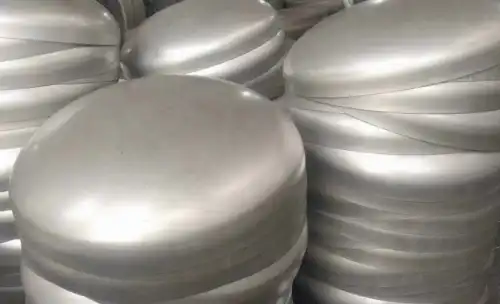
Understanding the Design Principle of Elliptical Dish Ends
What Are Elliptical Dish Ends and Their Core Function
Elliptical dish ends represent specialised closures designed to seal cylindrical pressure vessels, storage tanks, and piping networks across demanding industrial applications. The defining characteristic is their mathematical ellipse shape, where the crown radius and knuckle radius form a smooth, continuous curve that connects the cylindrical shell to the closed end. This geometry provides engineers with a practical solution that withstands significant internal pressure without requiring excessive wall thickness.
Pressure vessel manufacturers favour elliptical configurations because they reduce stress concentration points compared to abrupt transitions found in flat end caps. The ellipsoidal surface area efficiently converts radial pressure forces into tangential stresses along the curved profile, preventing localised yielding that could lead to catastrophic failure. We've observed this design principle protecting critical infrastructure in offshore platforms processing corrosive crude oil and LNG terminals handling cryogenic liquids at -162°C.
Mechanical Advantages Over Alternative Closure Types
When comparing closure options, procurement managers must evaluate how different geometries impact both structural performance and project economics. Hemispherical closures offer superior stress distribution but require complex forming operations that inflate manufacturing costs by 40-60%. Flat plate closures present the simplest fabrication process yet require substantial thickness increases and external reinforcement to handle equivalent pressure ratings.
Elliptical dished end caps occupy the practical middle ground. The 2:1 aspect ratio configuration delivers 80% of the hemispherical design's mechanical efficiency while maintaining compatibility with conventional press forming equipment. Torispherical alternatives, though economical, introduce stress intensification factors at the knuckle radius junction that necessitate additional safety factors. Engineering teams working on Gulf Coast petrochemical expansions consistently specify elliptical profiles when balancing code compliance requirements against construction timelines and budgetary constraints.
International Design Codes and Compliance Framework
Regulatory adherence forms the foundation of the elliptical dish end specification. ASME Boiler and Pressure Vessel Code Section VIII Division 1 establishes the primary design criteria for North American markets, defining allowable stress values, minimum thickness calculations, and mandatory inspection protocols. European installations reference EN 13445 standards, which incorporate similar safety philosophies adapted to metric measurement systems and regional fabrication practices.
These codes mandate specific formulas correlating dish radius, material yield strength, design pressure, and corrosion allowance. Engineers calculate the minimum required thickness using established equations that account for the ellipse's geometric properties. LINHUI TITANIUM maintains PED 2014/68/EU certification alongside ASME authorisations, ensuring our titanium dished end caps meet multi-jurisdictional requirements for global EPC contractors executing projects across continents. This dual compliance capability makes it easier for multinational energy corporations to manage procurement for simultaneous developments in Southeast Asian LNG facilities and North Sea offshore installations.
Materials and Manufacturing Process of Elliptical Dish Ends
Material Selection Criteria for Industrial Environments
Choosing appropriate base materials directly impacts the service life and operational safety of pressure systems. Stainless steel grades like 316L provide excellent general corrosion resistance in moderate chemical environments, while carbon steel variants offer cost advantages for hydrocarbon service with proper coating systems. Titanium alloys, particularly Grade 2 commercially pure titanium and Grade 5 Ti-6Al-4V, deliver unmatched performance in severely corrosive applications involving seawater, chloride-bearing brines, and acidic process streams.
For Dished End Caps, the material selection decision extends beyond simple corrosion tables. Engineers check mechanical properties at operating temperatures, thermal expansion compatibility with nearby components, and weldability for field installation. We've supplied titanium elliptical closures for desalination plants in the Gulf region, where conventional alloys failed within 18 months due to localised pitting corrosion. The natural oxide layer on titanium surfaces provides passive protection that eliminates the maintenance cycles associated with protective coatings, reducing total lifecycle expenses despite higher initial material investment.
High-temperature applications introduce additional complexity. Grade 5 titanium alloy maintains structural integrity up to 400°C, making it suitable for steam injection systems in enhanced oil recovery operations. The 6% aluminum and 4% vanadium alloying elements strengthen the crystalline structure while preserving the base metal's inherent corrosion immunity. Procurement specialists sourcing closures for thermal oxidisers or catalytic crackers must verify material certifications to confirm compliance with elevated temperature design parameters.
Manufacturing Methods and Quality Control Protocols
Three primary forming techniques dominate elliptical dish end production: cold pressing, hot forming, and spin forming. Cold press operations utilise massive hydraulic presses that apply 2000-5000 tonnes of force to stamp flat blanks into the elliptical profile using precision dies. This method suits high-volume production runs and ensures dimensional consistency across large batch quantities. Hot forming processes heat the material to recrystallisation temperatures before shaping, reducing spring-back effects and enabling deeper draws in high-strength alloys.
Our Xi'an manufacturing facility employs computer-controlled forming equipment that maintains tolerance bands within ±0.5mm for critical dimensions. The production sequence begins with laser-cut blanks sized according to developed length calculations that account for material thinning during the draw operation. Subsequent heat treatment cycles relieve residual stresses introduced during cold work and optimise mechanical properties for pressure service.
Quality assurance protocols implemented at each production stage guarantee structural reliability. Positive Material Identification using X-ray fluorescence analysers confirms alloy composition matches mill certificates and purchase order specifications. Ultrasonic thickness mapping detects any anomalous thinning that could compromise pressure ratings. Dye penetrant inspection reveals surface discontinuities invisible to visual examination. Dimensional verification using laser scanning systems produces detailed reports comparing manufactured geometry against engineering drawings. This rigorous testing regimen, using equipment like ultrasonic flaw detectors and metallographic microscopes, ensures that every titanium closure leaving our facility meets the strict standards expected by international oil companies and classification societies such as DNV, ABS, and Lloyd's Register.
Dimensions and Standards Governing Elliptical Dish Ends
Critical Parameters Affecting Performance
Understanding the dimensional variables controlling the elliptical dish end behaviour enables informed procurement decisions. Crown height, defined as the maximum depth from the plane of the tangent line to the apex, typically equals one-quarter of the inside diameter for standard 2:1 elliptical profiles. This proportion establishes the ellipse's aspect ratio while maintaining manageable forming depths compatible with conventional manufacturing equipment.
Wall thickness calculations incorporate multiple factors: design pressure magnitude, material allowable stress values, corrosion allowance for service life, and code-specified safety margins. The relationship between these parameters follows established formulas where thickness increases proportionally with diameter and pressure while varying inversely with material strength. Engineers must specify adequate corrosion allowance based on process fluid characteristics; titanium closures often require minimal allowance due to the metal's exceptional resistance, whereas carbon steel equivalents may need 3-6mm additional thickness.
Knuckle radius, representing the transition curve between the cylindrical shell and elliptical crown, significantly influences stress distribution patterns. Sharper radii create stress concentration zones that require localised thickness reinforcement. Standard elliptical profiles maintain knuckle radii that balance mechanical efficiency against fabrication complexity. Procurement teams reviewing vendor quotations should verify that these dimensional ratios comply with applicable code requirements rather than accepting arbitrary geometries that may compromise structural performance.
Standards Compliance and Certification Requirements
For Dished End Caps, ASME Section VIII Division 1 establishes the foundational requirements for pressure vessel closures serving North American markets. The code specifies minimum thickness formulas, acceptable stress values for various materials, mandatory inspection points, and documentation protocols. Manufacturers must maintain ASME certification through the National Board of Boiler and Pressure Vessel Inspectors, demonstrating competency through facility audits and quality system reviews.
European applications reference EN 13445 standards, which align philosophically with ASME principles while incorporating metric conventions and regional regulatory frameworks. The Pressure Equipment Directive (PED 2014/68/EU) governs equipment marketed within European Union member states, categorising closures based on pressure-volume products and fluid hazard classifications. Higher-category equipment demands third-party conformity assessment by Notified Bodies authorised to verify design calculations and witness production testing.
LINHUI TITANIUM's wide range of certifications—including TUV Nord AD2000-W0, PED compliance, and approvals from CCS, BV, and GL—makes us a qualified supplier for multinational projects with complex regulations. Our manufacturing licence for special equipment of China, combined with ISO 9001:2015 quality management certification, provides procurement managers with the assurance that titanium dished end caps will satisfy inspection requirements from agencies like DNV, SGS, and Bureau Veritas. This certification ecosystem is especially useful when coordinating equipment packages for integrated EPCM contracts that cover multiple jurisdictions with different technical standards.
Comparing Elliptical Dish Ends with Other Types of Dish Ends
Geometric and Structural Distinctions
The pressure vessel closure market offers several geometric alternatives, each presenting distinct engineering trade-offs. Hemispherical heads feature a constant radius equal to the vessel diameter, creating a uniform stress distribution that permits thinner walls than any other configuration. This theoretical advantage encounters practical limitations: specialised forming equipment, higher fabrication costs, and dimensional constraints that complicate nozzle placement and internal component integration.
Torispherical closures, also called flanged and dished heads, combine a large crown radius with a smaller knuckle radius transition. This profile reduces forming depth compared to elliptical designs, lowering manufacturing costs by 15-25%. The geometric discontinuity at the knuckle junction generates stress concentration factors requiring thickness increases that offset the initial material savings. These closures commonly appear in atmospheric storage tanks and low-pressure applications where code stress intensification factors remain acceptable.
Elliptical dished end caps deliver optimal compromise. The smooth ellipsoidal curve eliminates the stress concentration inherent in torispherical knuckles while requiring significantly less forming depth than hemispheres. Titanium elliptical closures capitalise on the material's 880 MPa yield strength in Grade 5 configurations, allowing engineers to specify thinner sections that reduce overall vessel weight—a critical advantage for offshore platforms where topside weight directly impacts foundation requirements and installation costs.
Procurement Considerations and Lead Time Variables
Cost analysis must encompass more than unit price comparisons. Standard elliptical configurations typically cost 20-30% less than equivalent hemispherical closures while offering 90% of the mechanical efficiency. Custom specifications involving unusual diameter-to-thickness ratios or exotic material grades extend manufacturing timelines by 2-4 weeks as tooling modifications and special quality procedures are implemented.
Minimum order quantities vary by manufacturer capability and production scheduling practices. Commodity materials like carbon steel may accommodate single-piece orders for replacement service applications, whereas speciality alloys, including titanium grades, often justify tooling setup costs only for quantities exceeding five units. We've structured our titanium products supermarket model to maintain inventory of common sizes in Grade 2 and Grade 5 materials, enabling responsive delivery for urgent turnaround requirements while offering competitive pricing for volume purchases supporting new construction projects.
Dished End Caps require careful lead time management when coordinating critical path activities in major capital projects. Standard elliptical closures in stock dimensions ship within 2–3 weeks, whereas engineered-to-order configurations requiring custom dimensions or third-party witness testing may extend to 10–12 weeks. Procurement managers should engage potential suppliers early in the project definition phase, communicating preliminary specifications that allow manufacturers to reserve production capacity and initiate material procurement for long-lead alloy heats.
How to Choose the Right Elliptical Dish End for Your Application?
Defining Application Parameters and Performance Requirements
Successful closure selection begins with comprehensive documentation of operating conditions. Design pressure and temperature establish the baseline for thickness calculations and material suitability assessments. Engineers must consider both steady-state conditions and transient events, including startup thermal shock, emergency depressurisation scenarios, and potential overpressure situations resulting from process upsets or relief valve operation.
Corrosion environment characterisation proves equally critical. Chloride concentration, pH ranges, fluid velocity, and temperature cycling all influence material degradation mechanisms. We've witnessed carbon steel vessels in sour gas service fail prematurely due to sulphide stress cracking, while titanium alternatives in identical conditions maintained integrity for decades. The initial cost differential becomes insignificant when lifecycle analysis incorporates avoided downtime, replacement expenses, and lost production revenue.
External factors, including seismic loads, wind forces on tall columns, and thermal expansion stresses from temperature gradients, require consideration in the overall structural analysis. Closures serving vacuum applications introduce unique challenges, as external atmospheric pressure can cause buckling if wall thickness proves inadequate. Procurement specifications should clearly communicate these loading conditions, enabling suppliers to perform appropriate design verification calculations confirming suitability for the intended service.
Evaluating Supplier Credentials and Quality Systems
Supplier qualification extends beyond price competitiveness. Manufacturers must demonstrate technical competency through relevant certifications, proven production capability, and documented quality management systems. ASME authorisation holders undergo rigorous National Board audits verifying compliance with code requirements, while PED compliance demands assessment by European Notified Bodies confirming adherence to essential safety requirements.
Third-party inspection capabilities represent another critical evaluation criterion. Major projects typically require independent verification by agencies like SGS, Bureau Veritas, or DNV at various production stages. Suppliers that maintain established relationships with these inspection organisations streamline coordination and reduce schedule risks associated with inspector availability and facility access approvals. Our facility regularly hosts inspectors from international agencies, having developed standardised protocols that ensure efficient witness testing without disrupting production workflows.
After-sales support and technical assistance differentiate premium suppliers from commodity vendors. Complex installations may require field support during fit-up and welding operations, particularly when joining dissimilar materials or executing repairs under compressed timelines. We maintain experienced technical teams capable of providing remote consultation and on-site assistance, backed by our global logistics network serving more than 60 countries. This comprehensive service model has established long-term partnerships with EPC contractors like those serving PETRONAS, PEMEX, and Kuwait National Petroleum Company, where reliability and responsiveness carry value beyond transactional pricing considerations.
Conclusion
Elliptical dish end design principles balance mechanical efficiency, manufacturing feasibility, and economic practicality through thoughtful geometry that optimises stress distribution while maintaining code compliance. Understanding material selection criteria, dimensional parameters, and regulatory requirements empowers procurement professionals to specify closures that ensure long-term operational safety and reliability. Titanium dished end caps from qualified manufacturers deliver exceptional corrosion resistance and strength-to-weight ratios that justify investment when lifecycle costs and operational criticality are properly evaluated. The decision framework presented throughout this guide equips engineering teams and supply chain managers with the technical foundation needed to navigate complex specifications, compare alternative solutions objectively, and select suppliers capable of meeting demanding quality standards across global industrial applications.
FAQ
How Do I Determine the Correct Thickness for an Elliptical Dish End?
Thickness calculations follow ASME Section VIII formulas incorporating design pressure, inside diameter, material allowable stress, and required corrosion allowance. The standard equation accounts for the elliptical profile's stress intensification factors. Engineers typically add a 10-15% safety margin beyond the calculated minimums. Titanium's superior strength allows thinner sections than carbon steel for equivalent pressure ratings, reducing overall vessel weight. Consulting with certified pressure vessel designers ensures calculations properly address specific operating conditions and jurisdiction requirements.
Can Titanium Elliptical Closures Be Welded to Stainless Steel Vessels?
Direct fusion welding of titanium to stainless steel creates brittle intermetallic compounds, causing immediate joint failure. Applications requiring dissimilar metal connections must employ explosion-bonded transition joints or mechanical flange connections with appropriate gasket materials. These transition assemblies maintain structural integrity while preventing galvanic corrosion at material interfaces. Proper installation requires specialised procedures and qualified welders who are familiar with titanium joining techniques. We provide technical guidance for complex installations involving material transitions.
What Lead Times Should I Expect for Custom Titanium Dished End Caps?
Standard configurations in common diameters ship within 3-4 weeks from our inventory. Custom specifications requiring special dimensions or grade combinations typically need 8-10 weeks covering material procurement, forming operations, heat treatment, and quality testing. Projects requiring third-party witness testing or special certifications may extend timelines by 2-3 weeks. Engaging early in project planning helps us reserve production capacity and schedule inspections, reducing critical path impacts on time-sensitive construction schedules.
Partner with LINHUI TITANIUM for Superior Dished End Cap Solutions
LINHUI TITANIUM stands as your trusted titanium dished end caps supplier, delivering precision-engineered pressure vessel closures that exceed the demanding requirements of oil, gas, chemical, and marine industries worldwide. Our state-of-the-art Xi'an facility produces certified titanium components backed by comprehensive international approvals, including ASME, PED, and classification society certifications from DNV, ABS, and Lloyd's Register. With over two decades of manufacturing excellence since 2000, we've supplied hundreds of thousands of tons to major energy corporations and EPC contractors across 60+ countries. Our integrated quality assurance protocols—featuring ultrasonic testing, PMI verification, and dimensional inspection—guarantee every closure meets stringent specifications. Whether you require Grade 2 commercially pure titanium for maximum corrosion resistance or Grade 5 alloy for high-strength applications, our technical team provides tailored solutions optimising performance and lifecycle value. Contact our specialists at linhui@lhtitanium.com to discuss your pressure vessel closure requirements and discover why industry leaders, including PETRONAS, PEMEX, and Kuwait Oil Company, trust LINHUI TITANIUM as their preferred dished end caps manufacturer for mission-critical applications.
References
1. American Society of Mechanical Engineers. (2021). ASME Boiler and Pressure Vessel Code, Section VIII, Division 1: Rules for Construction of Pressure Vessels. New York: ASME Press.
2. European Committee for Standardisation. (2019). EN 13445: Unfired Pressure Vessels - Part 3: Design. Brussels: CEN Publications.
3. Harvey, J.F. (2020). Theory and Design of Pressure Vessels (Fourth Edition). New York: Van Nostrand Reinhold Company.
4. Bednar, H.H. (2018). Pressure Vessel Design Handbook (Third Edition). Malabar: Krieger Publishing Company.
5. Boyer, R., Welsch, G., and Collings, E.W. (2019). Materials Properties Handbook: Titanium Alloys. Materials Park: ASM International.
6. Schutz, R.W. and Watkins, H.B. (2017). Recent Developments in Titanium Alloy Application in the Energy Industry. Journal of Materials Engineering and Performance, Volume 26, Issue 3, pp. 1235-1254.