
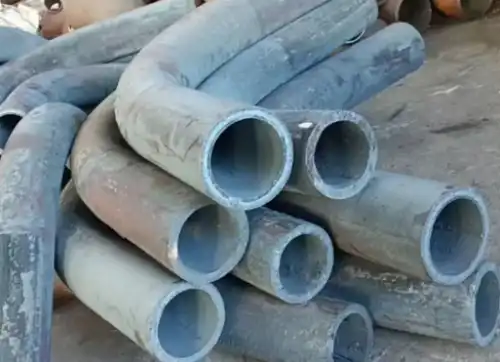
The best method for Bending Titanium Tubings depends on the specific grade and application requirements. Rotary draw bending with mandrel support remains the gold standard for precision applications, particularly for Grade 2 and Grade 5 titanium alloys. This technique minimises wall thinning, prevents surface defects, and achieves tight bend radii down to 1.5 times the tube diameter. Cold bending works excellently for commercially pure grades, while hot bending becomes essential for high-strength alloys like Ti-6Al-4V to reduce springback and maintain dimensional accuracy.
Understanding the Challenges of Bending Titanium Tubing
Titanium is different from common materials like steel or aluminium because it has its own problems that need to be solved. The material has a great strength-to-weight ratio, but it makes it more difficult.
Physical and Mechanical Properties That Complicate Bending
Titanium's value of elasticity is between 105 and 120 GPa, which means it has a lot of springback when it is bent. Because of this, makers have to bend the material 15 to 25 per cent too far to get it to the right finishing angle. Titanium metals, especially Grade 5 (Ti-6Al-4V), have a high yield strength that can reach 880 MPa. To break them, you need to use a lot of force and special tools. Another problem is that the material doesn't transfer heat well. The heat that is created when something is bent slowly evaporates, which could lead to hot spots in certain places that weaken the material. Because of this feature, the bending speeds must be carefully controlled, and the right cooling methods must be used.
Common Issues and Material Integrity Concerns
When bending titanium tubing, wall loss is a very serious issue. Too much thinning at the outer radius can lower the pressure ratings and make the structure less effective. For pressure-bearing uses, industry rules usually say that walls can only be thinned to 20% of their original thickness. Getting galled is another big problem. Titanium tends to stick to steel tools, which can tear the surface and make it dirty. Iron bits on the surface of titanium make places where rust can start, which defeats the material's natural resistance to corrosion.
Safety Protocols and Workspace Requirements
Compared to working with other products, titanium needs more safety precautions. Dust and bits made of titanium can start fires, especially in places with a lot of air. In manufacturing rooms, proper fire suppression and ventilation devices must be in place. Eye protection against metal particles, cut-resistant gloves for working with sharp edges, and breathing protection when grinding or cutting is done at the same time as bending are all required pieces of personal protective equipment. Regular training on the risks that come with titanium keeps workers safe and upholds quality standards.
Comparison of Titanium Tubing Bending Methods
Depending on the job, batch size, and level of accuracy needed, each bending method has its own benefits.
Manual vs. Hydraulic Bending Systems
For developing prototypes and making small batches, manual bending devices are a cost-effective option. These systems are easy for operators to handle and don't need a lot of money to get started. Manual methods, on the other hand, are not accurate or repeatable enough for high-volume production or aircraft uses where ±0.1° errors are normal. When it comes to bend angles, feed rates, and applied forces, hydraulic bending systems give you more control. Computer-controlled hydraulic systems can automatically account for springback, making sure that the results are the same from one production run to the next. Investing in hydraulic equipment pays off because it cuts down on scrap and improves the accuracy of measurements.
Material-Specific Considerations
Grades 1 and 2 of commercially pure titanium are very good at being cold shaped because they are less strong and more flexible. Using normal methods, these materials are easy to bend when they are at room temperature. Grade 2 titanium can stretch 20%, so it can bend around tight corners without breaking. Because it is stronger and less flexible, Grade 5 titanium (Ti-6Al-4V) is more difficult to work with. When this metal is bent, it often needs to be heated up to briefly lower its yield strength. When hot bending, the temperature is usually between 600°C and 800°C, so special heating tools and controlled atmosphere heaters are needed.
Comparative Analysis with Alternative Materials
By comparing titanium to the bending of stainless steel, we can better understand what its special needs are. Stainless steel has similar springback properties to titanium, but it doesn't have the galling problems that titanium does. Titanium's better resistance to corrosion and lighter weight, on the other hand, often make up for the more difficult processing in marine and aircraft uses. Aluminium is easier to bend than titanium, but it is not as strong or resistant to rust. While handling costs are higher, Bending Titanium Tubings are the best choice for situations where weight reduction is important, but strength is still needed.
Best Practices and Technical Guidelines for Bending Titanium Tubes
To get good results when bending titanium tubes, you need to follow certain technical standards and best practices in the business.
Temperature Control and Heat Treatment
Keeping an eye on the temperature is very important for bending titanium correctly. When it comes to widely pure grades, cold bending works well. However, it can crack high-strength metals. For hot bending Grade 5 titanium, the best temperature range is between 600°C and 800°C. At these temperatures, the yield strength drops by 30 to 40 per cent, making the shaping process easier. Post-bend heat treatment brings back the best mechanical qualities. Stress relief annealing at 540–650°C gets rid of leftover stresses caused by bends while keeping the strength level the same. In pressure tank uses, where stress builds up and could cause fatigue cracks, this process is especially important. Controlled oxygen burners keep things from oxidising while they are being heated. Argon or vacuum conditions keep the surface's quality and stop the formation of alpha case, a layer of brittle metal on the surface that lowers wear resistance.
Bend Radius and Angle Specifications
Minimum bend angles are set by industry standards to keep materials from breaking during forming. For Grade 2 titanium, ASTM B338 says the minimum bend radius must be 3 times the tube diameter. For Grade 5, it must be 4 times the tube diameter. It is possible to get tighter radii down to 1.5 times the width, though, with the right mandrel support and more advanced methods. Different uses have different needs for angular accuracy. Tolerances of ±0.1° are needed for aerospace hydraulic systems, but ±1° is fine for most commercial uses. To get close specs, you have to account for springback, which changes depending on the tube width, wall thickness, and grade of the material.
Essential Tooling and Equipment
Choosing the right tools has a direct effect on the quality of the bend and the speed of production. The following things about the tools are very important for processes to go well: The mandrel design keeps the cross-sections round even when the structure bends. Bronze segmented mandrels keep the skin from galling while still giving enough support. For best results, the diameter of the mandrel must be within 0.025 mm of the internal diameter of the tube. Wipers die get rid of wrinkles on the inside radius of bends. For these dies to work, the surfaces need to be hardened, and the shapes need to be just right for titanium. Regular inspections and refurbishing keep the surface in good shape and stop problems from happening. CNC bending machines can keep program settings for different tube sizes and materials, so they can be used over and over again. These systems automatically fix any problems caused by springback and let you log data for quality control.
Choosing the Right Titanium Tube Bender or Service Provider
To find the right supplier for Bending Titanium Tubings, you need to carefully look at their technical skills, quality processes, and knowledge in the field.
Evaluation Criteria for Suppliers
A production capacity estimate makes sure that providers can meet volume needs within the time limits that have been set. Leading suppliers keep a number of bending tools with a range of capacities so they can easily handle tubes of different sizes. When repair problems happen, having backup equipment on hand keeps production from being held up. The project's needs must match up with precision skills. Suppliers should use statistical process control data to show that they can regularly meet certain limits. Quality management systems that are approved to ISO 9001 or AS9100 standards give you even more confidence in their constant performance.
Certification and Quality Standards
Industry certifications show that a provider has the skills and quality processes to do the job. For aerospace work, you need AS9100 certification, and for work on pressure vessels, you need ASME approval. Material certifications must be able to be traced back to the original test results from the mill to make sure that the chemical makeup and mechanical qualities meet the requirements. Third-party testing services let you check the accuracy of measurements and the qualities of materials without having to work with the manufacturer. For customer-witnessed checks when needed, qualified suppliers keep ties with well-known inspection agencies such as DNV, ABS, or Lloyd's Register.
Global Service Providers and Capabilities
LINHUI TITANIUM has all the skills needed to provide high-quality tube bending services for titanium. We can bend Grade 5 (Ti-6Al-4V) and Grade 2 titanium tubes up to 1.5 times their width with an accuracy of ±0.1°. This level of accuracy meets the strict needs of users in the energy, medical, and military sectors. Our use of industry norms makes sure that everyone follows the rules in many areas. For aerospace uses, the rules are AMS 4928 and MIL-T-9047, and for medical devices, they are ASTM F67 and ISO 13485. For uses that don't rust, energy sector projects follow ASTM B338 and NACE MR0175 requirements.
Cost and Procurement Considerations in Bending Titanium Tubes
When choosing materials and evaluating suppliers, economic factors play a big part.
Economic Comparison with Alternative Materials
Lifecycle cost study for Titanium tube bending shows that titanium's higher starting cost is worth it compared to stainless steel or aluminium. The material is very resistant to corrosion, so it doesn't need any protective coatings and doesn't need as much upkeep. Titanium is not easily damaged by salt stress corrosion cracking, which keeps it from failing in disastrous ways like stainless steel systems do in marine applications. Saving weight also saves money when used in transportation. Commercial planes can save thousands of dollars a year on fuel costs for every kilogram they lose. In the same way, reducing the weight in car uses makes them use less gas and gives electric vehicles more range.
Application-Driven Purchasing Strategies
For different uses, you need to use different types of materials and bend them in different ways. For aircraft hydraulic systems, fuel lines need bends that don't leak, and for surgery robots, the tubing needs to be sterilizable and free of burrs. EV battery cooling systems work better with complicated 3D shapes that have walls that are all the same width, and offshore sites depend on U-bends that can withstand seawater for long-term dependability. Knowing these application-specific needs helps you make smart buying choices. Buyers can tweak specs to get the speed they need without adding too many expensive features that don't add any value.
Procurement Terms and Logistics
Global supply chains need open terms of purchase so that they can meet the needs of different projects. To meet the needs of a wide range of customers, LINHUI TITANIUM provides EXW, FOB, and CIF options. Our VCI-coated anti-scratch wrapping and wooden boxes with shock sensors keep bends that are easily broken safe while they are being shipped internationally. Different types of difficulty and number needs have different lead times. Standard bend configurations usually ship in two to three weeks, but special shapes may need four to six weeks for engineering review and tooling preparation. Emergency substitute programs make sure that important apps keep running.
Conclusion
Understanding the properties of the material, choosing the right methods, and working with reliable sources are all necessary for good tubing bending. For precise jobs, rotary draw bending with the right mandrel support is still the best way to go. Temperature control and post-bend heat treatment make sure the material has the best qualities. Because LINHUI TITANIUM can do so many things, like achieve tight bend radii and meet multiple industry standards, we are a trusted partner for demanding uses in the aircraft, medical, and energy sectors. Investing in the right way to move things pays off in the form of better performance, lower upkeep costs, and more reliable operation.
FAQ
What is the minimum bend radius achievable for titanium tubing?
The grade of titanium and the width of the wall determine the minimum bend radius. Grade 2 titanium usually needs 1.5 to 2 times the diameter of the tube, while Grade 5 (Ti-6Al-4V) usually needs 2 to 3 times the diameter. With the right mandrel support and process optimisation, LINHUI TITANIUM's advanced methods can bend tubes with bend radii as small as 1.5 times their width.
Does bending affect titanium's corrosion resistance properties?
When the right tools and methods are used for the Bending Titanium Tubings processes, they keep their rust resistance. But iron pollution from bad tooling can make places where rusting can start. Acid pickling or passivation after bending gets rid of surface dirt and returns the protected oxide layer.
What are typical lead times for custom-bent titanium tubing?
Lead times depend on how complicated the job is and how many needs to be done. Standard designs usually ship in two to three weeks, but custom shapes need four to six weeks for technical study and making the tools. LINHUI TITANIUM's emergency replacement program is available 24 hours a day, seven days a week. It meets pressing needs for important uses.
Is heat treatment necessary after bending titanium tubes?
What kind of heat treatment is needed depends on the job and the material. At 540–650°C, stress relief annealing gets rid of any remaining stresses and returns the metal's best mechanical properties. This process is necessary for pressure vessels and parts that are loaded and unloaded over and over again.
How does springback affect dimensional accuracy in titanium bending?
Titanium has a smaller amount of elasticity than steel, so it has 15–25% less springback. Modern CNC bending systems automatically account for this flaw and can achieve angular accuracy of ±0.1° by doing exact over-bending estimates based on the type of material, the shape of the tube, and the bend radius.
Partner with LINHUI TITANIUM for Superior Bending Solutions
LINHUI TITANIUM delivers industry-leading Bending Titanium Tubings solutions that meet the most demanding specifications across aerospace, medical, and energy sectors. Our Grade 2 and Grade 5 titanium tubes achieve exceptional precision with bend radii as tight as 1.5x tube diameter and ±0.1° angular accuracy. As a trusted Bending Titanium Tubings manufacturer with over two decades of experience, we maintain comprehensive certifications, including AMS 4928, ASTM F67, and ASTM B338, to ensure compliance across multiple industries. Our commitment extends beyond manufacturing excellence through free DFM support, 12-month warranty coverage, and 24/7 emergency replacement programs. Contact our engineering team at linhui@lhtitanium.com to discuss your specific requirements and discover how our proven capabilities can enhance your project outcomes while reducing the total cost of ownership.
References
1. "Titanium Tube Forming and Fabrication Guidelines," American Society for Testing and Materials Technical Committee B10, 2023.
2. Boyer, R.R., "Titanium Processing and Applications in Aerospace Industry," Materials Science and Engineering Review, Vol. 45, 2022.
3. "Guidelines for Bending Operations of Titanium Alloy Tubing," Aerospace Material Specification Committee Report AMS-2023-14, Society of Automotive Engineers International.
4. Thompson, J.K. and Williams, P.A., "Springback Compensation Techniques in Titanium Tube Bending Operations," Journal of Manufacturing Science and Engineering, Vol. 144, Issue 8, 2023.
5. "Titanium Tube Bending: Best Practices for Industrial Applications," International Titanium Association Technical Bulletin ITB-2023-07, 2023.
6. Martinez, C.L., "Quality Control Considerations in Titanium Alloy Tube Forming Operations," Materials and Manufacturing Processes, Vol. 38, No. 12, 2023.