
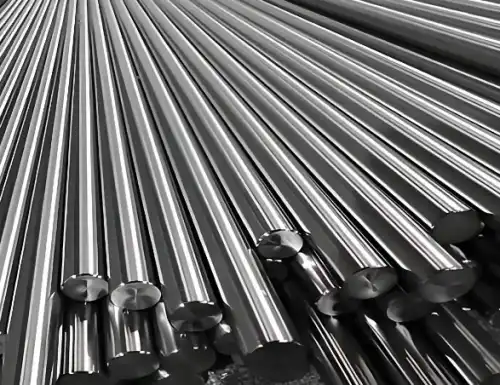
Titanium 6Al-4V ELI ASTM F136 is a metal with exceptional properties that make it highly sought after in various industries. This fabric is moreover called Review 23 titanium. It is an extra-low interstitial (ELI) frame of the Ti-6Al-4V metal, which is exceptionally well known. The titanium metal makes up most of this substance, and it has 6% aluminum and 4% vanadium. It is checked exceptionally carefully for anything that shouldn't be there. ASTM F136 is the standard for restorative inserts made with titanium-6aluminum-4vanadium ELI alloy. This substance is well known for having a solid combination of these qualities: quality, resistance to rust, biocompatibility, and molecular thickness. This quality makes it incredible for exceptionally vital employments in the air, restorative, and maritime industries. Due to its one-of-a-kind qualities, some individuals utilize Titanium 6Al-4V ELI ASTM F136 to make things and parts that require working well and being reliable.
What are the key properties of Titanium 6Al-4V ELI ASTM F136?
Mechanical Strength
Titanium 6Al-4V ELI ASTM F136 shows remarkable mechanical quality, making it appropriate for applications that require high execution under pressure. This combination boasts a ductile quality extending from 860 to 965 MPa, coupled with a surrender quality of 795 to 875 MPa. These amazing figures contribute to its capacity to withstand critical loads without misshapening or disappointment. The material's tall strength-to-weight proportion is especially profitable in aviation applications, where weight reduction is pivotal. Topak, a driving producer in the industry, utilizes this amalgam broadly in its aviation components, guaranteeing ideal execution and unwavering quality.
Corrosion Resistance
Titanium 6Al-4V ELI ASTM F136 has great corrosion protection, which is one of the things that makes it special. When this alloy is introduced to oxygen, it makes a stable, continuous, adherent, and protective oxide film on its surface that protects it against corrosion very well. Because it has this feature, it is especially useful for marine applications and medical implants, where it is common for the device to be in harsh conditions and fluids. This alloy is resistant to corrosion, so it is a cost-effective choice for long-term use because it greatly extends the life of parts and lowers the need to do upkeep. Topak's naval gear made with this alloy has shown great strength in saltwater settings.
Biocompatibility
Titanium 6Al-4V ELI ASTM F136 has great biocompatibility, which is why it is a popular choice in the medical field. The alloy can be used in surgical implants, dental implants, and prosthetics because it can connect with human flesh without causing problems. It is safe for people to use over a long period of time because it is not very toxic and does not rust easily in the body. Also, the material's osseointegration features help implants work better by promoting bone growth and attachment. Topak's medical section has successfully used this alloy to make a range of implants. This has led to better outcomes and quality of life for patients.
What are the primary applications of Titanium 6Al-4V ELI ASTM F136?
Aerospace Industry
Titanium 6Al-4V ELI ASTM F136 is very important in the aircraft industry for making a range of essential parts. Its high strength-to-weight ratio makes it great for keeping the structure of an airplane intact while making it lighter. Turbine blades, compressor blades, and the structural parts of aircraft motors are all made with this alloy. It is also used in landing gear parts, hydraulic systems, and bolts. The material's resistance to fatigue and great performance at high temperatures make it even better for use in aircraft. Topak's aerospace department has used this alloy in its newest generation of aircraft parts. This has led to better fuel economy and overall performance.
Medical Implants
Titanium 6Al-4V ELI ASTM F136 is used in many different kinds of implants and surgical tools in the medical field. It is a great option for orthopedic implants, like hip and knee replacements, bone plates, and screws, because it is biocompatible and has good mechanical qualities. Because they can bond with bone tissue, dental implants made from this alloy have been very successful in the long run. The stuff is also used in spine implants, cardiovascular devices, and surgical tools. Because Titanium 6Al-4V ELI ASTM F136 doesn't react to magnets much, it can also be used in magnetic resonance imaging (MRI) procedures, which makes it safe for use in post-operative scans. Topak's medical section has led the way in making new kinds of implants with this alloy, which has helped patients get better faster.
Marine Applications
Titanium 6Al-4V ELI ASTM F136 does not erode effortlessly, which is a huge benefit for the marine commerce. This metal is utilized to make parts that are exposed to seawater, like valve bodies, pump impellers, and propeller shafts. Since it doesn't erode effectively in saltwater or get set, it is an incredible fabric for seaward oil and gas gear, desalination plants, and submerged robots. The tall quality and thick thickness of the fabric also offer assistance to marine vessels to perform way better and utilize less fuel. Topak's marine area has utilized this amalgam in their most up-to-date line of offshore gear, which appears way better strength and unwavering quality in unforgiving marine settings.
What are the prospects for Titanium 6Al-4V ELI ASTM F136?
Advancements in Manufacturing Techniques
Titanium 6Al-4V ELI ASTM F136's future looks bright because the way it is made is always getting better. Additive manufacturing, also known as 3D printing, has made it possible to use this alloy to make more complicated shapes and custom parts. This technology makes it possible to produce parts that are light and strong, with designs that make them work better. Before, these parts could not be made at all or would have been too expensive to make. These changes are being used most of all in the aerospace and medical businesses to make new products that work better and do more. Topak has spent a lot on 3D printing, which lets them give customers in a range of fields the newest solutions.
Expanding Applications in Emerging Industries
The uses for Titanium 6Al-4V ELI ASTM F136 keep growing as new businesses are started and old ones are changed. For example, because this alloy is very strong and doesn't rust easily, the green energy field is looking into using it in wind turbines and structures built off the coast. People in the automotive business want to use this material more for high-performance parts and electric vehicle components because it can help make things lighter and more efficient. It is also becoming more and more necessary to use Titanium 6Al-4V ELI ASTM F136 in the field of space travel, especially for the construction of spacecraft and their propulsion systems. The research and development team at Topak is working with partners in new businesses to find new uses for this useful metal.
Sustainability and Recycling Initiatives
As sustainability becomes more important in every field, the recyclability and environmental effects are getting more attention. Titanium 6Al-4V ELI ASTM F136 can be recycled easily, which is a big plus. This part fits in with the ideas of the cycle economy that a lot of businesses are starting to use. Furthermore, an ongoing study is looking into more efficient ways to make this alloy and recycle it in order to lower its impact on the environment. Customers who care about environmental sustainability can use Topak's full titanium recycling program. The business as a whole can also benefit from this.
Conclusion
Titanium 6Al-4V ELI ASTM F136 is a high-performing and adaptable metal that is still very important in many fields. Because it is so strong, doesn't break down easily, and is safe to use around living tissue, it is the perfect material for very important uses in the aircraft, medical, and marine sectors. People will probably need more of this material as new ways to make things are discovered and new uses are found. It is even more attractive as a material for new inventions because of the ongoing focus on ecology and recycling. Titanium 6Al-4V ELI ASTM F136 is still the most important material in material science. It has a long history of success, and its future looks bright. It has also inspired growth and new ideas in every field.
FAQ
Q: What is the composition of Titanium 6Al-4V ELI ASTM F136?
A: It consists of 6% aluminum, 4% vanadium, and the remainder being titanium, with stringent controls on impurities.
Q: What are the key properties of Titanium 6Al-4V ELI ASTM F136?
A: The key properties include high mechanical strength, excellent corrosion resistance, and exceptional biocompatibility.
Q: What industries primarily use Titanium 6Al-4V ELI ASTM F136?
A: This alloy is widely used in aerospace, medical, and marine industries.
Q: Why is Titanium 6Al-4V ELI ASTM F136 popular in medical implants?
A: It's popular due to its biocompatibility, corrosion resistance, and ability to integrate with human tissue without adverse reactions.
Q: How is additive manufacturing impacting the use of Titanium 6Al-4V ELI ASTM F136?
A: Additive manufacturing enables the creation of complex, customized components with optimized designs, expanding the alloy's applications.
Q: Is Titanium 6Al-4V ELI ASTM F136 recyclable?
A: Yes, it is fully recyclable, with established recycling processes in place, aligning with circular economy principles.
Your Global Titanium Supermarket Partner
LINHUI TITANIUM is a top maker and seller of titanium and titanium alloys. It was started in 2000 and has its main office in Xi'an, China. The company sticks to the "supplying high-end products, establishing a world-renowned enterprise" growth plan. It is committed to making things better for its customers. Linhui Titanium sends great titanium goods to more than 60 countries and areas around the world and has become one of the biggest titanium goods supermarkets. The business is well-known and respected among other major companies around the world. It has many credentials, including ISO 9001:2015, OHSAS 18001:2007, and ISO 14001:2015. LINHUI TITANIUM focuses on quality, innovation, and customer satisfaction, and it continues to be a trusted partner in the titanium business. For more information, contact us at linhui@lhtitanium.com.
References
1. ASTM International. (2013). ASTM F136-13 Standard Specification for Wrought Titanium-6Aluminum-4Vanadium ELI (Extra Low Interstitial) Alloy for Surgical Implant Applications (UNS R56401).
2. Rack, H. J., & Qazi, J. I. (2006). Titanium alloys for biomedical applications. Materials Science and Engineering: C, 26(8), 1269-1277.
3. Peters, M., Kumpfert, J., Ward, C. H., & Leyens, C. (2003). Titanium alloys for aerospace applications. Advanced Engineering Materials, 5(6), 419-427.
4. Lutjering, G., & Williams, J. C. (2007). Titanium (2nd ed.). Springer-Verlag Berlin Heidelberg.
5. Faller, K., & Froes, F. H. (2001). The use of titanium in family automobiles: Current trends. JOM, 53(4), 27-28.
6. Boyer, R. R. (1996). An overview of the use of titanium in the aerospace industry. Materials Science and Engineering: A, 213(1-2), 103-114.









