
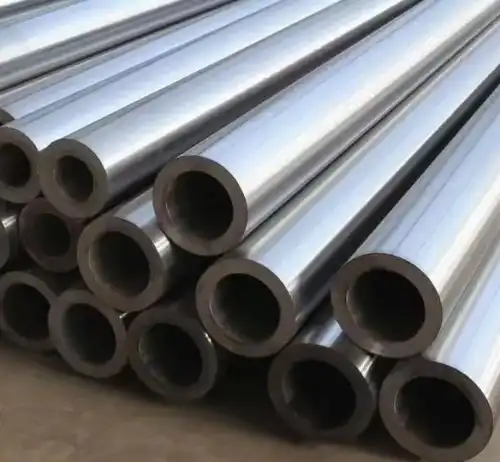
A zirconium insert pipe is an important corrosion-resistant option in places where other materials don't work. These special pipes have a zirconium metal core inside a carrier pipe structure. This makes them very resistant to harsh chemicals, especially in reducing acid settings. Zirconium insert pipes are used in chemical processes, petrochemicals, and medicines to protect against corrosive media such as sulfuric acid, hydrochloric acid, and acetic acid streams. The one-of-a-kind composite design combines zirconium's excellent corrosion resistance with structural stability. This makes these pipes essential in situations where equipment life, safety compliance, and steady production are very important.
Understanding Zirconium Insert Pipes: Specifications and Material Properties
The advanced structure of the materials used in zirconium insert pipe systems and their high performance in the harshest industrial circumstances make them the best engineers' tools.
Core Material Composition and Alloy Grades
Zirconium insert pipes are mostly made of two industrial-grade metals that are used for different tasks. Additionally, the UNS R60702 grade has at least 99.2% zirconium and hafnium, which makes it very flexible and resistant to rust in a wide range of chemical conditions. This grade is the standard for basic chemical processing jobs that need to be able to be shaped and welded easily. On the other hand, UNS R60705 has 2.0 to 3.0% niobium, which makes it almost twice as strong as UNS R60702. Because of this better mechanical performance, engineers can ask for thinner wall sections or higher pressure ratings. However, the addition of niobium makes the material slightly less resistant to rust in some acidic media. When exposed to air, both grades quickly form a thick, self-healing zirconium dioxide layer.
Technical Specifications and Dimensional Standards
International standards for making zirconium insert pipes are very strict, which makes sure that the pipes are always the same and reliable. The ASTM B658 standard sets strict rules for the chemical makeup, mechanical qualities, and size limits of both seamless and welded zirconium pipe. ASME SB-658 gives similar rules that are generally accepted in codes for pressure vessels and pipe systems. These guidelines say that the outside width, wall thickness, and surface finish must be precisely controlled. Small-bore tubing with an outer diameter of 6mm and big process pipe with a diameter of more than 600mm are the most common sizes. Wall thickness can range from 1mm to 25mm, based on the pressure class and the severity of the application. The material has an estimated density of about 6.51 g/cm³ and a melting point close to 1852°C, which makes it very stable for use in high-temperature situations.
Quality Verification and Testing Protocols
People who work in procurement who need to find zirconium insert pipes need to know the important quality control checks that set trustworthy sellers apart. Reputable manufacturers test all of their pipes with ultrasonic waves to find flaws inside them that could cause them to break catastrophically under pressure. These waves can find flaws in both the longitudinal and horizontal directions. After that, hydrostatic and pneumatic pressure tests are done, usually at least 1000 psi or estimated pressures based on ASME code standards. This makes sure that the leak-proof integrity is complete before it is shipped. Destructive mechanical tests, such as flare and flattening processes, make sure that the material is ductile.
Industrial Applications of Zirconium Insert Pipes
The flexibility of zirconium insert pipe technology shows up in many fields where rust problems are too big for regular materials to handle.
Chemical Processing and Production
This is where zirconium insert pipes are most often used: in chemical manufacturing, especially in processes that use strong organic and mineral acids. Zirconium pipe is often used for reboilers, flash tanks, and transfer tube systems in places that make acetic acid and acetic anhydride. Iodine catalysts and halide elements can't damage the material very much at boiling temperatures, which is high enough that stainless steel breaks down quickly. In service with sulfuric acid, zirconium insert lines work very well up to 70% concentration at boiling temperatures, which is a condition that breaks down most metals. When the percentage goes above 70%, corrosion rates go up a lot, which sets the realistic upper limit for this use. Taking care of hydrochloric acid is another important use case, and zirconium works well at all industrial temperatures and amounts. Zirconium's neutral resistance profile works best in mixed acid streams, while titanium is best in oxidizing acids and zirconium is best in reducing conditions.
Petrochemical and Refining Operations
In crucial process units handling acidic chemicals and products, petrochemical plants and refineries use zirconium insert pipes. Zirconium pipes are used in alkylation units, which use sulfuric acid as a catalyst, to keep upkeep costs low and response times long. Zirconium is resistant to sulfuric acid that is made during processing, which is helpful for crude oil production units that use high-sulfur feedstocks. The material's ability to prevent erosion and rust is useful in high-velocity fluid streams. It allows for thinner wall requirements than super duplex stainless steels while still providing the same or better service life. Major energy companies, like the ones we work with (PDVSA, PETROECUADOR, and PETRO VIETNAM), have started using zirconium insert pipe solutions in the toughest process environments. This proves that the technology works reliably in large-scale industrial settings.
Pharmaceutical and Specialty Chemical Manufacturing
To keep the cleanliness of the product, pharmaceutical production needs materials that don't rust and don't get contaminated during use. These two needs can be met by zirconium insert lines in synthesis reactors, distillation columns, and cleaning systems that use strong solvents and chemicals. Because the material is inert, metallic ions can't get into it and taint medicinal goods or cause unwanted side effects. Specialty chemistry companies that make high-value goods also depend on zirconium pipes to keep the process running smoothly and make sure the quality of the products they make. When zirconium insert pipes are properly kept, they last a long time. This means that systems don't have to be shut down as often to repair broken equipment, which directly supports production continuity and manufacturing efficiency.
Urea and Fertilizer Production
Fertilizer production, especially urea production, has a lot of rust problems. Because of this, zirconium insert pipes are the best material for some process equipment. High-pressure strippers and carbamate condensers work in environments with high temperatures, pressure, and acidic media that destroy normal materials through erosion and rust. Zirconium is resistant to this joint attack, and it also has enough mechanical strength to allow for better designs with thinner walls than with other materials. This lower weight means that the structure doesn't need as much support, and installation costs are lower as well. This helps to make up for the higher cost of the materials while also providing better operating stability.
Zirconium Insert Pipes vs. Alternative Materials: Making the Right Choice
To get the most long-term value, you need to carefully consider performance traits, cost effects, and application-specific needs when choosing a material for zirconium insert pipes.
Performance Comparison with Stainless Steel
Most of the time, stainless steel metals are used instead of zirconium in corrosive settings, but there are noticeable performance gaps in harsh conditions. It is faster for standard 316L stainless steel to split and crack in chloride-containing conditions above 60°C, but zirconium stays strong. If the concentration of sulfuric acid is less than 10% and the temperature is reasonable, stainless steel may be enough. However, as the concentration or temperature rises, zirconium insert pipes will last much longer. Super austenitic types like AL-6XN and super duplex alloys like 2507 make stainless steel more useful in harsher environments, but they still can't match zirconium's performance in strong acids. When doing the economics, you have to weigh the lower starting cost of stainless steel against the fact that it has a shorter service life, needs more upkeep, and has a higher risk of unexpected breakdowns that can lead to expensive unplanned shutdowns.
Titanium Versus Zirconium Selection Criteria
Even though both titanium and zirconium are reactive metals, they have very different levels of rust protection. Titanium works very well in oxidizing conditions like nitric acid, chromic acid, and chlorine-containing liquids, which makes it perfect for use in saltwater and seawater. When titanium would rust in reducing acids like hydrochloric acid, sulfuric acid, and organic acids, zirconium is more likely to stay strong. Because they have a controlled resistance, zirconium insert pipes work well with mixed acid streams that have both oxidizing and reducing components. Different metals have different temperature limits. Titanium can stay strong at higher temperatures in non-oxidizing environments, but zirconium can't go above 400–500°C in air because oxygen passage weakens it.
Ceramic-Lined and Glass-Lined Alternatives
Ceramic-lined and glass-lined pipes don't rust because they have neutral barrier coats, but zirconium insert pipes do because of the way the material itself is resistant. These covering technologies are very good at resisting chemicals, but they are not very good at resisting mechanical damage. Linings can crack because of thermal shock, mechanical contact, and shaking. This creates weak spots where the base metal can rust quickly. To fix ruined linings, you need a lot of downtime and special tools. Zirconium insert pipes get around these problems because they have uniform rust protection and can handle mechanical stress without breaking. Because the material is naturally flexible, it can handle system shaking and temperature changes without breaking down. Ceramic and glass linings may be cheaper at first, but they need more upkeep and are more likely to break. In demanding uses, zirconium insert pipes are often the better long-term value.
Cost-Benefit Analysis and Material Selection Framework
To make a good plan for choosing materials, you need to look at more than just the buying price. You also need to look at the total cost of ownership over the system's lifetime. When compared to stainless steel, zirconium insert pipes cost three to five times more, based on the grade and size. When looked at over a 20-year lifetime, this starting cost difference gets a lot smaller. Fewer breakdowns mean lower insurance costs, longer turnaround times, lower maintenance costs, and no unexpected output losses. All of these things add up to big savings that often make up for the higher capital investment. Procurement teams should ask possible providers to do lifetime cost analyses that include reasonable assumptions about how often repair needs to be done, when replacements should be made, and the value of the production.
Procurement Guide: How to Source Reliable Zirconium Insert Pipes
To buy zirconium insert pipe systems strategically, you need to carefully evaluate suppliers and know what quality standards are.
Supplier Qualification and Certification Requirements
Checking for important certifications and quality control systems is the first step in finding qualified sources. ISO 9001:2015 approval is the basic quality management standard. It shows that the design, production, and testing processes are controlled in a planned way. When using pressure equipment in foreign markets, it's common for installations in Europe to need PED 2014/68/EU approval or projects in North America to need to follow ASME code compliance. Classification society approvals from groups like DNV, ABS, CCS, Lloyd's Register, and Bureau Veritas show that a maker can meet the standards of the marine and offshore industries.
Evaluating Manufacturing Capabilities and Technical Expertise
In addition to certifications, procurement experts should look at the specialized skills and production facilities of the company. The ability to make seamless pipes shows that the tools and process control are very good, because seamless pipes don't have the weld joint that could be weak in welded pipes. Having testing tools that can do ultrasound inspection, hydrostatic testing, and mechanical property proof all in one place shows that quality control is important. The technical staff's knowledge in material science, welding engineering, and application engineering helps with choosing the right materials and methods for production. Ask for case studies and references from users that are similar to yours, preferably ones that have the same chemistry and working conditions.
Negotiating Terms and Understanding Pricing Structures
The price of zirconium insert pipe depends on the cost of the raw materials, how hard it is to make, and how many are ordered. When you commit to buying in bulk, the price usually goes down by 10–25% compared to when you buy in small lots. This is good for procurement strategies that combine needs from several projects or keep popular sizes in stock. Lead times range from 8 to 16 weeks, based on the size, quantity, and difficulty of the specifications. Custom sizes take longer to make than normal sizes. Most payment terms are based on a fee being due when the order is placed and the balance being due before the shipment. However, repeat customers may be able to negotiate better terms. In the request-for-quotation papers, make sure that all technical requirements are clearly stated. This includes grade, size, testing methods, and licensing needs.
Building Long-Term Supplier Partnerships
Strategic supplier ties that provide ongoing value are a key component of successful zirconium insert pipe buying, which goes beyond individual deals. Preferred seller programs with negotiated prices, priority production schedules, and specialized technical support make buying materials easier and make sure they are available when they are required. After-sales support, such as installation instructions, specs for welding procedures, and help with troubleshooting, keeps expensive delays and operating problems from happening. Technical training for maintenance workers on how to properly handle, check, and fix assets makes them last longer.
Maintenance and Longevity: Maximizing the Lifespan of Zirconium Insert Pipes
For zirconium insert pipe systems to reach their full lifecycle value potential, they need proactive maintenance plans and strict operating discipline.
Establishing Routine Inspection Protocols
Maintenance plans that work are built around systematic check schedules. Visual checks done every three months find external rust, mechanical damage, or weakening of the support structure before they become a threat to the system's stability. Every year, ultrasonic thickness measurements record the rate of rust, which lets you plan for replacements ahead of time instead of fixing things when they break. In high-consequence areas where failure could threaten worker safety or cause major production delays, inspections should happen more often. Keeping thorough inspection records creates trending data that shows trends in performance, helps efforts to keep improving, and backs up design ideas. Writing down what was found during inspections, what repairs were done, and how things were running creates cultural knowledge that makes long-term asset management better.
Identifying Early Warning Signs and Preventive Actions
By noticing early signs of degradation, small problems can be stopped before they become big fails. Discoloration around welds could mean that the material was contaminated during production, which could mean that it is weakening and needs to be looked at more closely. Surface stains or deposit buildup can make corrosion cells appear under deposits, which need to be cleaned to recover corrosion resistance. Vibrations or strange noises could be signs of flow-induced deterioration or problems with the support system that need to be fixed.
Welding and Repair Considerations
To keep zirconium insert pipes from becoming weak, they must be welded using specific techniques and strict contamination control. When zirconium is heated above 400°C, it takes oxygen, nitrogen, and hydrogen. This is why very pure argon shielding gas with following shields and back purging are needed when welding. The way a weld looks right away tells you a lot about its quality: a silver color means the protection is good and the quality is good, while a straw or blue tint means the surface is oxidized and needs to be removed. Grey or white powder formation means there is a lot of contamination, so the whole weld needs to be taken off and reworked. To avoid delayed hydrogen cracking, UNS R60705 grade needs to be heat treated within 14 days of welding. UNS R60702 grade, on the other hand, can wait longer before stress release.
Operational Limits and Chemical Compatibility
Knowing the material limits keeps you from accidentally being exposed to chemicals that don't work well together, which could lead to failure quickly. Hydrofluoric acid is the only common chemical that can't be used with zirconium insert lines. It attacks the metal at all concentrations and temperatures. Fluoride ions that get into phosphoric acid streams are also a big problem. When metal is exposed to air above 400–500°C for a long time, oxygen diffuses into it and causes scaling and fraying, which drastically shortens its useful life. Working within approved temperature and chemistry ranges protects the oxide layer and makes sure the design life is met. Process problems or situations that don't meet specifications should be looked at right away to see if they could have a material effect, and corrective action should be taken to get things back to normal.
Conclusion
Zirconium insert pipes have the best corrosion protection in harsh chemical conditions, where other materials fail before they're supposed to. They have been used reliably in the world's most demanding industrial processes, such as chemical processing, petrochemicals, medicines, and fertilizer production. The huge value that these engineered systems offer is increased by careful material selection that balances performance needs with lifecycle costs, as well as strict source approval and preventative maintenance programs. When industrial operations make buying choices based on technical knowledge and the backing of certified makers with a track record of success, they set themselves up for decades of trouble-free service and operational excellence.
FAQ
What is the main difference between Zr 702 and Zr 705 grades?
The UNS R60705 grade has 2.0–3.0% niobium in it, which makes its tensile and yield strengths much higher than those of UNS R60702. Because of this, higher pressure values are possible, or wall thickness can be lowered. To avoid delayed hydrogen cracking, UNS R60705 needs to be heat treated within 14 days of welding. UNS R60702, on the other hand, has less strict post-weld requirements. The corrosion protection is still very good in both types, but zirconium insert pipes made from UNS R60702 do a little better in some oxidizing conditions.
Can zirconium insert pipes be used with hydrofluoric acid?
Hydrofluoric acid targets zirconium very strongly at all temperatures and amounts, stopping the formation of the protective oxide layer that is needed for resistance to corrosion. For HF work, zirconium insert lines should never be used. Fluoride ions getting into other process streams, like phosphoric acid, are also very dangerous and need to be carefully controlled and monitored chemically.
How does temperature affect zirconium insert pipe performance?
Up to about 400–500°C in non-oxidizing conditions, zirconium keeps its great resistance to corrosion and mechanical qualities. When metal is heated above these levels in air, oxygen diffuses into it and causes surface scaling and underlying fraying, which weakens the metal over time. For uses that need to be exposed to high temperatures for a long time, different materials or safe atmospheres may be needed to keep things from breaking down too quickly.
Partner with LINHUI TITANIUM for Premium Zirconium Insert Pipe Solutions
Choosing the right zirconium insert pipe maker is the first step to a successful project and reliable operations for a long time. LINHUI TITANIUM has been working with reactive metals for more than 20 years and has helped large energy companies, EPC firms, and chemical makers in more than 60 countries. Our long list of certifications, which includes PED 2014/68/EU approvals, ASME approvals, and classification society certifications from DNV, ABS, CCS, Lloyd's, and others, shows that we can meet the strictest international standards. We keep a large stock of a wide range of grades and sizes, making us a true supermarket for titanium and zirconium goods that can speed up shipping and offer low prices for large orders. Get in touch with our technical sales team at linhui@lhtitanium.com to talk about your unique needs and find out why top companies trust LINHUI TITANIUM as their zirconium insert pipe provider.
References
1. American Society for Testing and Materials. (2021). ASTM B658: Standard Specification for Seamless and Welded Zirconium and Zirconium Alloy Pipe. West Conshohocken: ASTM International.
2. Covington, L.C. (1995). Corrosion Resistance of Zirconium in Chemical Processing Applications. Materials Performance Journal, 34(6), 48-54.
3. Yau, T.L., & Webster, R.T. (1987). Corrosion of Zirconium and Its Alloys. In ASM Handbook Volume 13: Corrosion (pp. 707-721). Materials Park: ASM International.
4. American Society of Mechanical Engineers. (2019). ASME SB-658: Specification for Seamless and Welded Zirconium and Zirconium Alloy Pipe. New York: ASME Press.
5. International Atomic Energy Agency. (2016). Zirconium in the Nuclear Industry: Properties and Applications. Vienna: IAEA Technical Reports Series.
6. Rebak, R.B., & Gupta, V.K. (2014). Performance of Reactive Metals in Aggressive Chemical Environments: A Comparative Study. Corrosion Engineering, Science and Technology, 49(4), 252-267.