
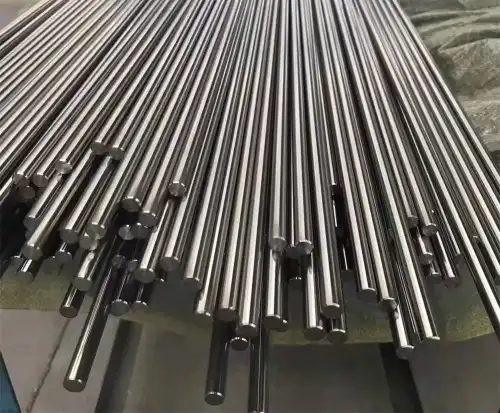
A titanium rod serves as one of the most versatile metallic components across multiple industries, offering exceptional strength-to-weight ratios, corrosion resistance, and biocompatibility. These cylindrical titanium bars find applications ranging from aerospace engineering and medical implants to chemical processing and marine environments. The unique properties of titanium metal rods make them indispensable for projects requiring durability under extreme conditions, where traditional materials fail to deliver the necessary performance standards.
Understanding Titanium Rod Properties and Characteristics
Titanium alloy rods are able to achieve such impressive performance levels due to the fact that they possess outstanding material qualities. Titanium round bars are considered to be the optimal choice for applications that are sensitive to weight since titanium has a level of strength that is equivalent to that of steel, while it weighs around 40% less than steel. In the majority of environments, especially in those that are high in chlorides, which are frequently encountered in marine and chemical processing applications, the corrosion resistance of these rods is superior to that of stainless steel.
There are a variety of titanium grades available, each of which possesses distinct features and can be used to satisfy specific conditions. In comparison to the Grade 5 (Ti-6Al-4V) titanium rod, which offers exceptional strength due to the presence of alloying components, the Grade 2 titanium rod provides good formability in addition to moderate strength. Across a broad range of temperatures, from cryogenic conditions to extreme temperatures above 400°C, these titanium structural rods continue to retain their qualities.
These rods are especially advantageous for use in medical applications due to the fact that titanium is biocompatible. Titanium is distinguished from a number of other metals by the fact that it develops a persistent oxide layer, which inhibits the occurrence of unfavorable interactions with human flesh. This property is the reason why titanium medical rods are the preferred choice of surgeons when it comes to prosthetics and implants.
Aerospace and Aviation Applications
Because of its outstanding strength-to-weight ratio, the aerospace sector accounts for the majority of titanium aerospace rod use. These rods are used by aircraft manufacturers in important structural components such as engine mounts, airframe structures, and landing gear assemblies. Titanium round bars, which are characterized by their lightweight composition, have a substantial positive impact on the enhancement of fuel efficiency in commercial aviation.
In the compressor portions of jet engines, titanium shafts are utilized because the high temperatures and mechanical stress in these sections require materials that are able to preserve their structural integrity. The engineers are able to maximize the efficiency of these components for particular working situations by using the titanium heat treatment capabilities, which guarantee dependable performance throughout lengthy service periods.
Titanium grade rods are pushed to their maximum potential by their use in spacecraft. Titanium is an excellent choice for use in harsh situations because of the vacuum of space, the significant fluctuations in temperature, and the radiation exposure. The materials in question are crucial to the continued performance of satellite structures, rocket components, and space station features as they are utilized in missions that last several years.
Medical and Healthcare Industry Uses
For a variety of surgical operations and implant applications, medical practitioners are increasingly relying on titanium rods. The biocompatibility of the titanium rod, which assists in the integration of bone and the provision of necessary structural support, makes it an ideal material for use in spinal fusion surgeries, where orthopedic doctors employ these rods. Because the material is non-magnetic, people who have titanium rod implants can safely undergo magnetic resonance imaging (MRI) procedures.
The usage of titanium bars in the field of dentistry is another significant application of this material in the healthcare industry. Because of the material's capacity to osseointegrate with the tissue of the jawbone, dental implants that are manufactured from titanium exhibit outstanding success rates. The implants' resistance to corrosion guarantees that they will maintain stability for the entirety of a patient's life without undergoing any degeneration or experiencing any negative side effects.
Surgeons are able to make use of lightweight tools that are resistant to corrosion from sterilization methods by utilizing surgical instruments that have been constructed out of titanium alloy rods. For thousands of sterilizing cycles, these instruments have retained their accuracy and durability, which has provided consistent performance during crucial medical procedures.
Chemical Processing and Industrial Applications
Titanium structural rods are an essential component for the equipment of chemical processing facilities that are exposed to corrosive chemicals. The remarkable resistance that titanium provides to acids, alkalis, and chlorinated chemicals makes it an ideal material for use in heat exchangers, reactor vessels, and pipe systems. Contamination of chemical processes is avoided due to the inertness of the material, which also guarantees that the equipment will last for a long time.
Rods such as this are used in desalination facilities and offshore oil rigs, where exposure to seawater results in highly corrosive conditions. The use of these rods is common in the petrochemical refining industry. Titanium round bars have the advantage of many years of dependable service with little maintenance requirements in these settings, whereas conventional materials necessitate frequent replacement.
Engineers are able to manufacture intricate parts for equipment that is used for specialist chemical processing due to the machining properties of titanium. In order to meet special dimensions and performance criteria for unique industrial applications, custom titanium fastener rods and structural parts can be accurately fabricated.
Marine and Offshore Engineering
Titanium metal rods are a highly effective solution for the special challenges that are presented by marine settings. The applications for shipbuilding include titanium rods for propeller shafts, rudder stocks, and hull reinforcements, all of which are areas where traditional materials are frequently destroyed by corrosion from seawater. Titanium is able to give outstanding durability in saltwater settings without the need for protective coatings because of its corrosion resistance.
Titanium bars are necessary for the structural components of offshore oil and gas installations that are constantly exposed to seawater. The durability of the materials used is a critical factor for ensuring the safety of operations as well as the economic feasibility of these installations, which can function for decades in the harsh circumstances of the marine environment. Because of titanium's resistance to stress corrosion cracking, the structural integrity of the platform is guaranteed to be maintained during its entire service life.
The distinctive qualities that titanium possesses are demonstrated by its usage in submarine applications in the deep sea. The material's strength-to-weight ratio allows for greater depths to be explored while yet retaining the integrity of the hull under conditions of high pressure. The cooling systems that are used in nuclear submarines' reactors incorporate titanium alloy rods that are specifically designed for this purpose, as radiation resistance and corrosion prevention are of the utmost importance in these environments.
Sports and Recreation Equipment
Titanium wire rods are being used more and more frequently in high-performance sports equipment in order to attain features that are superior in nature. Golf club shafts that are made from titanium deliver a remarkable distance and feel while simultaneously lowering the total weight of the club. The dampening capabilities of the material's vibrations improve both the control and the comfort level of the player while they are engaged in the game.
The building of bicycle frames by bicycle manufacturers is done with titanium round bars, resulting in cycles that are both lightweight and incredibly durable. It is possible to prevent fatigue cracking, which is a regular occurrence in aluminum frames, with these frames, which also provide a ride quality that is better than what is offered by steel equivalents. These bicycles will retain their appearance and performance capabilities for the duration of their use because to their corrosion resistance.
Titanium shafts are used in high-performance engines and suspension systems in automotive racing applications. Titanium components assist in the reduction of vehicle weight, which results in better handling and acceleration while at the same time keeping the strength that is required for racing situations. The materials in question are essential for the teams that compete in Formula 1 and endurance racing in order for them to acquire an advantage over their competitors.
Manufacturing and Machining Considerations
Titanium's surface finish requirements can vary greatly depending on the application, and this variation can have an impact on both the production process and the associated costs. In order to facilitate tissue integration, medical implants need to have surfaces that are as smooth as a mirror, whereas surfaces that are machined to industry standards are acceptable for industrial purposes. Engineers are able to specify the proper titanium grade rods for certain projects when they have a comprehension of these requirements.
The particular equipment and techniques that are required to prevent contamination that could impair material qualities are also necessary while welding titanium rods. In order to guarantee the integrity of welds in sensitive applications, it is necessary to maintain a specific temperature and an environment of inert gas. In order to acquire the unique procedures required for the manufacture of titanium, professional welders must undertake intensive training.
The cost of the titanium rod is a reflection of the material's outstanding characteristics and the difficulty of the manufacturing process. Although the initial expenses of utilizing non-traditional materials are more than those of traditional materials, the prolonged service life and less maintenance needs frequently lead to a reduction in the overall costs of ownership. When titanium bars are procured from reputable suppliers, large-scale projects are able to take advantage of the cost savings that come with economies of scale.
Conclusion
Titanium rods represent essential components across numerous industries, from aerospace and medical applications to chemical processing and marine engineering. Their exceptional strength-to-weight ratios, corrosion resistance, and biocompatibility make them indispensable for demanding applications where conventional materials cannot deliver adequate performance. The versatility of titanium bars continues to expand as engineers discover new applications leveraging their unique properties.
Understanding the specific requirements of your application ensures optimal titanium grade selection and cost-effective solutions. Professional suppliers provide the technical expertise and quality assurance necessary for critical projects requiring reliable titanium metal rods. Investment in premium titanium materials delivers long-term value through extended service life and reduced maintenance requirements.
Frequently Asked Questions
Q1: What grades of titanium rods are most commonly used in industrial applications?
A: Grade 2 titanium rods are widely used for general industrial applications due to their excellent corrosion resistance and formability. Grade 5 (Ti-6Al-4V) titanium alloy rods are preferred for high-strength applications in aerospace and automotive industries. Grade 1 provides maximum ductility for forming operations, while Grade 4 offers higher strength than Grade 2 for structural applications.
Q2: How do I determine the correct titanium rod diameter for my specific application?
A: Titanium round bar sizing depends on load requirements, stress calculations, and safety factors specific to your application. Engineers typically perform structural analysis considering tensile strength, fatigue resistance, and environmental factors. Consulting with experienced titanium suppliers like LINHUI TITANIUM ensures proper material selection and dimensional specifications for optimal performance.
Q3: Can titanium rods be welded to other materials or only to other titanium components?
A: Titanium welding rods can be joined to other titanium components using specialized inert gas welding techniques. Welding titanium to dissimilar metals requires careful consideration of galvanic corrosion potential and thermal expansion differences. Mechanical fastening or transition joints often provide better long-term performance when connecting titanium to other materials in most applications.
Why Choose LINHUI TITANIUM for Your Titanium Rod Requirements
Global industries trust LINHUI TITANIUM as their preferred titanium rod manufacturer, delivering superior quality products that meet the most demanding specifications. Our comprehensive certification portfolio, including PED 2014/68/EU, TUV Nord AD2000-W0, and multiple classification society approvals from DNV, ABS, CCS, and GL, demonstrates our commitment to international quality standards.
Operating from Xi'an, China, our strategically located facilities enable efficient distribution to clients across North America, South America, the Gulf region, Africa, CIS countries, and Southeast Asia. We maintain long-term partnerships with industry leaders, including CEFC, PTT, PDVSA, PETROECUADOR, KOC, KNPC, and PETRONAS, validating our reputation as a reliable titanium rod supplier.
Our "Titanium Products Supermarket" concept provides clients access to comprehensive titanium grades and specifications from a single source. This integrated approach simplifies procurement while ensuring consistent quality across all product lines. Whether you require standard titanium round bars or custom-manufactured components, our technical team collaborates with clients to deliver optimal solutions.
The extensive quality management system, certified to ISO 9001:2015, OHSAS 18001:2007, and ISO 14001:2015 standards, ensures every titanium bar meets stringent performance requirements. Our products undergo rigorous testing and inspection by third-party agencies, including DNV, BV, SGS, and TUV, providing clients with confidence in material reliability.
Experience the LINHUI TITANIUM advantage for your next project requiring premium titanium rods for sale. Our technical expertise, global reach, and commitment to excellence make us the ideal partner for your titanium material requirements. Contact us at linhui@lhtitanium.com to discuss your specific needs and discover how our solutions can enhance your project outcomes.
References
1. Boyer, R., Welsch, G., & Collings, E.W. (1994). Materials Properties Handbook: Titanium Alloys. ASM International.
2. Lutjering, G., & Williams, J.C. (2007). Titanium: Engineering Materials and Processes. Springer-Verlag Berlin Heidelberg.
3. Donachie, M.J. (2000). Titanium: A Technical Guide, Second Edition. ASM International.
4. Peters, M., Hemptenmacher, J., Kumpfert, J., & Leyens, C. (2003). Structure and Properties of Titanium and Titanium Alloys. Titanium and Titanium Alloys: Fundamentals and Applications. Wiley-VCH.
5. Veiga, C., Davim, J.P., & Loureiro, A.J.R. (2012). Properties and Applications of Titanium Alloys: A Brief Review. Reviews on Advanced Materials Science, Volume 32.
6. Rack, H.J., & Qazi, J.I. (2006). Titanium Alloys for Biomedical Applications. Materials Science and Engineering: C, Biomimetic and Supramolecular Systems.