
ASTM B265 Titanium Plate is the best material for industrial uses that need something that won't rust, is strong for its weight, and will last for a long time. In the energy, chemical processing, aerospace, and marine industries, this unique metal can be used to make goods that work well and don't cost a lot of money. There are different grades of titanium, like Ti 6Al-4V and Grade 2, to meet a variety of working needs. The standard specification makes sure that the quality is always the same. These plates are used by businesses all over the world because they have been shown to work in harsh situations where other materials fail.
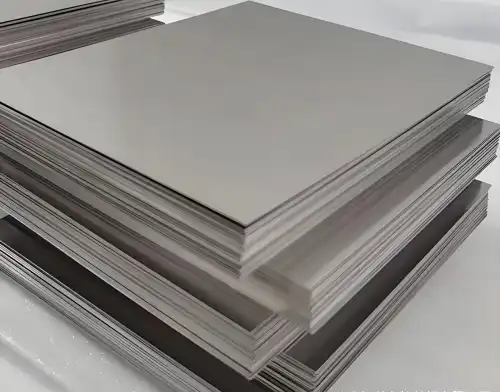
Key Performance Parameters of ASTM B265 Titanium Plates
When engineers understand the technical details, they can choose the right materials for the job. Grade 2 titanium is very flexible and has a yield strength of 275 MPa. This makes it great for bending. It is stronger than Grade 4 (Ti-6Al-4V), has yield strengths above 828 MPa, and is less likely to wear down.
How well something works depends a lot on what chemicals are in it. The amount of oxygen in commercial grades is typically between 0.18% and 0.25%, which changes the mechanical properties in a direct way. The metal won't break if the carbon level stays below 0.08%, and it won't rust if the iron level stays between 0.20 and 0.30%.
A density of 4.51 g/cm³ is one of its physical properties. This makes it much lighter than steel options. At 1660°C, it freezes, which means it stays safe at high temperatures. Things that have low thermal expansion coefficients don't change size when the temperature does. This is important for correct use in chemical processing and spacecraft.
Core Benefits That Drive Industrial Success
Adding a stable layer of titanium dioxide (TiO2) makes something very immune to rust. Damage to this natural protective film is quickly fixed because it comes back on its own. This keeps the material strong even in harsh conditions. This ability to heal itself is especially important for materials like ASTM B265 Titanium Plate, which is often chosen for its excellent performance in harsh settings. It's very helpful for businesses that work with chlorine, nitric acid, and seawater that this thing can fix itself.
Another big gain for medical uses is that they are biologically similar. The material doesn't hurt tissues and works well with them, so it can be used to make surgical tools and implant parts. It is helpful to have this trait not only in healthcare but also in food processing tools, since it is still important that the materials are clean.
Being able to lose weight is very useful in real life. The light weight of titanium makes it stronger than most metals. This lets engineers make lighter buildings without lowering safety standards. Companies in the aerospace industry use less fuel, and companies in the maritime industry use smaller ships to get better results.
Stable temperatures over a large range make a lot of different working conditions possible. The material stays stable even when it's very cold outside or when it's being used at temperatures above 300°C. It doesn't need to be changed when the temperature changes in complicated systems because it is so strong.
LINHUI TITANIUM's Superior ASTM B265 Plates vs. Competitors
LINHUI TITANIUM is different from other suppliers on the world market because we have been making things for 21 years. We run two dedicated plants with 30 specialized titanium production lines. This makes sure that quality control is always in place and that delivery dates are always met. With this infrastructure, we can keep up a production rate of 800 tons per year while still meeting strict foreign standards.
Quality certifications make our goods stand out from others on the market. LINHUI TITANIUM has ISO 9001:2015, PED 2014/68/EU, and approvals from several classification societies, such as DNV, ABS, CCS, and GL. Customers can be sure that these certifications show that the materials can be tracked and meet foreign standards.
Our "Titanium Products Supermarket" method lets you get a lot of different grades from a single source. There are four types of Ti 6Al-4V: Ti-3Al-2.5V, Ti6242, and Ti 6Al-4VVELI. The thicknesses range from 0.3mm to 4.76mm. You don't have to deal with various suppliers for different needs when you have this much choice. Packets get shipped on time all over the world thanks to global logistics. There are options like DHL, FedEx, air freight, and sea freight. Our supply chains have been around for a long time and help big projects in more than 60 countries for companies like PETRONAS, LUKOIL, and PEMEX. We ensure the reliable and timely delivery of critical materials, including specialized products like ASTM B265 Titanium Plate, to meet the demanding specifications of major industrial projects. We have a past of meeting tight deadlines for big projects, so we know how to do it again.
Maximizing Benefits Through Proper Selection and Usage
To choose the right grade, you need to carefully think about how it will be used. Grade 2 titanium is good for environments with mild corrosion and for forming. Grade 5 (Ti-6Al-4V) is best for high-stress construction uses that need the most strength. Palladium added to Grade 7 makes it more resistant to reducing acids and rust.
Choosing the right thickness has an effect on both efficiency and cost-effectiveness. Thinner plates (0.3 to 2.0 mm) work well for heat exchangers and structures that are light. Sections that are thicker (2.0 to 4.76 mm) give pressure vessel parts and structural frames the rigidity they need. Knowing the load requirements helps make the best use of materials and improve the economics of the job.
Material qualities are kept when it is handled correctly during fabrication. When bonding annealed titanium, the temperature needs to be carefully controlled to keep it from getting contaminated. Surface pollution that could weaken corrosion resistance can't happen in clean work areas. Following the rules in ASTM B265 guarantees the best performance during the whole production process.
Surface finish choices affect both how something looks and how it works. The performance of the mill finish is good enough for most industry uses. Better surface processes might help in some situations where the look needs to be better, or the friction needs to be lower. Knowing what the surface will be used for helps choose the right specs.
Critical Considerations for Successful Implementation
To keep joints strong during welding processes, you need to use specific techniques. During welding, inert gas protection keeps contaminants out of the heat-affected zone. The right choice of filler metal makes sure that the metallurgical qualities of all welded joints are compatible. In critical situations, following the AWS D1.9 welding methods keeps the structure's integrity.
Protocols for storage and handling keep the standard of materials high before they are made. Surface contamination that could affect the ability to weld or fight corrosion can't happen in clean, dry places. Using the right lifting methods keeps machines from breaking when moving things around. Documentation tools make sure that goods can be tracked all the way through the supply chain.
When needed, heat treatment methods can change the mechanical properties. Stress relief annealing gets rid of any remaining pressures in the forming process. In Grade 5 applications, solution treatment and aging cycles improve the strength qualities. Knowing the basics of metallurgy is important for choosing the right heat treatment for each job.
Inspection standards make sure that the requirements and specifications are met. Ultrasonic and dye penetrant inspection are two non-destructive testing methods that can find flaws on the inside and outside of something. Chemical analysis shows that the composition meets the standards of ASTM B265. For important uses, mechanical testing confirms the strength and ductility qualities.
FAQ
What thickness ranges are available for ASTM B265 titanium plates?
LINHUI TITANIUM sells ASTM B265 titanium plates with thicknesses ranging from 0.3mm to 4.76mm. These plates can be used for a wide range of purposes, from making thin heat exchanger parts to building solid plates.
Which grades offer the best corrosion resistance for chemical processing?
Grade 2 titanium provides excellent general corrosion resistance, while Grade 7 (Ti-0.2Pd) offers superior performance in reducing acid environments. The palladium addition enhances crevice corrosion resistance significantly.
How do titanium plates compare to stainless steel for marine applications?
Titanium plates demonstrate superior seawater corrosion resistance compared to stainless steel, eliminating pitting and crevice corrosion concerns. The weight reduction also provides operational advantages in marine structures.
Conclusion
For tough industrial uses that need the best corrosion protection, strength, and dependability, ASTM B265 Titanium Plate is the best material choice. Good mechanical properties, biocompatibility, and resistance to the environment make this material valuable in the chemical, marine, energy, and aircraft industries for a long time. Because LINHUI TITANIUM can make a wide range of products, has quality certifications, and knows how to manage the global supply chain, we are the best choice for meeting important titanium plate needs around the world.
Partner with LINHUI TITANIUM for Premium ASTM B265 Solutions
You can trust LINHUI TITANIUM to make high-quality ASTM B265 Titanium Plates because they have all the necessary certifications and years of experience in the field. Our wide range of grades, dependable supply chain, and ability to handle logistics around the world make sure that your projects get the best products on time. Contact our technical team at linhui@lhtitanium.com to discuss your specific requirements and experience the LINHUI difference in titanium excellence.
References
1. American Society for Testing and Materials. "Standard Specification for Titanium and Titanium Alloy Strip, Sheet, and Plate." ASTM International, West Conshohocken, PA, 2019.
2. Boyer, R., Welsch, G., and Collings, E.W. "Materials Properties Handbook: Titanium Alloys." ASM International, Materials Park, OH, 1994.
3. Lutjering, G. and Williams, J.C. "Titanium: Engineering Materials and Processes." Springer-Verlag, Berlin, Germany, 2007.
4. Peters, M., Kumpfert, J., Ward, C.H., and Leyens, C. "Titanium Alloys for Aerospace Applications." Advanced Engineering Materials, Vol. 5, No. 6, 2003.
5. Schutz, R.W. and Thomas, D.E. "Corrosion of Titanium and Titanium Alloys in Marine Environments." Metals Handbook, 9th Edition, ASM International, 1987.
6. Donachie, M.J. "Titanium: A Technical Guide." ASM International, Materials Park, OH, 2000.