
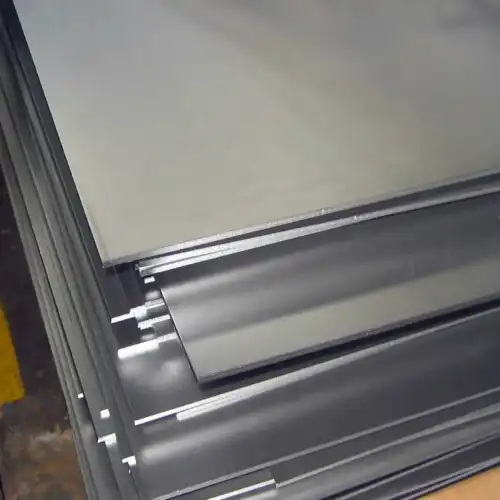
Titanium plates and sheets, especially Ti-6Al-4V ELI Titanium Sheet, provide the best strength-to-weight ratios, excellent corrosion resistance, and superior biocompatibility for demanding industrial applications. These advanced materials serve critical roles in aerospace structures, biomedical implants, chemical processing equipment, and marine environments where conventional alloys fail. The Grade 23 designation means less oxygen and iron, which improves ductility and fracture toughness while keeping the strong mechanical properties needed for high-stakes applications. Organisations sourcing from certified manufacturers gain access to materials that meet ASTM F136 and ISO 5832-3 standards, ensuring regulatory compliance and operational reliability across global projects.
Introduction
Advanced mechanical divisions request materials that withstand extraordinary conditions while keeping up dimensional stability and security edges. Titanium amalgam items have developed as vital arrangements in aviation design, therapeutic gadget fabrication, offshore oil and gas operations, and chemical handling facilities. The Ti-6Al-4V ELI titanium sheet speaks to a refined advancement of the standard Review 5 combination, particularly designed for applications requiring upgraded damage resistance and cryogenic performance.
Selecting the right provider gets as basic as choosing the fabric itself. Organisations collaborating with them set up producers to benefit from comprehensive traceability frameworks, thorough quality control conventions, and worldwide certifications that meet rigid administrative requirements. Since 2000, LINHUI TITANIUM has provided high-end titanium items to major vital enterprises and EPC temporary workers across North America, the Inlet locale, and Southeast Asia. Our broad certification portfolio—including PED 2014/68/EU, ISO 9001:2015, and AS9100D—demonstrates our commitment to conveying materials that perform dependably in mission-critical environments.
The growing use of titanium plates in different areas shows that they can lower lifecycle costs by extending their useful life, needing very little maintenance, and resisting environmental damage. Understanding the specialised properties, comparative points of interest, and application-specific contemplations empowers procurement experts to make educated choices that align with venture determinations and budget imperatives.
Understanding Ti-6Al-4V ELI Titanium Sheet Properties
Chemical Composition and Microstructural Characteristics
Grade 23 titanium sheets feature controlled interstitial elements that define their superior performance profile. The alloy contains aluminium (5.5-6.75%) for solid solution strengthening and vanadium (3.5-4.5%) for stabilising the beta phase. What distinguishes this material from standard Grade 5 is the reduced oxygen content (maximum 0.13% versus 0.20%) and iron content (maximum 0.25% versus 0.40%), which directly enhance ductility and impact resistance.
The extra-low interstitial designation means tighter control over carbon (below 0.08%), nitrogen (below 0.05%), and hydrogen (below 0.015%). These limitations prevent embrittlement during forming operations and welding procedures. The refined microstructure exhibits a bimodal distribution of primary alpha particles within a transformed beta matrix, optimising both static strength and fatigue crack growth resistance. This composition enables the material to maintain mechanical integrity under cyclic loading conditions encountered in aerospace fasteners and medical implants.
Mechanical Performance Metrics
The Ti-6Al-4V ELI titanium sheet demonstrates impressive mechanical characteristics that surpass many competing materials. The annealed condition typically exhibits a minimum tensile strength of 860 MPa and yield strength of 795 MPa, with elongation values between 10 and 15%. Compared to standard Ti-6Al-4V, the ELI variant sacrifices approximately 60 MPa in tensile strength but gains substantial ductility—a worthwhile trade-off for applications where fracture toughness is paramount.
Corrosion Resistance and Environmental Stability
Ti-6AL-4V ELI Titanium Sheet, whose passive oxide film spontaneously forms on titanium surfaces, provides exceptional resistance to chloride stress corrosion cracking, a failure mode common in stainless steels. In seawater exposure testing, Grade 23 materials exhibit negligible weight loss after extended immersion periods, outperforming 316L stainless steel by significant margins. This natural protective layer remains stable across pH ranges from 3 to 12, making these sheets ideal for chemical processing equipment handling oxidising acids and alkaline solutions. The alloy maintains structural integrity in high-humidity environments and withstands repeated thermal cycling without degradation—critical factors for offshore platform components and desalination systems.
Comparing Ti-6Al-4V ELI with Other Materials for Industry Use
Performance Against Standard Ti-6Al-4V
Whereas both amalgams share comparative ostensible composition, the interstitial component diminishments in Review 23 make quantifiable contrasts in application appropriateness. Standard Ti-6Al-4V offers higher room-temperature quality and superior crawl resistance at raised temperatures up to 400°C. In any case, Review 23 illustrates prevalent indent sturdiness and low-temperature execution, remaining bendable at cryogenic temperatures where standard titanium becomes brittle.
Medical gadget producers only indicate Review 23 for implantable equipment since the decreased interstitial substance minimises the hazard of push erosion in physiological situations. The material's versatile modulus (around 110 GPa) more closely matches human bone compared to cobalt-chrome amalgams, diminishing stress-protecting impacts that can lead to bone resorption around inserts. Aviation applications, including fluid hydrogen or fluid oxygen capacity tanks, also require the improved break sturdiness that, as it were, the ELI review gives amid quick warm drifters.
Advantages Over Stainless Steel and Nickel Alloys
When assessing the fetch of possession, titanium amalgams regularly demonstrate more temperance than stainless steels in spite of higher introductory fabrication costs. A Review 23 warm exchanger tube bundle weighs around 45% less than a comparable 316L stainless steel gathering, decreasing auxiliary back requirements and installation labour. The titanium arrangement requires no defensive coatings or cathodic security frameworks, dispensing with continuous upkeep costs that torment ferrous establishments in marine environments.
Nickel combinations like Inconel 625 offer fabulous high-temperature quality but need titanium's erosion resistance in oxidising chloride situations. The thickness advantage (4.43 g/cm³ versus 8.44 g/cm³) makes titanium the clear choice for weight-sensitive applications. Our precision-rolled titanium plates accomplish thickness resistances of ±0.02 mm, coordinating the dimensional consistency of premium stainless items, while conveying predominant execution characteristics.
Key Industrial Applications of Ti-6Al-4V ELI Titanium Sheet
Aerospace and Defense Applications
Aeroplane producers utilise Review 23 titanium sheets for basic airframe components, where weight decrease directly translates to fuel efficiency and payload capacity. Wing fight fittings, motor arch structures, and landing adapt components benefit from the alloy's excellent wear resistance under cyclic loading. The material's capacity to keep up mechanical properties amid long-term benefit at temperatures extending from -253°C to 300°C makes it irreplaceable for shuttle thermal protection systems and fawn-coloured basic panels.
Commercial aviation providers ask for complete fabric traceability and heat-specific test reports that include chemical investigation, mechanical properties, and ultrasonic review. LINHUI TITANIUM gives comprehensive process test certificates with interesting warm numbers, empowering total supply chain straightforwardness from purifying through last machining operations.
Biomedical Implants and Surgical Devices
Ti-6AL-4V ELI Titanium Sheet is widely used in the biomedical sector and represents one of the most important ASTM F136-certified materials. Orthopaedic specialists rely on Grade 23 plates for spinal fixation systems, trauma reconstruction devices, and joint replacement components. The alloy’s non-magnetic properties enable safe use in MRI environments without imaging artefacts or patient discomfort caused by magnetic interactions. Surface treatments, including polished, satin, and bead-blasted finishes, achieving Ra values below 0.4 μm, further enhance performance by improving osseointegration rates while reducing the risk of bacterial adhesion.
Dental implant manufacturers appreciate the material's remarkable resistance to the demanding chewing forces that challenge inferior amalgams. Surgical instrument makers indicate Review 23 for ultrasonic cutting edges and exactness forceps, where high-frequency vibration resistance and sterilisation compatibility are fundamental. Our ISO 13485:2016 certification affirms our quality administration frameworks meet therapeutic device manufacturing requirements, giving confirmation to targeted industry clients.
Chemical Processing and Marine Environments
Chemical plant administrators select titanium plates for reactor vessels, heat exchangers, and channelling frameworks dealing with destructive media that quickly assault stainless steels. A pharmaceutical generation office handling chlorinated solvents recorded gear life expectancies surpassing 25 years, utilising Review 23 components—three times the benefit life accomplished with extraordinary nickel amalgams at comparable introduced costs. The material's insusceptibility to setting erosion and hole assault dispels the disastrous disappointment dangers related to localised erosion phenomena.
Offshore oil stages and subsea generation frameworks progressively join titanium plates in riser components and complex gatherings. Deep-water penetrating operations uncover materials at tall weights, low temperatures, and destructive brines that challenge customary amalgams. The combination of tall strength-to-weight proportion and natural resistance decreases topside bolster structure necessities, whereas expanding assessment intervals. Marine heat exchangers manufactured from Review 23 sheets work without defensive coatings or sacrificial anodes, streamlining support conventions and lessening operational expenses.
Procurement Guide for Ti-6Al-4V ELI Titanium Sheet
Sourcing high-quality titanium products requires careful evaluation of supplier capabilities beyond basic price comparisons. Reputable manufacturers maintain direct relationships with primary producers, including ATI, VSMPO-AVISMA, and Baoji Titanium Industry, ensuring consistent raw material quality and supply continuity. LINHUI TITANIUM's strategic location in Xi'an, China—the starting point of the Belt and Road Initiative—provides logistical advantages for serving global markets while maintaining competitive lead times.
Critical Certification Requirements
Obtainment details ought to be ordered to comply with significant industry guidelines based on end-use applications. Therapeutic gadget ventures requiring ASTM F136 certification went with EN ISO 5832-3 documentation for European advertising access. Aviation applications require AMS 4930 conformance with AS9100D quality framework confirmation. Chemical handling establishments usually refer to ASTM B265 and also have extra requirements for mechanical testing and non-destructive examination. Our comprehensive certification bundle incorporates microstructure investigation reports, ultrasonic test outcomes, and dimensional review data—delivered at no extra charge to streamline your endorsement processes.
Third-party assessment administrations from DNV, Bureau Veritas, SGS, and Lloyd's Enrol give free confirmation of fabric properties and manufacturing quality. We routinely suit witness testing and source review demands, illustrating our certainty in item consistency and fabrication controls.
Practical Ordering Considerations
Typical minimum order quantities range from 500 to 2,000 kilograms, depending on thickness and width specifications, though we accommodate smaller quantities for prototype development and tooling trials. Standard lead times span 8-12 weeks for mill-direct material, with expedited production available for urgent project requirements. Our integrated titanium products supermarket maintains a strategic inventory of common sizes, enabling rapid fulfilment for maintenance and repair operations.
Ti-6AL-4V ELI Titanium Sheet offers custom thickness options from 0.5mm to 50mm to accommodate diverse application requirements, with width capabilities up to 2,500mm for large structural panels. Surface finishes can be tailored to specific functional needs—hot-rolled and pickled for maximum corrosion resistance, cold-rolled and annealed for superior surface quality, or ground and polished for medical device applications. Discussing your precise dimensional tolerances and surface finish requirements during the quotation phase ensures optimal material specifications for your manufacturing processes.
Technical Support and Best Practices for Handling Ti-6Al-4V ELI Sheets
Welding and Joining Procedures
Successfully welding Grade 23 requires strict environmental controls to prevent oxygen and nitrogen contamination that would compromise the ELI properties. Gas tungsten arc welding (GTAW) remains the preferred method, utilising high-purity argon shielding gas with trailing shields and backing gas protection. The low thermal conductivity of titanium creates narrow heat-affected zones but also increases distortion risk, necessitating proper fixturing and sequencing strategies.
Electron beam welding and laser welding techniques offer advantages for high-volume production, producing minimal distortion and narrow fusion zones. These processes operate in vacuum or controlled-atmosphere chambers, eliminating oxidation concerns while achieving superior mechanical properties in weld joints. Procurement of pre-qualified welding procedures and welder certifications from your fabricator reduces project risk and ensures code compliance for pressure vessel and aerospace applications.
Machining and Forming Recommendations
Titanium's relatively low thermal conductivity and high chemical reactivity with cutting tools demand modified machining parameters compared to steel processing. Sharp carbide or polycrystalline diamond tooling, generous coolant flow rates, and reduced cutting speeds (approximately 30-50% of steel speeds) minimise work hardening and tool wear. Interrupted cuts should be avoided to prevent galling, and chip evacuation must be carefully managed to avoid fire hazards from accumulated swarf.
Cold forming of Grade 23 sheets proves challenging due to high springback and limited room-temperature ductility. Hot forming at temperatures between 650°C and 850°C substantially improves formability while maintaining desirable mechanical properties after cooling. Superplastic forming techniques enable complex geometries for aerospace applications, though the process requires specialised equipment and extended cycle times. Consulting with experienced titanium fabricators during the design phase optimises part geometries for manufacturability while controlling production costs.
Quality Assurance and Testing Protocols
Comprehensive quality verification protects against material substitution and ensures conformance with project specifications. Positive material identification (PMI) using X-ray fluorescence analysers confirms alloy chemistry at receiving inspection. Hardness testing verifies proper heat treatment conditions, while tensile testing of witness coupons validates mechanical properties. Ultrasonic testing detects internal discontinuities that might compromise structural integrity in critical applications.
Our quality management system encompasses raw material qualification, in-process monitoring, and final product verification. Statistical process control charts track key parameters across production runs, identifying trends before they result in nonconforming material. Certificate packages document the complete inspection history, providing the traceability required for aerospace, medical, and nuclear applications. This rigorous approach ensures every shipment meets your specifications and supports your own quality requirements.
Conclusion
The Ti-6Al-4V ELI titanium sheet meets the strictest requirements in aerospace, biomedical, chemical processing, and marine sectors, where material failure can have serious consequences. The extra-low interstitial composition delivers enhanced ductility and fracture toughness while maintaining the strength and corrosion resistance that define titanium alloys. Procurement from certified manufacturers with comprehensive quality systems ensures material consistency and regulatory compliance. LINHUI TITANIUM's extensive certification portfolio, global supply network, and technical support capabilities position us as a reliable partner for organisations requiring premium titanium products with full traceability and documentation.
FAQ
What distinguishes Grade 23 from standard Grade 5 titanium sheet?
Grade 23 (Ti-6Al-4V ELI) contains reduced oxygen and iron levels compared to standard Grade 5, enhancing ductility and fracture toughness by approximately 25-30%. This makes it the preferred choice for biomedical implants and cryogenic applications where damage tolerance is paramount.
Can these sheets be cold-formed, or does the process require heat?
Cold forming proves difficult due to high yield strength and significant springback characteristics. Hot forming at elevated temperatures (650-850°C) or superplastic forming techniques are recommended to achieve complex shapes without cracking risk.
What welding precautions are necessary for maintaining ELI properties?
Welding requires inert gas shielding (argon or helium) with complete atmospheric protection to prevent oxygen pickup. The weld zone must be shielded during cooling to preserve the low interstitial characteristics critical to ELI performance.
How does this material perform in seawater environments?
Grade 23 demonstrates outstanding resistance to seawater corrosion, significantly outperforming 316 stainless steel in long-term immersion testing. The passive oxide film remains stable without protective coatings or cathodic protection systems.
Partner with LINHUI TITANIUM for Certified Ti-6Al-4V ELI Solutions
LINHUI TITANIUM serves as your comprehensive Ti-6Al-4V ELI titanium sheet supplier, offering ASTM F136 and ISO 5832-3 certified materials with complete mill test documentation and heat-specific traceability. Our precision-rolled sheets meet aerospace AS9100D and medical device ISO 13485:2016 standards, backed by third-party inspection services and customisable surface finishes, including polished, satin, and bead-blasted options, achieving Ra 0.4 μm. Whether your project demands orthopaedic implant components, aerospace structural panels, or chemical processing equipment, our technical team provides expert guidance on material selection, fabrication techniques, and quality verification protocols. Contact our specialists at linhui@lhtitanium.com to discuss your specific requirements and receive a detailed quotation for Ti-6Al-4V ELI titanium sheet manufacturer-certified materials that optimise your operational performance and regulatory compliance.
References
1. American Society for Testing and Materials. "ASTM F136-13: Standard Specification for Wrought Titanium-6Aluminum-4Vanadium ELI Alloy for Surgical Implant Applications." ASTM International, 2013.
2. Boyer, Rodney, Gerhard Welsch, and E.W. Collings. "Materials Properties Handbook: Titanium Alloys." ASM International, 1994.
3. Donachie, Matthew J. "Titanium: A Technical Guide, 2nd Edition." ASM International, 2000.
4. Lutjering, Gerd, and James C. Williams. "Titanium, 2nd Edition: Engineering Materials and Processes." Springer-Verlag Berlin Heidelberg, 2007.
5. Peters, Manfred, Christoph Leyens und Ulrich Schulz. "Titanium and Titanium Alloys: Fundamentals and Applications." Wiley-VCH Verlag GmbH, 2003.
6. Veiga, C., J.P. Davim e A.J.R. Loureiro. "Properties and Applications of Titanium Alloys: A Brief Review." Reviews on Advanced Materials Science, Vol. 32, 2012.