
Precision ASTM B352 Zirconium Alloy Plate is the main material used for important structures in nuclear power, chemical processing, and aircraft engineering. These plates are designed to have very little hafnium and to meet strict neutron transparency standards. They allow nuclear fuel assembly parts, reactor core structures, heat exchangers, and pressure tanks to work in very corrosive environments. The standard deals with the unique problem of keeping the structure strong while being exposed to high temperatures, radiation, and harsh chemicals. This makes ASTM B352-compliant plates essential for fields where material failure is not a choice.
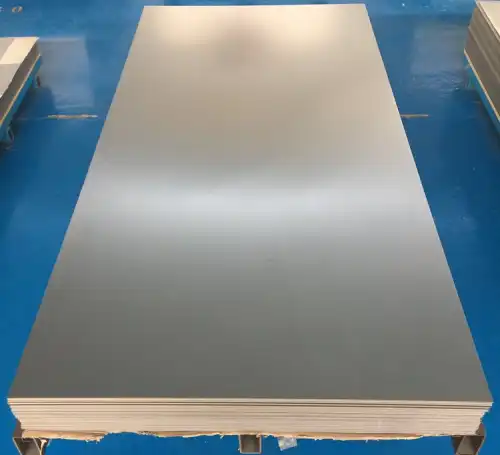
Understanding ASTM B352 Zirconium Alloy Plate: Properties and Standards
ASTM B352/B352M sets the requirements for sheet, strip, and plate made of Zirconium and Zirconium Alloys that are designed to be used in nuclear power plants. Materials that meet ASTM B352 Zirconium Alloy Plate standards go through strict methods to get hafnium amounts below 100 ppm, which is different from general industrial Zirconium that is covered by ASTM B551. This very low hafnium cutoff makes thermal neutrons very clear (a thermal neutron capture cross-section of about 0.18 barns), which lets nuclear reactors keep up efficient fission chain reactions without having to deal with extra neutron absorption.
Chemical Composition and Alloying Strategy
The metal makeup of ASTM B352 Zirconium Alloy Plate is different for each of the defined UNS grades, with each grade being best for a certain reactor setting. Zircaloy-2 (UNS R60802) has carefully balanced amounts of tin (1.20–1.70%), iron (0.07–0.20%), chromium (0.05–0.15%), and nickel (0.03-0.08%) added to it to make it stronger and less likely to rust. In a pressurized water reactor, Zircaloy-4 (UNS R60804) keeps the same amounts of tin, iron, and chromium while getting rid of nickel to lower hydrogen uptake. The Zr-2.5Nb alloy (UNS R60901) uses niobium (2.40–2.80%) instead of chromium as the main alloying element. It has better creep strength for use in pressure tubes in CANDU reactors. In addition to strengthening structures, these alloying elements do other things as well. Tin makes things less likely to rust by keeping the protective metal layer from forming. When iron and chromium are added, they create intermetallic precipitates that trap hydrogen. This lowers the risk of hydrogen embrittlement during long reactor operations. Controlling the exact amount of oxygen (usually between 0.09 and 0.16%) also affects how flexible and easy to shape the plate is during the manufacturing process.
Mechanical Performance Under Extreme Conditions
The mechanical features of ASTM B352 Zirconium Alloy Plate are very strong, even when exposed to different temperatures and radiation. Tensile strength can be anywhere from 379 to 552 MPa, and yield strength can be anywhere from 207 to 379 MPa. It depends on the metal type and how it was processed. High flexibility, shown by a minimum extension of 21%, stops brittle fractures from spreading when heated up or hit by a hard object. This mix of strength and toughness stays stable even after being exposed to neutron fluences higher than 10²² n/cm², which usually breaks down other building materials through radiation-induced stiffening. The heat properties are just as amazing. ASTM B352 Zirconium Alloy Plates stay the same size during reactor starting cycles and emergency cooling situations because they have a melting point higher than 1852°C and a thermal expansion rate of 5.9 μm/m-K. The low thermal neutron capture cross-section means that neutron absorption doesn't create much heat, which keeps the structure from becoming overly stressed from heat.
Certification Requirements and Quality Standards
Companies that make ASTM B352 Zirconium Alloy Plate have to deal with a lot of different certifications. Nuclear-grade materials need to be checked by outside groups like DNV, BV, SGS, TUV, and ABS in addition to meeting ASTM standards. As part of the approval process, mass spectrometry is used to check the chemical makeup, ASTM E8 standards are used to test the mechanical properties, and autoclave corrosion testing is required.For either 3 or 14 days, based on the grade, samples are put through an autoclave test that mimics how a reactor works by exposing them to 400°C steam at 1500 psi. Measurements of weight gain and hydrogen pickup rates can be used to figure out how well rust resistance works. Ultrasonic testing (UT) that covers the whole plate volume finds laminations, inclusions, or gaps below the surface that could cause cracks to spread. Using the ASTM E112 method for grain size research makes sure that the microstructure is uniform, which is important for getting the same mechanical reaction every time.
Comparative Material Analysis
When buying, teams look at different options for materials; it's important to know how they compare in terms of performance. Because they have a much lower thermal neutron capture cross-section—about one-fifth that of titanium—ASTM B352 Zirconium Alloy Plates work better in neutron economy uses than titanium plates. Titanium is better for aircraft uses because it is stronger for its weight, but Zirconium is better at resisting corrosion in hot, acidic conditions, especially when sulfuric acid and hydrochloric acid concentrations are above 10% at high temperatures. ASTM B352 Zirconium Alloy Plates are much more resistant to stress corrosion cracking in chloride-containing settings than stainless steel plates. Austenitic stainless steels usually break 60 °C below in chloride solutions, but Zirconium stays strong at temperatures close to 350°C when the reactor is running. Zirconium usually costs 8–12 times more than stainless steel, but its longer service life (over 40 years) and lower chance of catastrophic failure in important nuclear infrastructure make up ASTM B352 Zirconium Alloy Plate for the extra cost.
Key Industrial Applications of ASTM B352 Zirconium Alloy Plate
The unique features of ASTM B352 Zirconium Alloy Plate make it useful in many fields where the dependability of the material has a direct effect on safety at work and the economy.
Nuclear Power Generation Infrastructure
The main place where ASTM B352 Zirconium Alloy Plate is used is in the cores of nuclear reactors. Fuel assembly parts made from these plates have gap grids that keep the fuel rods exactly spaced apart. This makes sure that coolant flows smoothly and heat is transferred efficiently. The plates are carefully machined to make complex grid patterns with limits measured in micrometers. This stops flow-induced vibration and fretting wear that could damage the structure of the fuel rod covering. Core structural parts of reactors, like baffle plates and core support systems, depend on ASTM B352 Zirconium Alloy Plates to keep their shape even when neutron flux levels are higher than 10¹⁴ n/cm²-s. Temperature differences between 280°C and 350°C affect these structures, and they need to be able to withstand radiation-induced growth, which is when materials get longer when they are hit by neutrons. The Zr-2.5Nb alloy is better at resisting irradiation growth than other types of Zircaloy. This makes it the best choice for CANDU reactor pressure tubes that work at higher temperatures. More and more, spent fuel management systems need ASTM B352 Zirconium Alloy Plates for the linings of storage racks and the structure of shipping casks. Due to its resistance to rust in borated water, the material doesn't break down even after being stored wet for decades, so nuclear isotopes stay safe. As the amount of used fuel in the world grows, this application has grown a lot. Now, places need approved materials that can be expected to last 100 years.
Chemical Processing Equipment
Chemical processing plants also use ASTM B352 Zirconium Alloy Plates for heat exchanges, reaction tanks, and column interiors that deal with aggressive media. The self-healing oxide layer that forms on Zirconium surfaces protects them very well from attacks from sulfuric acid, nitric acid, and organic acids at temperatures and amounts that quickly eat away at other materials. The making of heat exchanger plates is an important industry area. Manufacturers make designs in ASTM B352 Zirconium Alloy Plates that are corrugated or dimpled to get the most surface area while keeping the equipment's size small. For example, these heat exchangers are used in factories that make urea, acetic acid, and medicines, where strict rules about product cleanliness mean that rusting equipment surfaces can't get dirty. ASTM B352 Zirconium Alloy Plates can be used to make storage tanks and pressure vessels that can safely hold strong acids and alkalis. Because the material doesn't react with hydrochloric acid at temperatures or amounts above 35%, it is essential in specific chemical synthesis methods. Fabricators usually ask for heated plate conditions so that the plates are as flexible as possible while the vessels are being built. They can make complex shapes using hot forming or stepwise sheet forming.
Aerospace and Specialized Industrial Sectors
ASTM B352 Zirconium Alloys are used in aerospace because they can withstand high temperatures and have a low mass. The material is thermally stable and resistant to oxidation, which is good for combustion chamber walls and turbine parts at temperatures where aluminum alloys lose their strength and titanium starts to oxidize more quickly. Specialized surface treatments are used to make the thermal barrier layer stick better to the plates. This lets them be used in gas turbine hot areas that are over 1200°C. The production of medical devices is a new area of application. Biocompatibility testing shows that Zirconium is very good at integrating with tissue and bone, which leads to standards for prosthetic implant parts. The radiolucency of the material, which means it is clear to X-ray imaging, makes it better than stainless steel implants because it lets doctors see clear images after surgery without any artifacts getting in the way. Thin-gauge ASTM B352 Zirconium Alloy Plates are required by the electronics industry for sputtering targets that are used to make semiconductors. Because the material is very pure and has a controlled grain structure, it can be used to make integrated circuits with uniform thin-film layering for dielectric layers and diffusion barriers. For this use, very tight compositional standards are needed, with hafnium level limits usually being below 50 ppm to keep electrical properties from changing.
How to Choose the Right ASTM B352 Zirconium Alloy Plate for Your Application
To choose the right ASTM B352 Zirconium Alloy Plate grades and standards, you need to carefully compare the material's capabilities with the working factors.
Grade Selection Based on Service Environment
In boiling water reactor (BWR) uses, Zircaloy-2 is usually used because it works well in reactive water chemistry settings. The nickel makes it more resistant to rust in the oxygen-rich coolant that is typical of BWR usage. On the other hand, owners of pressurized water reactors (PWRs) like Zircaloy-4 because it picks up less hydrogen in reducing chemistry settings where hydrogen is added for radiolysis control. The CANDU reactor specs say that pressure tubes must be made of Zr-2.5Nb alloy, which can withstand higher temperatures and has better creep resistance. When niobium is added, it forms small particles that stop dislocations from moving. This slows down the rate of creep displacement at temperatures close to 350°C. This grade also shows better resistance to delayed hydride cracking, a way that materials can break where hydrogen forms brittle Zirconium hydride platelets when they are under long-term tension stress.
Dimensional and Surface Finish Specifications
The choice of plate thickness strikes a balance ASTM B352 Zirconium Alloy Plate between the needs of the structure and the need to save neutrons. For nuclear uses, thicknesses between 2 and 8 mm are usually required to give enough mechanical strength while minimizing neutron absorption. Chemical processing tools can handle ASTM B352 Zirconium Alloy Plates that are 10 to 25 mm thicker when there are no worries about neutron transparency, and more material is needed to allow for corrosion. Surface finish standards have a big effect on efficiency. Pickled surfaces are clean and free of rust, which makes them perfect for welding. Machined finishes, on the other hand, offer tighter size limits for precision assembly tasks. Surface roughness standards usually call for Ra values below 1.6 μm to keep flow resistance and dirt buildup in reactor cooling systems to a minimum. In some situations, even smoother finishes (Ra 0.4 μm) are needed because of microbiologically-influenced rust risks that need as few surface flaws as possible.
Procurement Considerations and Supplier Evaluation
Because of specific processing needs and limited production numbers, ASTM B352 Zirconium Alloy Plate usually comes in minimum order sizes of 500 kg to 2000 kg. Manufacturers that let you customize their products can get the most out of the materials they use by cutting plates to almost exact dimensions. This cuts down on waste and machining time. When a supplier is qualified, they should show a full list of certifications, such as PED 2014/68/EU for pressure equipment uses, ASME Section III for making nuclear parts, and approvals from classification societies like DNV, ABS, CCS, BV, and Lloyd's Register. Long-term supply deals help projects that need to be able to track materials through multiple purchase rounds. They also make sure that the metals' properties stay the same and make quality assurance paperwork easier. Due to the steps needed to remove hafnium, work them hot, and make sure they pass all the required tests, ASTM B352 Zirconium Alloy Plates take 16 to 24 weeks to arrive after an order is placed. When buyers plan a project, they should keep these deadlines in mind, especially for parts that are on the critical path and where material delays can affect the whole schedule.
Best Practices for Working with ASTM B352 Zirconium Alloy Plates
To make ASTM B352 Zirconium Alloy Plate parts that work well and last a long time, you need to know a lot about how to handle them and keep an eye on quality.
Welding and Joining Techniques
To keep the air clean while welding ASTM B352 Zirconium Alloy Plates, strict oxygen control is needed. Gas tungsten arc welding (GTAW) is still the best way to do it. It is done in the following shield containers that are filled with argon or helium gas. Oxygen and nitrogen pollution at welding temperatures weakens and deforms metal, making joints more likely to crack. Monitoring the dew point below -50°C makes sure that the air is clean enough for welding. The choice of filler metal should match the makeup of the base plate so that the mechanical qualities and resistance to rust stay the same across weld zones. Welding factors need to be carefully optimized—too much heat causes grains to grow, which weakens the material, and not enough heat creates places where defects can start. Post-weld stress release by vacuum heating at 580–650°C for 30–60 minutes gets rid of any remaining stresses and makes heat-affected areas more flexible again.
Machining and Forming Protocols
To machine ASTM B352 Zirconium Alloy Plates, you need to use carbide or ceramic cutting tools at modest speeds and a lot of coolant. Because the material tends to work harden while being cut, positive rake angles and sharp tool tips are needed to keep cutting forces as low as possible. Cutting speeds are usually between 30 and 60 m/min for roughing and 60 to 100 m/min for finishing. These speeds are much slower than the limits for steel cutting. ASTM B352 Zirconium Alloy Plate is very flexible, so it can be used for forming by hot forming at 600–750°C or cold forming with intermediate cooling stages. For press brake bending, the smallest bend radius that won't crack is two to three times the width of the plate. With incremental forming methods, complicated three-dimensional forms can be made without special tools. This lowers the cost of development for complex part geometries.
Surface Preparation and Passivation
Using mixes of hydrofluoric acid and nitric acid for pickling gets rid of surface contamination and creates regular oxide layers. A normal pickling solution has 3–5% HF and 30–45% HNO₃ in it, and the soaking time can be anywhere from 1 to 5 minutes, based on how bad the contamination is. Rinsing the part with water and then passivating it in diluted nitric acid stabilizes the oxide on the surface, making it more resistant to rust in future use. When finishing a mechanical surface with abrasive blasting or grinding, iron pollution must be avoided because it speeds up localized rusting. Using aluminum oxide or stainless steel shot as abrasives stops iron from getting embedded, which weakens the resistance to rust. The protective oxide layer that was damaged during mechanical finishing is put back together during the final passivation processes.
Long-Term Maintenance and Monitoring
Ultrasonic thickness readings are often used in corrosion monitoring programs for ASTM B352 Zirconium Alloy Plate parts at set times to keep track of material loss rates and find attack zones. In nuclear uses, eye checks are done during refueling breaks to look for oxide nodule formation or surface discoloration that could mean that corrosion is progressing too quickly. Controlling contamination is a big part of preventative maintenance. This means getting rid of deposits that cause different aeration cells and speed up localized rusting. Using weak acids or alkaline soaps for chemical cleaning gets rid of fouling without hurting the passive oxide layer. Keeping extra ASTM B352 Zirconium Alloy Plates in climate-controlled areas with humidity levels below 50% is the best way to keep them from rusting during long periods of storage before they are installed.
Trusted Suppliers and Procurement Strategies for ASTM B352 Zirconium Alloy Plate
A smart investment that affects the success of a project in many ways is building relationships with qualified ASTM B352 Zirconium Alloy Plate sources.
Supplier Qualification Criteria
Leading ASTM B352 Zirconium Alloy Plate providers, such as ASTM B352 Zirconium Alloy Plate, show extensive certification files that confirm their production skills and quality control systems. Some important certificates are ISO 45001 (formerly OHSAS 18001) for health and safety at work, ISO 9001:2015 for quality management systems, and ISO 14001:2015 for environmental management. To be a part of the nuclear supply chain, you need to be certified by ASME NQA-1 or an equivalent national standard. Verification of manufacturing licenses makes sure that suppliers keep the right licenses for making pressure equipment and nuclear parts. Third-party inspection agency approvals from DNV, BV, SGS, TUV, ABS, Lloyd's Register, and other well-known international groups confirm the quality of the products and the methods used to make them. Customer reference checks give you useful information about a supplier's work that isn't contained in licensing paperwork. Long-term ties of success with big energy companies, EPC contractors, and chemical processors show that the company can meet strict requirements and keep its delivery promises. LINHUI TITANIUM has built ties like these with CEFC, PTT, PDVSA, PETROECUADOR, and many other global companies by providing steady quality and dependable service.
Pricing Dynamics and Negotiation Strategies
The price of ASTM B352 Zirconium Alloy Plates is mostly determined by the cost of the raw materials, and the process of removing hafnium adds a lot to the cost of production. Market prices change based on how much Zirconium sponge is available and how much demand there is in the nuclear business. Volume agreements help sellers plan their production efforts more efficiently, and orders over 5000 kg per year can get better prices. Customization needs affect prices by adding more steps to the processes. Standard plate sizes mean that extra fees aren't needed as often, but special widths or lengths may cost 15–25% more, based on how well the material is used. Specifications for the surface finish affect the price. For example, pickling surfaces costs less than precision-ground finishes that need more work. Long-term supply deals keep prices stable and give suppliers more power when supplies run out. Annual contracts with quarterly release plans balance the costs of keeping goods with the savings from buying in bulk. Suppliers with vendor-managed inventory systems cut down on management costs and make sure that materials are available on time for production plans.
Logistics and After-Sales Support
When sending ASTM B352 Zirconium Alloy Plate internationally, it needs special packaging to keep the surface from getting damaged or contaminated. Suppliers should offer wooden crates that are properly packed with moisture-proof and padding materials for both sea and air freight transport. Shipments must come with documentation packages that include mill test records, material certificates, and third-party inspection reports. This makes it easier to clear customs and do a check upon arrival. Technical help after the sale is what sets high-quality providers apart from average ones. Access to metallurgical experts for manufacturing advice, help with developing welding procedures, and troubleshooting adds a lot of value on top of providing materials. Suppliers with North American distribution centers shorten the wait time for emergency orders and make repair spare parts easier to find locally.
Conclusion
In industries like nuclear power, chemical processing, aircraft, and others that need corrosion resistance, neutron transparency, and mechanical stability, ASTM B352 Zirconium Alloy Plate is the only thing that can be used. The material's special mix of properties—ultra-low hafnium content, high corrosion resistance, and steadiness in shape when exposed to radiation—meets problems that other materials can't. To make an application work, you need to carefully choose the grade, use special fabrication methods, and work with qualified providers who can provide consistent quality and full technical support. Collectively, these factors make it possible for infrastructure to work safely and cost-effectively for many years.
FAQ
1. How does ASTM B352 differ from ASTM B551 zirconium specifications?
The main difference is the amount of hafnium that must be present. In ASTM B352 Zirconium Alloy Plate, hafnium levels must be less than 100 ppm to ensure neutron transparency, which is needed for nuclear applications. But in ASTM B551, there are no limits on hafnium content because neutron economy is not an issue in chemical processing applications. ASTM B352 also needs tighter dimensional limits and autoclave corrosion tests, which are nuclear quality assurance requirements. Because of this, B352 materials are much more expensive, but they are necessary for parts of reactors where neutron absorption has a direct effect on how well they work.
2. What documentation accompanies ASTM B352 plate shipments?
Certified Mill Test Reports (CMTR) are required paperwork that lists the chemical makeup of a lot, including any hafnium or trace impurities, as well as the results of tests on its mechanical properties, such as its tensile strength and elongation values, its weight gain from an autoclave corrosion test, and its volumetric soundness. Independent proof comes from third-party inspection certificates from companies like DNV, BV, or SGS. Material traceability paperwork lets you keep track of everything from making the ingots to making the final plates, which meets the standards for nuclear quality assurance. The right paperwork makes it easier for the receiving check and keeps important records for regulatory compliance throughout the service life of the component.
3. Can zirconium alloy plates be welded to dissimilar metals?
Metallurgical problems are big when ASTM B352 Zirconium Alloy Plate is welded to metals that are not the same. When you directly fuse metals like stainless steel or nickel alloys together, you make intermetallic mixtures that are weak and easily break. Explosive bonding or roll bonding makes mechanical joints without melting, which lets tank nozzles and pipe links change from Zirconium to steel. To make these bimetallic transition joints, you need special equipment and ways to check the quality. For situations where fixed connections are okay, mechanical fastening with isolation seals is another option. When combining metals that are not the same, design engineers should talk to experienced manufacturers early on in the project development process.
Partner with LINHUI TITANIUM for Premium Zirconium Alloy Solutions
LINHUI TITANIUM is a reliable company that makes ASTM B352 Zirconium Alloy Plate. With more than 20 years of experience in metalworking, they have worked on important industrial projects all over the world. Our long list of certifications, which includes PED 2014/68/EU, ASME qualifications, and approvals from DNV, ABS, CCS, BV, and Lloyd's Register, shows that we are dedicated to quality standards that meet the strictest needs in nuclear, chemical processing, and aerospace uses. We keep a large stock of different types of alloys, such as Zircaloy-2, Zircaloy-4, and Zr-2.5Nb. We can also make unique sizes, ranging from 0.5 mm up to 1000 mm in width and thickness.
Our long-term partnerships with big energy companies like CEFC, PTT, PDVSA, and PEMEX show that we can support world-class infrastructure projects. As a full-service ASTM B352 Zirconium Alloy Plate provider, we offer full technical support, from helping you choose the right material to helping you build it. Our metallurgical engineers have experience working with nuclear and chemical processing uses. Email our team at linhui@lhtitanium.com to talk about your project needs, get full specs, or set up testing of materials. When you buy materials from LINHUI TITANIUM, you can turn your transaction into a strategic relationship thanks to our certified quality, technical knowledge, and on-time delivery.
References
1. American Society for Testing and Materials. "ASTM B352/B352M-20: Standard Specification for Zirconium and Zirconium Alloy Sheet, Strip, and Plate for Nuclear Application." ASTM International, 2020.
2. Cox, Brian. "Pellet-Clad Interaction (PCI) Failures of Zirconium Alloy Fuel Cladding—A Review." Journal of Nuclear Materials, vol. 172, 1990, pp. 249-292.
3. Northwood, Donald O., and Uwe Kosasih. "Hydrides and Delayed Hydrogen Cracking in Zirconium and Its Alloys." International Metals Reviews, vol. 28, no. 1, 1983, pp. 92-121.
4. Sabol, George P., et al. "Development of a Cladding Alloy for High Burnup." Zirconium in the Nuclear Industry: Eighth International Symposium, ASTM STP 1023, 1989, pp. 227-244.
5. Steinberg, Meyer A. "Corrosion of Zirconium and Zirconium Alloys." Corrosion Engineering Handbook, edited by Philip A. Schweitzer, Marcel Dekker Inc., 1996, pp. 891-918.
6. Yilmazbayhan, Aylin, et al. "Transmission Electron Microscopy Examination of Oxide Layers Formed on Zr Alloys." Journal of Nuclear Materials, vol. 349, 2006, pp. 265-281.









