
Titanium amalgams are known for their astonishing qualities when it comes to high-performance materials in a range of businesses. Grade 5 Titanium and Review 23 are two well-known grades that individuals frequently conversation approximately. These two combinations each have their claim uncommon highlights that make them great for diverse employments. Ti-6Al-4V, or Review 5 titanium, is utilized in a parcel in flying machine, pharmaceutical, and industrial sectors since it is strong and doesn't erode. Review 23 titanium, also known as Ti-6Al-4V ELI (Additional Moo Interstitial), is a more immaculate form of Review 5 with less oxygen. This makes it a way better choice for therapeutic gadgets and parts for airplanes and shuttles, where resistance to weakness and breaks is exceptionally important. This web journal will go over the pros and cons of each of these two sorts of titanium, where they are utilized, and how they stack up against each other in diverse circumstances.
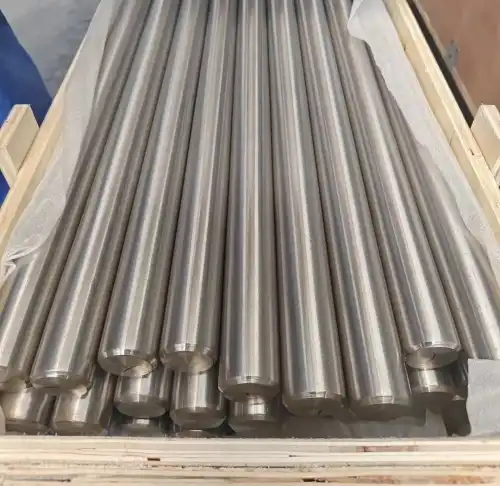
What are the key differences between Grade 5 and Grade 23 titanium?
Chemical composition and purity levels
Review 5 titanium, or Ti-6Al-4V, is an alpha-beta metal made up of generally titanium, along with 6% aluminum and 4% vanadium. This material's awesome strength-to-weight proportion and resistance to rust make it a great choice for fifth graders. Review 23 titanium, moreover known as Ti-6Al-4V ELI, has a comparable base composition, but interstitial components (particularly oxygen) are more entirely controlled in this case. Review 23 has less oxygen than Review 5 (more often than not 0.13% max vs. 0.20% max), which makes it more bendable and break-intensive. Due to its higher immaculateness, Review 23 is superior for employments that require higher split resistance and wear quality. Topak, a beat creator of titanium products, gives both grades with certified chemical compositions that meet the standards of the industry.
Mechanical properties and performance
Grade 5 and Grade 23 titanium have different mechanical qualities because of how they are made and what they are made of. Titanium Grade 5 usually has a higher yield strength and tensile strength than Grade 23. Grade 23, on the other hand, has better elongation and a lower modulus of elasticity, which makes it better for uses that need better wear resistance and biocompatibility. Grade 23 has less oxygen, which also helps it fight fracture and crack propagation. Grade 23 is a great option for important parts in aircraft and medical implants because of these qualities that ensure long-term performance and safety. Topak's advanced production methods make sure that both grades have the same mechanical properties. This meets the strict standards of fields like healthcare and aerospace.
Cost and availability considerations
Cost and availability are important factors to think about when considering titanium of Grade 5 and Grade 23. Grade 5 titanium has a lot more uses and is produced in larger amounts, so it is easier to get and usually cheaper. For Grade 23 titanium, the manufacturing method has to be stricter, and the composition has to be more tightly controlled. This means it costs more to make and may take longer to get. But in important cases where efficiency and safety are very important, the better qualities of Grade 23 often make the extra cost worth it. Topak uses its global supply chain to offer good prices on both grades and make sure that even specific grades like Ti-6Al-4V ELI are always in stock.
How do Grade 5 and Grade 23 titanium compare in aerospace applications?
Structural components and airframe materials
In aerospace uses, Grade 5 and Grade 23 titanium are very important to the building of the aircraft and the structure of the wings. Grade 5 titanium doesn't add much weight to an airplane but makes it much stronger. It is also used in engines and to help parts stay together. Its strength and resistance to fatigue make it a good material for parts that have to handle cyclic loads. Grade 23 titanium has better fracture toughness and fatigue resistance, so it is often the choice for important structural parts in high-performance airplanes and spacecraft. Grade 23 has less oxygen in it, which lowers the chance of highly stressed parts failing too early. Topak makes sure that both Grade 5 and Grade 23 are made according to industry standards like AMS 4928 and AMS 4931 when they are sold to big aircraft companies.
Engine components and high-temperature applications
In aviation motor parts and applications with exceptionally high temperatures, the choice between Review 5 and Review 23 titanium depends on how each will be utilized. Since it is exceptionally solid and doesn't twist or extend effortlessly at high temperatures, Review 5 titanium is regularly utilized in motor parts like rings, edges, and other things. Review 23 titanium, on the other hand, is a awesome alternative for imperative motor parts that require to be more dependable and last longer since it has superior wear resistance and ductility. The lower oxygen level in Review 23 makes a difference in anticipating embrittlement, which too makes a difference; it works way better in hot places. Topak is a master in making titanium amalgams, so he makes beyond any doubt that both grades meet the strict necessities of aviation motor producers.
Space exploration and satellite components
Grade 5 and Grade 23 titanium are both very useful for spacecraft and satellites. Because of its great strength-to-weight ratio and ability to fight corrosion in space, Grade 5 titanium is commonly used in satellite structures, propulsion systems, and other parts of spacecraft. Grade 23 titanium has better fracture toughness and fatigue resistance. It is especially useful for important parts of spacecraft and missions where dependability is very important. Grade 23's better resistance to crack propagation makes it a great option for pressure vessels and structural elements that need to be able to handle the harsh conditions of space flight. Topak works with major space programs and satellite makers to deliver high-quality titanium alloys that meet the strict standards of space travel.
What are the advantages of using Grade 23 titanium in medical implants compared to Grade 5?
Biocompatibility and osseointegration
For medical devices, Grade 23 titanium is better than Grade 5 Titanium in terms of biocompatibility and osseointegration. Grade 23 has less oxygen and fewer interstitial elements, which makes it more biocompatible and lowers the chance of negative reactions in the body. Better osseointegration is also made possible by this higher purity, which lets the implant and nearby bone tissue join more strongly. Grade 23 titanium can better fight fatigue, which keeps the implant stable over time. This is very important for things like joint replacements and dental implants. Topak's medical-grade titanium alloys are tested very carefully to make sure they are biocompatible with FDA and foreign standards. This makes sure that they are as safe as possible for patients.
Mechanical properties for long-term implant performance
Grade 23 titanium's mechanical qualities make it a better choice for long-term implants than Grade 5. Both grades have great strength-to-weight ratios, but Grade 23 is better suited to bone tissue because it is more ductile and has a lower value of elasticity. This helps lessen the impact of stress shielding. Grade 23 titanium's improved fatigue resistance is very useful in load-bearing implants, like hip and knee replacements. These can fail over time when they are used under cyclic loads. Also, Grade 23's better fracture toughness lowers the chance of terrible implant failure, which gives patients another safety benefit. Topak works closely with makers of medical devices to create custom Grade 23 titanium alloys that are tailored to different kinds of implants. This makes sure that each use case has the best mechanical qualities.
Corrosion resistance and long-term stability
Both Grade 5 and Grade 23 titanium withstand corrosion very well, which is important for medical implants that are used in the body. Grade 23 titanium, on the other hand, has even better long-term stability and resistance to rust because it is purer and has less oxygen. This makes the implant much less likely to break down, which helps it keep its shape and compatibility with the body over long periods of time. This reduces the need for repair surgeries. Grade 23 titanium has better surface qualities that make it easier for protective coatings and surface treatments to stick. This makes it even more resistant to corrosion and biocompatible. Topak's advanced manufacturing and quality control methods make sure that both grades are equally resistant to corrosion. This meets the strict standards of the medical device business.
Conclusion
To wrap up, Grade 5 Titanium and Review 23 both have incredible qualities, but each one is way better for certain employments. For a parcel of diverse industry and aviation purposes, Review 5 is still a valuable and reasonable choice. On the other hand, Review 23 is the best choice for critical applications that require much better resistance to wear, break strength, and biocompatibility. It is vital to weigh execution, cost, and accessibility when choosing which amalgam to utilize for a specific application. As materials science moves forward, both sorts will likely be assisted in moving forward and utilized in more businesses. This will make titanium indeed more imperative in high-performance designing.
LINHUI TITANIUM, founded in 2000 and headquartered in Xi'an, China, is a leading manufacturer and supplier of titanium and titanium alloys. With a commitment to creating value for customers, LINHUI TITANIUM adheres to the development strategy of "supplying high-end products, establishing a world-renowned enterprise." Our extensive product range includes both Grade 5 and Grade 23 titanium, catering to diverse industry needs. We have established long-term partnerships with renowned companies worldwide and hold numerous international certifications, ensuring the highest quality standards. Our global reach, combined with our expertise in titanium alloys, positions us as a preferred choice for customers seeking reliable and high-performance titanium products. For inquiries, please contact us at linhui@lhtitanium.com.
FAQ
Q: What is the main difference between Grade 5 and Grade 23 titanium?
A: The main difference is that Grade 23 has lower oxygen content and stricter control of interstitial elements, resulting in improved ductility and fracture toughness compared to Grade 5.
Q: Which grade is better for aerospace applications?
A: Both grades are used in aerospace, but Grade 23 is often preferred for critical components due to its superior fatigue resistance and fracture toughness.
Q: Why is Grade 23 titanium preferred for medical implants?
A: Grade 23 offers better biocompatibility, improved osseointegration, and superior long-term stability due to its higher purity and enhanced mechanical properties.
Q: Is Grade 5 titanium more cost-effective than Grade 23?
A: Generally, yes. Grade 5 is more widely available and less expensive due to its broader range of applications and higher production volumes.
Q: Can Grade 5 and Grade 23 titanium be used interchangeably?
A: While they have similar base compositions, they are not always interchangeable. The choice depends on specific application requirements, especially in critical or high-performance scenarios.
Q: How do the corrosion resistance properties of Grade 5 and Grade 23 titanium compare?
A: Both grades offer excellent corrosion resistance, but Grade 23's higher purity can provide slightly better long-term corrosion resistance in certain environments.
References
1. Matthews, A., & Okabe, T. (2018). Titanium Alloys in Medical Applications. In Handbook of Advanced Materials for Medical Applications (pp. 123-156). Elsevier.
2. Peters, M., Kumpfert, J., Ward, C. H., & Leyens, C. (2003). Titanium alloys for aerospace applications. Advanced Engineering Materials, 5(6), 419-427.
3. Rack, H. J., & Qazi, J. I. (2006). Titanium alloys for biomedical applications. Materials Science and Engineering: C, 26(8), 1269-1277.
4. Boyer, R. R. (1996). An overview of the use of titanium in the aerospace industry. Materials Science and Engineering: A, 213(1-2), 103-114.
5. Niinomi, M. (2008). Mechanical biocompatibilities of titanium alloys for biomedical applications. Journal of the Mechanical Behavior of Biomedical Materials, 1(1), 30-42.
6. Leyens, C., & Peters, M. (Eds.). (2003). Titanium and titanium alloys: fundamentals and applications. John Wiley & Sons.