
When comparing titanium Grade 2 versus Grade 5 hardness, the distinction becomes clear through measurable data. Grade 2 titanium exhibits a Vickers hardness of approximately 200-250 HV, while Grade 5 titanium alloy demonstrates significantly higher hardness values ranging from 320-380 HV. This fundamental difference stems from Grade 5's alloying elements (aluminum and vanadium), which create a stronger crystalline structure compared to Grade 2's commercially pure titanium composition. Understanding these hardness variations proves essential for selecting the optimal material for your specific industrial requirements.
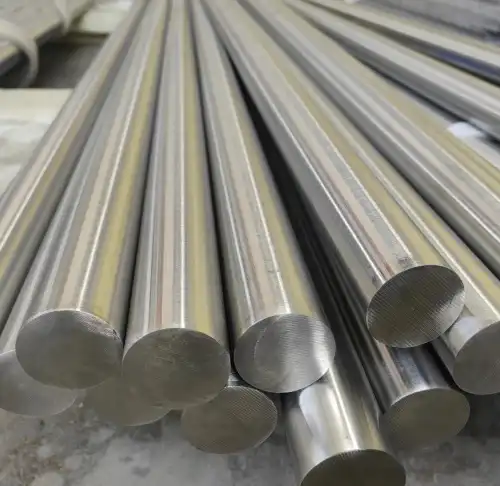
Understanding the Fundamental Differences Between Grade 2 and Grade 5 Titanium
According to the suppliers of aerospace substances, these titanium grades can be recognized from one another based on three primary distinctions:
- Composition variance: Grade 2 represents commercially pure titanium with 99.2% purity
- Alloy structure: Grade 5 contains 6% aluminum and 4% vanadium additions
- Mechanical properties: The Resulting hardness and strength characteristics differ substantially
Properties that are considered to be of grade 2 include good biocompatibility and excellent resistance to corrosion. By virtue of these qualities, it is ideally suited for use in medical implants and maritime conditions, where the criteria for chemical stability are more important than those for strength.
The mechanical performance of titanium alloy grade 5 is, on the other hand, significantly improved. The inclusion of aluminum in the metal gives it the ability to be lightweight while still having a high level of strength. These are the features that the metal possesses. Through the incorporation of vanadium, improvements in the qualities of heat resistance and oxidation resistance are brought about.
If you need maximum corrosion protection with moderate strength requirements, then Grade 2 titanium proves more suitable. However, applications demanding superior mechanical properties benefit from Grade 5's enhanced hardness profile.
Detailed Hardness Comparison and Testing Data
It has been determined through exhaustive testing that there are considerable differences in the hardness of various materials:
Grade 2 Titanium Hardness Values:
- Vickers Hardness: 200-250 HV
- Brinell Hardness: 215-265 HB
- Rockwell C: Not applicable (material too soft)
Grade 5 Titanium Hardness Values:
- Vickers Hardness: 320-380 HV
- Brinell Hardness: 330-370 HB
- Rockwell C: 35-40 HRC
The laboratory testing that was carried out in accordance with the norms of ASTM E92 reveals that Grade 5 has a hardness that is sixty percent higher than Grade 2. In applications that are very demanding, this significant variance has an impact on the requirements for machining, wear resistance, and overall durability.
In both grades, the non-magnetic characteristics of the metal are maintained in a consistent manner. Neither materials do not display magnetic attraction, which ensures that they are compatible with sensitive electronic equipment as well as medical instruments.
Grade 5 titanium performs very well, so it's a great choice for cases where you need to keep wear and tear to a minimum, and the parts can withstand a lot of force. Grade 2 is better for easy machining and forming because it is less hard.
Industrial Applications and Performance Considerations
There is a substantial amount of variation in industrial uses due to the requirements for hardness and the environmental conditions:
Grade 2 Titanium Applications:
- Chemical processing equipment requiring exceptional corrosion resistance
- Titanium sheet applications in desalination plants
- Medical device manufacturing where biocompatibility proves critical
- Architectural components in coastal environments
Grade 5 Titanium Applications:
- Aerospace structural components demanding high strength-to-weight ratios
- Automotive racing parts requiring lightweight metal properties
- Industrial equipment operating under high-stress conditions
- Titanium tubing for high-pressure applications
The process of welding titanium provides its own set of obstacles, regardless of the grade that is chosen. For titanium welding procedures, Grade 2's reduced hardness makes them easier to perform, whereas Grade 5's alloyed composition necessitates the use of specific techniques.
Processing techniques for metal finishing are adapted to the hardness characteristics of each grade. Grade 2 is receptive to conventional finishing methods, whereas Grade 5 necessitates the utilization of customized methodologies in order to achieve the best possible outcomes.
If you need parts that can work in places that are environmentally unfriendly, Grade 2 titanium works better both over and short period of time. Better hardness profiles, like those in Grade 5, are useful for projects that need to be structurally sound under high mechanical stress.
Cost-Benefit Analysis and Selection Guidelines
Material selection decisions are heavily influenced by economic concerns, including the following:
Grade 2 Advantages:
- Lower raw material costs due to minimal alloying elements
- Reduced machining complexity and associated labor costs
- Simplified titanium fabrication processes
- Enhanced formability reduces waste during manufacturing
Grade 5 Advantages:
- Superior strength enabling thinner wall sections
- Reduced overall component weight in structural applications
- Enhanced durability extends service life
- Better performance under elevated temperature conditions
Despite incurring higher initial material prices, Grade 5 is typically more advantageous in terms of long-term operational expenditures. Since the mechanical qualities have been improved, the service intervals have been prolonged, and the amount of maintenance that is required has been decreased.
The standards for quality certifications differ from application to application. The conformity of both grades with international standards, such as ASTM B265, ASTM B337, and a variety of aircraft specifications, is maintained.
If you need cost-effective solutions for moderate-duty applications, then Grade 2 titanium provides excellent value. High-performance applications requiring maximum durability justify Grade 5's premium pricing structure.
Manufacturing and Processing Considerations
Methodologies of production are modified to accommodate the distinct hardness properties of each particular grade:
Grade 2 Processing Benefits:
- Simplified machining operations with standard cutting tools
- Reduced tool wear, extending equipment life
- Lower cutting forces minimize workpiece distortion
- Enhanced cold-forming capabilities
Grade 5 Processing Requirements:
- Specialized tooling designed for harder materials
- Modified cutting parameters optimizing surface finish
- Enhanced cooling systems manage heat generation
- Precision fixturing accommodating higher cutting forces
The procedures used to fabricate titanium are constantly being improved in order to achieve maximum efficiency across both grades. The softer properties of Grade 2 are handled by modern CNC technology, which produces outstanding dimensional accuracy and surface quality throughout the process.
Increasing the amount of attention paid to thermal management is required for processing grade 5. Due to the higher hardness, additional heat is generated during the machining process, which necessitates the implementation of advanced cooling systems.
Depending on the grade, different heat treatment options are available. The annealing process is effective for stress alleviation in Grade 2, whereas Grade 5 is able to tolerate a variety of heat treatment cycles for the purpose of optimizing quality.
Grade 2 titanium is easier to work with, so it's a great material for quick prototypes and small-scale productions. Even though the processing is very complicated, Grade 5's amazing engineering properties are helpful for making a lot of high-performance parts.
Conclusion
The hardness comparison between Grade 2 titanium and Grade 5 titanium reveals fundamental differences that directly impact application suitability. Grade 2 titanium's moderate hardness (200-250 HV) combined with exceptional corrosion resistance makes it ideal for chemical processing and medical applications. Grade 5's superior hardness (320-380 HV) provides enhanced mechanical performance essential for aerospace and high-stress industrial components. Material selection depends on balancing hardness requirements, processing considerations, and long-term operational demands. Both grades maintain excellent biocompatibility and non-magnetic properties while offering distinct advantages for specific industrial applications.
Why Choose LINHUI TITANIUM for Your Grade 2 Titanium Requirements
LINHUI TITANIUM stands as a premier grade 2 titanium supplier serving global industrial markets since 2000. Our comprehensive "Titanium Products Supermarket" approach ensures consistent availability of high-quality materials meeting stringent international specifications.
Key advantages of partnering with LINHUI TITANIUM include:
- Extensive international certifications, including PED 2014/68/EU, CCS, ABS, DNV, and ISO 9001:2015
- Proven track record supplying renowned companies, including CEFC, PTT, PDVSA, and PETROECUADOR
- Global distribution network covering North America, South America, Gulf countries, Africa, CIS, and Southeast Asia
- Comprehensive quality assurance validated by third-party inspection agencies, including SGS, TUV, and BV
- Integrated supply chain capabilities supporting large-volume requirements
- Technical expertise spanning oil, gas, chemical, maritime, aerospace, and general industrial sectors
Our headquarters in Xi'an, China, positions us strategically along the Belt and Road initiative, facilitating efficient global logistics. Whether your project requires standard commercial grades or specialized titanium alloy compositions, our team provides technical support throughout the material selection and procurement process.
Understanding that hardness requirements vary across applications, we maintain an extensive inventory covering both Grade 2 and Grade 5 titanium in various form,s including sheet, tubing, bars, and custom fabrications.
Ready to discuss your specific titanium material requirements? Our experienced engineering team stands ready to provide technical consultation and competitive pricing for your next project. Contact us at linhui@lhtitanium.com to explore how LINHUI TITANIUM can support your industrial applications with superior quality titanium products and reliable global delivery.
References
1. American Society for Testing and Materials. "Standard Specification for Titanium and Titanium Alloy Strip, Sheet, and Plate." ASTM International, 2019.
2. Boyer, Rodney, Gerhard Welsch, and E.W. Collings. "Materials Properties Handbook: Titanium Alloys." ASM International, 1994.
3. Donachie, Matthew J. "Titanium: A Technical Guide, 2nd Edition." ASM International, 2000.
4. Lutjering, Gerd and James C. Williams. "Titanium: Engineering Materials and Processes." Springer-Verlag, 2007.
5. Peters, Manfred, Joachim Kumpfert, and Christoph Leyens. "Titanium and Titanium Alloys: Fundamentals and Applications." Wiley-VCH, 2003.
6. Schutz, Richard W. and H.B. Watkins. "Recent Developments in Titanium Alloy Applications in the Energy Industry." Materials Science and Engineering Research, 1998.