
For industrial uses, picking between titanium alloy tubes and pure titanium is hard. Knowing the main differences between them is important for the project's success. It goods mix titanium with other metals, such as aluminum and vanadium, to make them stronger than pure titanium, which is naturally resistant to corrosion and compatible with living things. The main differences are in how strong they are, how much they cost, and how they are used in the military, medical, and energy sectors.
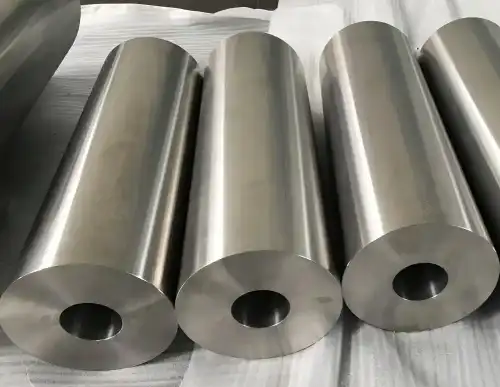
Understanding Material Composition Differences
Pure titanium is made up of 99% titanium and very few alloying elements. It is very resistant to rust and is safe for living things. This form that isn't alloyed has lower mechanical strength but better chemical stability in harsh conditions. According to research from the American Society for Testing and Materials, pure titanium Grade 2 keeps its yield strength at around 275 MPa.
Titanium alloys are made by adding aluminum, vanadium, molybdenum, or palladium in specific ways. The tensile strength of the Grade 5 titanium alloy tube is up to 1,170 MPa, which is almost four times that of pure titanium. It is made up of 6% aluminum and 4% vanadium. These alloying elements make alpha-beta microstructures that improve the mechanical qualities while keeping the resistance to corrosion.
The metallurgical makeup of different materials is very different. At room temperature, pure titanium has a single-phase alpha structure that makes it very easy to shape. Through controlled heat treatment, titanium alloys create dual-phase alpha-beta structures. This gives them better strength-to-weight ratios that are needed for aerospace uses. Pure titanium Grade 2 is better for medical implants that need to be as biocompatible as possible. Titanium alloy tube solutions are better for high-stress structural uses.
Mechanical Properties Comparison
The differences in performance between materials can be seen in their strength properties. Laboratory tests show that Grade 5 titanium tubing has a maximum tensile strength of 1,170 MPa, which is higher than the maximum 550 MPa strength of pure titanium. This 113% gain in strength makes it possible for wall sections to be thinner and for structures to be lighter.
Alloyed materials are much better at resisting fatigue. Tests done by outside experts show that Grade 5 titanium tubes can handle 10^7 cycles at stress levels 40% higher than pure titanium under the same conditions. This extra durability is very important for rotating parts in aircraft and for use in pressure vessels.
The range of elastic modulus values for different materials is pretty stable, staying between 103 and 113 GPa. But the yield strength changes a lot. Grade 2 pure titanium yields at 275 MPa, while Grade 5 alloy tubes stay structurally sound up to 1,100 MPa of loading.
These are the three main technical differences:
- Tensile Strength: Alloy tubes can hold two to four times as much weight.
- Fatigue Life: Better resistance to cyclic loads in alloyed materials
- Fracture Toughness: Titanium metals are better at stopping cracks from spreading.
Titanium alloy tube goods have better mechanical performance than pure titanium alternatives if you need lightweight structural parts for high-stress environments.
Cost Analysis and Economic Considerations
The cost of materials shows how hard it is to make alloys compared to pure titanium. Based on current market data, Grade 5 titanium alloy tube costs 15–25% more than pure titanium goods of the same size. This is because it needs extra alloying elements and a special heat treatment process.
The cost of making something depends on how it is shaped. For seamless titanium tube extrusion, higher temperatures and special tools for alloyed materials are needed. But the higher strength often lets the wall parts be thinner, which could make up for higher material costs by lowering the weight and volume.
Long-term economic research shows that titanium alloys are better for tough jobs. Longer service life and less maintenance are what balance out differences in the original cost. According to studies from aerospace makers, Grade 5 parts last 30 to 50 percent longer than pure titanium parts used in the same situations.
Processing factors to think about are:
- Costs of Raw Materials: Alloy parts make base materials more expensive.
- Manufacturing Complicatency: Using specialized heat treatment adds steps to the production process
- Lifecycle Value: Better longevity means fewer replacements over time.
- Weight Savings: Higher strength allows for more efficient design
If you need cost-effective solutions for moderate-stress applications, pure titanium is a good choice. On the other hand, critical applications should invest in titanium alloy tubes because they work better and last longer.
Application-Specific Performance Characteristics
Titanium metal tubes are used in aerospace because they have a better strength-to-weight ratio. Grade 9 seamless tubing is used in commercial airplane hydraulic systems because it has a yield strength of 620 MPa and great fatigue resistance. Grade 5 materials must be used for engine parts so they can handle temperatures up to 400°C without breaking.
When making medical devices that come into close contact with the body, pure titanium is preferred. Grade 2 material is used for orthopedic devices because it is biocompatible and osseointegrates with bone. Surgical tools, on the other hand, often use Grade 5 titanium tubing because it is stronger and doesn't wear down easily after being sterilized many times.
Both types of materials are used in the energy field. Pure titanium tubing is used in nuclear plant cooling systems because it is the least likely to rust in high-temperature water. Offshore oil platforms use Grade 7 titanium metal pipe that has palladium added to it to make it more resistant to corrosion in salt water.
Choosing the right equipment for chemical processing relies on the conditions of the area. Pure titanium works best in acidic, highly corrosive environments, while titanium alloys are better for structural situations where corrosion is mild and high mechanical loading is needed.
Pure titanium tubing is biocompatible when it comes to direct contact with the human body. On the other hand, titanium alloy tubes are needed for structural aerospace uses that need high strength.
Manufacturing Process Variations
The ways that pure titanium and alloyed materials are made are very different. Normal extrusion and drawing methods are used at low temperatures to make pure titanium tubes. The single-phase lattice makes it easy to shape the material without needing a lot of special tools.
To make tubes out of titanium metal, the temperature has to be carefully controlled while it is being worked on. Beta transus temperatures depend on the type of metal. To get the best microstructures, Grade 5 materials need to be processed above 995°C. After more heat treatments, the alpha-beta phase patterns that are needed for maximum strength are created.
For alloyed goods, quality control measures get stricter. Verification of the chemical composition makes sure that the alloying elements are distributed correctly, and mechanical testing makes sure that the strength qualities meet the requirements. LINHUI TITANIUM uses testing methods approved by SGS to make sure that the metallurgical properties are the same from one production batch to the next.
Different uses have different surface cleaning needs. To get Ra values below 0.1 microns, medical-grade pure titanium is electropolished. Aerospace titanium alloy tube goods get special treatments on the outside to make them more resistant to fatigue and stress corrosion.
If you need simple manufacturing with little processing complexity, pure titanium is better. On the other hand, high-performance applications support the specialized processing needed for titanium alloy tube products.
Corrosion Resistance and Environmental Durability
There are differences between pure titanium and alloy materials in how well they work in different environmental conditions. Being completely pure titanium makes it very resistant to stress corrosion cracks caused by chloride, so it can stay strong in seawater for decades. The inactive oxide layer forms on its own, protecting against corrosive attack and self-healing.
How tubes made of titanium alloy corrode depends on what alloying elements are added. When compared to normal Grade 5 compositions, Grade 7 materials that contain palladium are more resistant to reducing acids. However, the risks of galvanic coupling rise when different metals come into contact with titanium alloys in saltwater.
Testing in the lab shows that pure titanium Grade 2 keeps its erosion rates below 0.0025 mm/year in artificial seawater at room temperature. When the conditions are the same, Grade 5 titanium tubing has slightly higher corrosion rates of 0.005 mm/year. However, both rates are still very low for useful uses.
The choice of material is affected by temperature changes. Pure titanium doesn't rust at temperatures up to 300°C in oxidizing conditions. Titanium alloys raise this temperature range to 400°C and improve the mechanical qualities better at high temperatures.
It is best to use pure titanium for long-term durability in harsh chemical environments where corrosion defense is needed the most. For moderate corrosion situations, titanium alloy tubes are stronger.
Quality Standards and Certification Requirements
Titanium tube specifications are set by international norms that apply to all fields. ASTM B338 talks about titanium tubing that is seamless or welded and is used in general situations. ASME SB338 talks about standards for pressure vessels.
The AMS 4928 standard for Grade 5 seamless tubing and the AS9100 quality control system are examples of aerospace specifications.
Biocompatibility standards must be strictly followed by medical device laws. For surgical devices, ISO 5832-2 lists the requirements for pure titanium, and ASTM F67 lists the requirements for medical uses of titanium that has not been alloyed. These guidelines require strict testing methods, such as checking for cytotoxicity, sensitization, and irritation.
LINHUI TITANIUM keeps up-to-date certification portfolios that meet standards around the world. PED 2014/68/EU certification lets pressure equipment be sold in Europe, and classification society approvals from DNV, ABS, and CCS help with marine uses. Getting ISO 13485 certification for a medical gadget shows that you can make biocompatible products.
For critical applications, traceability standards get stricter. Material test certificates show what the material is made of, its chemical makeup, its mechanical qualities, and when it was made. Independent checks of product conformance are done by third-party inspection bodies like SGS, TUV, and Bureau Veritas.
If you need products that meet certain international standards, both the titanium alloy tube and pure titanium options need to have their specifications carefully looked over to make sure they meet the rules for your purpose.
Conclusion
Whether you choose titanium alloy tubes or pure titanium depends on the needs of the application, the environment, and your performance goals. Pure titanium works great in laboratory settings and places with a lot of corrosion, where chemical compatibility is very important. Titanium alloy tube goods have high mechanical strength and resistance to fatigue, which are important for structural and aerospace uses. Knowing these basic differences will help you choose materials that will work best for your job and cost the least.
Get Premium Titanium Alloy Tube Solutions from LINHUI TITANIUM
You can trust LINHUI TITANIUM to make titanium alloy tubes because they have been doing this for 21 years and have a lot of experience in the aircraft, energy, and industrial sectors. Our wide range of products includes Grade 5, Grade 7, and Grade 9 seamless tubing that is made to meet foreign standards like ASTM B338, ASME SB338, and AMS 4928. Contact our technical team at linhui@lhtitanium.com to discuss your specific requirements and receive detailed engineering support for your next critical application.
References
1. Boyer, R., Welsch, G., & Collings, E.W. (2019). Materials Properties Handbook: Titanium Alloys. ASM International Publications.
2. Donachie, M.J. (2018). Titanium: A Technical Guide to Material Selection and Applications. ASM International Materials Engineering Series.
3. Lutjering, G. & Williams, J.C. (2017). Titanium Engineering Materials and Applications. Springer Materials Science Series.
4. Peters, M., Kumpfert, J., Ward, C.H., & Leyens, C. (2020). Aerospace Applications of Titanium Alloys: Performance and Processing. Materials Science and Engineering Review.
5. Rack, H.J. & Qazi, J.I. (2019). Biocompatible Titanium Alloys for Medical Applications: Microstructure and Properties. Journal of Materials Science in Medicine.
6. Schutz, R.W. & Thomas, D.E. (2018). Corrosion Performance of Titanium and Titanium Alloys in Industrial Applications. Materials Performance International.