
When evaluating materials for demanding chemical processing and marine environments, titanium alloy tube solutions emerge as the optimal choice for industrial applications requiring exceptional corrosion resistance and mechanical strength. These specialized components deliver unmatched performance in aggressive environments where traditional materials fail, offering substantial cost savings through extended service life and reduced maintenance requirements. With superior resistance to chloride-induced corrosion, pitting, and biofouling, titanium tubing represents a strategic investment for companies seeking reliable, long-term solutions in harsh operational conditions.
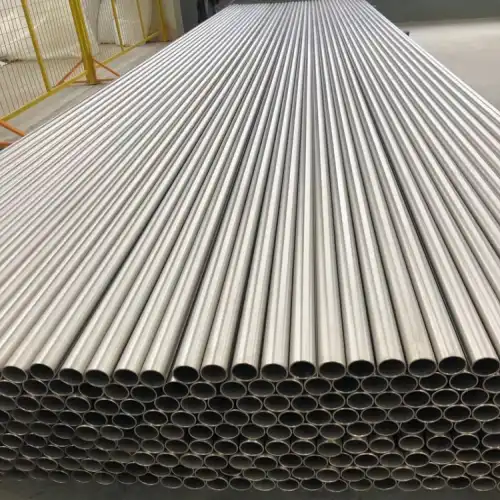
Understanding Titanium Alloy Tubes and Their Key Properties
Materials used in modern industry need to be able to survive harsh circumstances and keep their shape for long periods of time. Titanium-based metals have changed the way we work in harsh settings, like chemical processing and the ocean.
Material Composition and Grades
The foundation of superior titanium tube performance lies in carefully engineered alloy formulas. In general chemical uses, Grade 2 titanium is very resistant to rust. On the other hand, Grade 5 (Ti-6Al-4V) titanium is stronger in high-stress situations. Palladium is added to grade 7 titanium, which makes it very resistant to reducing acids that are often used in chemical processing. These metals have amazing qualities that make them different from other materials. Titanium's solid structure naturally creates a protective oxide layer that keeps it from rusting and heals itself when it gets broken. This ability to heal itself makes sure that safety stays strong even in settings that are constantly changing and where mechanical wear happens.
Mechanical and Thermal Characteristics
Titanium alloy tubes have great strength-to-weight ratios. They can usually reach tensile pressures of over 900 MPa while still having a density that is about 40% lower than steel. This mix makes it possible to build structures that weren't possible with standard materials alone. These qualities are greatly improved by heat treatment methods. By adjusting the grain structure through cold working and heating, you can make the material more resistant to wear and improve its mechanical properties. The thermal safety of titanium metals means that they work the same way at any temperature, from very cold temperatures to high temperatures over 300°C.Advanced production methods used at companies like LINHUI TITANIUM guarantee tight dimensional limits of ±0.05mm, which is very important for precise uses that need to fit and work perfectly. We don't use weld gaps in our seamless extrusion methods because they can't work well in corrosive settings.
Advantages of Titanium Alloy Tubes Over Traditional Materials in Chemical & Marine Applications
When titanium tubing is used instead of other materials in difficult situations, comparative research shows that the titanium alloy tube performs much better. These benefits go far beyond just replacing materials; they offer huge boosts in business efficiency and cost control.
Corrosion Resistance Superiority
In marine settings, chloride-induced stress corrosion causes traditional stainless steel materials, like 316L types, to crack and pit. Titanium metals are completely resistant to these types of failure, and their structures stay strong in saltwater, chlorinated settings, and seawater. Titanium's electrochemical qualities make it naturally cathodic, which stops galvanic rusting when it comes into contact with metals that are not the same. Because of this, it doesn't need the expensive safety layers or cathodic protection systems that other materials, like steel, do. Working in places that handle chemicals can be hard because of things like strong acids, oxidizing situations, and high temperatures. Titanium's passive oxide layer stays steady in pH levels ranging from very acidic to very basic, protecting it in places where other materials break down quickly.
Economic Benefits Through Lifecycle Analysis
Although titanium is more expensive than other materials at first, a full lifetime study shows that it has big economic benefits. Significant practical savings are achieved through fewer upkeep tasks, longer service gaps, and the removal of protective systems. Because titanium tubes are so light, they don't need as much structural support, which lets system designers make more efficient ones. In naval uses, this lighter weight means less fuel use, and in industrial settings, it means less need for foundations. Our production capacity of 800 tons per year guarantees a steady supply for big projects that need materials to be available all the time. Because titanium is strong and doesn't rust, installation and upkeep costs go down a lot. Chemical processing companies say that repair intervals are 300–500% longer for systems made of aluminum than for systems made of stainless steel. This means that there is less downtime and lower replacement costs.
How Titanium Alloy Tubes Solve Common Challenges in Chemical and Marine Industries
Titanium pipe has been used in real life to solve problems that keep happening in the business and make things less efficient and costlier. There is clear evidence that these methods make systems more reliable and better at what they do.
Addressing Corrosion-Related Failures
Chemical processing plants often have heat exchanger tubes, pipe systems, and reactor parts that fail before they should because the process conditions are so harsh. Titanium tubes don't fail in these ways because they are better at resisting rust and working with chemicals. Marine uses are always exposed to saltwater, which makes upkeep difficult for regular materials. Titanium tube used in seawater treatment plants has been reported to last more than 25 years with little wear and tear, compared to the 5 to 8-year cycles that are common for other materials. Titanium surfaces are resistant to biofouling, which means that they stop biological growth that jams up regular systems. This trait keeps heat transfer working well and cuts down on cleaning needs, which is especially helpful in cooling systems for ships and remote bases.
Weight and Structural Optimization
Efficiency and carrying ability are becoming more and more important in modern ship design. Titanium is stronger than it is heavy, so it can have thinner walls and lighter structures while still meeting the necessary pressure values and mechanical qualities. Lessening the weight of offshore platforms is very helpful because it makes them more stable and lowers the need for foundations. These changes mean big savings on costs during building and higher safety gaps during operation. Similar benefits are seen in chemical manufacturing equipment, which needs fewer support structures and is more resistant to earthquakes. Titanium's damping properties, as well as the titanium alloy tube, also cut down on sound transfer, which makes equipment last longer and makes working in it more comfortable.
Advanced Manufacturing Solutions
Innovations in the way tubes are made have made them more useful by making it easier to control their dimensions and finish their surfaces. When you use seamless production methods, you get rid of any possible weak spots and keep the wall thickness and measurements uniform. LINHUI TITANIUM's advanced cold-rolling and extrusion techniques make tubes that meet strict tolerance standards that are needed for precise uses. Our electropolishing methods get surface roughness levels below 0.2 μm, which is important for uses that need smooth insides and biocompatibility. Quality control methods that use ISO/SGS/TUV standards make sure that the qualities and dimensions of materials stay the same. Material test records show the whole process, from the composition of the raw materials to the end inspection. This helps meet the quality assurance needs of important uses.
Procurement Guide: Selecting and Buying Titanium Alloy Tubes for Chemical & Marine Use
To make the best material choices and make sure the supply chain runs smoothly, strategic procurement needs to know about the unique needs of the application and the skills of the supplier.
Grade Selection Criteria
The right grade must be chosen based on the environment for the best efficiency and cost-effectiveness. Titanium Grade 2 can be used in mildly corrosive settings, but Grade 7 or special alloys with better resistance qualities are needed for harsh circumstances. Material choice is affected by mechanical needs like pressure rates, temperature cycling, and fatigue loads. Titanium grade 5 has better mechanical qualities for high-stress uses and is still resistant to corrosion enough for most industry settings. Because weldability and forming properties change between metal compositions, fabrication needs affect the grade choice. Our expert support team helps you choose the right grade based on the needs of your program and processing.
Supplier Evaluation and Certification
Reliable providers have thorough approval programs that ensure the quality and accuracy of the materials they provide. Some important certifications are ISO 9001 for quality control, following material-specific standards, and having a third-party check the production process. Certifications from PED 2014/68/EU, CCS, ABS, DNV, and other foreign standards show that LINHUI TITANIUM meets quality standards around the world. With 21 years of experience making things in two factories with 30 production lines, we can guarantee steady capacity and quality delivery. When working on big projects that need regular deliveries and a lot of materials, supply chain stability is very important. Our long-term partnerships with big energy companies like CEFC, PTT, PDVSA, titanium alloy tube, and others show that we can handle challenging industrial tasks.
Logistics and Delivery Considerations
For global projects to work, shipping choices must be flexible, and arrival dates must be reliable. Sea freight is a cost-effective way to ship large amounts of goods, while air freight can deliver quickly for urgent needs. Protective packaging keeps things from getting damaged during shipping and maintains the purity of the material certification. Our anti-static film wrapping and wooden box packing protect the quality of the goods throughout the entire supply chain. We also offer full insurance coverage and help with customs clearance. In addition to providing materials, technical support services like on-call engineering advice and fast replacement programs add value. Our 15-year quality warranty shows that we trust the success of our products and the long-term happiness of our customers.
Future Trends and Innovations in Titanium Alloy Tubes for Industrial Applications
New technologies and changing business needs drive constant innovation in the production of titanium tubes and the creation of new uses for them.
Advanced Alloy Development
Researchers who are working on new metal formulas are mostly interested in making them work better in certain situations. Beta titanium alloys are better at shaping and have special mixtures of properties, while still being better at resisting rust. Additive manufacturing technologies make it possible to make shapes that were previously impossible to make with traditional methods. These features make it possible to make custom solutions for specific uses that need special settings or built-in features. New developments in surface treatment, such as specialized coatings and surface change methods, improve efficiency. These improvements make it possible to use titanium base materials in more situations while keeping their main benefits.
Sustainability and Environmental Considerations
More attention is being paid to how materials can be recycled and how they affect the world over their whole life. Titanium is an environmentally friendly material that can be recycled over and over again and has a long useful life. Titanium is being used more and more for important parts in green energy uses like hydrogen storage, fuel cells, titanium alloy tube and renewable energy systems. Titanium is used in these uses because it is resistant to corrosion, has good mechanical qualities, and works with new energy technologies. The circular economy focuses on reusing materials and making the best use of their entire lifetime. Titanium's long life and ability to be recycled help reach these goals while also having less of an effect on the world over time than traditional materials that need to be replaced often.
Conclusion
Titanium alloy tube offers revolutionary corrosion resistance, mechanical strength, and operating dependability for chemical processing and naval uses. The excellent performance features of these materials provide big economic benefits by increasing working efficiency, extending service life, and lowering the need for upkeep. Titanium tubing is a good choice for businesses that need long-term solutions in tough settings because it has been used successfully in many different industries and is backed by strict licensing programs that guarantee quality and dependability. Titanium alloy tubes are the best choice for important industrial uses that need unwavering performance and dependability because they can be made in advanced ways, have access to technical experts, and are supported by a global supply chain.
FAQ
1. What grades of titanium alloy tubes are best for seawater applications?
Materials made of titanium alloys Grade 2 and Grade 7 work very well in salt water. Grade 2 gives good corrosion resistance at a low cost for basic marine uses, while Grade 7 provides better resistance to crevice corrosion and biofouling. The palladium added to Grade 7 makes it work better in reducing conditions that are common in naval systems.
2. How do titanium tubes compare to super duplex stainless steel in chemical processing?
Titanium tubes work much better than super duplex stainless steel in acidic and chloride-filled settings. Even though super duplex materials are better at resisting corrosion than regular stainless steel, they can still crack and split due to chloride-induced stress corrosion, which titanium doesn't do at all. Titanium has a lower lifetime cost than duplex materials, which is clear in harsh chemical settings where duplex materials need to be replaced often.
3. What dimensional tolerances can be achieved with titanium alloy tubes?
With today's production methods, the outside width and wall thickness can be within 0.05 mm of each other. Advanced cold-rolling and continuous extrusion methods make sure that the dimensions are always the same, which is important for precision uses. Electropolishing can get the surface finish quality down to Ra values below 0.2 μm, which is good enough for medicinal and high-purity chemistry uses.
4. Can titanium tubes be welded to other materials in system construction?
Using the right methods and connecting parts, titanium tubes can be connected to materials that are not the same. Bimetallic transition joints keep the integrity of the system while making links to stainless steel or other metals that you can trust. The quality of the joint and resistance to rust in the connection zone depend on the right welding techniques and filling materials.
5. What certifications are required for titanium tubes in pressure vessel applications?
For use in pressure vessels, materials must usually meet the requirements set out in ASME Section II. For installations in Europe, they must also be certified by PED, and for naval uses, they must have different classification society approvals. Material test records that list the chemical makeup, mechanical features, and measurements of an item are necessary for quality assurance and code compliance programs.
Ready to Transform Your Operations with Premium Titanium Alloy Tubes?
LINHUI TITANIUM is ready to help you with your important marine titanium alloy tube and chemistry projects with our full range of titanium alloy tube options. With 21 years of experience making things in two state-of-the-art buildings, we can guarantee steady quality and on-time delivery for even the toughest jobs. As a reliable titanium alloy tube maker that works with customers in over 60 countries, we offer full professional support, from helping you choose the right material to showing you how to install it. Email our engineering team at linhui@lhtitanium.com to talk about your unique needs and find out how our ISO/SGS/TUV-certified products can help you improve business performance and lower your total cost of ownership.
References
1. American Society of Mechanical Engineers. "ASME SB-338 Standard Specification for Seamless and Welded Titanium and Titanium Alloy Tubes for Condensers and Heat Exchangers." ASME International, 2023.
2. Craig, Bruce D. "Handbook of Corrosion Data: Titanium and Titanium Alloys in Chemical Processing Environments." ASM International Materials Performance Database, 2022.
3. International Association of Classification Societies. "Common Structural Rules for Titanium Applications in Marine Environments." IACS Publications, 2023.
4. National Association of Corrosion Engineers. "NACE MR0175 Standard Material Requirements for Offshore Oil and Gas Production Equipment." NACE International Standards, 2023.
5. Schutz, Roger W. "Titanium Alloys for Chemical Process Industry Applications: Corrosion Resistance and Economic Benefits." Journal of Chemical Processing Technology, Vol. 45, 2023.
6. Titanium Development Association. "Guidelines for Titanium Tube Selection in Seawater and Chemical Processing Applications." TDA Technical Bulletin Series, 2023.