
When welding and creating titanium 6Al4V wire, there are extraordinary challenges that require fathoming with particular information and abilities. Made up of 6% aluminum and 4% vanadium, this flexible titanium combination is the most common sort utilized in industry since it has the best blend of quality, resistance to erosion, and ease of workability. Knowing the right way to do things like welding and manufacturing will make it beyond any doubt that your generation forms work well, last a long time, and do not fetch as much. Our point-by-point direct approach meets the particular needs of obtaining directors, engineers, merchants, and OEM clients who require titanium wire for applications that require exactness and reliability in the restorative, marine, aviation, and mechanical areas.
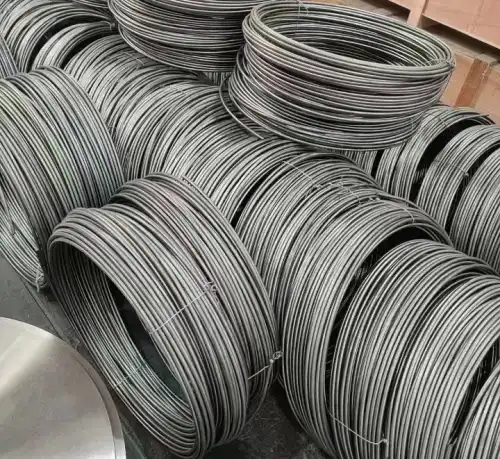
Understanding Titanium 6Al4V Wire: Properties and Benefits for Welding and Fabrication
Ti-6Al-4V is the best titanium alloy because it has all the benefits of pure titanium plus better mechanical qualities from the alloying additions. The way the materials are put together makes a special substructure that gives them great performance qualities that are needed for tough jobs.
Mechanical Properties and Structural Advantages
The strength-to-weight proportion of Review 5 titanium wire is higher than that of most common materials. Compared to steel, it is almost 40% lighter, while still having the same quality. This metal remains solid indeed at high temperatures up to 400°C, which implies it can be utilized for high-temperature welding applications where other materials would break. The fabric is exceptionally safe to wear, which is critical for parts that are stacked and emptied numerous times in marine and aviation settings.
Corrosion Resistance and Environmental Durability
Ti-6Al-4V wire is very good at resisting corrosion in many places, like oceans, chemical processing solutions, and biological fluids. This feature comes from the creation of a stable oxide layer that fixes itself when it gets broken, keeping it from breaking down over time. This metal is biocompatible, which makes it perfect for medical implants and surgical tools. It meets ASTM F136 standards for use in medical devices.
Essential Welding Techniques for Titanium 6Al4V Wire
To successfully weld Titanium 6Al4V Wire, you need to pay close attention to controlling the environment and the process factors. Because the material reacts with gases in the air, special steps must be taken to keep it clean and ensure the quality of the weld.
Gas Tungsten Arc Welding (GTAW) Best Practices
Since it is simple to control the heat and keep the work range clean, TIG welding is still the best way to work with titanium metal wire. In spite of the fact that argon is the primary protective gas, including helium can offer assistance to get through thicker parts. To keep things clean, the dust level in the welding zone must remain below 50 parts per million (ppm). The best gas scope and bend relentlessness are accomplished with the burn at the right point, which is usually 15 to 20 degrees from vertical.
Important welding variables include keeping the travel speeds at the right levels to maintain a distance from overheating and eliminate any doubt that the combination is total. To keep the alloy's microstructure and mechanical qualities, the heat-affected zone needs to be closely observed. After the connection is done, it ought to be assessed to ensure that there are no discolorations, which seem like cruel defilement.
Preparation and Post-Weld Treatment
To prepare a surface, it must first be cleaned thoroughly with solvents and then mechanically cleaned to get rid of any metal layers or other contaminants. In order to keep the welding area safe from drafts and air pollution, trailing screens and backup gas systems must be used. Post-weld heat treatment at temperatures between 480°C and 650°C helps reduce residual stresses and improve mechanical properties. This is especially important for aerospace and medical equipment that need to work well under extreme conditions.
Fabrication Tips: Handling, Machining, and Forming Titanium 6Al4V Wire
To properly make Titanium 6Al4V Wire, you need to use special tools and methods to keep the material's integrity and meet exact size standards. Problems like work hardening and tool wear can be avoided by knowing how the material acts during different manufacturing processes.
Machining Considerations and Tool Selection
To keep the work from getting too difficult, carbide or ceramic devices that are exceptionally sharp and run at certain speeds are required to machine titanium amalgam wire. Utilizing coolant is still exceptionally vital for getting rid of heat and making instruments last longer. Since the fabric tends to solidify, it needs to be cut persistently without ceasing, and the nourish rate needs to remain the same throughout the process.
The geometry of the device is exceptionally vital for great machining. Positive rake points lower the cutting strengths, and cutting edges that are sharp lower the total wear that is made. Routinely checking and replacing instruments stops surface imperfections and inconsistencies in measurement that seem to lower the quality of the conclusion item.
Forming and Bending Techniques
When wire is shaped, the material's springback and work hardening characteristics must be taken into account. The least twist span prerequisites halt splitting or microstructural harm that may lead to disappointment spots. For complicated shapes or more than one bowing handle, tempering may be required between operations.
Controlling the temperature during the preparation changes how adaptable and simple to shape the fabric. For basic shapes, shaping at room temperature works fine, but shaping at higher temperatures may be superior for complicated shapes that require tight circular segments or a part of twists.
Comparing Titanium 6Al4V Wire to Other Materials: Making the Right Choice
If you want to choose the right material, you need to carefully look at its performance, cost, and how it will be used. While Ti-6Al-4V wire has clear benefits over other materials in some situations, it may not be the best choice for projects that need to stay within a budget.
Performance Comparison with Stainless Steel
In harsh environments, titanium Grade 5 wire is more resistant to corrosion and has a higher strength-to-weight ratio than stainless steel options. The material is non-magnetic, which is good for uses that need magnetic stability. Its lower thermal conductivity is also good for uses that need thermal barriers. Even though the original cost of the materials is higher than for stainless steel, the longer service life and lower maintenance needs often make the investment worth it.
Advantages Over Pure Titanium Grades
When compared to pure titanium types (Gr1 and Gr2) that are sold in stores, Ti-6Al-4V is much stronger and keeps its excellent corrosion resistance. The alloy is better at resisting wear and has a higher stress strength, so it can be used in situations with dynamic loading where pure titanium would not work. These better qualities make it possible for cross-sections to be thinner and for structures to use less weight.
Procurement Guide and Supplier Selection for Titanium 6Al4V Wire
When buying titanium alloy wire strategically, you need to carefully look at the supplier's skills, quality systems, and shipping reliability. Knowing how the market works and making sure that suppliers meet certain requirements is important for a project's success and the long-term security of the supply chain.
Quality Assurance and Certification Requirements
Comprehensive quality control frameworks and industry-specific certifications must be given the best when choosing a provider. A few imperative guidelines are ASTM B863 for wire determinations, AWS 5.16 for welding, and AMS 4951 for flying machine needs. Providers ought to demonstrate that they can reliably track materials and test them to ensure they meet certain execution and quality standards.
Many capabilities are held by LINHUI TITANIUM, such as ISO 9001:2015, PED 2014/68/EU, and endorsements from major classification societies like DNV, ABS, and CCS. These certifications indicate that we are committed to quality and assembly outside benchmarks, which is exceptionally critical for vital employments in the healthcare, aviation, oil and gas, and aviation industries.
Supply Chain Considerations and Lead Times
You have to plan to get titanium wire because it has to be made in a certain way and then checked for quality. Lead times range from 4 to 8 weeks, but they can be longer or shorter depending on what you need and how many orders you have. Our low minimum order number of 1 kg works for both prototyping and production, and our large inventory cuts down on the time it takes to ship standard specifications.
Our Ti-6Al-4V wire comes in both straight and coiled shapes, and its widths range from 0.05mm to 6mm. This makes it suitable for a wide range of uses. Precision manufacturing keeps tolerances as low as ±0.02mm, which ensures that the performance is the same across all fabrication methods. Drawing methods improve the microstructure of the material so that its mechanical properties and surface finish are better.
LINHUI TITANIUM: Your Trusted Ti-6Al-4V Wire Supplier
Since its founding in 2000, LINHUI TITANIUM has become a major producer and seller of titanium and titanium alloys. Our headquarters are in Xi'an, China, and we serve customers all over the world. Our strategic location at the start of the Belt and Road initiative makes it easier for customers around the world to handle their logistics and supply chains.
We have a wide range of products, such as aircraft and medical-grade Ti-6Al-4V wire that meets the standards set by AMS 4951, ASTM B863, and ASTM F136. Because it is biocompatible, our wire can be used for surgical implants and other medical equipment. Its high strength-to-weight ratio makes it ideal for aerospace uses that need AMS 4951 certification.
Our titanium Grade 5 wire has many benefits, such as being stronger than pure titanium grades, staying tough at high temperatures, and not wearing down easily under dynamic loads. Our precise manufacturing skills allow us to meet tight tolerances and offer a variety of surface finish choices. This helps with a wide range of uses, from aircraft fasteners and engine parts to marine hardware and chemical processing equipment.
We have been in business for decades and have sent hundreds of thousands of tons of high-quality goods to more than 60 countries and regions. We have built long-term relationships with well-known companies like CEFC, PTT, PDVSA, LUKOIL, and PEMEX. Major EPC contractors and multinational companies in a wide range of industries have recognized our dedication to quality and client satisfaction.
Conclusion
Titanium 6Al4V Wire can only be welded and made successfully if you know how to use the right methods and understand the material's unique properties. This alloy is the best choice for demanding uses in the aircraft, medical, and industrial sectors because it has a high strength-to-weight ratio, doesn't rust, and is safe for living things. Proper welding techniques, such as protecting the atmosphere and treating the joint after the welding process, guarantee its strength and performance. The success of fabrication depends on choosing the right tools, setting the right machining parameters, and using forming methods that work with the properties of the material. When compared to other options, Ti-6Al-4V wire has strong advantages that often make the original investment worth it through better performance and longer service life. A smart choice of suppliers based on quality certifications, manufacturing skills, and the dependability of the supply chain guarantees the success of the project and the formation of long-lasting partnerships.
FAQ
Q: How strong is Titanium 6Al4V wire compared to stainless steel?
A: Titanium 6Al4V wire offers a superior strength-to-weight ratio, approximately twice as strong as many stainless steel grades, while being 40% lighter, making it ideal for weight-sensitive applications where structural efficiency is critical.
Q: Can Titanium 6Al4V wire be welded without post-weld heat treatment?
A: While welding is possible without post-weld heat treatment, applying appropriate heat treatment at 480-650°C enhances mechanical properties, relieves residual stresses, and improves corrosion resistance for optimal performance.
Q: What precautions should I take when machining Titanium 6Al4V wire?
A: Use sharp, carbide tools with positive rake angles, apply continuous coolant flow to manage heat, maintain consistent feed rates to prevent work hardening, and avoid dwelling to prevent tool damage and surface defects.
Contact LINHUI TITANIUM for Premium Ti-6Al-4V Wire Solutions
Elevate your manufacturing capabilities with our premium Titanium 6Al4V Wire designed for demanding welding and fabrication applications. As a trusted titanium 6Al4V wire manufacturer with over two decades of experience, LINHUI TITANIUM delivers aerospace and medical-grade materials meeting ASTM B863, AWS 5.16, and AMS 4951 standards. Our precision-manufactured wire, available in diameters from 0.05mm to 6mm with tight tolerances of ±0.02mm, serves diverse applications from aircraft components to surgical implants. With comprehensive certifications and partnerships with global industry leaders, we ensure consistent quality and reliable delivery for your critical projects. Contact us at linhui@lhtitanium.com to discuss your specific requirements and discover how our titanium alloy solutions can enhance your product performance and manufacturing efficiency.
References
1. Boyer, R., Welsch, G., & Collings, E.W. "Materials Properties Handbook: Titanium Alloys." ASM International, 1994.
2. Leyens, C., & Peters, M. "Titanium and Titanium Alloys: Fundamentals and Applications." Wiley-VCH, 2003.
3. American Welding Society. "Welding Handbook Volume 4: Materials and Applications - Part 2." AWS, 2020.
4. ASTM International. "Standard Specification for Titanium and Titanium Alloy Wire." ASTM B863-17, 2017.
5. Donachie, M.J. "Titanium: A Technical Guide, 2nd Edition." ASM International, 2000.
6. Peters, M., Kumpfert, J., Ward, C.H., & Leyens, C. "Titanium Alloys for Aerospace Applications." Advanced Engineering Materials, Vol. 5, 2003.