
Ti6Al4V and Ti6Al4V ELI are two well-known titanium alloys that have different features and uses. Both of these metals are made up of the famous Ti-6Al-4V alloy. They have great strength-to-weight ratios, can survive rust, and are biocompatible. They are very similar, but the second one is labeled "ELI," which stands for Extra Low Interstitial. This is the main difference between them. The goal of this blog post is to look at the differences between Ti6Al4V and Ti6Al4V ELI by looking at their makeup, characteristics, and different situations where they are used. When engineers, makers, and researchers choose the best material for their military, medical, or industry projects, they need to know the different properties of each alloy.
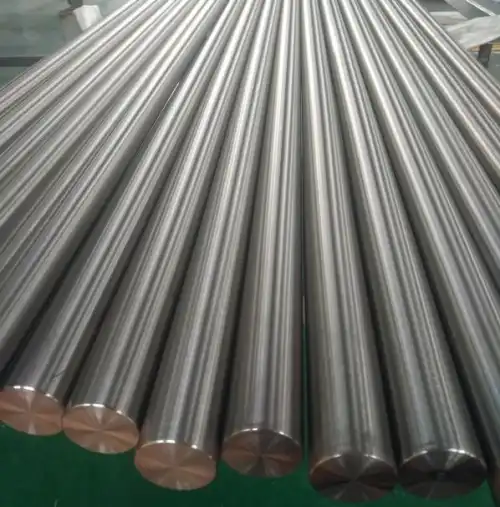
What are the key differences between Ti6Al4V and Ti6Al4V ELI in terms of composition?
Chemical Composition Variations
The important qualities and performance of Ti6Al4V and Ti6Al4V ELI are largely based on their chemical compositions. Both alloys have titanium as their main part, with aluminum and vanadium as the main parts that make up the alloy. The ELI grade has intermediate elements in amounts that are managed, which is the main difference. Ti-6Al-10V, a different titanium alloy, is often compared to these two types because it has a one-of-a-kind makeup and set of characteristics. When you compare Ti6Al4V ELI to normal Ti6Al4V, it has a more tightly managed and lower amount of oxygen, nitrogen, and iron. The loss of intermediate elements makes Ti6Al4V ELI more ductile and tougher against fractures. This makes it especially good for uses that need better resistance to wear and crack spreading. Topak is a well-known maker of titanium alloys, and it has been a big part of the work to make high-purity Ti6Al4V ELI for very important uses in the military and medical fields.
Microstructural Differences
The dynamic qualities and general efficiency of Ti6Al4V and Ti6Al4V ELI are greatly affected by their microstructure. Even though both alloys have a dual-phase α+β microstructure, the smaller interstitial content in Ti6Al4V ELI causes small changes in grain size and phase distribution. These changes at the micro-level help the ELI grade become more ductile and fracture-resistant. On the other hand, Ti-6Al-10V usually has a different lattice because it has more vanadium. Heat treatment can be used to give it the right mix of properties. Ti6Al4V ELI's controlled geometry makes it especially good for uses that need great crack spread and wear resistance. Topak's advanced processing methods make sure that the microstructures in their Ti6Al4V and Ti6Al4V ELI products are always the same and as good as they can be. These products meet the strict standards of aircraft and medical device makers.
Impurity Levels and Their Impact
The mechanical qualities and general performance of Ti6Al4V and Ti6Al4V ELI are greatly affected by the amount of flaws in each material. Ti6Al4V ELI has less iron, oxygen, and nitrogen than regular Ti6Al4V because it has tighter controls on intermediate elements. This drop in particles makes the material more ductile, crack-tough, and wear-resistant. Even though Ti-6Al-10V is a different metal, the same ideas about controlling impurities are important for making it. Ti6Al4V ELI has lower impurity levels than other materials, so it is especially good for uses that need high purity and great mechanical qualities, like medical devices and important parts for aircraft. Topak's cutting-edge factories and strict quality control make sure that their Ti6Al4V ELI goods always meet or go beyond the industry's purity and performance standards. This makes them a popular choice for tough uses in a range of industries.
How do the mechanical properties of Ti6Al4V compare to those of Ti6Al4V ELI?
Strength and Ductility Comparison
When looking at the strength and flexibility of Ti6Al4V and Ti6Al4V ELI, there are a few important changes. Ti6Al4V usually has a little higher final tensile strength and yield strength than its ELI equivalent. Ti6Al4V ELI, on the other hand, makes up for it with better flexibility and extension. This makes the material easier to shape and harder to break, which is useful in lots of different situations. On the other hand, Ti-6Al-10V usually has even more strength because it has more vanadium, but it might be less ductile than both versions of Ti6Al4V. Ti6Al4V ELI has a great mix of strength and flexibility, so it's a great material for aircraft and medical uses where both of these qualities are important. With their advanced production methods, Topak makes sure that their Ti6Al4V and Ti6Al4V ELI goods always meet or go beyond the standards for mechanical properties in the industry. This gives customers dependable, high-performing materials for their difficult uses.
Fatigue Resistance and Fracture Toughness
Fatigue resistance and crack hardness are important features in many situations, and this is where Ti6Al4V ELI really stands out. Ti6Al4V ELI has better fracture hardness and wear resistance than normal Ti6Al4V because it has less intermediate material. This better performance is especially useful for apps that have to deal with repeated loading or need to be highly damage-tolerant. Ti-6Al-10V has its own mechanical benefits, but Ti6Al4V ELI is better at resisting wear and fractures, so it is the chosen choice for important parts in aircraft and medical uses. Ti6Al4V ELI's better wear life and crack spread resistance make things safer and help them last longer in tough settings. Topak's promise of quality and innovation means that their Ti6Al4V ELI products always have better wear and fracture performance. These products meet the strict standards of fields where failure isn't an option.
Corrosion Resistance and Biocompatibility
Both Ti6Al4V and Ti6Al4V ELI can prevent rust very well because they can make a steady, protected layer of oxide. But Ti6Al4V ELI's smaller interstitial content can make it a little more resistant to rust in some settings. Ti6Al4V ELI is the best choice for medical implants and devices because it is more resistant to rust and is more compatible with the body than other options. Ti-6Al-10V also resists rust well, but its higher vanadium content may make it less useful in some biological settings. Ti6Al4V ELI has great biocompatibility because it doesn't respond much with human cells or release many ions, which lowers the risk of negative effects in the body. Topak's strict quality control makes sure that their Ti6Al4V ELI products have the best levels of purity and biocompatibility. Because of this, people who make medical devices and implants around the world trust these products.
What are the primary applications and industries for Ti6Al4V versus Ti6Al4V ELI?
Aerospace and Defense Applications
Ti6Al4V and Ti6Al4V ELI are both used a lot in the military and defense fields, but they may be used in different ways depending on what is needed. Because it is strong and doesn't corrode easily, Ti6Al4V is often used in airplanes for things like support structures, engine parts, and screws. Ti6Al4V ELI has better fracture toughness and wear resistance, so it is used more often in important parts that have to deal with a lot of stress and cycle loads, like landing gear and engine bearings. Ti-6Al-10V is also used in some aircraft applications, but Ti6Al4V and its ELI version are still the most popular titanium alloys in this area. Ti6Al4V ELI's better damage tolerance and longer service life in important structural parts are good for the aircraft business. Topak's aerospace-grade Ti6Al4V and Ti6Al4V ELI goods are known for always being high quality and performing well. They meet the tough standards of top airplane makers and defense companies.
Medical and Biomedical Uses
Ti6Al4V ELI is very important in the medical and biological fields because it is more biocompatible and has better dynamic qualities than other materials. A lot of the time, this metal is used to make hip implants, dental implants, and other medical tools. Ti6Al4V ELI has less interstitial content than other materials, which lowers the chance of allergy responses and improves osseointegration. These factors make it the best material for long-term implants. Standard Ti6Al4V is used in some medical settings, but Ti6Al4V ELI is better for load-bearing implants because it has better fracture hardness and wear resistance. Ti-6Al-10V is not used as much in biological uses, even though it is very strong because it has more vanadium. Ti6Al4V ELI has great rust protection and biocompatibility, which helps the medical field make sure that implants are safe and last a long time. Topak's medical-grade Ti6Al4V ELI goods are trusted by top makers of medical devices because they always meet strict regulatory standards.
Industrial and Marine Applications
Ti6Al4V and Ti6Al4V ELI are both used in industry and naval uses, but they are chosen based on different needs. Because of its great strength and ability to fight rust, Ti6Al4V is used a lot in chemical processing equipment, heat exchangers, and parts for offshore oil and gas. Ti6Al4V ELI is the better choice for important parts that have to work in high-stress situations, like valves and pumps underwater, because it has better resistance to fatigue and fractures. Ti-6Al-10V might be stronger for some uses, but Ti6Al4V and its ELI version are useful in these areas because they are flexible and have a history of success. These metals are better at resisting rust in settings with saltwater. This is especially helpful for the naval business. Topak's Ti6Al4V and Ti6Al4V ELI goods are known for their performance and dependability in tough naval and industrial settings. They also stand up to rust and wear in difficult situations.
Conclusion
In conclusion, while Ti6Al4V and Ti6Al4V ELI share many similarities, the ELI grade's lower interstitial content results in superior ductility, fatigue resistance, and biocompatibility. This makes Ti6Al4V ELI the preferred choice for critical aerospace components and medical implants where these properties are paramount. However, standard Ti6Al4V remains a versatile and widely used alloy in various industries due to its excellent balance of properties and cost-effectiveness. The choice between these alloys ultimately depends on the specific requirements of the application, considering factors such as mechanical properties, environmental conditions, and regulatory standards.
FAQ
What does ELI stand for in Ti6Al4V ELI?
ELI stands for Extra Low Interstitial, indicating lower levels of interstitial elements like oxygen, nitrogen, and iron compared to standard Ti6Al4V.
Which alloy is better for medical implants, Ti6Al4V or Ti6Al4V ELI?
Ti6Al4V ELI is generally preferred for medical implants due to its superior biocompatibility, lower risk of allergic reactions, and improved mechanical properties.
How does the fatigue resistance of Ti6Al4V ELI compare to standard Ti6Al4V?
Ti6Al4V ELI exhibits superior fatigue resistance compared to standard Ti6Al4V, making it more suitable for applications subjected to cyclic loading.
Can Ti6Al4V and Ti6Al4V ELI be used interchangeably in aerospace applications?
While both alloys are used in aerospace, they are not always interchangeable. Ti6Al4V ELI is often preferred for critical components requiring higher fatigue resistance and fracture toughness.
How does the cost of Ti6Al4V ELI compare to standard Ti6Al4V?
Ti6Al4V ELI is generally more expensive than standard Ti6Al4V due to the tighter controls on composition and the additional processing required to achieve lower interstitial levels.
Your Trusted Global Supplier of High-Performance Titanium Solutions
LINHUI TITANIUM, founded in 2000 and headquartered in Xi'an, China, is a leading manufacturer and supplier of titanium and titanium alloys. With a commitment to creating value for customers, LINHUI TITANIUM adheres to a development strategy of "supplying high-end products and establishing a world-renowned enterprise." Our extensive product range, including Ti6Al4V and Ti6Al4V ELI, serves diverse industries worldwide. We pride ourselves on our international certifications, long-standing relationships with global EPC contractors, and our ability to deliver superior quality products and services to customers in over 60 countries. For inquiries, please contact us at linhui@lhtitanium.com.
References
1. Lutjering, G., & Williams, J. C. (2007). Titanium (2nd ed.). Springer-Verlag Berlin Heidelberg.
2. Boyer, R., Welsch, G., & Collings, E. W. (1994). Materials Properties Handbook: Titanium Alloys. ASM International.
3. Peters, M., Kumpfert, J., Ward, C. H., & Leyens, C. (2003). Titanium Alloys for Aerospace Applications. Advanced Engineering Materials, 5(6), 419-427.
4. Rack, H. J., & Qazi, J. I. (2006). Titanium alloys for biomedical applications. Materials Science and Engineering: C, 26(8), 1269-1277.
5. Veiga, C., Davim, J. P., & Loureiro, A. J. R. (2012). Properties and applications of titanium alloys: A brief review. Reviews on Advanced Materials Science, 32(2), 133-148.
6. Donachie, M. J. (2000). Titanium: A Technical Guide (2nd ed.). ASM International.