
Thick-walled titanium tube technology is one of the most important answers to problems in modern industry, where normal materials don't work in harsh circumstances. These unique parts combine titanium's natural resistance to corrosion with improved structural stability through thicker walls. This makes them essential in the energy, chemical processing, aircraft, and medical device manufacturing industries. Because they have a high strength-to-weight ratio and work very well in high-pressure, high-temperature conditions, these tubes are essential parts for mission-critical tasks that can't fail.
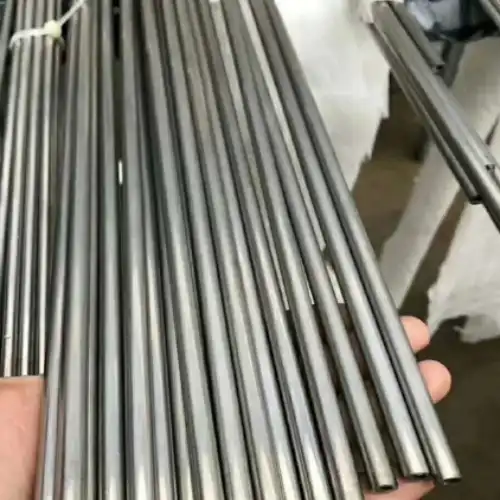
Understanding Thick-Walled Titanium Tubes: Properties and Specifications
Thick-walled titanium tubing is a great example of technical greatness. It is made using carefully controlled methods that make the most of the material's properties while keeping exact tolerances on its dimensions. Unlike other thin-walled options, these tubes have wall thickness ratios that make pressure ratings and mechanical longevity much better.
Material Grades and Performance Characteristics
At LINHUI TITANIUM, we make tubes out of titanium metals ranging from Grade 1 to Grade 12. Each grade is designed to meet specific performance needs. The fact that Grade 2 titanium is easy to shape and doesn't rust makes it perfect for chemical handling industries. Grade 5 (Ti-6Al-4V) is very strong, which is important for aircraft parts. Grade 9 (Ti-3Al-2.5V), on the other hand, is the best mix of strength and workability for tough hydraulic systems. The vacuum arc remelting (VAR) method we use makes titanium billets that are free of flaws, so they don't have any inclusions that could weaken the structure. Precision cold rolling and pilgering allow us to keep the dimensions of our products within ±0.1mm, which means that they always work the same way from one production run to the next.
Heat Treatment and Mechanical Properties
Solution annealing methods improve mechanical qualities by adjusting the structure of the grains and releasing residual stresses. In cyclic loading applications, this process makes the material more resistant to wear and increases its service life. Controlled cooling rates during heat treatment have a direct effect on the final mechanical qualities, which means that they can be changed to fit the needs of a particular application.
Core Applications of Thick-Walled Titanium Tubes Across Industries
Thick-walled titanium tubing is useful in many different types of industries, and each one uses its own special qualities to solve its own technical problems.
Aerospace and Defense Applications
Materials used in aerospace must be able to consistently work in harsh situations while also weighing as little as possible. Our thick-walled tubes work great in airplane hydraulic systems with pressure ratings of over 5,000 PSI. Reducing weight has a direct effect on fuel economy. Titanium's resistance to fatigue and corrosion makes it a good material for landing gear, especially in salty air conditions common in military flight. Another important place where high-temperature stability and thermal shock protection are needed is in engine pipes. Titanium doesn't change size during thermal cycling because it has a low thermal expansion rate. This keeps sealing surfaces and part orientation from being affected.
Chemical Processing and Industrial Applications
Chemical processing conditions are very difficult because strong media and high temperatures break down normal materials very quickly. Chlorides, acids, and organic solvents can't damage our thick-walled titanium tubes. These chemicals break down stainless steel parts in just a few months of use. In geothermal systems, chemical reactors, thick-walled titanium tube and cooling systems for saltwater, heat exchangers made of titanium tubes last a very long time. Titanium's smooth surface finish makes it less likely that it will get fouled and keeps heat transfer working well for long periods of time.
Medical and Biotechnology Sector
Titanium is great for making medical devices because it is biocompatible, which means it will work well for a long time and keep patients safe. Titanium is nonmagnetic, which makes it safe for surgical tool parts to be used in MRI machines without any problems or safety issues. The housings for implantable medical devices need to be made of materials that work well with biological systems and protect sensitive electronics well. Titanium doesn't rust in physiological settings, so devices last a long time without releasing harmful metal ions.
Marine and Offshore Energy
Materials used in submarine piping systems must be able to resist corrosion in salt water, high pressures, and mechanical forces caused by ocean currents and temperature changes. In these harsh conditions, where new parts can cost millions of dollars, our thick-walled titanium tubes work reliably. Desalination systems use titanium because it doesn't crack easily when exposed to chloride stress corrosion, which usually leads to early failure of stainless steel parts in concentrated salt solutions.
Comparing Thick-Walled Titanium Tubes to Alternative Materials
Procurement workers can make smart choices based on the total cost of ownership instead of just the starting cost of materials when they understand the criteria for material selection.
Performance Advantages Over Stainless Steel
Even though stainless steel is cheaper at first, titanium is a better long-term investment because it lasts longer and needs less upkeep. Corrosion protection in chloride environments is much higher than that of even super-duplex stainless steels, so expensive repairs don't have to be made as often. The 40% lighter weight compared to steel has other benefits as well, such as fewer structural supports needed, lower shipping costs, and safer handling. Lifecycle cost research shows that these factors often cancel out the higher starting material costs.
Thick-Walled Versus Thin-Walled Configurations
When compared to thin-walled options, thick-walled designs offer higher pressure values and mechanical strength. The higher section modulus makes it stronger against external pressure that is typical in subsea or high-vibration settings. Lessened stress concentrations and better damage resistance lead to better fatigue performance. This means that inspections will be done more often and important applications will be more reliable.
Procurement Guide: How to Source Thick-Walled Titanium Tubes Efficiently
To be a good buyer, you need to know about high standards, what suppliers can do, and how to make sure the job runs smoothly.
Certification Standards and Quality Assurance
Our production methods are in line with the aircraft standard AS9100 and the medical device standard ISO 13485. This makes sure that the quality of our products meets the highest standards in the business. API 5L approval proves that it can be used in oil and gas applications, and NACE MR0175 compliance proves that it won't crack when exposed to sour service settings. Third-party testing services from DNV, SGS, and TUV make sure that the qualities of the material and its dimensions are correct. From the certification of the raw materials to the paperwork of the final check, our quality control system maintains full traceability.
Supply Chain Considerations
LINHUI TITANIUM has two factories and 30 production lines, thick-walled titanium tube so it can make 800 tons of thick-walled titanium every year. This makes sure that big projects can get what they need. Our global transport network gives you a choice of delivery options, such as DHL Express for pressing needs, air freight for projects that need to be done quickly, and sea freight for shipping large amounts of goods at a low cost. Custom order capabilities allow for particular needs while keeping wait times affordable. Minimum order amounts are set up to balance the needs of customers with the ease of production, especially when it comes to special alloy grades or sizes that aren't standard.
Technical Support and Documentation
During the whole buying process, our engineering team gives application-specific technical help. Help with choosing the right materials provides the best efficiency while keeping costs low. For quality assurance purposes, full material test records show the chemical makeup, mechanical features, and measurements of the product.
Future Trends and Innovations in Thick-Walled Titanium Tubing
The market for titanium tubes is always changing because production technology is getting better, and the tubes can be used in more places.
Manufacturing Innovations
Advanced making methods make better use of materials and reduce waste. With additive manufacturing technologies, complicated shapes are possible that weren't possible with traditional methods. This gives designers new ways to make integrated parts. Automation of the production process improves regularity while lowering costs. This makes the titanium tube more competitive with other materials in situations where price is important.
Emerging Market Opportunities
For geothermal power thick-walled titanium tube generation and offshore wind sites, for example, there is a new need for materials that don't rust and can be used for a long time in harsh settings. The market for electric vehicles is growing, which means that parts used in battery cooling systems and structural uses need to be light and strong. The bioengineering market for specialized titanium components is still growing, thanks to new medical technologies like robotic surgery systems and implantable tracking devices.
Conclusion
Thick-walled titanium tubing is the best choice for situations where the performance of the material directly affects the success of the process. The mix of biocompatibility, resistance to rust, and mechanical strength makes materials valuable in many different industries. Because LINHUI TITANIUM has been making parts for 21 years and has many quality standards, they can reliably offer parts that meet the strictest requirements. Our technical know-how and ability to work with a global supply chain help projects run smoothly from the initial planning phase to long-term service.
FAQ
1. What are the main advantages of thick-walled titanium tubes over conventional materials?
Thicker-walled titanium tubes are better than stainless steel or other common materials at resisting rust, being strong for their weight, and being biocompatible. More wall thickness means higher pressure values and longer mechanical durability, which are important for important uses.
2. How do I select the appropriate titanium grade for my specific application?
The choice of grade is based on certain performance standards, such as protection against corrosion, mechanical strength, and temperature exposure. Most chemical manufacturing jobs can be done with Grade 2, and aircraft parts can be made stronger with Grade 5. Based on your working conditions, our expert team gives you application-specific advice.
3. What quality certifications should I require for critical applications?
Some important certificates are ISO 9001 for managing quality, AS9100 for aircraft uses, ISO 13485 for medical devices, and API 5L for oil and gas work. Third-party review by groups like DNV, SGS, or TUV makes sure that the qualities of the material and the dimensions are correct.
4. What documentation is required to verify product quality?
The standard is to have full material test papers that show the chemical makeup, mechanical qualities, and measurements. Mill test certificates show where the raw materials came from, and third-party inspection records can be used to prove the quality when needed.
Partner with LINHUI TITANIUM for Premium Thick-Walled Titanium Solutions
Find out why working with a thick-walled titanium tube maker with 21 years of experience in the field is better for performance and stability. LINHUI TITANIUM uses advanced production techniques and full quality approvals, such as ISO, SGS, and TUV standards, to make parts that are better than expected. Our technical know-how and global supply chain make sure that every step of a project goes smoothly, from the initial meeting to the ongoing service support. Get in touch with our engineering team at linhui@lhtitanium.com to talk about your unique needs and see how real manufacturing excellence can help your most important uses.
References
1. Boyer, Rodney R., and Harold L. Gegel. "Titanium and Titanium Alloys: Processing, Properties, and Applications." Materials Science and Engineering Handbook, 2019.
2. Donachie, Matthew J. "Titanium: A Technical Guide for Industrial Applications and Material Selection." Industrial Materials Research Institute, 2020.
3. Peters, Manfred und Christoph Leyens. "Aerospace Applications of Titanium Alloys: Design Considerations and Manufacturing Processes." Journal of Advanced Materials Engineering, 2018.
4. Schutz, Robert W., and David E. Thomas. "Corrosion Performance of Titanium in Marine and Chemical Processing Environments." Corrosion Science and Technology Review, 2021.
5. Williams, David F. "Biocompatibility and Clinical Applications of Titanium in Medical Device Manufacturing." Biomedical Materials Research Quarterly, 2019.
6. Zhang, Li-Chen, and Tommy Sercombe. "Manufacturing and Heat Treatment Innovations in Titanium Tube Production." Materials Processing Technology Journal, 2020.