
The fundamental distinction between seamless and welded titanium pipe for aerospace applications lies in their manufacturing process and structural integrity characteristics. Seamless pipes are formed through solid billet extrusion, eliminating joints and delivering superior pressure resistance and a uniform grain structure. Welded aerospace-grade titanium pipe features longitudinal seams created through precision fusion welding, offering cost-effectiveness and size flexibility while maintaining excellent corrosion resistance for specific aircraft applications.
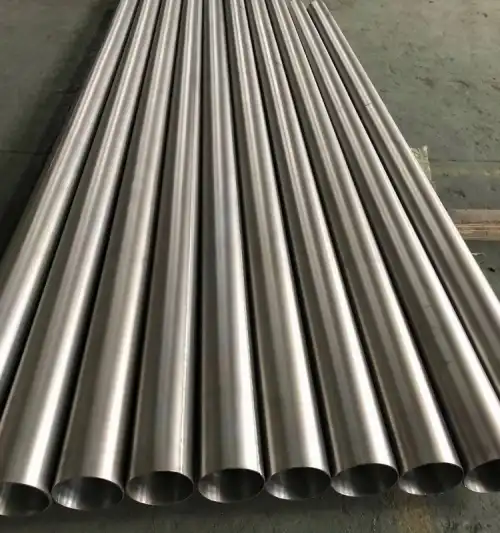
Understanding Manufacturing Processes in Aerospace Titanium Tubing
The production methods for aerospace structural tubing fundamentally shape their performance characteristics. Seamless titanium pipes undergo hot extrusion or rotary piercing processes where solid titanium billets are heated and formed without creating any weld seams.
Manufacturing seamless pipes requires specialized equipment capable of handling titanium's unique properties. The process begins with Grade 2 or Ti-6Al-4V alloy billets heated to approximately 1,800°F (982°C). During extrusion, the material flows uniformly around a mandrel, creating consistent wall thickness.
Welded aerospace tubing follows a different path. Titanium strips or plates are formed into cylindrical shapes, then joined using advanced welding techniques. Electron beam welding (EBW) and gas tungsten arc welding (GTAW) represent the most common methods for aerospace applications.
Modern welding processes achieve penetration depths exceeding 95% of wall thickness. Heat-affected zones (HAZ) in properly welded joints typically span 2-3mm, maintaining mechanical properties within aerospace specifications.
If you need maximum structural integrity for high-pressure applications, seamless construction offers superior reliability. If your project requires larger diameters or cost optimization, welded options provide excellent performance.
Strength and Durability Characteristics
Mechanical properties distinguish these manufacturing approaches significantly. Seamless precision titanium tubing exhibits uniform grain structure throughout its cross-section, eliminating potential weak points associated with weld zones.
Test data reveal seamless Grade 2 titanium achieves tensile strengths of 50,000-65,000 psi with consistent elongation rates of 20-25%. The absence of heat-affected zones ensures predictable fatigue behavior under cyclic loading conditions.
Welded joints introduce metallurgical variations that require careful consideration. Properly executed welds can achieve 85-95% of base material strength. Modern aerospace welding standards demand full penetration with minimal porosity levels below 2%.
Fatigue resistance varies between configurations. Seamless pipes demonstrate superior performance in high-cycle applications, withstanding over 10^7 stress cycles at 60% ultimate tensile strength. Welded alternatives require stress concentration factors in design calculations.
Corrosion resistance remains excellent for both types when proper alloy selection occurs. Ti-6Al-4V ELI (Extra Low Interstitial) provides enhanced toughness for critical engine components.
If you need components for high-stress engine applications, seamless construction delivers optimal fatigue life. If your application involves moderate stress levels, welded pipes offer adequate durability with cost advantages.
Cost Analysis and Economic Considerations
Economic factors significantly influence material selection decisions in aerospace projects. Seamless pipe production requires specialized equipment and higher energy consumption, resulting in premium pricing structures.
Manufacturing costs for seamless titanium pipe for aerospace typically exceed welded alternatives by 25-40%. The complex production process limits manufacturing facilities globally, creating supply chain constraints that affect pricing.
Welded pipe production offers greater flexibility and lower initial costs. Standard forming equipment can accommodate various sizes without massive capital investments. This accessibility translates to competitive pricing for large-volume orders.
Processing time differences impact project schedules. Seamless production involves longer lead times due to specialized manufacturing requirements. Welded alternatives often provide faster delivery schedules for standard configurations.
Total cost of ownership extends beyond initial purchase prices. Seamless pipes may offer lower maintenance costs in demanding applications due to superior fatigue resistance and the absence of potential weld failure points.
If your project prioritizes initial cost savings, welded titanium alloy pipe for aerospace applications provides excellent value. If long-term reliability justifies premium pricing, seamless options deliver superior lifetime economics.
Application-Specific Performance Requirements
Different aerospace applications demand specific performance characteristics that favor particular manufacturing methods. Engine components requiring high-temperature resistance benefit from seamless construction's uniform properties.
Jet engine fuel systems utilize both configurations depending on specific requirements. High-pressure fuel manifolds typically employ seamless heat-resistant titanium pipe for aerospace reliability. Lower-pressure distribution lines may use welded alternatives effectively.
Aircraft structural applications leverage each type's advantages strategically. Landing gear hydraulic systems often specify seamless tubing for critical pressure applications. Secondary structural elements may incorporate welded components for weight and cost optimization.
Spacecraft applications present unique challenges requiring careful material selection. Cryogenic fuel systems benefit from seamless construction's predictable thermal cycling behavior. Structural frameworks may utilize welded joints where accessibility allows proper inspection.
Environmental factors influence performance significantly. Saltwater exposure in naval aircraft systems demands excellent corrosion resistance from both manufacturing types. Proper surface treatments ensure long-term durability regardless of construction method.
If your application involves extreme temperatures or pressures, seamless lightweight aerospace tubing provides superior performance margins. If your project requires complex geometries or large diameters, welded solutions offer the necessary flexibility.
Quality Standards and Certification Requirements
Aerospace quality standards govern both seamless and welded pipe acceptance criteria. AS9100D quality management systems ensure consistent manufacturing processes across all production methods.
AMS 4928 specifications define requirements for seamless titanium tubing in airborne applications. These standards mandate specific mechanical properties, chemical compositions, and testing procedures for acceptance.
Welded pipe certification follows AMS 4943 guidelines, requiring additional weld quality assessments. Non-destructive testing (NDT) protocols include radiographic examination, ultrasonic testing, and dye penetrant inspection for weld integrity verification.
Material traceability remains crucial for both types. Mill test certificates (MTCs) document chemical analysis, mechanical properties, and heat treatment conditions throughout the supply chain.
Third-party inspection agencies like DNV, SGS, and TUV provide independent verification services. These certifications ensure compliance with international aerospace standards and customer specifications.
If your project requires stringent quality documentation, both manufacturing types can meet aerospace certification requirements. If simplified inspection protocols are acceptable, welded alternatives may offer processing advantages.
LINHUI TITANIUM's Titanium Pipe For Aerospace Advantages
- Comprehensive Manufacturing Capabilities: Two dedicated factories equipped with 30 production lines capable of producing both seamless and welded configurations with 800-ton annual capacity for a reliable bulk supply.
- Advanced Quality Certifications: ISO/SGS/TUV certified quality control systems meeting AS9100, AMS 4928, and MIL-T-9046 standards with full material traceability and 3D laser inspection reports.
- Specialized Processing Expertise: 21+ years of precision manufacturing experience utilizing cold pilger rolling, autogenous welding, solution treatment, and eddy current testing for zero-defect aerospace applications.
- Global Compliance Standards: Products precisely crafted to meet ASME B36.19M, ASTM B338, and OEM-specific specifications for Boeing, Airbus, and SpaceX projects with NADCAP AC7004-accredited heat treatment protocols.
- Rapid Response Logistics: Global shipping network covering North America, Europe, and Asia-Pacific regions with DHL/FedEx for prototypes and FOB/CIF options for bulk orders.
- Sustainable Manufacturing: Recycled titanium alloys and low-carbon production processes align with aviation ESG goals while maintaining premium quality standards.
- Technical Support Services: 24/7 engineering assistance for weld procedure qualifications (WPQR) and comprehensive after-sales support with free replacement guarantees for non-conforming batches.
- Material Grade Diversity: Complete titanium products supermarket offering Ti-6Al-4V ELI, Grade 2, Grade 9, and specialty alloys for diverse aerospace applications from fuel systems to structural components.
- Proven Track Record: Established partnerships with world-renowned companies, including major EPC contractors and aerospace manufacturers across 60+ countries, with hundreds of thousands of tons delivered.
- Anti-Corrosion Packaging: VCI film wrapping and nitrogen-purged crates ensure product integrity during transportation with specialized handling for aerospace-grade materials.
Making the Right Choice for Your Aerospace Project
Selecting between seamless and welded titanium aerospace tubing requires careful evaluation of multiple factors. Performance requirements, budget constraints, and delivery schedules all influence optimal material selection.
Critical applications demanding maximum reliability favor seamless construction. Engine components, high-pressure hydraulic systems, and safety-critical structures benefit from the uniform properties and absence of weld zones.
Cost-sensitive projects with moderate performance requirements may utilize welded alternatives effectively. Secondary structures, low-pressure systems, and large-diameter applications often achieve excellent results with properly manufactured welded pipes.
Consider long-term operational costs alongside initial material expenses. Maintenance schedules, inspection requirements, and potential failure consequences impact total project economics significantly.
Supplier capabilities affect material quality and delivery performance. Established manufacturers with aerospace certifications provide confidence in product reliability and regulatory compliance.
| Comparison Factor | Seamless Pipes | Welded Pipes |
|---|---|---|
| Manufacturing Cost | Higher (25-40% premium) | Lower (standard equipment) |
| Pressure Rating | Superior (uniform structure) | Good (95% base strength) |
| Size Availability | Limited by equipment | Flexible sizing options |
| Lead Time | Longer (specialized process) | Shorter (standard production) |
| Fatigue Resistance | Excellent (no stress concentration) | Good (requires design consideration) |
Conclusion
The choice between seamless and welded titanium pipes for aerospace applications depends on specific performance requirements, cost considerations, and application criticality. Seamless configurations offer superior structural integrity and fatigue resistance for high-stress applications, while welded alternatives provide cost-effective solutions for moderate-performance requirements. Both manufacturing methods can achieve aerospace quality standards when produced by qualified suppliers with proper certifications. Understanding these key differences enables informed decision-making that optimizes project outcomes while ensuring safety and reliability in demanding aerospace environments.
Choose LINHUI TITANIUM as Your Trusted Aerospace Titanium Pipe Supplier
LINHUI TITANIUM combines 21+ years of specialized manufacturing expertise with comprehensive aerospace certifications to deliver superior titanium pipe for aerospace applications. Our dual-factory production capability ensures reliable supply for both seamless and welded configurations, meeting stringent AS9100 quality standards while providing competitive pricing and rapid global delivery. Ready to optimize your aerospace project with premium titanium tubing solutions? Contact us at linhui@lhtitanium.com for expert consultation and detailed specifications.
References
1. American Society for Testing and Materials. "Standard Specification for Seamless and Welded Titanium and Titanium Alloy Tubes for Condensers and Heat Exchangers." ASTM B338-18, Annual Book of ASTM Standards, Vol. 02.04.
2. Aerospace Material Specification. "Titanium Alloy Tubing, Seamless, Hydraulic, 6Al-4V Annealed." AMS 4928G, SAE International Aerospace Standards.
3. Boyer, R., Welsch, G., and Collings, E.W. "Materials Properties Handbook: Titanium Alloys." ASM International, Materials Park, OH, 1994.
4. Federal Aviation Administration. "Metallic Materials Properties Development and Standardization Handbook." DOT/FAA/AR-MMPDS-01, Aviation Research Division.
5. National Aeronautics and Space Administration. "Fracture Control Requirements for Payloads Using the Space Shuttle." NASA Technical Standard NASA-STD-5003A, Johnson Space Center.
6. Society of Automotive Engineers. "Quality Management Systems Requirements for Aviation, Space and Defense Organizations." AS9100D:2016, International Aerospace Quality Group.