
Teams with skilled gr5 titanium plate manufacturers are the key to effective success when looking for titanium alloys for mission-critical uses. GR5 titanium plates, which are also known as Ti-6Al-4V metal, have the best mechanical performance in the energy, marine, and aircraft industries. Reliable providers make sure that their products meet international standards and can be made in a way that can accommodate both OEM customisation and large orders. Choosing the right maker affects not only the quality of the materials but also the security of the supply chain, the effectiveness of cost savings, and the long-term success of the project.
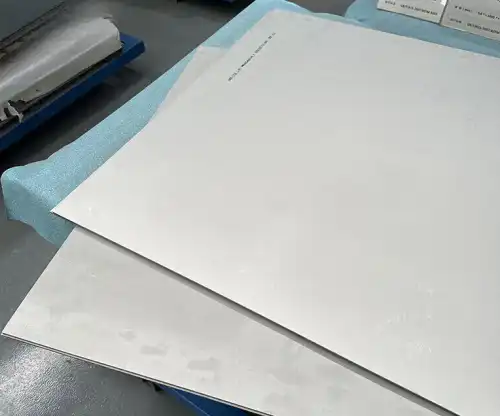
Understanding GR5 Titanium Plate: Key Properties and Industry Applications
Metallurgical Composition and Mechanical Performance
The gr5 titanium plate has a two-phase microstructure, with alpha phases that are close-packed hexagons and beta phases that are body-centred cubics. According to ASTM B265 standards, this design has a density of 4.43 g/cm³, which is about 60% that of structural steel. It also has a tensile strength of 895 to 1000 MPa and a yield strength of about 828 MPa. The aluminium content (5.5–6.75%) stabilises the alpha phase to make it stronger, and the vanadium content (3.5–4.5%) makes the beta phase easier to shape. Oxygen levels that are controlled (no more than 0.20%) stop embrittlement, which is very important when working with plates that are less than 6 mm thick or more than 50 mm thick.
Hardness numbers are usually between 30 and 36 HRC, which means that the structure will last without breaking easily. The measure of elasticity of the material is 113.8 GPa, which is closer to human bone than stainless steel. This means that orthopaedic devices can handle less stress. Unlike Grade 2 titanium that is sold in stores, GR5 plates can be treated with a solution and aged (STA) to improve their mechanical qualities even more. This makes them perfect for parts that are loaded and unloaded many times at temperatures up to 400°C.
Corrosion Resistance and Surface Chemistry
When the gr5 titanium plate is exposed to air, a passive titanium dioxide (TiO2) layer forms right away. This layer protects the plate from pitting and crevice corrosion in chloride-rich settings. This quality makes it better than stainless steel 316 for marine uses, especially when sour gas (H2S) is present, which is common on offshore oil sites. In chemical processing equipment that works with nitric acid, sulphuric acid, and sodium hydroxide at levels that would break austenitic steels, this material stays strong. Compared to Grade 23 (GR23) metal, which is an extra-low interstitial version, GR5 is better at hot working with a slightly higher interstitial content. This makes it easier to shape while still being cost-effective for large-scale production.
Critical Applications Across Industries
Manufacturers of aerospace parts use Gr5 titanium plate for wing spars, bulkheads, and landing gear parts because it is lighter, which means more fuel economy. The material can handle G-force loads and temperature changes from -54°C to 400°C without breaking down. Because they meet ISO 5832-3 standards for biocompatibility and osseointegration, GR5 plates are used by orthopaedic doctors for fracture fixation devices and spine implants. For downhole tools and pressure tanks, offshore drilling companies use thick plates (25–100 mm) that can withstand corrosion and mechanical stress from seawater at depths of more than 3,000 meters. Racing teams in cars use a 2mm Gr5 titanium plate for suspension mounts and exhaust systems. This makes the parts 40–50% lighter than high-strength steel while still being able to withstand 10^7 loads.
Choosing the Right GR5 Titanium Plate Manufacturer: Key Criteria for B2B Buyers
Defining Procurement Specifications and Volume Requirements
OEM partnerships need exact measurements (±0.1mm for thickness and ±5mm for width/length), surface finish requirements (Ra values below 3.2 µm for finished surfaces), and ICP-OES analysis to confirm the chemical makeup. For bulk orders, uniform performance from lot to lot is important, so makers have to keep strict process controls across multiple production batches. Buyers need to know the difference between mill-edge plates that can be used for more manufacturing and cut or machined edges that need to meet tight assembly standards. Custom needs, like certain alpha case removal levels, non-standard alloy changes (ELI variants), or pre-fabricated forms, call for suppliers with dedicated R&D teams and flexible production lines that can handle packages ranging from 500 kg to 50 tonnes.
Certification and Quality Assurance Infrastructure
Some of the certifications that trustworthy gr5 titanium plate manufacturers keep up to date are ISO 9001:2015 for quality management, AS9100D for aerospace uses, and PED 2014/68/EU for pressure equipment guidelines. According to EN 10204 3.1 standards, Material Test Certificates (MTC) show the chemical make-up, tensile qualities (ultimate tensile strength, yield strength, and elongation percentage), and heat treatment records for each production lot. Third-party inspection procedures with DNV, BV, SGS, or Lloyd's Register make sure that AMS 4911 (aerospace material standards) and ASTM B265 (industrial plates) are followed. Ultrasonic testing according to AMS 2631 can find internal laminations in plates that are thicker than 6 mm, and microstructure analysis can prove that the alpha-beta grains are spread out evenly without any harmful alpha case layers.
When looking at possible partners, buying teams should check the facilities of potential suppliers to make sure they have specialised vacuum arc remelting (VAR) furnaces (important for reducing inclusions) and hot rolling mills that can make wide plates (up to 2,500 mm width) the same thickness. Manufacturers with various production lines show that they can handle large orders quickly while keeping the standard of their products high. Top-tier suppliers stand out in competitor evaluations thanks to delivery reliability measures like on-time shipment rates above 95% and proven ability to expedite purchases in an emergency.
Reputation and Long-Term Partnership Indicators
Track records of suppliers with "blue-chip" clients like national oil companies, aerospace OEMs, and foreign EPC contractors show how well they've done in the past. Manufacturers that work on projects for CEFC, PTT, PDVSA, and PETRONAS have shown that they can meet strict requirements and meet contractual dates. Qualitative validation comes from customer comments that talk about how quickly you respond to technical questions, how flexible you are when specifications change, and how you solve problems when there are quality disagreements. After-sales services that go beyond delivering the material, such as verified cutting to net shapes, surface finishing (pickling, passivation), and value-added heat processes, lower the costs and complexity of buyers' secondary processing. Strategic sellers educate their customers by holding technical workshops on topics like TIG and friction stir welding, as well as the pros and cons of different types of forming and new uses. This builds partnerships that go beyond just buying and selling things and include working together to create new products.
The Manufacturing Process of GR5 Titanium Plates and Its Impact on Quality
Raw Material Sourcing and Melting Operations
The best gr5 titanium plate starts with high-purity titanium sponge and master alloy additions (aluminium-vanadium) that come from trusted sources. Vacuum arc remelting (VAR) melts electrode bars in neutral atmospheres, which get rid of hydrogen, nitrogen, and metal impurities that weaken the metal. Premium makers usually use two or three VAR cycles to lower the inclusion density to less than 5 particles per cubic centimetre. This is very important for aircraft parts that need to last for a long time. Electron beam melting (EBM) technology is being used by more and more major manufacturers. It gives better control over interstitial elements and makes bars with uniform chemistry across widths of 800 mm or more.
Hot Rolling and Annealing Cycles
Beta forging at 1,050°C breaks down the microstructures of the cast ingots, and hot rolling at 900–950°C lowers the width to make intermediate slabs. Controlling the grain size and phase distribution through multi-pass rolling plans with intermediate annealing processes (700–800°C for 2–4 hours) is important for getting the balanced alpha-beta microstructure that is needed for good mechanical properties. When manufacturers use real-time thickness tracking and automatic temperature control, they can keep the size tolerances of plates longer than 6 meters within ±3%. For cold rolling thin plates (2–6 mm), it's important to keep the tension just right to avoid edge cracking. After rolling, stress-relief annealing gets rid of any remaining pressures that could bend the parts during cutting.
Rigorous Inspection Protocols
Every batch of steel is tensile tested at room temperature and higher temperatures, and the elongation values are compared to the minimum standards set by ASTM B265 (10% for the annealed state). Bend testing shows that the material can be shaped without cracking at certain angles, which are usually 4-5 times the thickness of the plate for 2mm GR5. To make sure the stability of the passive film, it is tested for corrosion resistance using salt spray (ASTM B117) and crevice corrosion evaluations. Dimensional checks with laser scanning devices make sure that the material is flat (with a maximum variation of 10 mm per metre) and that the thickness is all the same, which is very important for pressure tank uses. It is possible to track products from the melt batch to the finished product and find out why something went wrong during investigations of non-conformance because leading Gr5 titanium plate manufacturers keep written records of their process controls and statistical process tracking.
Comparing Leading GR5 Titanium Plate Manufacturers: How to Identify the Best Partner
Geographic Production Hubs and Market Dynamics
The world's production of Gr5 titanium plates is mostly concentrated in three main areas. North American manufacturers focus on aerospace-grade materials with AS9100 certifications. These materials are priced 15–25% higher than Asian alternatives, but strict traceability and local supply chain security are reasons for the higher prices. European companies make sure that their products are of high quality and don't cost too much. They do this by following PED rules for pressure equipment markets and keeping their strong places in medical device supply chains with ISO 13485 standards. Asian suppliers, especially those in China, control the bulk order markets thanks to their integrated production chains that include everything from making titanium sponges to making finished plates. These chains offer cost savings of 20 to 30 per cent and are getting closer to meeting Western certification standards by working with international inspection agencies.
Evaluating Customisation Capabilities and Technical Support
Standard stock usually comes in 1,000x2,000mm and 1,220x2,440mm sizes and thicknesses ranging from 0.5mm to 100mm. Buyers who need non-standard sizes, specific surface finishes (like pickled, polished, or shot-peened), or custom mechanical qualities must check with providers to see if they can make what they need. It takes 6 to 8 weeks longer for advanced Gr5 titanium plate manufacturers to make custom orders for small amounts (at least 200 kg), compared to the 12 to 16 weeks it takes for regular production plans. Technical support that includes application engineering, like finite element analysis for structural parts, helps with qualifying welding procedures and rust testing programs, and is a real plus for OEM partnerships that are making new products or entering new markets.
Price competitiveness should be evaluated holistically, considering not only per-kilogram costs but also logistics efficiency, payment terms flexibility, and total cost of ownership, which includes any secondary processing. When manufacturers combine shipping for different product types, like GR5 plates with GR2 sheets, titanium bars, or screws, they save money on freight costs and administrative costs. Long-term volume deals with tiered pricing systems encourage buyers to stay committed while also ensuring supply during volatile markets or shortages of raw materials.
Scalability and Crisis Management Capacity
Strategic partners are different from transactional providers because they can quickly increase production when a project needs to go faster or take on more work when there are problems in the supply chain. Top-tier gr5 titanium plate manufacturers keep extra semi-finished goods (hot-rolled slabs) in stock so that they can deliver quickly in 3–4 weeks for urgent orders. For multi-year project promises, procurement security is very important. This is why documented backup plans for things like equipment breakdowns, quality issues, or "force majeure" events are so important. They include backup production sites and pre-qualified suppliers for raw materials. Manufacturers with a wide range of customers in the aerospace, energy, and industrial sectors are more likely to be able to handle downturns in those sectors, which helps them keep their businesses running and keep prices stable over the lifecycles of their contracts.
Practical Guide to Procuring GR5 Titanium Plates for OEM & Bulk Orders
Structuring Effective RFQ Submissions
Requests for quotes should be very detailed, including the type of material (GR5/Ti-6Al-4V), the standards that apply (ASTM B265, AMS 4911, ISO 5832-3), the certifications that are needed (3.1 MTC, ultrasonic testing records), and the exact sizes that are allowed. Drawings or CAD files of unique forms make it easier to get accurate quotes faster. Procurement teams should be clear about how much they expect to buy each year, when they'd like it delivered (blanket orders with scheduled releases vs. single packages), and what kinds of packaging are okay (wooden boxes, steel frames with moisture barriers). When you include acceptance criteria like needed mechanical property ranges, surface finish standards (Ra values), and allowed alpha case thickness, you avoid expensive disagreements during receiving checks. Buyers who want extra services should make it clear that they want cutting services (waterjet, laser, or slicing), edge finishing, or third-party checks before delivery.
Negotiation Strategies and Payment Structures
Prices for the Gr5 titanium plate are usually based on market prices for titanium sponge + conversion premiums that show how complicated the manufacturing process is. For sales over 5 tonnes, there are bulk discounts of 8–15%, and yearly contracts lock in preferential prices for 12 months, even if the market changes. Payment terms usually include a 30% deposit when the order is confirmed, 60% against the Bill of Lading, and 10% retention released after delivery inspection. However, established buyers with good credit histories can negotiate longer terms (60–90 days net) or consignment inventory arrangements for partnerships that buy a lot. The amount of money you pay (USD, EUR, or RMB) affects how much it really costs because of the exchange rate. Some suppliers offer natural hedging by billing in more than one currency.
Logistics and International Shipping Considerations
Titanium plates that are thicker than 6 mm are usually shipped by ocean freight in break-bulk ships or normal containers. Lead times are 3 to 6 weeks for routes across the Pacific and 4 to 8 weeks for routes between Asia and Europe. For urgent orders under 500 kg, air freight becomes a realistic option, cutting travel time to 5–7 days at higher costs (300–50% more than ocean rates). Plates that are properly packed keep them from getting wet or damaged. They should be wrapped in VCI (vapour corrosion inhibitor) paper, split by corrugated dividers, and sealed in plywood boxes that meet ISPM 15 standards for international phytosanitary compliance. To avoid customs delays, documentation packages that include business invoices, packing lists, certificates of origin, and material test results must match the rules of the country where the goods are going to be imported.
Getting to know experienced Gr5 titanium plate manufacturers with warehouses near major ports (Shanghai, Rotterdam, and Houston) lets buyers use just-in-time shipping models, which lowers the costs of keeping inventory on hand. Some sellers have vendor-managed inventory (VMI) programs where buyers keep stock at their facilities and move ownership when the stock is used up. This helps with cash flow and makes sure that materials are always available for production.
Conclusion
When looking for qualified gr5 titanium plate manufacturers, you need to find a balance between technical know-how, strict quality control, business flexibility, and the chance to form a long-term relationship. Because this material is so important in aerospace structures, energy infrastructure, and medical devices, it needs providers that can regularly deliver certified goods that meet international standards and can also change to meet the needs of new projects. Thorough due research is key to successful procurement. This includes checking certifications, production capabilities, and track records with similar clients. Strategic buyers know that premium-grade titanium plate manufacturers offer more than just materials. They also offer engineering support, customisation services, and a reliable supply chain, all of which have a direct effect on the success of projects and the ability to keep running in tough industrial settings.
FAQ
1. What certifications should gr5 titanium plate manufacturers possess for aerospace applications?
Buyers in the aerospace industry should check that the company has AS9100D quality management approval, AMS 4911 material standard compliance, and NADCAP accreditation for special processes. Material Test Certificates must follow the rules set by EN 10204 3.1. They must show the chemical makeup through ICP-OES analysis and the material qualities through tensile testing. Third-party inspection records from companies like DNV or Lloyd's Register add to the proof. Manufacturers that work with defence companies often need to be registered with ITAR and get cybersecurity licenses to protect protected technical data.
2. Can the gr5 titanium plate be cold-formed, particularly in thinner gauges?
GR5 is hard to cold form because it has a high springback and is less flexible than commercially pure types. For a 2 mm thickness, the minimum bend radius to keep the material from cracking is 4-5 times the thickness. Hot forming at 650–750°C makes it much easier to shape while lowering leftover loads. Manufacturers who are skilled at forming operations can offer shapes that have already been bent or suggest annealing processes that should be done after forming to recover mechanical qualities that have been damaged by work hardening.
3. How does GR5 compare to stainless steel 316 in marine environments?
The GR5 titanium plate is better at resisting pitting and crevice corrosion in saltwater. It stays strong even when chloride levels go over 10,000 ppm, which is when stainless steel 316 starts to rust in certain places. The material is about 45% lighter than stainless steel, which is important for offshore platform buildings and underwater equipment, where extra weight can make installation more expensive and lower the load capacity. Even though titanium costs three to five times more at first, it often ends up being cheaper in the long run because it lasts longer and requires less upkeep, even after 30 years of use.
Partner with LINHUI TITANIUM for Your GR5 Titanium Plate Requirements
LINHUI TITANIUM is ready to help you get titanium. For more than 20 years, they have been making high-quality products for the oil, gas, aircraft, and marine businesses around the world. We provide materials that meet the strictest international standards because we are a qualified Gr5 titanium plate manufacturer with ISO 9001:2015, PED 2014/68/EU, and approvals from multiple classification societies (DNV, ABS, CCS, BV, GL). We can process titanium sponges all the way through to finished plates. This makes sure that the supply chain is reliable for both large orders and OEM customisation projects. CEFC, PTT, PDVSA, and LUKOIL are just a few of the clients who value our quality control and technical help over multi-year contracts. Contact linhui@lhtitanium.com right away for full product details, competitive quotes, and expert advice on how to choose the best titanium material for your needs. Our offices are in Xi'an, and our global logistics network ships to more than 60 countries. This makes us your ideal partner for mission-critical tasks.
References
1. Boyer, R., Welsch, G., & Collings, E.W. (2019). Materials Properties Handbook: Titanium Alloys. ASM International, Materials Park, Ohio.
2. Donachie, M.J. (2020). Titanium: A Technical Guide, Third Edition. ASM International, Materials Park, Ohio.
3. Lutjering, G. & Williams, J.C. (2018). Engineering Materials and Processes: Titanium, Second Edition. Springer-Verlag, Berlin.
4. ASTM International (2021). ASTM B265-20a: Standard Specification for Titanium and Titanium Alloy Strip, Sheet, and Plate. West Conshohocken, Pennsylvania.
5. SAE International (2022). AMS 4911M: Titanium Alloy, Sheet, Strip, and Plate 6Al-4V Annealed. Warrendale, Pennsylvania.
6. Froes, F.H. (2015). Titanium: Physical Metallurgy, Processing, and Applications. ASM International, Materials Park, Ohio.