
Understanding quality OEM GR2 titanium wire control standards and certification requirements becomes essential when finding OEM GR2 titanium wire for important industrial uses. In the business world, this economically pure titanium wire is the standard for uses that need good corrosion protection and modest strength. Under UNS R50400, this grade is for unalloyed titanium with a single-phase alpha lattice that gives it a tensile strength of about 345 MPa while still being very flexible. Companies in the oil and gas, chemical processing, and aerospace industries rely on certified OEM Gr2 titanium wire to get rid of the faster corrosion problems that come with stainless steel alternatives. This is especially important in seawater and chlorine-rich environments, where failure of the material can have serious operational and safety consequences.
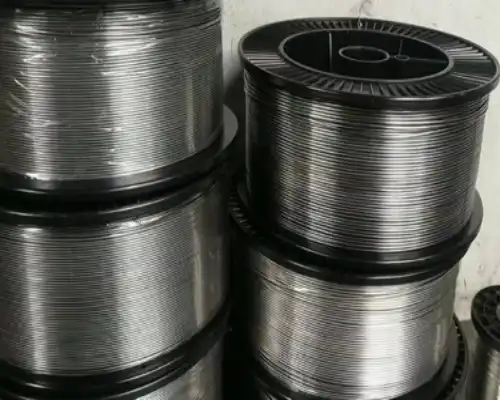
Understanding GR2 Titanium Wire Quality Standards
Specifications set by international standards groups for the chemical make-up and mechanical properties of OEM Gr2 titanium wire serve as quality norms. These standards make sure that materials work the same way in all kinds of industry and service settings.
ASTM B863 Requirements and Chemical Composition Limits
In North America, ASTM B863 is the main standard that sets the requirements for titanium wire. For example, the standard says that the nitrogen content can't be more than 0.03%, the carbon content can't be more than 0.08%, the hydrogen content can't be more than 0.015%, the iron content can't be more than 0.30%, and the oxygen content can't be more than 0.25%. The balance is made of titanium, with minor elements carefully controlled to keep the metal from becoming weak or prone to rust. These limits on makeup have a direct effect on how the wire acts during manufacturing steps like cold drawing, annealing, and riveting. When buying things, procurement teams need to make sure that the supplier's paperwork clearly states that they follow ASTM B863. If there are any differences in the amount of oxygen or iron, it can make the rust resistance worse in acidic environments, which is a big problem for companies that make chemical processing equipment. We've seen that a lot of quality problems are caused by not checking raw materials properly, which is why new inspection procedures are so important.
ISO and AMS Standards for Global Compliance
OEM gr2 titanium wire often has to meet ISO 5832-2 standards for use in medical implants and AMS standards for use in aircraft parts, in addition to ASTM standards. Biocompatibility testing and surface finish requirements are emphasized in ISO standards. On the other hand, dimensional limits and mechanical property stability across production lots are covered in AMS standards. When these standards come together, they make a quality system that covers both the properties of materials and the methods used to make them. Multinational companies that manage supply chains in various regulatory areas benefit from suppliers that can offer dual or triple certification, which includes ASTM, ISO, and AMS standards all at the same time. This makes buying easier and makes sure that materials can be used in different facilities. From choosing the raw materials to the final review, LINHUI TITANIUM follows these international standards in every step of the production process. Since our founding in 2000, we've worked with customers from more than 60 countries.
Material Test Reports and Third-Party Certifications
The main piece of written proof that OEM Gr2 titanium wire is compliant is the Material Test Report. These reports show the results of heat-specific chemistry analysis, tensile tests, measures of hardness, and confirmation of dimensions. Certified by outside groups like DNV, BV, SGS, TUV, and Lloyd's Register, industrial quality systems and product compatibility are checked by a third party. The MTR needs to have unique heat numbers that can be used to track the wire all the way back to the titanium sponge or ingot that it came from. This traceability is very important for failure analysis or when regulatory bodies look into events involving OEM Gr2 titanium wire materials. Professionals in procurement should make sure that MTRs have full testing data and not just brief statements. This is because thorough data lets engineering teams decide if a material is suitable for a certain application. If a provider has ISO 9001:2015 certification, it means they are committed to structured quality management. Other certifications, like NADCAP, show that they can handle manufacturing processes that are very technical.
Comparing GR2 Titanium Wire Quality with Other Grades & Materials
To choose the right material, you need to know how the performance of OEM Gr2 titanium wire and other metals compares. These similarities help you understand why some grades are better for some uses than others.
GR2 versus GR1 Titanium Wire Performance Characteristics
Both Grade 1 and Grade 2 are commercially pure titanium. The main difference between them is the amount of oxygen in them and the power levels that follow. Grade 1 has less air than Grade 2 (maximum 0.18% vs. 0.25%), which makes it slightly easier to shape cold but weaker. Because it has a tensile strength difference of about 70 MPa, OEM gr2 titanium wire is better for structural uses that need it to hold more weight. But Grade 1 is great for extreme cold-forming tasks that need to avoid work hardening as much as possible. Both grades have about the same corrosion protection because the protective titanium oxide film grows on both of them in the same way. Since there aren't many changes in cost, strength needs should be the main factor used to choose. We mostly suggest Grade 1 for uses that need to be very cold worked after the wire is delivered, like making complex spring shapes or deep-drawn parts. Grade 2's high strength-to-weight ratio and great resistance to corrosion make it a good choice for most commercial uses.
Titanium Grade 2 Compared to Stainless Steel Alternatives
Performance differences between OEM Gr2 titanium wire and austenitic stainless steels like 316L are stark. Titanium has a density of 4.51 g/cm³, while stainless steel has a density of 8.0 g/cm³. This means that titanium is much lighter than stainless steel in aircraft and transportation uses. When it comes to rust protection in chloride-containing environments, titanium really shines. Stainless steel can still get pitting and stress corrosion cracking, but titanium does not. Titanium is usually three to five times more expensive than steel, which makes people less likely to use it at first. When replacement intervals, upkeep needs, and downtime costs are taken into account, however, lifetime cost analysis often comes to the opposite result. In saltwater environments, stainless steel parts may need to be replaced every five to ten years, while titanium parts usually last longer than thirty years. One area where stainless steel excels is thermal conductivity, which makes it a better choice for some heat transfer tasks. The magnetic properties are also very different. Titanium's non-magnetic property is very important in MRI machines and some electrical uses, where stainless steel would cause problems.
Strength-Ductility Trade-offs Between GR2 and GR5 Titanium Alloys
The most common type of titanium metal is grade 5 titanium (Ti-6Al-4V). It is much stronger than OEM Gr2 titanium wire because it contains aluminum and vanadium. Grade 5 has a yield strength of about 880 MPa, which is almost twice as high as Grade 2. This makes it necessary for aircraft parts that are under a lot of stress. This extra strength comes at the cost of being less flexible, less easy to shape in cold temperatures, and less resistant to rusting in places with less acid. Grade 5 can't be used in situations that need a lot of cold working because it needs to be heated up to a certain point for it to distort significantly. The price difference between Grade 5 and Grade 2 is usually between 40 and 60%. This is because Grade 5 requires more complicated processes and costs more in raw materials. When corrosion protection is the most important factor in choosing a material and modest strength is enough for the job, we point customers toward Grade 2. On the other hand, Grade 5 is needed when the extra cost and difficulty of manufacturing are worth it to get the best strength-to-weight ratio. Medical devices often use Grade 2, even though it isn't as strong, because its better biocompatibility and osseointegration qualities are more important than its mechanical properties. By knowing these trade-offs between performance and cost, buying teams can choose the best materials instead of automatically choosing more expensive alloys when commercially pure grades would work just as well.
OEM GR2 Titanium Wire Certification: How to Verify Authenticity and Compliance
Verifying the validity of certifications keeps buying organizations safe from low-quality materials that hurt product quality and legal compliance. Systematic checks find fake certificates and materials that don't meet standards before they are used in production.
Reading and Interpreting Material Test Reports
There are certain components in Material Test Reports for OEM Gr2 titanium wire that make them real and fake. Real MTRs have unique heat or lot numbers that are formatted the same way on all pages of the paperwork. The chemical composition data should show the percentages of each element that add up to 100%, with measuring errors that are reasonable for the method used. The mechanical property data must show values that are in line with the grade that was given. Results that are all exactly at the minimum standard values or that have the same numbers across multiple heats are signs that something is wrong. The lab that issued the certificate should be named and given contact information so that it can be checked by someone else. We suggest that procurement teams keep databases of the usual result ranges for genuine suppliers. This past background helps them spot reports that don't make sense. The MTR document itself can give you hints—real reports usually have uniform letterhead, professional layout, and security features like watermarks or printing that make it clear that it has been tampered with. When there are doubts about the accuracy of an MTR, calling the lab that issued the report directly to check report issuance and content is the only way to be sure.
Best Practices for Procuring Certified OEM GR2 Titanium Wire
Quality control, cost control, and supply chain dependability are all factors to consider when purchasing OEM Gr2 titanium wire. Structured review systems help with procurement by lowering risk and improving results.
Supplier Assessment Checklist and Quality System Evaluation
A complete seller assessment guide makes it easier to qualify vendors and keep an eye on their performance over time. Some important things to look at when judging a company are its certifications (ISO 9001, industry-specific standards, and approvals from classification societies), its production capacity, and the level of sophistication of its tools, the strength of its quality control labs, and the reliability of its traceability system. A financial stability review keeps your supply from being interrupted by a vendor going bankrupt. The site of your business affects logistics costs and wait times. We suggest that you ask for specific process flow diagrams that show how the materials move from being received to being shipped. These papers show where quality control touches occur and where there may be weak spots. Accreditation of a lab according to ISO/IEC 17025 guidelines shows that the tests are done correctly and the results can be trusted. Responding quickly to questions during the qualification process is often a good indicator of how well communication will work after the contract is signed. This makes evaluation exchanges useful for predicting the quality of long-term relationships. Setting up weighted scoring systems lets you compare multiple qualified sellers in an objective way, which helps you make choices that you can defend. Periodic reassessment makes sure that sellers keep their qualified standing and find performance problems early enough to be fixed.
Defining Custom Specifications and OEM Requirements
Clear specifications that cover dimensional tolerances, surface finish requirements, mechanical property goals, preferred packing, and paperwork requirements are necessary for the successful purchase of OEM GR2 titanium wire. Specifications that aren't clear allow suppliers to read them in ways that might not match the intended use, which could lead to expensive rework or the rejection of the material. In the dimensional specs, you should list the diameter, the diameter tolerance, the requirements for straightness, and the coil size or spool design. Specifications for surface finish use comparison standards or numbers like average roughness (Ra) to describe the surface. For uses that need more accuracy, ASTM B863 ranges may be narrowed by standards for mechanical properties. Specifications for packaging cover keeping wetness out, keeping things from getting damaged during transport, and making sure that unit sizes work with production equipment. These standards spell out the exact content of the MTR, the types of certificates that are needed, the markings that must be on the product and packing, and the digital data formats that can be used. We have talks with customers about the specifications to make sure everyone understands and to find any possible production problems before the contract is signed. With this collaborative method, LINHUI TITANIUM has been able to meet specifications over 97% of the time, which has cut down on delays and quality issues.
Balancing Lead Times, MOQ, and Pricing Transparency
For procurement optimization to work, the objectives of delivery urgency, order number economics, and price competitiveness must all be balanced. Lead times for OEM Gr2 titanium wire are usually between six and twelve weeks, but they can be longer or shorter depending on the complexity of the specifications, the size of the order, and the loading of the production plan. Most of the time, expedited production costs more, but it may be worth it if it means not having to deal with production delays or contractual fines. Minimum order numbers are based on the economics of production runs. Numbers below these levels usually come with extra costs. When sellers make volume promises that go beyond individual buy orders, they can better plan production and get raw materials, which often means better prices and first pick during supply shortages. Clear pricing that breaks down the cost of the base material, handling fees, testing fees, and packaging costs makes it easier to compare prices and find the best provider. Long-term contracts with agreed-upon volume promises and price changes based on raw material indices make budgets more stable and encourage suppliers to invest in relationship-specific skills. We set up deals that include forecast clarity. This lets production planning be optimized, which is good for everyone because it lowers costs and increases supply reliability.
Conclusion
The purchase of OEM GR2 titanium wire must include quality control and certification proof as essential components. Knowing about foreign standards like ASTM B863, ISO specifications, and classification society requirements helps you choose a provider and decide whether to accept a shipment. From validating the raw materials to testing the finished product, strict quality control makes sure that the material always has the right properties to meet the needs of any difficult purpose. When you compare Grade 2 titanium to other grades and materials, you can find the best decision factors that take cost, performance, and lifecycle into account. Checking the authenticity of certifications through a full MTR review, physical testing, and supplier checks keeps fake materials and goods that don't follow the rules safe. Structured procurement practices, such as clear business terms, thorough specs, and seller assessment frameworks, help improve the reliability of the supply chain while keeping costs low. When companies need titanium wire for important projects, they should only work with well-known sources that can show they have a lot of certifications, good quality control systems, and open ways of communicating. These partnerships provide the material uniformity, legal compliance, and supply continuity that are necessary for operations to run smoothly.
FAQ
1. What certifications should I look for when purchasing OEM GR2 titanium wire?
Compliance documents showing that the product meets ASTM B863 or similar ISO standards are an important part of certifications. Material Test Reports from recognized labs give chemistry and mechanical trait information that is specific to heat. Supplier quality system standards, like ISO 9001:2015, show that the manufacturing process is being controlled in a planned way. Certifications specific to the industry, such as PED for pressure equipment, API for oil and gas uses, or classification society approvals from DNV, ABS, or Lloyd's Register, show that the product is suitable for controlled uses. Reports from third-party inspections by well-known organizations like BV, SGS, or TUV offer independent confirmation. For medical gadget uses, you need ISO 13485 certification and proof of biocompatibility tests.
2. How does gr2 titanium wire differ from gr1 in practical applications?
The tensile strength of Grade 2 is about 70 MPa higher than that of Grade 1 because it has a slightly higher oxygen content. Because of its higher strength, OEM gr2 titanium wire is better for structural uses that need it to hold more weight. Grade 1 is slightly better at being cold-formed and slightly better at working in settings with a lot of reducing factors, but both classes are very good at resisting corrosion in general. Since there aren't many changes in cost, strength needs should be the main factor in choosing, not price.
3. Why is approval so important for making medical devices with titanium wire?
Medical device rules require full proof of biocompatibility and material tracking. The certification shows that OEM GR2 titanium wire has uniform mechanical qualities that guarantee gadget function and meet chemical composition limits that prevent cytotoxic effects. Regulatory groups like the FDA require producers to show that their materials are compliant by using approved paperwork. Non-certified materials raise concerns about governmental approval and patient safety, which could lead to product recalls, liability problems, and being unable to get into the market.
Partner with LINHUI TITANIUM for Certified GR2 Titanium Wire Excellence
Procurement is transformed from a business problem into a strategic advantage by finding a reliable OEM Gr2 titanium wire manufacturer with established credentials. LINHUI TITANIUM has more than 20 years of experience working with the toughest industries in the world, such as oil and gas giants like PEMEX and LUKOIL, as well as chemical processing leaders and aerospace companies. Our factory in Xi'an has many foreign certifications, such as ISO 9001:2015, PED 2014/68/EU, and classification society approvals from DNV, ABS, CCS, BV, and GL. This makes sure that every meter of wire meets strict quality standards. As your one-stop shop for titanium products, we keep a large stock of a wide range of grades and specifications. We can meet both pressing needs and unique OEM specs. You can email our expert team at linhui@lhtitanium.com to talk about your specific application needs, ask for material certifications, or get competitive quotes with clear pricing and dependable delivery promises.
References
1. American Society for Testing and Materials. (2021). ASTM B863-21: Standard Specification for Titanium and Titanium Alloy Wire. West Conshohocken, PA: ASTM International.
2. International Organization for Standardization. (2019). ISO 5832-2:2018 - Implants for surgery - Metallic materials - Part 2: Unalloyed titanium. Geneva: ISO.
3. Donachie, M.J. (2000). Titanium: A Technical Guide, 2nd Edition. Materials Park, OH: ASM International.
4. Schutz, R.W. & Thomas, D.E. (1987). Corrosion of Titanium and Titanium Alloys. In Corrosion: Metals Handbook, 9th Edition, Volume 13. Materials Park, OH: ASM International, pp. 669-706.
5. Boyer, R., Welsch, G., & Collings, E.W. (1994). Materials Properties Handbook: Titanium Alloys. Materials Park, OH: ASM International.
6. Veiga, C., Davim, J.P., & Loureiro, A.J.R. (2012). Properties and applications of titanium alloys: A brief review. Reviews on Advanced Materials Science, 32(2), 133-148.