
When your project needs titanium solutions that are precisely designed and won't skimp on quality, it's important to find a partner you can trust. Advanced metallurgy and specialized engineering come together in Custom Titanium Tubing, which is used in aerospace hydraulic systems, medical implants, and offshore energy infrastructure. LINHUI TITANIUM has spent more than 20 years perfecting the art of providing titanium tubes that are made to exact specs. We have worked with Custom Titanium Tubing clients from PETRONAS to PEMEX in more than 60 countries. This guide tells you what's most important when choosing a seller that can help you reach your business goals.
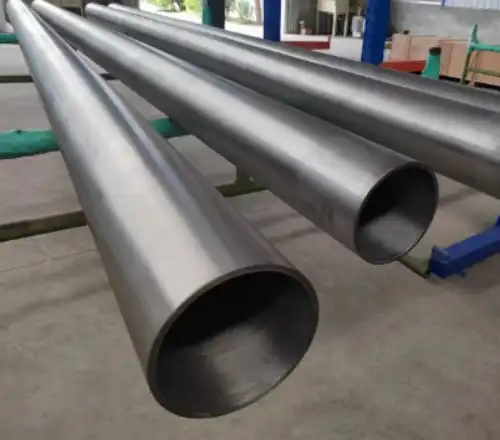
Understanding Custom Titanium Tubing: Key Insights for Buyers
Why titanium alloy tubes were chosen over other metals is because they meet specific performance requirements that regular metals can't. Custom production, unlike off-the-shelf inventory, solves problems with dimensional compatibility, making it possible for parts to fit into complicated systems even when ASTM standard sizes don't work. At its core, this includes making tubes to order that have exact lengths, outer sizes, and wall thicknesses—often within 0.05 mm of the exact measurements.
What Defines Custom Titanium Tubing
Custom Titanium Tubing can be made in both smooth and welded styles, depending on the unique needs of the customer. If you extrude seamless versions from solid billets, they have even strength without weld joints, which makes them perfect for high-pressure aerospace uses like airplane hydraulic lines. For industrial heat exchangers, welded choices made from titanium strip offer better wall thickness concentricity and lower costs. Both types go through a lot of heat treatment to get mechanical qualities that are similar and meet the requirements of ASTM B338, ASTM B861, and AMS 4943. The material has a low density of 4.51 g/cm³, which means it is 45% lighter than steel alternatives. This is a big deal in industries like aircraft and cars, where every gram affects performance and fuel economy. On the other hand, titanium's passive oxide film is very resistant to saltwater, chlorides, and oxidizing acids. This means that it can be used in coastal settings and chemical processing plants for much longer than stainless steel options.
Grade Selection and Material Properties
To pick the right titanium grade, you have to weigh the cost of the project against its mechanical strength, formability, and resistance to the environment. Grade 2, a commercially pure version, is great for shell-and-tube heat exchangers in desalination plants because it is flexible and doesn't rust. In the Cold Worked Stress Relieved (CWSR) state, Grade 9 (Ti-3Al-2.5V), which is often called for in AMS 4943 for hydraulic systems, is 20–50% stronger than widely pure grades while still being able to be cold shaped. The maximum tensile strength of Grade 5 (Ti-6Al-4V) is more than 895 MPa, and it is used for structural aircraft parts. However, it can't be shaped easily, so hot-working processes are needed. Knowing these differences can help you avoid making costly design mistakes. ASTM F67 and ASTM F136 approved materials are used by medical device makers to make hip implants that are biocompatible. Hydrogen sulfide environments in oil and gas projects need to follow NACE MR0175 to avoid sulfide stress cracking. This is a strict requirement that can only be met by specialized sources using controlled chemistry and heat treatment methods.
Technical Parameters That Matter
People who work in procurement have to look at tubes in more ways than just their sizes. Specifications for surface finishes, such as acid-etched matte surfaces (great for anodizing) or centerless-ground, precise finishes, have a direct effect on the manufacturing processes that come after. When used in hydraulics, internal surface grinding makes sure that fluid flows smoothly by reducing noise and pressure losses. Wall thickness changes in butted tubing—where the thickness changes along the length of the tube—allow weight efficiency in sports equipment and bike frames that isn't possible with standard round stock. To regularly meet these standards, LINHUI TITANIUM's 30 specialized production lines use cutting-edge cold drawing, rotary forging, and laser welding methods. Our process controls make sure that every production batch's tensile strength, yield strength, and stretch qualities meet ASTM standards. This is shown by X-ray fluorescence spectroscopy, which is a form of Positive Material Identification (PMI).
Comparing Titanium Tubing with Alternative Metals: Making an Informed Choice
When people talk about choosing materials, they often compare the original prices of buying them to their long-term value. Even though stainless steel and aluminum cost Custom Titanium Tubing less up front, they often have secret upkeep and replacement costs that eat away at any savings that might have been made over decades of use.
Performance Metrics Across Materials
A common standard for corrosive settings is stainless steel 316L. This steel works well in mild chloride exposures, but pitting and crevice rust happen in ocean and high-salinity conditions. Titanium tubes completely get rid of these ways that things can go wrong, so the passive film stays intact even in strong brine solutions. This means that the walls can be smaller while still holding the same amount of pressure. Compared to copper-nickel metals, this makes heat transfer more efficient in condensers by 15 to 20%. Aluminum alloys are similar to titanium in that they are dense, but they are not as strong or resistant to rust. Titanium is used by aerospace engineers for engine tubes and landing gear parts that need to work at temperatures up to 315°C (615°F), which is much higher than the melting point of aluminum. The material's elastic modulus qualities, especially in Grade 9, make it great for pressure lines that are loaded and unloaded many times. This makes them more resistant to wear, which means that parts don't need to be replaced as often. Carbon steel is used for most low-cost tasks, but it needs special coats and cathodic protection systems that make installation harder and require more upkeep over time. When a project lasts longer than 20 years, titanium's history of low upkeep often makes up for the higher original cost by saving money on downtime and replacement costs.
Sector-Specific Value Propositions
Titanium's osseointegration properties—its ability to join directly with bone tissue—are used in the biomedical field to make surgical devices that last instead of just being brief fixes. Medical-grade tubes made to ASTM F67 standards are used in orthopedic applications where the purity of the material and cleanliness of the surface keep biological reactions from going badly. Applications in the energy field show economic gains by being reliable in their operations. Offshore sites that use heat exchangers made of Grade 2 titanium tubes don't need toxic anti-fouling solutions because they don't get biofouling. This helps the environment and cuts down on the number of times they need to be cleaned. Hydrogen holding tanks for new energy systems need materials that can handle high-purity hydrogen at pressures above 10,000 psi. Most ferrous alloys can't handle these conditions without becoming brittle. More and more, automakers are using titanium for battery cooling tubes in electric cars and speeding up vehicles' exhaust systems. The lower weight directly improves the range and driving, and the thermal stability keeps the structure intact at exhaust gas temperatures that would normally oxidize metal parts. These uses show that investments in materials make finished goods more competitive in ways other than just comparing costs.
How to Choose a Trusted Custom Titanium Tubing Supplier: Criteria and Best Practices
Qualifying a supplier is more than just negotiating a price. Verification of manufacturing capabilities, quality systems, and compliance evidence is all part of industrial buying. Regulatory agencies and end clients will look closely at this documentation as the project is carried out.
Mandatory Certifications and Standards Compliance
ISO 9001:2015 approval sets the basic standards for quality management, but sector-specific standards tell the difference between sellers who are capable and partners who are truly qualified. The Pressure Equipment Directive (PED) 2014/68/EU approval shows that the parts meet European safety standards for compressed parts. Approvals from DNV, ABS, Lloyd's Register, Bureau Veritas, and the China Classification Society (CCS) show that marine and offshore standards are being met. LINHUI TITANIUM has a Manufacturing License of Special Equipment from the Chinese government and a TUV Nord AD2000-W0 approval, which shows that they follow German rules for pressure vessels. Third-party inspection agencies like SGS, Moody's, TUV, and RINA have approved our products. These approvals speed up project approvals and get rid of qualification delays when sending materials to customers for acceptance. Protocols for material tracking are another important point of proof. When something is certified under EN 10204 3.1, it comes with written test results from the maker. These results include chemical composition analysis, mechanical property testing, and heat treatment records that can be linked to specific production runs. This paper record is very helpful for finding out what went wrong and filing warranty claims. It also keeps buying teams from being held responsible.
Manufacturing Capabilities and Capacity
The production sites of suppliers have a direct effect on the project's viability. Specialized tooling, tools, and forming machines are needed to make custom tube designs with oval, rectangular, or tapered shapes. Lead times for non-standard forms range from 4 to 8 weeks, depending on how complicated they are. For repeat orders, sources with established tooling libraries are useful. There are 30 specialized production lines in our two factories that can work with Grades 1–23 titanium metals. This scale can handle both small amounts for prototypes and large production runs without affecting delivery times. Our controlled-environment processing helps aerospace projects meet the requirements of AMS 4928 and MIL-T-9047, and for medical device orders, we use ultra-clean handling procedures that meet ASTM F136 cleanliness standards for implantable materials.
Logistics and After-Sales Support
For global projects to be completed, providers must be able to handle international freight, customs paperwork, and hazmat certifications for both sea and air transfer. Anti-oxidation packing methods, like vacuum wrapping with desiccant materials, keep the surface finish of titanium safe during long shipping times. FOB and CIF shipping terms make prices clear and make it clear who is responsible for making freight plans and insurance coverage. Value-added services set key partners Custom Titanium Tubing apart from competent providers. Cutting precisely to the lengths needed for the job cuts down on the work that needs to be done on-site. Secondary activities, such as bending, end-forming, and surface finishing, make the production process run more smoothly. Technical consulting services help engineering teams set the best standards possible before they commit to making the tools for production. This keeps the project from having to go through expensive redesigns later on.
Navigating the Procurement Process: Where and How to Buy Custom Titanium Tubing
Sourcing strategies that work well balance how carefully suppliers are evaluated with the time constraints of the buying process. Knowing where to look and what questions to ask speeds up the screening process and lowers the risk.
Sourcing Channels and Supplier Discovery
B2B platforms and industry directories show suppliers at first, but the level of verification decides how reliable they really are. Checking references from past clients in the same or a similar industry can show performance trends that marketing materials can't. Site visits to production sites let you see for yourself how well the quality control systems work, how well the equipment is maintained, and how knowledgeable the workers are—things that you can't see just by talking to someone from far away. Trade shows and industry gatherings make it possible to talk to expert representatives in person, who can address the finer points of specifications. These conversations often show skill gaps early on, which saves months of discussion trying to fit sources who aren't right for the job into projects they can't support. LINHUI TITANIUM is a regular participant in international aerospace and energy shows, which gives buyers direct access to our research teams and sample supplies.
Pricing Dynamics and Negotiation Strategies
Titanium raw material costs change based on how much can be made of sponge around the world and how much demand there is in the aircraft business. Knowing these factors that affect the market can help you tell the difference between fair prices and unjustified fees. People who commit to buying in bulk can often get better prices, but the minimum order amounts need to be right for the project's usage rates and the cost of keeping inventory on hand. Quotes that clearly break down the prices of materials, processing, tools, and shipping into different items. This makes it possible to compare costs between sources in a useful way and find chances for changing specifications in a way that lowers costs without lowering performance. Asking for specific breakdowns shows that you are good at procurement, which makes sellers more likely to offer you the best terms right away.
Due Diligence and Risk Mitigation
Before making full commitments, sample review procedures make sure that suppliers can do what they say they can do. By asking for material test records (MTRs) and dimensional inspection reports for samples, stated specs can be checked by a third party. Third-party lab testing makes sure that the chemical composition and mechanical qualities match what the seller says they are. This keeps substitute materials from being below standard. The payment terms and guarantee terms make sure that everyone is responsible for their share of the risk. Progressive payment plans that are tied to production goals protect buyers from losing money on payments they made early if providers don't deliver. When goods don't meet specs, warranties that cover things like dimensional tolerances, surface flaws, and material property deviations give customers a way to get their money back. Clear conflict settlement procedures, such as guidelines for third-party inspections, keep differences from getting worse and causing project delays.
Building Long-Term Partnerships: Why Trust Matters in the Custom Titanium Tubing Business
Building relationships with suppliers based on regular performance and open communication gives businesses benefits that go beyond individual transactions. Excellence in procurement comes from relationships where suppliers take the time to understand how clients use their products and offer ways to make them better.
The Strategic Value of Supplier Partnerships
Working together with the same Custom Titanium Tubing sources over and over again lets them predict what projects will need and keep a collection of grades and sizes that are often asked for. Because they are prompt, wait times for urgent orders are cut down, and emergency surcharge premiums are also lowered. When suppliers know how their clients' quality systems work, they can make it easier to prepare paperwork, which speeds up the processes of getting materials and inspecting them. LINHUI TITANIUM has been in business for 21 years and has built long-term partnerships with big energy companies and EPC contractors in several countries. Our work on projects with CEFC, PTT, PDVSA, and PETROECUADOR shows that we can meet a wide range of technical needs while also adapting to local rules and regulations. As the project's needs changed, these partnerships grew because of consistent high-quality delivery, quick technical support, and the ability to adapt to new requirements that put rigid supplier relationships to the test.
Case Studies in Collaborative Success
Just recently, an aircraft project needed Grade 9 hydraulic tubes that had to be bent to specific shapes and sizes for 200 different part numbers. Our engineering team used finite element analysis to make sure that the bend radii were compatible with the fatigue life standards. They then suggested changes to the specifications that made the product easier to make without lowering its performance. This proactive working together cut the cost of tools by 30% while still meeting the customer's tight delivery deadline. Titanium's lifecycle value is shown by offshore platform applications that decrease the need for upkeep. We provided heat exchanger tubes to a project in the Gulf region in 2015, and they are still working without descaling or replacement, which is a lot longer than the usual 5-year service life of copper-nickel alternatives in the same conditions. This record of success backs up our expert advice to procurement teams that are looking at different materials for new projects.
Engagement Strategies for Building Trust
During the first interactions with suppliers, the focus should be on confirming their abilities rather than making instant buy commitments. By asking for expert consultations to look over the project specs, problems can be found before the official quotation process starts. Sample review programs let you test materials in real life and show that the provider is willing to put time and money into building relationships. Being open about problems with the project and limited funds lets providers come up with creative solutions that strict adherence to the specifications might miss. We urge our clients to share application details that help us choose the best manufacturing process. This is called an "information partnership" instead of a "transactional exchange." This way of working together has led to process improvements that have helped whole industries, not just one job at a time.
Conclusion
When choosing a titanium tube provider, you have to weigh the supplier's technical skills, quality certifications, and operating dependability against the deadlines and budgets for your project. The special features of the material make it suitable for use in aircraft, medicine, energy, and other industries where regular metals can't provide the same level of performance. LINHUI TITANIUM has a wide range of licenses, a track record of working with global players in the industry, and a large manufacturing scale that allows us to help with projects from developing prototypes to producing large quantities. Our dedication to open communication and expert teamwork makes sure that procurement workers get the help they need to complete projects successfully, while also forming connections that can be used on multiple projects.
FAQ
1. Why Choose Custom Titanium Tubing Over Stainless Steel?
It is better for titanium tubes to be resistant to corrosion in chloride and salty conditions than for stainless steel, which can pit and crack. Because the material is 45% lighter than steel, it can be used in aircraft and automobile uses that need strength without adding extra weight. Titanium is the only material that can be used for lasting medical implants because it is biocompatible. Even though it costs more up front than stainless steel, the long service life and lack of upkeep make it worth the investment in challenging situations.
2. How Can I Verify Supplier Certifications and Quality?
Ask for copies of the ISO 9001, PED, and classification society certificates and use records maintained by the granting bodies to make sure they are real. Material test records (MTRs) for sample orders should include testing for chemical composition and mechanical properties that can be linked to production runs. Apologies from SGS, DNV, or Bureau Veritas as a third-party inspection body show that the product meets foreign standards. Site audits let you see how well quality control methods work and how well production can be done.
3. What Are Typical Lead Times for Bulk Custom Orders?
It usually takes between 4 and 6 weeks from the time an order is confirmed until it is shipped for standard grade tubes in popular sizes. Depending on how complicated the die is, custom shapes that need special tools can add 6 to 10 weeks to the lead time. For sales over 10 tons, it might take 8 to 12 weeks to figure out how to get the raw materials and plan the production schedule. If you need something quickly, suppliers who keep common specs in stock can usually do that, but you'll usually have to pay more.
Partner with LINHUI TITANIUM for Reliable Custom Titanium Tubing Supply
To achieve success in procurement, you need providers with technical know-how, large production capacities, and the ability to handle logistics around the world. With 21 years of experience, LINHUI TITANIUM is a well-known company that makes titanium tubing. They help the aerospace, medical, energy, and automobile industries by offering a wide range of material types, strict quality control systems, and helpful customer service. Our 30 specialized production lines and two factories give you the power and freedom your projects need. Email our team at linhui@lhtitanium.com to talk about your needs, ask for Custom Titanium Tubing material approvals, or set up a review of a sample. We're dedicated to helping you reach your buying goals by being open and honest with you and delivering on time.
References
1. American Society for Testing and Materials. "ASTM B338: Standard Specification for Seamless and Welded Titanium and Titanium Alloy Tubes for Condensers and Heat Exchangers." ASTM International, 2021.
2. Boyer, Rodney, Gerhard Welsch, and E.W. Collings. "Materials Properties Handbook: Titanium Alloys." ASM International, 1994.
3. Donachie, Matthew J. "Titanium: A Technical Guide, 2nd Edition." ASM International, 2000.
4. Lutjering, Gerd, and James C. Williams. "Engineering Materials and Processes: Titanium, 2nd Edition." Springer-Verlag Berlin Heidelberg, 2007.
5. National Association of Corrosion Engineers. "NACE MR0175/ISO 15156: Petroleum and Natural Gas Industries—Materials for Use in H2S-Containing Environments in Oil and Gas Production." NACE International, 2015.
6. Schutz, R.W., and D.E. Thomas. "Corrosion of Titanium and Titanium Alloys." ASM Handbook Volume 13B: Corrosion—Materials. ASM International, 2005.