
More and more, procurement professionals are turning to lightweight titanium rod manufacturers who make high-performance parts that can survive the constant corrosive forces of seawater environments when they need to choose materials for important marine uses. Marine equipment needs materials that are very strong for their weight and can keep their shape in harsh conditions. Titanium rods have become the answer for shipbuilders, operators of offshore platforms, and designers of maritime equipment who want long-lasting and reliable products. This detailed guide talks about the unique benefits of titanium rods for marine applications, contrasts them with other materials, looks at how they are made, and gives useful selection criteria to help B2B buyers make smart sourcing choices that improve equipment performance and operational budgets.
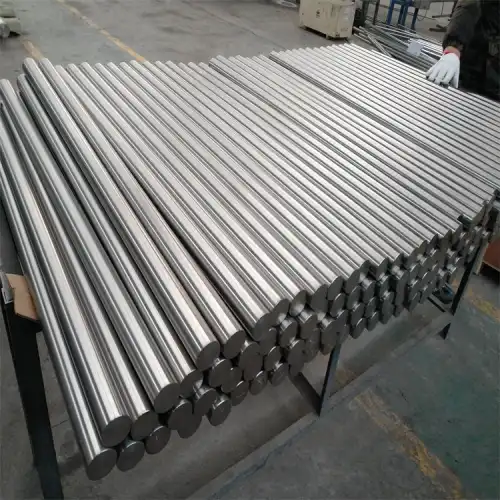
Understanding Lightweight Titanium Rods for Marine Equipment
Marine-grade titanium bars are made of special technical materials that set them apart by being very resistant to corrosion and very strong. These parts are used in a lot of places where traditional metals break down quickly, like underwater power systems, offshore drilling equipment, desalination plants, and shoreline infrastructure.
Chemical Composition and Grade Specifications
Commercially pure grades (CP Grades 1, 2, and 3) and titanium alloy Grade 5 (Ti-6Al-4V) are the grades of titanium most often used in marine settings. Grade 2 titanium is made up of 99.2% pure titanium and a few trace elements. It has a great mix of resistance to rust and mechanical strength, which is why it is used for so many naval parts. With a tensile strength of up to 895 MPa and excellent corrosion protection, Grade 5 is an alpha-beta metal made up of 6% aluminum and 4% vanadium. Careful choice between these types is needed based on the equipment's load-bearing needs, its exposure conditions, and the way it will be built.
Corrosion Resistance in Saltwater Environments
Titanium works very well in coastal environments because it can create a steady, protective oxide layer when it comes in contact with air and water. If this passive film gets broken, it heals itself on its own, protecting against chloride-induced corrosion that eats away at carbon steel and stainless steel options. The National Association of Corrosion Engineers did research that shows titanium can stay structurally sound in seawater for decades without losing much material. Stainless steel parts, on the other hand, usually need to be replaced every 5 to 10 years, depending on how harsh the environment is.
Mechanical Properties and Performance Parameters
Titanium bars are not only resistant to corrosion, but they also have mechanical properties that make them essential for difficult naval uses. The mass of the material is about 4.5 g/cm³, which is about 45% lighter than steel, but it is just as strong as steel or stronger. This weight advantage directly means that ships will use less fuel, installation will be easier, and support frames will not have to carry as much weight. Depending on the grade, commercially pure titanium has a tensile strength of between 240 and 550 MPa. Grade 5 alloy, on the other hand, has strengths of over 900 MPa, which is as strong as high-strength steels but doesn't rust.
Comparison of Lightweight Titanium Rods with Alternative Materials for Marine Equipment
When buying teams know how titanium bars compare to other materials, they can back up their decisions about which materials to use and guess how much they will cost over time. In terms of performance, longevity, and cost, each option has its own trade-offs.
Titanium Versus Stainless Steel
Because they are easier to find and cost less at first, stainless steel types like 316L have long been the standard for naval gear from lightweight titanium rod manufacturers. However, stainless steel can develop pitting corrosion and fissure corrosion after being exposed to saltwater for a long time, especially in places with little air or limited water flow. These ways of breaking don't happen with titanium bars, so they last three to five times longer than similar stainless steel parts. Titanium rods are more expensive than stainless steel rods of the same size (usually 4-6 times as much), but they often have a lower total cost of ownership because they don't need to be replaced as often and don't cause as much downtime.
Titanium Versus Aluminum Alloys
Marine-grade aluminum metals are lighter than titanium, but they are less resistant to corrosion and don't have as much mechanical strength. To stop galvanic corrosion and general rust in seawater, aluminum parts need protective coatings and cathodic protection systems. This makes them more complicated and increases the amount of upkeep that needs to be done. Marine aluminum alloys usually only have a tensile strength of 280 to 380 MPa, which is much lower than titanium's strength. This means they aren't good for structural parts that are heavily loaded. Professionals in procurement choose aluminum for non-critical uses where frequent repair is still cost-effective, while titanium is saved for parts where dependability is very important.
Titanium Versus Carbon Fiber Composites
Advanced composite materials have great strength-to-weight ratios and don't rust, but they also come with their own set of problems. Anisotropic features mean that the strength of carbon fiber parts changes depending on how the fibers are oriented. This means that engineers have to be very careful to avoid weak surfaces. When the temperature changes, stress builds up where the carbon fiber connection points meet the metal ones because their coefficients of thermal expansion don't match up. Composite application is made even harder by the difficulty of manufacturing and damage checking. Titanium rods are best for uses that need to be reliable and easy to check for quality because they have isotropic features, predictable behavior, and simple quality proof.
How Lightweight Titanium Rods Are Made: Manufacturing Insights
Understanding how things are made helps buying professionals judge the skills of suppliers and predict how quality might vary. Making marine-grade titanium rods requires a lot of different, specialized steps, high-tech tools, and strict quality control.
Raw Material Selection and Melting Processes
The Kroll method is used to get titanium sponge, which is the main raw material used in the making of high-quality titanium rods. To get the right formulas, manufacturers mix titanium sponge with alloying elements and scrap material in very specific amounts. The usual way to melt metals is called vacuum arc remelting (VAR). In VAR, electrodes are heated over and over in vacuum tanks to get rid of impurities and make the chemicals uniform. When used in naval settings, where even small amounts of contamination can weaken corrosion protection, double or triple VAR processes are needed to make sure the required level of purity.
Forging and Hot Working Operations
Titanium that is molten turns into bars that are hot-forged at temperatures between 900°C and 1000°C to improve the mechanical qualities and fine-tune the grain structure. Forging breaks up the cast dendritic structure, making a microstructure that is more regular and better at resisting wear and bending. As more hot rolling processes are done, the cross-sections of the ingots get smaller until they reach middle billet sizes, but the dimensions stay exactly the same. These steps in the thermomechanical processing have a big effect on the traits of the finished rod. If they are not worked enough, they could leave behind coarse grains that make the rod less tough and resistant to rust.
Precision Extrusion and Final Sizing
Hot billets are fed through extrusion dies to make rod shapes with widths ranging from thin wire to big bars over 200 mm in diameter. Temperatures and reduction ratios for extrusion need to be carefully managed to avoid surface flaws and make sure that the mechanical properties of rods of all lengths are the same. During cold drawing, the final dimensions and surface finishes are achieved. This creates rods with tight circle specs and smooth surfaces that can be used for precise machining. Centerless grinding and polishing are used by manufacturers to make sure that the surfaces of important naval parts meet strict quality standards.
Heat Treatment and Quality Verification
Stress relief annealing at controlled temperatures gets rid of any leftover stresses that were created during cold working and improves the balance between strength and flexibility. To get the best mechanical qualities from Grade 5 metal, it goes through solution treating and aging processes. Comprehensive testing procedures check the chemical make-up using spectroscopy, the mechanical qualities using tensile testing, and the resistance to corrosion using standard immersion studies in seawater. Ultrasonic inspection finds internal flaws, and measurement inspection makes sure that the product meets the requirements. Reputable lightweight titanium rod manufacturers keep certificates like ISO 9001:2015, ASTM B348 compliance, and approvals from DNV, ABS, and Lloyd's Register as classification societies.
Choosing the Right Lightweight Titanium Rod Manufacturer for Marine Equipment
Choosing skilled suppliers is an important buying choice that affects the success of the project, the reliability of the equipment, and the costs over its lifetime. There are a number of things that set skilled makers apart from marginal sellers.
Certification and Compliance Requirements
International guidelines and industry-specific certifications must be followed for marine uses. Specifications for buying things should say that companies must have current ISO 9001:2015 quality management certifications that show they have structured process controls. Type approvals from groups like DNV (Det Norske Veritas), ABS (American Bureau of Shipping), CCS (China Classification Society), and BV (Bureau Veritas) show that factories and goods meet strict standards for the marine business. Certification under the Pressure Equipment Directive (PED) is necessary for parts that are used in systems that are under pressure. Manufacturers who work with the oil, gas, and petroleum industries should keep their API (American Petroleum Institute) approvals and show that they have passed third-party inspections from companies like SGS, TÜV, and Lloyd's Register.
Production Capacity and Technical Capabilities
Manufacturers should be judged on how well they can meet project deadlines and number needs while keeping quality standards high. For big marine projects, hundreds of tons of titanium rods need to be supplied on a set timeline that matches up with building goals. Suppliers with wide ranges of goods, like big-box stores for titanium products, make it easier to buy by combining supply lines and making sure that grades are compatible with different project needs. Custom alloy development, non-standard diameter production, and value-added services like precision cutting, heat treating to client specs, and coordinating material testing should all be part of the technical skills.
Geographic Sourcing Considerations
Global production is centered in several regional hubs, each with its own unique benefits. In the US, makers focus on technical innovation, fast prototyping, and integration with the country's defense and aircraft industries. However, prices are usually high because of the high cost of labor and the time and money spent on following regulations. European makers have a lot of experience with process engineering and have good relationships with classification societies. This makes them a good choice for projects that need a lot of paperwork and can be tracked back to the source. China has become the most important place to make things because it has a lot of production capacity, low prices, and rising quality standards. Chinese companies that have been around for a long time, like LINHUI TITANIUM, have built up extensive certification files and decades of experience working on large foreign projects on six continents.
Track Record and Project Experience
A manufacturer's reputation comes from being able to show that they've completed successful marine projects in the past and from having ties with well-known people in the industry. Ask for case studies that go into detail about similar uses, such as specs, volumes, delivery performance, and data on how the product has worked in the long run. Suppliers who work with big national oil companies, foreign EPC contractors, and global shipbuilders have a track record of doing good work and know how to meet high-quality standards. Long-term relationships with companies like PETRONAS, LUKOIL, and PEMEX show that the company consistently meets world-class standards.
Application Case Studies: Lightweight Titanium Rods in Marine Equipment
Looking at how titanium rods are used in the real world gives us useful information about how they work and helps us set reasonable goals for similar situations.
Offshore Platform Seawater Cooling Systems
A big offshore oil platform in the Gulf region had stainless steel pipe parts in its seawater cooling system that kept breaking. These parts needed to be replaced every 18 to 24 months because of pitting and rust. A study by engineers found that salt buildup and oxygen loss in pipe bends were the main causes of failure. The user asked for lightweight titanium rod manufacturers Grade 2 titanium bars to be used to make new parts like pipe sections, valve stems, and fasteners. After being put together, the titanium parts worked for more than twelve years without any rust that could be seen. This meant that they didn't need to be fixed unexpectedly, which would have caused production losses. Even though the original investment in materials was higher, the longer service life cut lifecycle costs by about 60% and got rid of the safety risks that came with pressurized system breakdowns.
Submarine Ballast Tank Components
A military shipbuilder came up with plans for the next generation of submarines with the goal of reducing weight to make them more hydrodynamically efficient and able to carry more cargo. The old carbon steel frames for ballast tanks needed big sealing systems to protect them, which made them heavier and harder to maintain. The design team used Grade 5 titanium bars instead of main structural members, which cut the weight by 45% and made the structure more resistant to corrosion. The titanium structure got rid of the need for coatings and the inspection processes that went with them. This made upkeep easier and extended the time between overhauls. Finite element analysis showed that titanium parts met all structural loading requirements with enough safety margins, even though their smaller cross-sections were possible because the material is so strong for its weight.
Desalination Plant Heat Exchanger Tubes
A big saltwater desalination plant in Southeast Asia asked for Grade 2 titanium rods as the raw material for making heat exchanger tubes that would be exposed to hot, concentrated brine. In the past, systems that used copper-nickel alloys failed within five years because of rust. This meant that expensive tubes had to be replaced and production had to stop during outages. After eight years of constant use in harsh conditions, the titanium tubes showed no signs of rusting, proving that the choice of material was the right one. Plant managers said that the titanium investment paid off in four years because it made the system more reliable and got rid of the need for regular upkeep. The tubes are expected to last longer than thirty years.
Conclusion
Lightweight titanium rod manufacturers are very important for keeping naval equipment reliable and running smoothly. The material's high resistance to corrosion, high strength-to-weight ratio, and long service life make it worth the higher price for important uses where failure would have serious effects. Procurement professionals should look at possible sellers' qualification portfolios, past project experience, technical skills, and how well their output capacity matches the needs of the project. Understanding how things are made and the properties of materials lets you make smart design choices that improve performance and lifetime costs. It was shown in the case studies that properly designed titanium parts improve reliability and lower total costs in a wide range of marine uses.
FAQ
How does titanium compare to marine-grade stainless steel in corrosion resistance?
When exposed to saltwater, titanium is much more resistant to rust than stainless steel types like 316L. The inactive titanium oxide film stays steady over a wide range of pH levels and chloride concentrations. This keeps stainless steel from corroding in places like pits and cracks. Studies in the field show that titanium can be used for more than 30 years in saltwater without any measurable rust, while similar stainless steel parts usually need to be replaced every 5 to 10 years. This difference in performance is especially clear in warm ocean, low-flow situations, and oxygen-poor settings, where stainless steel is attacked more quickly.
What typical lead times should procurement teams expect for custom marine-grade titanium rod orders?
Titanium rods with a standard thickness and popular grades usually ship within 4 to 6 weeks from well-known manufacturers who keep stock. For non-standard diameters, special metal compositions, or odd lengths, manufacturing campaigns are needed. Depending on production plans and order quantities, these can take 10 to 16 weeks. Planning is helpful for large orders that support big marine building projects. Buying things should start 6 to 9 months before the delivery dates needed to make sure there is enough time for production schedule and quality checks.
Which certifications indicate a qualified lightweight titanium rod manufacturer for marine applications?
Important certificates include quality management systems that meet ISO 9001:2015 standards, materials that meet ASTM B348 standards, and approvals from a classification society like DNV, ABS, Lloyd's Register, BV, or CCS, based on the project's location. API licenses show skill in the petrochemical business, while PED certification is for pressure tools. Acceptance of a third-party inspection report from SGS, TÜV, Moody's, or a similar agency shows that the company is honest and confident in its quality. Manufacturing permits for specialized tools and environmental management certifications (ISO 14001) are two more ways to make sure that processes are managed in a systematic way.
Partner with LINHUI TITANIUM for Marine-Grade Solutions
When choosing lightweight titanium rod manufacturers, you need to carefully look at their professional skills, quality systems, and project experience. Since 2000, LINHUI TITANIUM has delivered hundreds of thousands of tons of titanium to more than 60 countries in North America, the Gulf region, Southeast Asia, and other places. Its main customers are in the marine, offshore energy, and shipbuilding industries. Our wide range of certifications includes PED 2014/68/EU, ISO 9001:2015, DNV, ABS, CCS, BV, Lloyd's Register, and approval from major third-party inspection agencies. This ensures that we meet the strict standards of the marine industry. As one of the biggest suppliers of titanium goods, we keep a large stock of many grades, so we can quickly meet both standard and unique requirements. We can help important naval projects because we have long-term relationships with PETRONAS, LUKOIL, PEMEX, and other world-class companies. You can email our technical team at linhui@lhtitanium.com to talk about your specific needs, ask for material certifications, or get cheap quotes for your future marine equipment projects.
References
1. Davis, J.R. (2003). "Corrosion of Titanium and Titanium Alloys." ASM International Handbook Committee, Materials Park, Ohio.
2. Schutz, R.W. and Watkins, H.B. (1998). "Recent Developments in Titanium Alloy Application in the Energy Industry." Materials Science and Engineering A, Volume 243, Issues 1-2.
3. Boyer, R., Welsch, G., and Collings, E.W. (1994). "Materials Properties Handbook: Titanium Alloys." ASM International, Materials Park, Ohio.
4. International Titanium Association (2015). "Titanium for Marine Applications: Design Guidelines and Performance Data." ITA Technical Reference Manual.
5. Sedriks, A.J. (1996). "Corrosion of Stainless Steels, Second Edition." John Wiley & Sons, New York, comparative analysis chapter.
6. Matthew, J. Donachie (2000). "Titanium: A Technical Guide, 2nd Edition." ASM International, Processing and fabrication methodologies section.









