
When selecting materials for mission-critical industrial applications, understanding the mechanical behaviour of 6Al4V titanium sheet becomes paramount. This Grade 5 titanium alloy delivers a remarkable combination of tensile strength (minimum 895 MPa), yield strength (828 MPa), and corrosion immunity that has made it the gold standard across aerospace, oil and gas, and biomedical sectors. Its ability to maintain structural integrity under extreme thermal cycling and aggressive chemical exposure directly impacts operational uptime and safety compliance. Procurement managers and engineers require detailed technical insight into these properties to optimise material selection, ensure regulatory conformity, and achieve long-term cost efficiency within their supply chains.
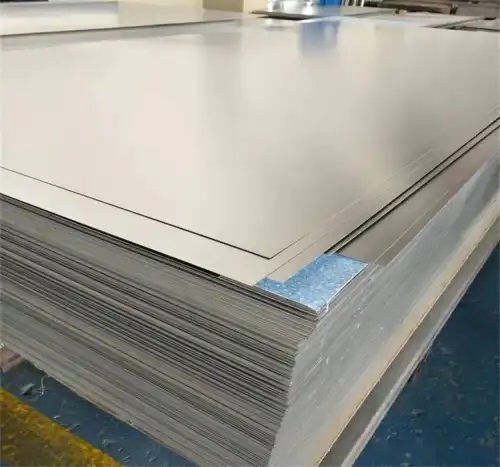
Understanding the Composition and Basic Properties of 6Al4V Titanium Sheet
The 6Al4V titanium sheet—widely recognised as Grade 5 or Ti-6Al-4V—represents the most extensively utilised titanium alloy worldwide. Its chemical composition consists of approximately 90% titanium, 6% aluminium, and 4% vanadium, with tightly controlled impurity limits on iron (0.40% max), oxygen (0.20% max), carbon (0.08% max), and nitrogen (0.05% max). These precise compositional controls prevent embrittlement and ensure predictable performance.
Adherence to International Standards
When making premium 6Al4V titanium sheets, strict worldwide standards must be followed. ASTM B265 sets the rules for industry and chemical processing uses, while AMS 4911 is more strict when it comes to aerospace needs. European makers follow EN 2.4.6 rules, and biomedical uses need Extra Low Interstitial (ELI) variants to be compliant with ISO 5832-3. LINHUI TITANIUM has many certifications, such as PED 2014/68/EU, TUV Nord AD2000-W0, and classification society approvals from DNV, ABS, CCS, BV, GL, and Lloyd's Register. This gives global procurement teams full traceability and legal compliance.
Intrinsic Physical Characteristics
This alpha-beta alloy has a density of 4.43 g/cm³, which is about 40% lighter than steel. It has exceptional strength-to-weight ratios that are important for aircraft fuselages and offshore platform parts. The beta transus temperature, which is between 980°C and 995°C, sets the temperature range for thermal processing. With an elastic value of 113.8 GPa, ELI-grade 6Al4V titanium sheet is very similar to human bone. This makes it perfect for orthopaedic implants that need to reduce stress. When exposed to air, the material creates a passive oxide layer (TiO₂) that protects it from saltwater, chlorides, and most industrial chemicals without the need for protective coats. This natural resistance to corrosion lasts decades longer than 304 stainless steel in marine environments, which lowers the costs of upkeep over the life of a ship or piece of subsea equipment.
In-Depth Analysis of Key Mechanical Properties for Industrial Applications
The mechanical performance metrics of a 6Al4V titanium sheet determine its suitability for structural loading scenarios encountered in energy, defence, and automotive sectors. Understanding how these properties respond to heat treatment and operational stresses enables engineers to predict component behaviour under service conditions.
Tensile and Yield Strength
An annealed 6Al4V titanium sheet typically achieves an ultimate tensile strength (UTS) of 895-930 MPa with a yield strength of 828-860 MPa. Solution-treated and aged (STA) processing can elevate these values by 15-20%, reaching UTS levels approaching 1100 MPa for applications requiring maximum load-bearing capacity. This strength retention extends up to 400°C, far exceeding aluminium alloys that soften above 150°C. Aerospace bulkheads and gas turbine casings exploit this elevated temperature capability.
Ductility and Elongation
Minimum elongation of 10% in a 2-inch gauge length ensures adequate formability for complex geometries. Superplastic forming operations conducted at elevated temperatures enable the creation of intricate airframe components without fracture, reducing assembly complexity and weight. Procurement specifications should verify elongation values, as excessive oxygen content from substandard manufacturing reduces ductility and increases crack susceptibility during forming.
Hardness and Fatigue Resistance
Rockwell hardness typically ranges between 30-34 HRC, providing excellent wear resistance for valve components and fasteners in chemical processing equipment. High cycle fatigue strength of approximately 510 MPa at 10⁷ cycles makes 6Al4V titanium sheet suitable for landing gear and connecting rods subjected to repetitive loading. The material's resistance to notch sensitivity prevents premature failure initiation at stress concentrations.
Impact Toughness
Charpy V-notch impact values of 20–30 J at room temperature make sure that the material doesn't break easily when it's hit with shocks. This quality is very important for ballistic armour, which saves people and things by absorbing kinetic energy without breaking down completely. Defence companies ask for ELI variants with less interstitial content so that the materials are as tough as possible at very low temperatures. The past of heat treatment has a big effect on these properties. Material that has been annealed is the most flexible, while processes that age it make it stronger by sacrificing some of its flexibility. LINHUI TITANIUM gives full mill test records (MTR) that are certified by EN 10204 3.1. These reports show the mechanical test results that can be linked to specific heat lots, which helps procurement teams make sure that performance is consistent.
Comparative Insights: 6Al4V Titanium Sheet vs Other Materials
B2B procurement decisions often involve evaluating a 6Al4V titanium sheet against alternative materials to optimise performance and cost. Understanding comparative advantages clarifies when titanium justifies its premium pricing.
Comparison with 304 Stainless Steel
While 304 stainless steel costs approximately 60% less, it suffers from chloride-induced stress corrosion cracking in marine and chemical environments. The 6Al4V titanium sheet's immunity to this failure mode eliminates unexpected shutdowns in offshore oil platforms and desalination plants. Weight savings of 40% reduce structural loads in shipbuilding, enabling increased payload capacity or fuel efficiency. The tensile strength of grade 5 titanium exceeds 304 stainless steel by 50%, allowing thinner sections that maintain equivalent load capacity.
Evaluation Against Other Titanium Grades
Pure titanium grades (1-4) offer superior corrosion resistance but lack the strength required for structural applications. The 6Al4V titanium sheet delivers four times the strength of Grade 2 while retaining excellent corrosion properties. Comparisons with 3Al2.5V (Grade 9) show that Grade 5 provides 30% higher strength, justifying its selection for aerospace primary structures despite Grade 9's lower cost. Ti-6Al-4V ELI variants reduce oxygen and iron content below standard Grade 5, enhancing ductility and fracture toughness for cryogenic rocket fuel tanks and medical implants.
Material Form Considerations
Different types of products have different mechanical features. Plates thicker than 25 mm may be less flexible because they cool more slowly during processing. Bars have isotropic properties that make them good for made parts, while sheets have directionality properties that make them good for roll-formed parts. LinHui Titanium makes 6Al4V titanium sheets with thicknesses ranging from 0.5 mm to 100 mm and widths up to 2000mm. This allows for a wide range of uses, from making thin heat exchanges to heavy structural plates. Knowing the differences between these types helps buying teams choose the best grade and form factor for the job while staying within the budget. LINHUI TITANIUM's technical support team helps engineers choose the right material based on the service area, loading conditions, and the way it will be made.
Procurement Considerations: How to Choose and Buy 6Al4V Titanium Sheets
Sourcing premium 6Al4V titanium sheet requires evaluating supplier capabilities beyond price quotations. Quality consistency, certification authenticity, and supply chain reliability directly impact project timelines and operational performance.
Critical Quality Benchmarks
Dimensional tolerances must meet ASTM B265 standards. For hot-rolled goods, these are usually ±0.25mm for thickness and ±6mm for width. The limits for cold-rolled sheets are ±0.10mm, which is much tighter. Depending on the need for the purpose, the surface finish can be anything from a mill finish (as-rolled) to polished or pickled. Ultrasonic inspection finds internal breaks, and chemical analysis shows that the composition is correct. Traceability protocols are necessary for businesses that need to keep track of the history of materials. LINHUI TITANIUM uses laser-etched heat lot identification on every sheet, which makes it possible to track everything from the suppliers of the raw materials to the final tests. This system meets the batch tracking needs of the nuclear, military, and pharmaceutical industries.
Certification and Testing Requirements
Third-party inspection by agencies such as DNV, BV, SGS, TUV, and Lloyd's Register validates material properties independently. EN 10204 3.1 certificates document test results performed by the manufacturer under independent supervision. Aerospace applications may require AMS 4911 compliance with additional microstructure examination to prevent alpha-case defects that reduce fatigue life. Biomedical procurement demands ISO 5832-3 certification confirming biocompatibility through cytotoxicity and sensitisation testing. LINHUI TITANIUM maintains dedicated production lines for medical-grade material, preventing cross-contamination with industrial alloys.
Pricing Dynamics and Value Considerations
The price of a 6Al4V titanium sheet on the market changes based on the cost of raw materials, the price of energy, and the demand from aerospace makers around the world. When you buy more than 5 metric tonnes, you can usually get savings of 8–15%. Standard sizes take 15 to 30 days to get from LINHUI TITANIUM's Xi'an plant, while custom sizes take 45 to 60 days to schedule for production. Value-added services have a big effect on the total cost of ownership. CNC cutting, drilling, and finishing the edges of parts lower the costs of making them later on. Getting technical advice on choosing the right heat treatment and forming settings can help you avoid making mistakes that cost a lot of money. After-sales help, such as checking the material's properties and figuring out why it failed, shows that the company cares about its customers' success.
Supply chain disruption risks can be reduced by choosing providers that have been around for a while and have a good track record. Since it began in 2000, LINHUI TITANIUM has sent more than 100,000 tonnes to big energy companies like CEFC, PTT, PDVSA, KOC, PETRO VIETNAM, and PETRONAS. These long-term relationships show that quality and delivery performance are always the same in more than 60 countries.
Practical Applications and Benefits of 6Al4V Titanium Sheet in Industry
The versatility of 6Al4V titanium sheet across demanding sectors stems from its unique combination of mechanical properties, environmental resistance, and processing flexibility. Understanding sector-specific applications clarifies the material's value proposition for OEMs and project contractors.
Aerospace and Defense Applications
Aircraft makers use a 6Al4V titanium sheet for the skins of the fuselage, the bulkheads, the firewalls, and the structures of the wings. Reducing weight directly affects how much fuel an aeroplane uses and how much it can carry. Boeing and Airbus specs say that materials must meet AMS 4911 standards to ensure they can handle high-cycle fatigue from repeated pressurisation cycles and temperature changes from the ground to the stratosphere. Landing gear parts use the alloy's ability to keep its strength even when they are hit hard during multiple takeoffs and landings. Ballistic armour plating for people carriers and aircraft is one military application. The high hardness of the material deflects projectiles while keeping the aircraft mobile by reducing weight. Rocket motor cases for missiles use high strength-to-weight ratios and thermal stability up to 400°C.
Oil, Gas, and Chemical Processing
Offshore platforms and subsea tools have to work in harsh environments with both saltwater and high-pressure hydrocarbons. The 6Al4V titanium sheet doesn't rust or react with hydrogen sulphide, which breaks down stainless steel heat exchangers and pipe systems very quickly. LINHUI TITANIUM provides materials to big projects in the Gulf states, the CIS, and oil fields in South America. Longer service lives cut down on maintenance shutdowns that cost operators millions of dollars every day. Titanium is chemically compatible with a wide range of substances, making it useful for making equipment that works with chlorine solvents, acids, and oxidising media. Grade 5 sheets are used to make reactor vessels, distillation columns, and storage tanks. These sheets eliminate the chance of contamination and provide structural strength for pressure containment.
Biomedical and Medical Device Manufacturing
The ELI variant of 6Al4V titanium sheet meets stringent biocompatibility requirements for implantable devices. Orthopaedic plates, spinal fusion cages, and dental implants exploit the material's modulus match to bone, reducing stress shielding that causes adjacent bone resorption. ISO 5832-3 certification ensures material purity and prevents inflammatory responses. LINHUI TITANIUM's medical-grade production maintains traceability to individual patient implants, supporting post-market surveillance requirements.
Marine and Shipbuilding
A 6Al-4V titanium sheet is used in propeller shafts, hull plating, and exhaust systems on commercial ships, luxury yachts, and naval ships that are subject to saltwater spray. The resistance of the material to pitting and biofouling lowers aerodynamic drag and the number of times it needs to be maintained. Pressure tanks on submarines are stronger than they are heavy, which lets them dive deeper. Material's suitability for marine environments is proven by certificates from classification societies like ABS, DNV, Lloyd's, and CCS. Despite its high price, these different uses show why procurement workers in the energy, aerospace, medical, and marine sectors choose Grade 5 titanium over other grades. Total cost of ownership benefits are strong when performance reliability, longer service life, and less upkeep are all combined.
Conclusion
Selecting a 6Al4V titanium sheet for industrial applications requires a comprehensive understanding of mechanical properties, comparative advantages, and supplier capabilities. The material's exceptional strength-to-weight ratio, corrosion immunity, and heat resistance deliver measurable performance benefits across aerospace, energy, biomedical, and marine sectors. Procurement success depends on partnering with certified manufacturers offering complete traceability, rigorous testing, and technical support throughout the supply chain. LINHUI TITANIUM's two-decade track record supplying major multinational corporations and EPC contractors demonstrates consistent quality and reliability essential for mission-critical applications.
FAQ
What heat treatment options enhance the mechanical properties of 6Al4V titanium sheet?
The annealed condition provides optimal ductility for forming operations, typically specified for complex geometries. Solution treatment at 955°C followed by ageing at 540°C for 4-8 hours (STA process) increases tensile strength by 15-20% while reducing elongation slightly. This treatment suits applications requiring maximum load-bearing capacity like aerospace fasteners. Mill annealed material remains most common for general industrial use, balancing strength and formability.
How does corrosion resistance compare between titanium and stainless steel?
The 6al4v titanium sheet significantly outperforms 300-series stainless steel in chloride environments, eliminating stress corrosion cracking that causes catastrophic failures in marine equipment. Titanium's passive oxide layer regenerates spontaneously if damaged, while stainless steel requires sufficient oxygen and non-contaminated surfaces. In chemical processing applications involving acids and oxidisers, titanium provides broader compatibility. LINHUI TITANIUM supplies material to subsea installations where 304/316 stainless steel would fail within months.
What lead times should procurement teams expect for large-volume orders?
Standard dimensions from LINHUI TITANIUM's inventory ship within 15-30 days for quantities up to 10 metric tonnes. Custom thicknesses, widths, or surface finishes require 45-60 days of production scheduling. Aerospace-grade material with additional testing and certification may extend timelines by 2-3 weeks. Volume commitments exceeding 50 tonnes annually qualify for consignment inventory programmes that reduce lead times to 7 days. Contact our team at linhui@lhtitanium.com for project-specific scheduling.
Partner with LINHUI TITANIUM for Certified Grade 5 Titanium Sheet Supply
LINHUI TITANIUM delivers aerospace-grade 6Al4V titanium sheet manufactured to ASTM B265, AMS 4911, and ISO 5832-3 standards, backed by comprehensive international certifications including PED, TUV, DNV, ABS, and CCS approvals. As a leading 6Al4V titanium sheet manufacturer headquartered in Xi'an—the Belt and Road Initiative hub—we supply over 60 countries with fully traceable material featuring EN 10204 3.1 mill test reports. Our extensive inventory supports rapid delivery of standard and custom sizes from 0.5 mm to 100 mm thickness, complemented by value-added CNC processing and technical consultation. Procurement teams at major energy companies, including PETRONAS, PEMEX, and LUKOIL, rely on our consistent quality and supply chain stability. Contact our engineering team at linhui@lhtitanium.com to discuss your project requirements and receive competitive quotations for high-performance titanium alloy solutions.
References
1. Boyer, R., Welsch, G., & Collings, E.W. (1994). Materials Properties Handbook: Titanium Alloys. ASM International.
2. Donachie, M.J. (2000). Titanium: A Technical Guide, 2nd Edition. ASM International.
3. Lutjering, G. & Williams, J.C. (2007). Titanium, 2nd Edition. Springer-Verlag Berlin Heidelberg.
4. Peters, M., Kumpfert, J., Ward, C.H., & Leyens, C. (2003). "Titanium Alloys for Aerospace Applications," Advanced Engineering Materials, 5(6), 419-427.
5. Rack, H.J. & Qazi, J.I. (2006). "Titanium alloys for biomedical applications," Materials Science and Engineering C, 26(8), 1269-1277.
6. Schutz, R.W. & Watkins, H.B. (1998). "Recent developments in titanium alloy application in the energy industry," Materials Science and Engineering A, 243(1-2), 305-315.