
Grade 5 titanium and 6Al 4V are often used interchangeably in various industries, leading to confusion among professionals and consumers alike. To address this common question, it's essential to understand that grade 5 titanium is indeed the same as 6Al 4V. This designation refers to a specific titanium alloy composition that consists of 6% aluminum, 4% vanadium, and the balance titanium. This alloy is renowned for its exceptional strength-to-weight ratio, corrosion resistance, and biocompatibility, making it a popular choice in aerospace, medical, and industrial applications. As we delve deeper into the characteristics and uses of grade 5 titanium, we'll explore its unique properties, manufacturing processes, and the reasons behind its widespread adoption across various sectors. Understanding the nuances of this versatile material is crucial for engineers, designers, and decision-makers in industries that rely on high-performance materials.
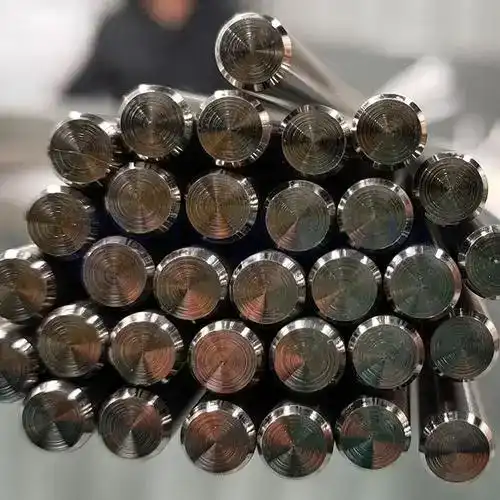
What are the key properties of grade 5 titanium?
Strength and Durability
Grade 5 titanium, or 6Al 4V, is legendary for the amount of strength it has for its weight. This property renders it appropriate for uses where a low weight and high strength are both crucial. The tensile strength of this alloy is between 895 and 1000 MPa, based on how the steel is heated along cooled. Its longevity is even better because it is very impervious to fatigue, which means it can handle cyclic loading without causing significant harm. Topak is a major producer of titanium goods. They use grade 5 titanium in a range of airplane components because it is stronger than other grades. The alloy's ability to keep its mechanical properties at high temperatures also makes it popular for high-performance uses, like components for jet engines and planes.
Corrosion Resistance
One thing that truly makes grade 5 titanium remarkable is how well it resists rust. When the alloy is exposed to oxygen, it makes a stable, protective oxide layer on its surface, which protects it safe in a variety of corrosive settings. Because of this characteristic, it is particularly useful in marine uses, chemical processing equipment, and medical implants. Topak's grade 5 titanium products have been extensively utilized in offshore oil and gas platforms, where their capacity to avert corrosion from saltwater is essential. Because the metal can withstand harsh chemicals and bodily fluids, it is also widely utilized for surgical tools and medical devices that are put deep within the body. Its rust resistance keeps things from running out and helps keep crucial components secure and dependable in tough environments.
Biocompatibility
The titanium grade 5 is utilized extensively in medicine because it is compatible with tissues that are alive. The alloy can be used in hip and knee replacements, dental implants, and spinal fusion devices since it can interact with human flesh without causing bad reactions. Topak has been a leader in making grade 5 titanium items for medical applications, using its understanding of efficient manufacturing. The alloy's low modulus of elasticity, which is nearer to that of human bone than other metals, implies less stress buffering and better bone integration. Also, because it isn't magnetic, it can be used in MRI equipment, ensuring that patients with titanium implants are able to obtain diagnostic scans.
How is grade 5 titanium manufactured?
Raw Material Preparation
Making grade 5 titanium begins with a careful selection and preparation of the materials that will be used. Vanadium, aluminum, and high-purity titanium sponge are incorporated in precisely how right way to get the 6Al 4V makeup that is wanted. Topak uses the latest technology for analyzing chemicals to make sure that the exact amounts are kept. This is because the alloys' properties can change a lot if there are even minor modifications in the mix. Next, the raw materials are melted in a vacuum or inert gas to keep them clean and make sure that they meet the highest standards of the resulting ingot. The initial stage is very important for the performance and consistency of the final grade 5 titanium goods, so it is a crucial component for quality control.
Melting and Casting
After the raw materials have been received, they are burned and cast on multiple occasions to make the first grade 5 titanium ingots. A popular technique called vacuum arc remelting (VAR) requires melting the alloy in a copper crucible that is cooled by water and under vacuum conditions. This process helps get rid of impurities and makes sure that the whole ingot has the same chemical composition. Topak Manufacturing uses sophisticated VAR machines to make high-quality, small-defect microstructures in grade 5 titanium alloys. It is essential that you carefully solidify the metal during the casting process in order to get the desired mechanical qualities and keep the alloying elements combined within one another. To improve the alloy's structure and properties even more, some makers may use supplementary approaches like electron beam melting or plasma arc melting.
Forming and Heat Treatment
Once the first ingot has been produced, grade 5 titanium can be formed in several different ways to get the proper sizes and forms to suit various uses. Depending on what is required for the final product, a number of these processes may be forging, rolling, or extrusion. Topak's sophisticated factories have precision forming instruments that can make all sorts of grade 5 titanium parts with very tight specifications. After the forming stage, heat treatment is extremely crucial in getting the alloy's microstructure and durability just right. For grade 5 titanium, solution treating and aging (STA) is a popular heat treatment technique. It consists of heating the alloy to an ideal temperature, rapidly cooling it, and then reheating it to a lower temperature for a set amount of time. This process makes the metal more resilient and resilient while keeping its ductility, which is useful, intact.
What are the main applications of grade 5 titanium?
Aerospace Industry
The aerospace company is one of the chief users of grade 5 titanium because it is exceptionally strong but not very heavy, and it performs well at extremely high temperatures. Flight parts, like structural components, engine parts, and fasteners, are made with a lot of this alloy by aircraft manufacturers. Topak sells grade 5 titanium products to significant aerospace manufacturers for things like turbine blades, wing spars, and landing gear assemblies. The material's ability to hold up according to the extreme conditions of flight, such as extreme winds and changing temperatures, makes it an integral component of current airplane design. Also, its ability to prevent corrosion is very useful for keeping essential components safe from the harsh conditions that occur with high altitude and different climates around the world.
Medical Implants and Devices
Grade 5 titanium is great for all sorts of medical implants and equipment because it can be safely used in the human body as well, and it is extremely durable and strong. The strength, light weight, and ability to bond with bone tissue make the metal beneficial in hip and knee replacements and other orthopedic implants. Topak partners with the best designers of medical devices to make high-quality grade 5 titanium parts for these tasks. Another important use for the alloy is in dental implants. The alloy's ability against corrosion and osseointegration properties help make sure that implants last a long time and work efficiently. Surgical tools made from grade 5 titanium can be extremely precisely made and can be repeatedly used on patients who are not infected. Because of this, they are often the best choice for many health care procedures. Because the alloy doesn't have any magnetic qualities, people with titanium devices can safely get MRI scans. This is a vital component in modern healthcare.
Industrial and Chemical Processing
Grade 5 titanium is very durable and not susceptible to corrosion in harsh conditions, so the chemical processing business uses it a lot. Topak supplies titanium grade 5 parts for chemical reactors, heat exchanges, and storage tanks that deal with materials that are corrosive materials. The alloy is very useful in petrochemical manufacturing processes because it can handle very high temperatures and pressures without undergoing modification as well as separation. Grade 5 titanium is used in highly critical parts of reverse osmosis systems in the desalination business. There, its ability to withstand damage from saltwater ensures that the systems stay trustworthy and effective as time passes. The maritime industry also makes use of the alloy in propeller shafts, valve systems, and other parts that are in proximity to seawater, which is helpful to the alloy's properties. Engineers who have to make tools for demanding job sites often choose to use Grade 5 titanium because it can handle a variety of substances and environmental conditions.
Conclusion
In conclusion, grade 5 titanium and 6Al 4V are indeed the same alloy, offering a unique combination of strength, lightweight properties, corrosion resistance, and biocompatibility. This versatile material has found widespread applications across various industries, from aerospace and medical to chemical processing and marine engineering. Its exceptional characteristics make it an invaluable resource for designers and engineers seeking high-performance materials for demanding applications. As technology advances and new challenges emerge, grade 5 titanium continues to play a crucial role in innovation and development across multiple sectors, solidifying its position as one of the most important engineering materials of our time.
FAQ
Q: What is the chemical composition of grade 5 titanium?
A: Grade 5 titanium, also known as 6Al 4V, consists of 6% aluminum, 4% vanadium, and 90% titanium.
Q: Why is grade 5 titanium popular in the aerospace industry?
A: It's popular due to its high strength-to-weight ratio, corrosion resistance, and ability to withstand high temperatures.
Q: Is grade 5 titanium safe for medical implants?
A: Yes, grade 5 titanium is biocompatible and widely used in medical implants due to its non-toxicity and ability to integrate with human tissue.
Q: How does the corrosion resistance of grade 5 titanium compare to other metals?
A: Grade 5 titanium offers superior corrosion resistance compared to many metals, making it ideal for use in aggressive environments.
Q: Can grade 5 titanium be welded?
A: Yes, grade 5 titanium can be welded using various methods, including TIG welding, although special precautions are needed to prevent contamination.
Q: What is the typical tensile strength of grade 5 titanium?
A: The tensile strength of grade 5 titanium typically ranges from 895 to 1000 MPa, depending on the heat treatment process.
Your Trusted Global Partner for Premium Grade 5 Titanium Solutions
LINHUI TITANIUM, founded in 2000 and headquartered in Xi'an, China, is a leading manufacturer and supplier of titanium and titanium alloys. With a commitment to creating value for customers, LINHUI TITANIUM adheres to the development strategy of "supplying high-end products, establishing a world-renowned enterprise." Our extensive product range and global reach have made us one of the largest TITANIUM PRODUCTS SUPERMARKETS, exporting to over 60 countries and regions worldwide. We pride ourselves on our international certifications, including ISO 9001:2015, OHSAS 18001:2007, and ISO 14001:2015, ensuring the highest quality standards for our customers. Our expertise in grade 5 titanium and other alloys makes us the ideal partner for your titanium needs. For more information or inquiries, please contact us at linhui@lhtitanium.com.
References
1. Lutjering, G., & Williams, J. C. (2007). Titanium (2nd ed.). Springer-Verlag Berlin Heidelberg.
2. Donachie, M. J. (2000). Titanium: A Technical Guide (2nd ed.). ASM International.
3. Froes, F. H. (2015). Titanium: Physical Metallurgy, Processing, and Applications. ASM International.
4. Boyer, R., Welsch, G., & Collings, E. W. (1994). Materials Properties Handbook: Titanium Alloys. ASM International.
5. Peters, M., Kumpfert, J., Ward, C. H., & Leyens, C. (2003). Titanium Alloys for Aerospace Applications. Advanced Engineering Materials, 5(6), 419-427.
6. Rack, H. J., & Qazi, J. I. (2006). Titanium alloys for biomedical applications. Materials Science and Engineering: C, 26(8), 1269-1277.