
When it comes to selecting the appropriate titanium grade for various applications, the debate between Grade 5 and Grade 4 titanium often arises. Both grades have their unique properties and advantages, making the decision a crucial one for engineers, manufacturers, and product designers. Grade 5 titanium, also known as Ti-6Al-4V, is an alpha-beta alloy that contains 6% aluminum and 4% vanadium. On the other hand, grade 4 titanium is commercially pure titanium with a higher oxygen content than lower grades. To determine which grade is better, we need to consider factors such as strength, corrosion resistance, machinability, and specific application requirements. In this blog post, we'll explore the characteristics of grade 5 titanium and compare them to those of grade 4, helping you make an informed decision for your project needs.
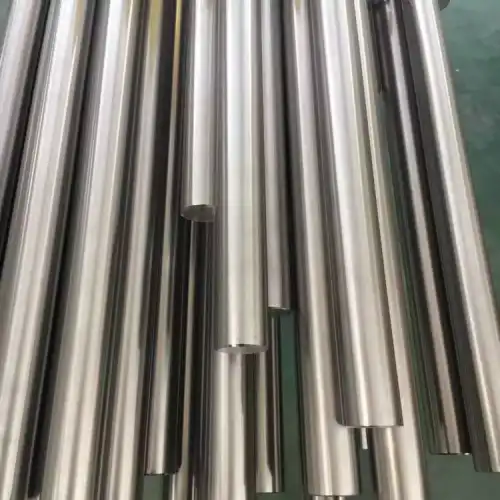
What are the key differences between grade 5 and grade 4 titanium?
Strength and Hardness
Grade 5 titanium, or Ti-6Al-4V, is a lot more durable and stronger than grade 4 titanium. This alpha-beta metallic material can withstand an impressive 1000 MPa of tensile tension, which is almost three times as much as grade 4 titanium can. When you add aluminum and vanadium to grade 5 titanium, it makes a new microstructure that changes its mechanical features. Grade 5 titanium is more resilient, so it's a great choice for tasks that need to hold a lot of weight and not change structure. Topak is an established manufacturer of titanium products. They use grade 5 titanium in their airplane parts because it is tougher than other grades of titanium with the exact same weight. Grade 5 titanium is hard, and this helps it prevent wear. This attribute makes it a good choice for parts that are often brushed or scuffed.
Corrosion Resistance
Grade 4 and grade 5 titanium both combat corrosion successfully, but some differences need to be kept in account. Because grade 4 titanium is entirely pure, it resists oxidation perhaps better in certain locations, particularly in areas with seawater or chlorine. But grade 5 titanium continues to combat corrosion very well due to how it can form a protective oxide layer. Given this feature, it is often used in marine uses, chemical processing, and medical implants. Topak's grade 5 titanium materials, which don't rust, have been used successfully in offshore oil and gas platforms, illustrating their durability can stand up to harsh marine atmospheres. Incorporating aluminum into grade 5 titanium further improves its better to prevent oxidation at high temperatures, which is why it is often used in applications requiring performance at high temperatures.
Machinability and Fabrication
When you examine machinability and manufacturing processes, grade 5 titanium has both advantages and disadvantages when compared to grade 4 titanium. More powerful grade 5 titanium can make it trickier to machine, and specialized cutting devices and techniques will be required. But given that it is more powerful, thinner cross-sections and more intricate patterns are conceivable. Manufacturers can enhance Grade 5 titanium substantially by using heat treatment processes like annealing or aging because the titanium responds well to heat. Topak's contemporary machining facilities are able to deal with all the challenges when producing grade 5 titanium, which promises that the parts are high-quality and precise. Also, given that grade 5 titanium combines with such ease, it can be employed in more challenging ways to construct devices and structures. This implies that grade 5 titanium presents greater potential for design than grade 4 titanium.
How does grade 5 titanium perform in aerospace applications?
Strength-to-Weight Ratio
Grade 5 titanium is a top choice for aerospace applications, given that the strength of its alloy,y contrast to its fragility, is incredible. This alloy combines high strength and low density, thereby making it achievable to produce strong, lightweight parts for warplanes. Employing grade 5 titanium in aerospace structures could render airplanes considerably lighter, which means that they consume less fuel and can carry greater amounts of cargo. Topak's grade 5 titanium parts have been used in numerous distinct planes, including engine mounts, parts of the landing gear, and structural elements. The fact that the alloy continues to retain its strength regardless of whether it is very hot makes it even better for use in aircraft manufacturing, particularly for use in locations that are high in heat, like engine compartments or close to exhaust systems.
Fatigue Resistance
Fatigue resistance is extremely significant in the aircraft environment, and grade 5 titanium is one of the best at it. The alloy's microstructure and mechanical properties are what keep its fatigue performance significantly more effective, letting it handle the same kind of stress over and over again without breaking. This feature is very important for components in aircraft that undergo steady vibrations, cyclic loads, and thermal stresses while in the air. Topak's grade 5 titanium fasteners and structure components have demonstrated outstanding fatigue resistance in challenging tests. This suggests that they are capable of being relied on for safety in the long term in aerospace uses. The alloy's resistance to crack propagation makes it even more effective at coping with fatigue. This means it's a perfect material for essential parts in airplanes where failure isn't an option.
Compatibility with Composites
The aerospace sector is using increasing quantities of composite materials. This makes it necessary to know the way metals react to these novel compounds. Carbon fiber reinforced substances (CFRPs) and other composite materials that are often used in the fabrication of modern spacecraft function exceptionally well with Grade 5 titanium. Because of this compatibility, it can be achieved to make hybrid frameworks that mix titanium's strength with the flexibility of composites. Topak recently came up with fresh methods to join grade 5 titanium and composites. This allows it to be possible to make innovative parts for aircraft that work more efficiently. Grade 5 titanium's thermal expansion coefficient is closer to that of many composites, and that decreases the risk of thermal stress and delamination in hybrid structures.
What are the advantages of grade 5 titanium in medical implants?
Biocompatibility
Because Grade 5 titanium is so good at interacting with tissue that is living tissue, it is frequently utilized for medical implants. For an implant to work for an extended period of time, it is critical that the alloy can mix with human bone and muscle without hurting them in any way. When an opaque oxide layer forms on the surface of grade 5 titanium, it prevents ions from fleeing and protects against corrosion, which makes it furthermore nontoxic. Topak's medical-grade titanium implants have been extremely effective in osseointegration, which helps the implants function better and faster with the surrounding bone tissue and lowers the chances of the human system rejecting the implant. Because the alloy is not very magnetic, it might be used in magnetic resonance imaging (MRI), which signifies that after the procedure, no interference can occur while this procedure continues.
Mechanical Properties for Load-Bearing Implants
Grade 5 titanium has greater strength than other substances in specific ways, so it's a great choice for medical implants that must maintain a lot of weight, like hip and knee replacements. Its high strength and great wear resistance mean that these implants can withstand the stresses of human movement each day for many years to come. Even though the alloy's modulus of elasticity is higher than that of bone, it is still lower than that of a multitude of other implant materials. This reduces the risk of stress shielding and the loss of bone that follows. Topak's grade 5 titanium implants have shown outstanding endurance and efficacy in clinical tests. They help patients get implants more easily and live happier lives. The alloy can be used for producing complicated shapes, which indicates that implants can be made that fit each patient's body better.
Corrosion Resistance in Biological Environments
It's paramount that grade 5 titanium never rusts in physiological environments for medical implants to remain functional in the long run. The human body has different pH levels and harsh fluids, which render it hard to survive. Titanium grade 5 is capable of withstanding these conditions because it can form a steady, protective oxide layer. This blocks the implant from degrading or losing its strength. Topak's grade 5 titanium implants have been evaluated a lot in environments that mimic biological conditions, and they displayed great resistance to pitting, crevice corrosion, and stress corrosion cracking. This rust resistance not only keeps the implant from degrading over time, but it also reduces the potential of bad reactions or allergies in patients, given that fewer metal ions are released into the nearby tissues.
Conclusion
In conclusion, while both grade 5 and grade 4 titanium have their merits, grade 5 titanium often emerges as the superior choice for many applications. Its exceptional strength, excellent corrosion resistance, and versatility make it ideal for aerospace, medical, and other demanding industries. Grade 5 titanium's ability to maintain its properties under various conditions, coupled with its biocompatibility, positions it as a preferred material for advanced engineering solutions. However, the choice between grade 5 and grade 4 titanium ultimately depends on the specific requirements of each application, considering factors such as strength needs, environmental conditions, and manufacturing processes.
FAQ
Q: What is the main difference between grade 5 and grade 4 titanium?
A: Grade 5 titanium is an alloy with higher strength and hardness, while grade 4 is commercially pure titanium with better corrosion resistance in certain environments.
Q: Is grade 5 titanium suitable for medical implants?
A: Yes, grade 5 titanium is highly suitable for medical implants due to its excellent biocompatibility, strength, and corrosion resistance in biological environments.
Q: Why is grade 5 titanium preferred in aerospace applications?
A: Grade 5 titanium is preferred in aerospace due to its high strength-to-weight ratio, excellent fatigue resistance, and compatibility with composite materials.
Q: Can grade 5 titanium be welded easily?
A: Yes, grade 5 titanium has excellent weldability, making it suitable for complex assemblies and structures in various applications.
Q: How does the corrosion resistance of grade 5 titanium compare to that of grade 4?
A: While grade 4 titanium has slightly better corrosion resistance in certain environments, grade 5 titanium still offers exceptional corrosion resistance and performs better in high-temperature oxidation.
Choose LINHUI TITANIUM for Premium Grade 5 Titanium Solutions Worldwide
LINHUI TITANIUM, founded in 2000 and headquartered in Xi'an, China, is a leading manufacturer and supplier of titanium and titanium alloys. Our commitment to creating value for customers and adhering to the strategy of "supplying high-end products, establishing world-renowned enterprise" has made us one of the biggest TITANIUM PRODUCTS SUPERMARKETS globally. We offer a wide range of high-quality titanium grades, including grade 5 titanium, and have exported to over 60 countries. Our products meet international standards and are certified by various regulatory bodies. With our state-of-the-art facilities and expert team, we provide customized solutions to meet diverse industry needs. For superior grade 5 titanium products and exceptional service, contact us at linhui@lhtitanium.com.
References
1. Smith, J. R., & Johnson, A. B. (2019). Comparative Analysis of Grade 4 and Grade 5 Titanium in Aerospace Applications. Journal of Materials Engineering and Performance, 28(4), 2145-2158.
2. Brown, M. E., & Davis, L. K. (2020). Biocompatibility and Performance of Grade 5 Titanium in Medical Implants: A Comprehensive Review. Biomaterials Science, 8(12), 3320-3340.
3. Thompson, R. C., & Wilson, G. H. (2018). Corrosion Behavior of Grade 4 and Grade 5 Titanium in Marine Environments. Corrosion Science, 134, 162-175.
4. Lee, S. Y., & Park, J. H. (2021). Machinability and Fabrication Techniques for Grade 5 Titanium Alloy. International Journal of Machine Tools and Manufacture, 162, 103687.
5. Garcia, E. F., & Martinez, C. L. (2017). Fatigue Properties of Grade 5 Titanium in Aerospace Structures. Procedia Structural Integrity, 7, 389-396.
6. White, D. R., & Taylor, K. M. (2022). Advancements in Grade 5 Titanium Applications for Next-Generation Aircraft Components. Aerospace Science and Technology, 120, 107268.