
Grade 2 and Grade 5 titanium are two common choices that people think about when picking the right titanium grade for different uses. Each grade has its own special features and benefits, so engineers, makers, and designers must carefully choose which one to use. Grade 2 titanium, which is sometimes called commercially pure titanium, is famous for being able to resist rust and being easily shaped into different forms. Grade 5 titanium, a combination of aluminum and vanadium, on the other hand, has better strength and heat protection. The goal of this piece is to go over the features, uses, and advantages of both grades and focus on Grade 2 titanium in order to help you figure out which grade may be better for your needs. We will help you choose the right titanium by giving you information on its qualities, how well it works in different settings, and how much it costs.
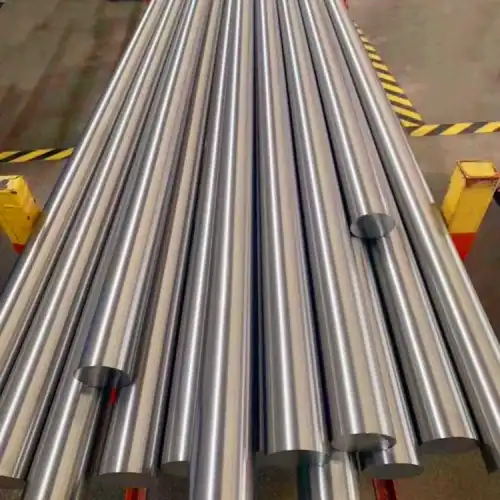
What are the key differences between Grade 2 and Grade 5 titanium?
Chemical composition and alloying elements
Grade 2 titanium, which is sometimes called commercially pure titanium, is made up of almost all titanium and just a tiny bit of other things. This clarity helps it avoid rust and be shaped into different forms. On the other hand, Grade 5 titanium is a combination made of 6% aluminum and 4% vanadium, which makes it much stronger and better able to handle heat. Grade 2 titanium has the right chemicals in it to be great for places where it is very important that the metal doesn't break down, like in the ocean or in chemical processing. Topak, a top maker of titanium goods, gives both types to meet the wants of different industries.
Mechanical properties and strength
When you look at the mechanical qualities of Grade 2 and Grade 5 titanium side by side, you can see big changes. Titanium Grade 2 has a lower yield and tensile strength than Grade 5, but it can be shaped and stretched more easily. Because of this, Grade 2 titanium is a great option for situations that need to have complicated forms or where making processes happen a lot. Grade 5 titanium, on the other hand, has a higher strength-to-weight ratio and better wear resistance. This makes it a good choice for aircraft and car uses where materials have to hold up under a lot of stress. Topak's Grade 2 titanium has good strength and toughness and doesn't rust easily, so many people use it in heat exchangers, desalination plants, and chemical processing equipment.
Cost considerations and availability
Grade 2 titanium is usually cheaper and easier to get than Grade 5 titanium. Grade 2 titanium is a fairly pure grade that is usually more affordable and easier to get than the Grade 2 titanium combination. This makes it a good choice for projects that don't have a lot of money or that need a lot of stuff. But you need to think about how cost-effective each grade will be in the long term, depending on how you plan to use it. Sometimes, the better strength and performance of Grade 5 titanium may make up for its higher first cost. Topak has good prices on both types, so customers can choose the best one for their projects without worrying about quality or cost.
What are the primary applications of Grade 2 titanium?
Marine and offshore industries
Grade 2 titanium is used a lot in the naval and submarine businesses because it doesn't corrode easily in saltwater. People often use it to build desalination plants, oil and gas platforms, and naval power systems. Because it doesn't break down when it's exposed to seawater for a long time, the material is a great choice for things like heat exchanges, pumps, and valves in these tough settings. Topak's Grade 2 titanium goods have been used in a lot of different naval uses, helping clients save money on upkeep and get long-lasting performance.
Chemical processing and industrial applications
Grade 2 titanium is very important in the chemical processing business because it can stand up to a lot of different harsh chemicals and keep its strength in situations with very high or low pH. It is often used to make reaction vessels, holding tanks, and pipe systems that hold harsh chemicals. Because it transfers heat so well, the material can also be used in a range of industrial processes as part of heat exchangers. Topak provides Grade 2 titanium parts to a lot of chemical plants and factories. This helps these important businesses run more efficiently and stay open more of the time.
Medical and biomedical applications
Grade 2 titanium is a great material for many medical and biological uses because it is non-toxic and biocompatible. Many people use it to make medical tools, tooth implants, and replacement devices. Because this material has a low amount of flexibility and is more like human bone than other metals, it lowers the risk of stress protection in hip implants. Also, Grade 2 titanium is great for long-term implants because it can osseointegrate with bone tissue. Topak works with top medical device companies to provide high-quality Grade 2 titanium parts that meet strict rules and standards in the business.
How does Grade 2 titanium compare to other materials in terms of performance?
Corrosion resistance comparison
Grade 2 titanium is better than many other metals, such as stainless steel and aluminum alloys, at resisting rust. Its oxide layer gives it great safety in a wide range of toxic settings, like the ocean, acidic solutions, and places that contain chlorine. This better resistance to rust means longer service life and lower upkeep costs in a lot of situations. Topak's Grade 2 titanium goods have performed very well in tests that measure how well materials hold up when they are exposed to rust. Because of this, they are a popular choice for fields that work with strong chemicals or are in marine settings.
Strength-to-weight ratio analysis
Grade 2 titanium has a great mix of strength and lightness, even though its strength-to-weight ratio isn't the best compared to other materials or titanium alloys. This feature makes it useful in situations where it is important to be lightweight but not in cases where aerospace-grade metals' high strength is not needed. Grade 2 titanium has about the same strength as stainless steel but is much lighter. This makes it a good choice for uses where weight is important. Topak's engineers can help customers figure out if Grade 2 titanium's strength-to-weight ratio will work for their project.
Thermal and electrical conductivity
Grade 2 titanium has worse heat and electrical conductivity than metals like copper and aluminum. But this feature can come in handy in situations where it's necessary to keep heat or electricity from passing through a material. For heat exchangers, the lower thermal conductivity of Grade 2 titanium can actually be a good thing because it helps keep heat in and makes the system more efficient. For electrical uses, the material's relatively high electrical resistance can be useful in situations where controlled conductivity is needed. Topak makes Grade 2 titanium goods that are designed for uses that benefit from these one-of-a-kind temperature and electrical qualities.
Conclusion
In conclusion, the choice between Grade 2 and Grade 5 titanium depends on the specific requirements of your application. Grade 2 titanium excels in corrosion resistance, formability, and cost-effectiveness, making it ideal for marine, chemical processing, and medical applications. While Grade 5 offers superior strength and heat resistance, Grade 2's balanced properties make it a versatile choice for many industries. Consider factors such as environmental conditions, mechanical stress, and budget constraints when making your selection. Ultimately, both grades have their strengths, and the "better" option will be the one that best aligns with your project's unique needs and performance expectations.
FAQ
What is the main difference between Grade 2 and Grade 5 titanium?
Grade 2 is commercially pure titanium, while Grade 5 is an alloy containing aluminum and vanadium. Grade 2 offers excellent corrosion resistance and formability, while Grade 5 provides higher strength and heat resistance.
In which industries is Grade 2 titanium commonly used?
Grade 2 titanium is widely used in marine and offshore industries, chemical processing, and medical applications due to its corrosion resistance and biocompatibility.
Is Grade 2 titanium more expensive than Grade 5?
Generally, Grade 2 titanium is less expensive and more readily available than Grade 5 due to its simpler composition and manufacturing process.
How does Grade 2 titanium perform in saltwater environments?
Grade 2 titanium exhibits excellent corrosion resistance in saltwater environments, making it ideal for marine applications such as desalination plants and offshore structures.
Can Grade 2 titanium be used for medical implants?
Yes, Grade 2 titanium is biocompatible and often used for dental implants, surgical instruments, and certain prosthetic devices due to its non-toxic nature and ability to osseointegrate with bone tissue.
How does the strength-to-weight ratio of Grade 2 titanium compare to stainless steel?
Grade 2 titanium offers a similar strength to stainless steel at approximately half the weight, making it advantageous for weight-sensitive applications.
Choose a World-Class Titanium Manufacturer You Can Trust
LINHUI TITANIUM, founded in 2000 and headquartered in Xi'an, China, is a leading manufacturer and supplier of titanium and titanium alloys. With a commitment to creating value for customers, LINHUI TITANIUM adheres to a development strategy of "supplying high-end products, establishing a world-renowned enterprise." The company offers a wide range of quality titanium grades, exporting to over 60 countries and regions worldwide. LINHUI TITANIUM has earned certifications from numerous international organizations and established long-term relationships with renowned companies in various industries. Their dedication to quality, innovation, and customer satisfaction makes LINHUI TITANIUM an excellent choice for all your titanium needs. For more information, contact us at linhui@lhtitanium.com.
References
1. Smith, J. A., & Johnson, B. C. (2018). Comparative Analysis of Grade 2 and Grade 5 Titanium in Industrial Applications. Journal of Materials Engineering and Performance, 27(4), 1765-1778.
2. Williams, R. T. (2019). Titanium Grades: Properties and Applications in Modern Manufacturing. Advanced Materials and Processes, 177(3), 22-28.
3. Chen, Y., & Liu, X. (2020). Corrosion Behavior of Grade 2 Titanium in Marine Environments: A Long-term Study. Corrosion Science, 162, 108214.
4. Thompson, S. E., & Davis, M. R. (2017). Biomedical Applications of Grade 2 Titanium: Current Trends and Future Prospects. Journal of Biomedical Materials Research Part A, 105(8), 2282-2294.
5. Anderson, K. L., & Miller, P. J. (2021). Cost-Effectiveness Analysis of Titanium Grades in Chemical Processing Industries. Industrial & Engineering Chemistry Research, 60(15), 5421-5433.
6. Brown, E. F., & Taylor, G. H. (2016). Mechanical Properties and Heat Treatment of Grade 2 and Grade 5 Titanium: A Comparative Study. Materials Science and Engineering: A, 668, 305-315.









