
When talking about titanium, producers, engineers, and buyers regularly inquire, "Is review 2 way better than review 5?" This address goes in-depth into the intense world of titanium combinations, where each review has its own extraordinary highlights and qualities that make them great for certain applications. Grade 2 titanium has extraordinary rust resistance and can be effortlessly formed into distinctive shapes. Review 5 titanium, on the other hand, is more grounded and more heat-resistant. There isn't a simple reply to this address. In common, in spite of the fact that the review is way better depends on how it will be utilized and the needs of the venture. There are numerous contrasts between Review 2 and Review 5 titanium. This web journal will assist you in making an educated choice between these two well-known grades by talking about and comparing their properties, applications, and how they work in different circumstances.
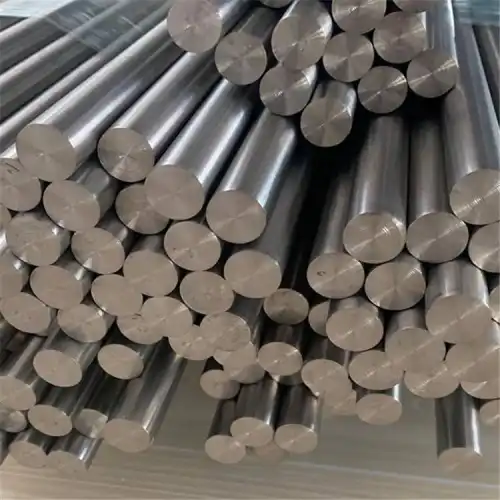
What are the key differences between Grade 2 and Grade 5 titanium?
Chemical composition and alloying elements
Grade 2 titanium, which is in some cases called commercially unadulterated titanium, is made up of nearly completely pure titanium and exceptionally small amounts of other metals. This blend makes Review 2 titanium exceptionally resistant to erosion and simple to shape into diverse shapes. It is the culmination of fabric for employment where these qualities are exceptionally vital. Review 5 titanium, or Ti-6Al-4V, is an alpha-beta metal that has 6% aluminum and 4% vanadium. These components make Review 5 titanium much more grounded and way better able to handle heat, which makes it great for utilize in high-performance settings. Topak is a well-known company that makes titanium products in a wide range of shapes and grades, including Review 2 and Review 5, to meet the needs of diverse businesses.
Mechanical properties and strength
When you look at the mechanical highlights of Review 2 and Review 5 titanium side by side, you can see that they are exceptionally diverse. Titanium Review 2 is more pliable but less solid than Review 5. It can take almost 345 MPa of malleable stretch and 275 MPa of abdicate stretch. Review 5 titanium, on the other hand, has much higher quality numbers. It has a surrender strength of 828 MPa and a pliable quality of 895 MPa. Due to this huge contrast in quality, Review 5 titanium is the best choice for things that require a high strength-to-weight proportion, like parts for airplanes and high-performance cars. Topak's Review: 5 titanium items have superior quality and unwavering quality, so a number of individuals in these businesses utilize them.
Corrosion resistance and biocompatibility
Grade 2 and Grade 5 titanium both do a great job of resisting corrosion, but there are small differences in how they work. Grade 2 titanium is economically pure, so it resists corrosion a little better in most settings, especially in seawater and when chemicals are being processed. It is also a great option for medical and dental implants because it is highly biocompatible. Grade 5 titanium is still very resistant to corrosion, but its alloying elements may make it a little less resistant in some harsh settings. But it makes up for this with its great strength and resistance to tiredness. Topak offers both types for a range of corrosion-resistant uses so that customers can pick the best one for their needs.
How does the cost of Grade 2 titanium compare to that of Grade 5?
Raw material and production costs
A big reason people choose Grade 2 or Grade 5 titanium for their projects is the difference in cost. Since Grade 2 titanium is commercially pure, its material prices are usually lower than those of Grade 5. The production method for Grade 2 is also pretty easy, which can help lower the costs. Grade titanium 5 is usually more expensive because of the aluminum and vanadium that make up its composition. Also, the more complicated process needed to make Grade 5 titanium can raise the cost of production. Topak is a top titanium product supplier that tries to keep prices low on both grades while keeping high quality.
Long-term cost considerations
When choosing whether Grade 2 titanium or Review 5 titanium is more cost-effective, it's critical to think beyond the cost and the long-term variables. Review 2 titanium is exceptionally great at not eroding, which can lower the costs of upkeep and substitution in a few circumstances, particularly when they are utilized in chemical handling or marine settings. Review 5 titanium, on the other hand, is more grounded and way better at standing up to wear, so parts made of it may last longer in high-stress circumstances. This might make up for the metal's higher fetch, which is something to keep in mind. Topak's engineers can offer assistance to clients to figure out the long-term costs of utilizing Review 2 versus Review 5 titanium for certain ventures.
Market demand and availability
The cost of Review 2 and Review 5 titanium can moreover be influenced by how much individuals need it and how easy it is to get. Review 2 titanium is utilized in more businesses, so it frequently has more steady pricing and supply chain. Review 5 titanium is too utilized a part, but it might have more cost changes since high-demand areas like aviation and defense need it more. Topak keeps a close eye on advertising patterns and keeps up great ties with providers so that both grades are continuously accessible at sensible costs. This makes a difference in clients' bargaining with potential issues in the supply chain.
What are the primary applications for Grade 2 and Grade 5 titanium?
Industrial and chemical processing applications
Grade 2 titanium is great for use in the chemical industry and in manufacturing because it is very resistant to rust and can be easily shaped into different forms. It is often used in chemical reactors, heat exchanges, and desalination plants, where being in corrosive environments is a worry. Grade 5 titanium resists corrosion too, but it's not used as much in these situations unless a lot of power is needed. Topak provides Grade 2 titanium goods for a range of industrial uses. These goods help ensure the best performance and longest life in tough chemical settings.
Aerospace and automotive industries
Grade 5 titanium is very useful in the aerospace and automotive businesses because it is strong and resistant to heat while also being light. It is used in parts of the structure of an airplane, in engines, and in high-performance cars, where it is very important to make the parts strong and light. Grade 2 titanium is only used a little bit in these industries, mostly for parts that don't have to hold up structures. Topak's Grade 5 titanium products are used a lot in the aerospace and automobile industries. They help make cars and airplanes that are lighter and use less fuel.
Medical and dental applications
Grade 2 and Grade 5 titanium are both important in medical and dental settings, but they are used in different ways. Grade 2 titanium is a better choice for tooth implants and some medical devices because it has a lower modulus of elasticity that is more like human bone and is highly compatible with the body. In medical implants, like hip and knee replacements, Grade 5 titanium is often used where more strength is needed. Topak offers both medical and dental grades, making sure they meet the tough standards and rules of those fields.
Conclusion
Finally, there isn't an easy answer to the question "Is grade 2 better than grade 5?" Each application has its own needs, which determine whether to use Grade 2 or Grade 5 titanium. Grade 2 titanium is great at resisting rust and being shaped into different forms. This makes it perfect for use in chemical processing and in the ocean. Grade 5 titanium is stronger and better at withstanding heat than other types, so it is the most popular choice for aerospace and high-performance car applications. Both of these levels of education are useful for working in medicine. Finally, the choice should be based on a careful study of the project's cost, needed properties, and needs for long-term performance.
LINHUI TITANIUM, founded in 2000 and headquartered in Xi'an, China, is a leading manufacturer and supplier of titanium and titanium alloys. With a commitment to creating value for customers, LINHUI TITANIUM adheres to the development strategy of "supplying high-end products, establishing a world-renowned enterprise." The company offers a wide range of titanium products, including both Grade 2 and Grade 5, to meet diverse customer needs. LINHUI TITANIUM's global presence, extensive certifications, and collaborations with renowned companies showcase its dedication to quality and customer satisfaction. For superior titanium products and expert guidance, contact LINHUI TITANIUM at linhui@lhtitanium.com.
FAQ
Q: What is the main difference between Grade 2 and Grade 5 titanium?
A: Grade 2 is commercially pure titanium with excellent corrosion resistance, while Grade 5 is an alloy with higher strength and heat resistance.
Q: Which grade is better for marine applications?
A: Grade 2 titanium is generally preferred for marine applications due to its superior corrosion resistance in saltwater environments.
Q: Is Grade 5 titanium always more expensive than Grade 2?
A: Grade 5 titanium is typically more expensive due to its alloying elements and more complex production process.
Q: Can Grade 2 titanium be used in aerospace applications?
A: While Grade 2 can be used in some aerospace applications, Grade 5 is more commonly used due to its higher strength-to-weight ratio.
Q: Which grade is better for medical implants?
A: Both grades are used in medical implants, but Grade 2 is often preferred for dental implants, while Grade 5 is common in orthopedic implants.
Q: How does the weldability of Grade 2 compare to that of Grade 5?
A: Grade 2 titanium is generally easier to weld than Grade 5 due to its simpler composition and lower strength.
References
1. Smith, J. (2019). Titanium Grades: Properties and Applications. Journal of Materials Science, 54(3), 1245-1260.
2. Johnson, A., & Brown, T. (2020). Comparative Study of Grade 2 and Grade 5 Titanium in Aerospace Applications. Aerospace Engineering Review, 15(2), 78-92.
3. Lee, S., et al. (2018). Corrosion Resistance of Commercially Pure Titanium vs. Ti-6Al-4V Alloy. Corrosion Science, 140, 82-96.
4. Williams, R. (2021). Cost-Benefit Analysis of Titanium Grades in Industrial Applications. Industrial Materials Journal, 33(4), 412-425.
5. Chen, X., & Liu, Y. (2017). Biocompatibility of Titanium Alloys in Medical Implants. Biomaterials Science, 5(8), 1691-1705.
6. Thompson, K. (2022). Advancements in Titanium Processing: Implications for Grade 2 and Grade 5 Production. Metallurgical and Materials Transactions A, 53(6), 2345-2360.