
For seamless titanium and titanium alloy pipes intended for general corrosion-resistant and elevated-temperature service across critical industrial uses, ASTM B861 sets complete standards. This standard includes 34 different grades, each designed to meet particular performance needs in harsh settings where the integrity of the material cannot be compromised. ASTM B861 seamless titanium pipes don't have longitudinal weld lines like welded pipes do. This means that the microstructural stability is the same across the whole cross-section of the tube. This structural uniformity is very important in situations where even small differences in the materials could cause catastrophic breakdowns in systems that move fluids under high pressure.
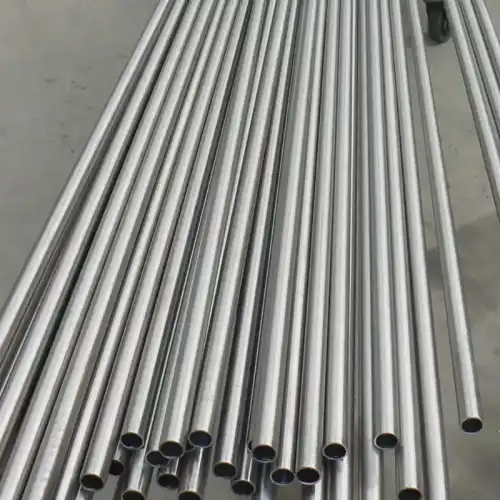
Understanding ASTM B861 Standard for Seamless Titanium Pipes
The ASTM B861 standard is the result of many years of metallurgical study and feedback from industry users. It spells out exact requirements that make sure products are reliable even in the toughest working environments. At its core, this standard handles basic issues that buying specialists and engineering teams face in fields where failure of materials has serious effects.
Scope and Historical Evolution of the Standard
ASTM B861 started out as a standard for titanium used in aircraft in the middle of the 20th century. It slowly grew to include industrial processing settings. The standard now includes seamless pipes with a size range of NPS 1/8 to NPS 24, and wall thicknesses are estimated using plans from ASME B36.19M. This change is because more and more people in the business are realizing that seamless building gets rid of the areas around weld seams that are more likely to rust. The standard handles important problems in the industrial world, like the chance of stress corrosion cracking in chemical processing areas and the need for reliable pressure containment in subsea operations.
Chemical Composition and Grade Classifications
The standard clearly defines the chemical makeup limits that make the performance qualities of each grade different. Grade 2 titanium, which is designated as UNS R50400, has a makeup that is called the "workhorse" because it has no more than 0.25% oxygen, 0.30% iron, and 0.03% nitrogen. This formula strikes a good mix between middling strength, excellent formability, and better corrosion protection across a wide range of applications. With 3% aluminum and 2.5% vanadium added to Grade 9, the yield strength goes up to 483 MPa, making it perfect for high-pressure hydraulic uses in offshore platforms. While Grade 7 adds 0.12-0.25 percent palladium, it makes the metal much more resistant to crevice rust in hot seawater, where normal commercially pure grades are attacked locally.
When evaluating purchases, it is important to pay close attention to the oxygen level in commercially pure grades. Oxygen acts as a strengthening agent between cells, but too much of it can make materials less flexible and less easy to join. In order to achieve the best strength-ductility balance under the conditions that will be encountered in service, ASTM B861 sets the highest oxygen levels that are carefully measured.
Mechanical Properties and Performance Requirements
ASTM B861 sets out procedures for mechanical testing that make sure every output lot meets basic performance standards before it is shipped. In normal tensile tests according to ASTM E8 methods, Grade 2 seamless pipe must show a minimum yield strength of 275 MPa, a final tensile strength of 345 MPa, and elongation greater than 20%. When systems are under pressure, these mechanical qualities directly affect the safety limits that can be used.
The standard requires that most grades be delivered in an annealed state. This means that they must go through heat treatment steps that remove any residual stresses from the manufacturing process and create stable microstructures. Usually, annealing takes place between 650°C and 760°C, and then it is cooled slowly so that no rigid phases form. This heat treatment is especially important for getting rid of the alpha-case layer, which is a surface area that is high in oxygen that forms during hot working and lowers fatigue resistance if it isn't removed through pickling treatments.
Dimensional Tolerances and Quality Assurance
ASTM B861 sets strict limits for sizes, making sure that they work with standard pipe parts and keeping the pressure integrity. Tolerances for outside diameter run from ±0.4 mm for smaller nominal sizes to ±0.8 mm for pipes bigger than NPS 6. Tolerances for wall thickness usually allow +20% to -12.5% variation from nominal specs. These limits are based on how seamless pipes are actually made, while still allowing for enough safety factors in pressure estimates.
As a required proof step, hydrostatic testing puts each pipe length under internal pressure that creates hoop stress equal to 50% of the minimum stated yield strength. This nondestructive test shows that the leak-proof integrity is maintained under realistic service loads. Eddy current or ultrasound testing can also find cracks below the surface that can't be seen with the naked eye. This makes sure that the pipe wall is sound throughout its cross-section.
Comparing ASTM B861 with Other Pipe Standards
When choosing materials for a job, it's important to know how ASTM B861 compares to other standards.
ASTM B861 versus ASTM B338 Heat Exchanger Tubing
The difference between ASTM B861 seamless pipe and ASTM B338 titanium tubing can be confusing for many buying teams. ASTM B338 covers tubes that are made to fit condensers and heat exchangers. These tubes are sized by their exact outside diameter and wall thickness, not by standard pipe size schedules. B338 tubing usually comes in smaller sizes and thinner walls that are better at moving heat than keeping air in. B861 pipe, on the other hand, is made for general service uses that need higher pressure values and structural stability. Both specs have seamless construction, which gets rid of worries about weld seams. However, B861's schedule-based sizing makes it easier to connect to standard pipe fittings and valves in industrial piping systems.
Seamless B861 versus Welded B862 Titanium Pipe
ASTM B862 describes welded titanium pipe that is made from flat stock that has been shaped and fusion-welded. Welded construction saves money on materials and lets you make things with bigger diameters, but the lengthwise weld seam adds possible failure places that aren't there in seamless options. Heat-affected areas next to weld gaps have changed microstructures that could make them more likely to corrode in harsh chemical conditions. These problems are completely taken care of by making seamless B861 pipe using hot extrusion or cold pilgering of solid billets. This uniform construction is necessary in situations where it's hard to check the weld seams or where the need for total reliability supports the higher costs of the materials. Even though it costs more, seamless building is usually required for offshore oil platforms, underwater pipes, and important chemical process streams.
Metric Equivalent B861M and International Standards
ASTM B861M is the metric equivalent standard. It uses millimeter measurements for nominal pipe widths that are based on inches while keeping the same metallurgical and performance requirements. International projects often use ASTM B861M to make sure they are in line with SI unit standards used outside of North America. The European PED 2014/68/EU directive and several state pressure equipment codes accept both ASTM B861 and ASTM B861M standards as long as they are backed by the right third-party certification paperwork.
Procurement and Supply Chain Insights for ASTM B861 Seamless Pipes
To find your way through the global supply chain for high-quality seamless titanium pipe, you need to know how the market works, how long you can expect to wait for deliveries, and how to tell the difference between trustworthy suppliers and sellers who are just looking for a quick sale.
Evaluating Supplier Credentials and Certifications
Reputable makers keep a full set of certifications that show they follow the rules for international quality control systems and pressure tools. Certification to ISO 9001:2015 ensures that quality processes are recorded, and approvals from classification societies like DNV, ABS, CCS, BV, and Lloyd's Register confirm that the material is suitable for use in marine and offshore environments. For sites in the European Union, PED 2014/68/EU certification is necessary to make sure that the processes for conformity assessment meet the same safety standards.
Acceptance of a third-party inspection is another important qualification factor. Independent organizations like SGS, Bureau Veritas, TUV, and Moody International can check the work of well-known makers. This gives purchasing teams objective proof that material test results accurately reflect the goods they deliver. This review access is especially helpful when buying from suppliers you don't know or when the project requirements call for independent oversight.
Pricing Structures and Lead Time Planning
The price of seamless titanium pipe depends on the cost of the raw materials, how hard it is to make, and changes in market demand. Prices for Grade 2 seamless pipe range from $35 to 55 per kilogram, based on the diameter, wall thickness, and order number. Prices for better alloy grades like Grade 9 or Grade 12 go up to $60 to 85 per kilogram. These prices are very different from alternatives made of stainless steel, but lifetime cost studies often support choosing titanium because it lasts longer and needs less upkeep.
Lead times for ASTM B861 seamless pipe are typically between 8 and 16 weeks, but they can be longer or shorter based on the complexity of the standard and the manufacturer's production schedules. Stock programs run by specialized distributors can cut shipping times down to two to four weeks for popular grades and sizes, but prices are usually higher. Strategic buying teams that are in charge of long-term projects arrange framework deals that set stable prices and ensure the sharing of capacity. This keeps supplies from being interrupted when the market is tight.
Documentation Requirements and Quality Verification
Each shipment from a qualified source comes with full paperwork that lets you track the materials. Mill test papers that meet EN 10204 3.1 or 3.2 standards give full reports on chemical analysis, mechanical tests, heat treatment, and nondestructive examinations for each output heat and pipe length. This paperwork helps manufacturers further down the line come up with the right welding methods and ensures that the project is compliant with all regulations during commissioning.
Specifications for purchases should make it clear that approval is needed to make sure that the hydrogen content stays below 0.015 percent. This is because high hydrogen levels weaken titanium metals. This standard is especially important for pipes that will be used with hydrogen or sour gases, since hydrogen absorption in service could damage the material.
Applications and Industries Using ASTM B861 Seamless Titanium Pipes
The unique mix of low density, high strength, and excellent rust resistance makes seamless titanium pipe the best material for many industrial applications where regular metals don't work well enough.
Chemical Processing and Chlor-Alkali Production
ASTM B861 seamless pipe is used a lot in the chemical process industries to deal with toxic substances like organic acids, wet chlorine gas, and chlorine dioxide. The titanium dioxide passive film that forms on its own protects against attack in oxidizing conditions that quickly corrode nickel metals and stainless steels. In chlor-alkali plants, the chlorine gas transport systems use Grade 2 seamless pipe, which lasts for decades without the pitting and crevice rust that happens with other materials. A big chlorine maker on the Gulf Coast said that Grade 2 titanium pipe systems had been used for 25 years without being replaced. This is a big difference from the 3–5 years that tantalum-lined steel piping had been used.
Offshore Oil and Gas Production Systems
Subsea production systems need materials that can handle being exposed to seawater, production fluids that are toxic, and huge differences in pressure all at the same time. ASTM B861 Grade 2 and Grade 7 seamless pipes are used in firewater distribution, saltwater cooling loops, and systems that handle produced water on offshore bases. Because the material doesn't crack when exposed to salt, it doesn't have the catastrophic failure modes that austenitic stainless steels do in marine settings. Grade 9 titanium pipe is used in high-pressure hydraulic control systems that run underwater blowout preventers. Its 483 MPa yield strength allows for small system designs that make subsea equipment lighter.
Desalination and Power Generation
Seawater entry systems, high-pressure pump release pipes, and brine discharge lines in thermal and reverse osmosis desalination plants all use seamless titanium pipe. The material's resistance to biofouling means that it doesn't need to be maintained as often as copper-nickel options, and it can handle high-velocity seawater flows without breaking down. A desalination plant in the Middle East that has been running since 2005 says that none of the pipes in its Grade 2 titanium seawater systems have needed to be replaced. This means that the plant has reached operational reliability goals that were not possible with earlier material choices.
Conclusion
In conclusion, ASTM B861 seamless titanium pipes have been shown to work well in the toughest industry settings where the dependability of the material has a direct effect on safety at work and the bottom line. The detailed specification structure of the standard makes sure that quality is always the same by controlling the chemical makeup, setting strict requirements for mechanical properties, and requiring inspection routines. Procurement workers can safely choose materials when they know the differences between seamless and welded construction, how different grades perform, and how to choose sources based on their certification portfolios and quality system development. Investing more in smooth titanium pipes pays off in the long run by increasing their service life, lowering upkeep costs, and getting rid of the risk of catastrophic failure in important process systems.
FAQ
What distinguishes ASTM B861 from ASTM B338 specifications?
ASTM B861 covers seamless pipe that is sized by nominal pipe size and schedule names. It is meant for general structural and corrosion-resistant service uses. ASTM B338 describes a tube that has a precise outside diameter and wall thickness and is only meant to be used in heat exchangers and condensers. B861 pipe works with standard pipe parts, and B338 tubing makes heat movement more efficient in shell-and-tube exchanger designs.
Can seamless titanium pipe be welded to standard piping components?
When the right steps are taken, Grade 2 and commercially pure titanium grades can be welded very well. When welding, argon or helium must be used as a neutral gas shield to keep the atmosphere from contaminating the metal and weakening it. You can't attach titanium straight to carbon steel or stainless steel; you need to use explosive bonding, mechanical flanges, or transition joints to connect the two. Qualified welding methods created according to ASME Section IX make sure that the joint is strong and matches the qualities of the base material.
Which grade provides optimal performance for seawater applications?
If you put Grade 2 titanium in normal or slightly warm saltwater, it works well and is very resistant to rust and wear. Grade 7, which has 0.1 to 0.25% palladium, is much better at resisting crevice corrosion in hot seawater above 80°C. This is why it is used in high-temperature seawater cooling systems and salt handling uses where Grade 2 is attacked locally.
Partner with LINHUI TITANIUM for Certified ASTM B861 Seamless Pipe Solutions
For reliable access to certified seamless titanium pipe, you need to work with well-known makers who can show consistent quality and the ability to offer products all over the world. LINHUI TITANIUM is based in Xi'an, China, which is on the Belt and Road route. The company has a lot of different certifications, such as PED 2014/68/EU, ISO 9001:2015, CCS, ABS, DNV, BV, and Lloyd's Register approvals. Our factories have China's Special Equipment Manufacturing License, and all the big foreign agencies can come in and check them as a third party. We provide ASTM B861 seamless pipe in all grades and sizes, from NPS 1/8 to NPS 24, to meet the needs of international sourcing for offshore platforms, chemical processing facilities, and power generation projects. Get in touch with our expert team at linhui@lhtitanium.com to talk about the specifics of your project and get quotes from a reliable ASTM B861 supplier who will deliver certified goods on time.
References
1. ASTM International. "ASTM B861-20: Standard Specification for Titanium and Titanium Alloy Seamless Pipe." Annual Book of ASTM Standards, Vol. 02.04, 2020.
2. Boyer, R., Welsch, G., and Collings, E.W. "Materials Properties Handbook: Titanium Alloys." ASM International, Materials Park, Ohio, 1994.
3. Schutz, R.W. and Thomas, D.E. "Corrosion of Titanium and Titanium Alloys in Chemical Processing Applications." Handbook of Corrosion Engineering, McGraw-Hill, 2000.
4. American Society of Mechanical Engineers. "ASME B36.19M: Stainless Steel Pipe Dimensions." ASME Standards Collection, 2018.
5. Donachie, Matthew J. "Titanium: A Technical Guide, 2nd Edition." ASM International, Materials Park, Ohio, 2000.
6. Peters, M., Hemptenmacher, J., Kumpfert, J., and Leyens, C. "Structure and Properties of Titanium and Titanium Alloys." Titanium and Titanium Alloys: Fundamentals and Applications, Wiley-VCH, 2003.