
Understanding the key differences between industrial pure titanium tubes and titanium alloy options is crucial for the project's success. Grades 1-4 are made up of 99.5%+ titanium and very few alloying elements. This makes them more resistant to corrosion and easier to shape. Titanium alloys contain additional elements, such as aluminum and vanadium, which make them stronger but less resistant to corrosion in certain environments.
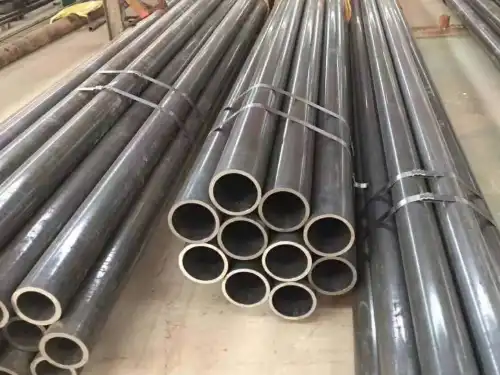
Core Material Composition Differences
Pure titanium tubing and titanium alloy tubing are fundamentally different from each other in terms of their chemical makeup. There are small amounts of oxygen, nitrogen, and iron in the industrial titanium tube, but mostly titanium.
Pure titanium is used in industry:
- 99.5 to 99.8% titanium
- 0.18% to 0.40% oxygen
- Zero to fifty percent iron
- 0.03 to 0.08% nitrogen
The most common titanium alloy is made up of (Ti-6Al-4V):
- Titanium is 90%.
- Copper: 6%
- 4-percent vanadium
Test results from ASTM B338 standards show that pure titanium rusts at a rate of 0.0025 mm/year in seawater, while Ti-6Al-4V rusts at a rate of 0.0051 mm/year in the same conditions
From this composition difference, we can see three main differences:
- Performance Against Corrosion: Pure grades don't crack under stress from chloride corrosion
- When it comes to mechanical properties, alloys have higher tensile strength.
- Costs: Processing pure titanium is easier and costs less.
For chemical processing where corrosion resistance is very important, an industrial pure titanium tube is a better choice. When high strength-to-weight ratios are needed in aerospace applications, titanium alloys work better for the job.
Mechanical Properties Analysis
The mechanical performance of these materials makes them very different in many industrial settings. While still being strong enough for most chemical processing needs, grade 2 titanium tube is very flexible.
Comparison of Tensile Strength:
- Pure Grade 2 Titanium: 345 to 483 MPa
- 895–930 MPa for Ti-6Al-4V alloy
- Pure Titanium Grade 4: 550 to 758 MPa
Performance of Yield Strength:
- 275 to 410 MPa for Grade 2 Pure Titanium
- 825-869 MPa for Ti-6Al-4V alloy
Testing in the lab shows that pure titanium has higher elongation values (20–30%) than Ti-6Al-4V (10–15%). This improved ductility makes it easier to do complicated shaping operations that are common in heat exchanger production.
Tests of fatigue resistance show:
- 240–300 MPa at 10^7 cycles for pure titanium
- 450 to 550 MPa at 10^7 cycles for Ti-6Al-4V
If you need to be able to bend tubes in complicated ways, pure titanium tubing is the best choice. Titanium alloys have the right amount of strength for high-stress structural uses.
Corrosion Resistance Performance
Corrosion resistance is the main reason why the chemical and marine industries choose industrial pure titanium tubes. It is best for pure grades to be used in oxidizing conditions where passive film formation happens naturally.
Corrosion Rate Data (mm/year):
| Environment | Grade 2 Ti | Ti-6Al-4V | Stainless 316L |
|---|---|---|---|
| Seawater | 0.0025 | 0.0051 | 0.102 |
| 10% HCl | 0.508 | 1.27 | 25.4 |
| Nitric Acid | 0.0127 | 0.0254 | 0.254 |
Titanium can instantly form protective TiO2 layers when it comes into contact with oxygen, which is what gives it its superior performance. It is amazing how stable this passive film is across pH ranges from 2 to 12.
Key corrosion advantages include:
- Immunity to Crevice Corrosion: Pure grades don't react to localized attack
- Corrosion and stress resistance: doesn't crack in chloride environments
- Galvanic Compatibility: Noble behavior stops corrosion from speeding up.
When you need tubing for harsh chemical environments, a pure seamless titanium tube lasts the longest. Titanium alloys work well in mildly corrosive environments with high mechanical demands.
Application-Specific Performance Requirements
Different industries put different levels of importance on different performance characteristics when choosing between alloys and pure titanium. Figuring out these application-specific needs helps with choosing the right materials.
Uses for chemical processing:
- Corrosion resistance is more important than strength for heat exchangers.
- For complex geometries, reactor vessels need to be able to be shaped.
- Piping systems need to be reliable for a long time.
Needs in the Aerospace Industry:
- Structures with high strength-to-weight ratios
- Performance at high temperatures for engine uses
- Resistance to fatigue under cyclic loading conditions
Data from offshore platforms shows that pure titanium tubing stays strong after 15 years or more in marine environments. Comparable alloy installations need to be replaced every 8 to 12 years because of corrosion in specific areas.
Manufacturing issues affect the choice:
- Pure titanium lets you shape it cold without heating it up.
- Alloys need to be heated to get the best properties.
- Procedures for welding are very different between variants.
Industrial pure titanium tube, such as Grade 2, makes sure that processing is free of contamination if you need tubing for making medicines. For military and aerospace uses, the Ti-6Al-4V alloy tube has the right structural performance.
Cost Analysis and Economic Considerations
Beyond the initial cost of procurement, economic factors have a big impact on the choice of materials. Total ownership costs include things like processing, installation, and maintenance over the course of the product's life.
Costs of materials at the start (per kg):
- $35 to $45 for Grade 2 Pure Titanium
- $55–$75 for Ti-6Al-4V alloy
- $8–$12 for 316L stainless steel
But lifecycle cost analysis shows a different picture of economics:
Costs Over 20 Years (per Meter):
- Pure titanium tube: $450 initially plus $50 a year for upkeep, a total of $500
- Aluminum tubing costs $650 to buy and $150 a year to keep up.
- $120.00 for the first one and $800 for repairs or replacements, for a total of $920.
Things that affect processing costs are:
- Machining Needs: Pure grades are easier to machine.
- Heat Treatment: Alloys need extra steps in the processing process.
- Steps for Welding: It's easier to work with pure titanium.
Pros of installing pure titanium tubing:
- Support structure costs go down when the weight is lighter.
- More work is needed when things are easier to handle.
- Skilled workers aren't needed as much when joining things is easier.
Even though it costs more at first, an industrial pure titanium tube is the best way to go for long-term installations that need to be cost-effective.
Manufacturing and Quality Standards Compliance
Compliance with quality standards guides the choice of materials in regulated fields where certification requirements demand certain levels of performance. There are different international standards for both pure titanium and alloys.
Standards for Industrial Pure Titanium:
- Astm B338: Titanium tubing that is seamless and welded
- Part 338 of ASME's Pressure Vessel Applications
- AMS 4928: Specifications for aircraft
- Standards for quality management systems (ISO 9001)
Certification Requirements by Industry:
| Industry | Required Standards | Preferred Grade |
|---|---|---|
| Oil & Gas | NACE MR0175, API 6A | Grade 2 Pure |
| Aerospace | AMS 4928, MIL-T-9047 | Grade 2/Ti-6Al-4V |
| Medical | ISO 13485, ASTM F67 | Grade 2 Pure |
| Chemical | ASME VIII, PED 2014/68/EU | Grade 2 Pure |
Quality control procedures ensure consistent performance:
- Chemical Analysis: Verify composition within specification limits
- Mechanical Testing: Confirm strength and ductility requirements
- Non-Destructive Testing: Detect internal defects before shipping
LINHUI TITANIUM has many certifications, such as ISO 9001:2015, CCS, ABS, PED 2014/68/EU, and more. These certifications let suppliers work on big international projects that need quality systems that have been checked.
If you need certified titanium tube suppliers for regulated uses, verified manufacturers offer the necessary traceability paperwork. Standard commercial grades work well enough for non-critical uses and are less expensive.
Conclusion
When choosing between an industrial pure titanium tube and a titanium alloy option, it's important to think carefully about what the application needs. Pure titanium works great in corrosive environments and is easier to shape. It also has better long-term economics. Titanium alloys have better mechanical properties for uses that put a lot of stress on them. By understanding these basic differences, you can choose the best materials for projects in a wide range of industries.
LINUI TITANIUM - Your Trusted Industrial Pure Titanium Tube Supplier
LINHUI TITANIUM has more than 21 years of experience making products and offers the best industrial pure titanium tube solutions in the world. Grade 2 titanium tubing that we sell meets ASTM B338 standards, and we offer technical support 24 hours a day, seven days a week, and can ship anywhere in the world. We make sure that your important projects' supply chains work well by having partnerships in more than 60 countries and full international certifications. Contact linhui@lhtitanium.com to discuss your specific requirements.
References
1. American Society for Testing and Materials. "Standard Specification for Seamless and Welded Titanium and Titanium Alloy Tubes for Condensers and Heat Exchangers." ASTM B338-21.
2. Boyer, R., Welsch, G., and Collings, E.W. "Materials Properties Handbook: Titanium Alloys." ASM International, Materials Park, OH, 1994.
3. Schutz, R.W. and Thomas, D.E. "Corrosion of Titanium and Titanium Alloys." Metals Handbook, 9th Edition, Volume 13, Corrosion, ASM International, 1987.
4. National Association of Corrosion Engineers. "Materials Requirements for Sulfide Stress Cracking Resistant Metallic Materials for Oilfield Equipment." NACE MR0175/ISO 15156.
5. Peters, M., Kumpfert, J., Ward, C.H., and Leyens, C. "Titanium Alloys for Aerospace Applications." Advanced Engineering Materials, Volume 5, Issue 6, 2003.
6. Donachie, Matthew J. "Titanium: A Technical Guide, 2nd Edition." ASM International, Materials Park, OH, 2000.