
When procurement teams look at material options for chemically aggressive settings, it becomes mission-critical to choose a trusted GR2 titanium wire factory. Grade 2 commercially pure titanium wire has great resistance to rust, mechanical integrity, and weldability, all of which are important in chemical processing plants, heat exchangers, and reactor vessels. Working with a specialized production partner that knows about both mechanical science and industrial compliance standards will help your business keep safety margins while lowering costs over the life of the product. We can provide steady quality on a large scale because we have worked with big energy and chemical companies around the world for decades.
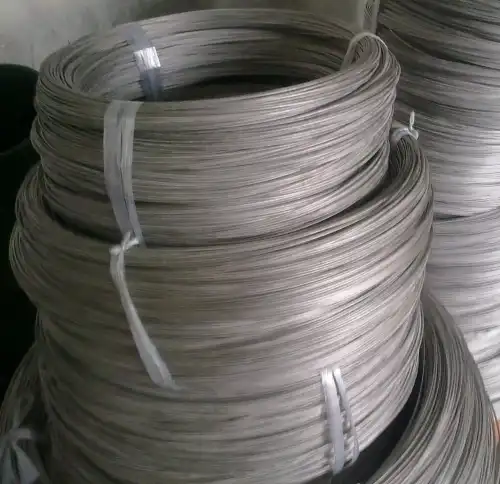
Understanding GR2 Titanium Wire and Its Industrial Significance
What Makes GR2 Titanium Wire Essential for Chemical Applications?
GR2 titanium wire is the workhorse of the widely pure titanium family. Its alpha-phase microstructure gives it a modest level of strength while also making it very flexible and easy to weld. This material solves problems that keep coming up in chemical processing settings, like chloride-induced stress corrosion cracks and localized pitting that destroy regular metals. This grade of titanium is about 60% lighter than steel and can keep its shape in both highly oxidizing and mildly reducing environments. It solves both the weight and corrosion problems at the same time, without the high costs of palladium-stabilized versions or the brittleness of high-strength alloy alternatives.
The chemical makeup closely follows ASTM B863 guidelines, and the performance range is set by the carefully controlled intermediate elements. The oxygen level is usually between 0.15 and 0.25%, which gives it more strength than Grade 1 while still letting it be shaped easily. The key hydrogen level stays below 0.015%, and the iron content stays below 0.30% to stop the embrittlement processes that lead to delayed fracture in load-bearing uses. The amounts of carbon and nitrogen are also limited to keep the material flexible during shaping and bonding.
Primary Industrial Applications Demanding GR2 Properties
This material is used a lot in chemical processing plants to make heat exchangers, reaction vessels, and transfer pipe systems that handle harsh media. In chlor-alkali plants, the wire makes important welded joints that have to be able to handle hot, wet chlorine gas and hypochlorite solutions, which are situations where austenitic stainless steels quickly crack from stress corrosion. Because the wire is resistant to these ways of breaking down, it means that devices will last longer and need less upkeep.
In the marine and offshore engineering fields, titanium wire is used in fire control systems for offshore platforms, seawater treatment plants, and structural parts for submarines. The material is resistant to crevice rust and pitting in still seawater at temperatures up to 260°C, which means that fully immersed parts will last longer than 20 years. Power plants use the wire to weld condenser tubing for both nuclear and fossil fuel systems. Leak-proof seals in thin-wall tubing keep cold water from getting into steam cycles, which is an important safety and efficiency factor.
Verifying Authenticity Through Rigorous Quality Control
When buying real material from a certified GR2 titanium wire factory, strict checking rules must be followed to make sure that critical uses don't fail catastrophically. ICP-OES technology is used to check the amounts of intermediate elements, paying special attention to the levels of oxygen and hydrogen. Too much hydrogen (above 0.015%) can weaken materials and cause them to break more slowly, which can damage structures over time.
Tensile and bending tests according to ASTM E8 standards show that the wire meets the required temper, whether it is annealed or hard-drawn. Eddy current testing and microscopic analysis are used together in surface integrity checking to find laps, cracks, or heavy oxide scale formations that can cause wear failures when loaded and unloaded repeatedly. Using a laser micrometer to check the dimensions makes sure that the width stays within the h7, h8, or h9 tolerance bands, which is necessary for automatic feeding equipment in welding or sewing machines.
Comparing GR2 Titanium Wire with Alternative Materials for Chemical Equipment
Performance Differentiation Among Titanium Grades
By knowing the differences between titanium types, you can choose a material that fits the needs of your business. The oxygen and iron levels in Grade 1 titanium wire are lower than those in Grade 2, which means that Grade 1 wire has a 20–30% lower tensile strength. Because of this difference in strength, GR2 is the best choice for structural wire uses like anodizing racks and bonding filler metals, where load-bearing ability is important. There is more intermediate material in Grade 4, which makes it stronger but also less flexible and easier to weld. Because of these issues, it is not ideal for complex fabrications that need a lot of shaping.
The Grade 5 titanium alloy, which has aluminum and vanadium added to it, is much stronger, but it can be hard to weld and doesn't fight corrosion well in some chemical conditions. The alloying elements stabilize the beta-phase, which changes how the metal reacts to heat treatment and how it reacts electrochemically in acidic environments. When choosing materials from an experienced GR2 titanium wire factory, these differences in properties must be matched to the needs of the application, rather than using higher-grade materials that may add extra problems.
Evaluating Titanium Against Stainless Steel and Specialty Alloys
Compared to austenitic stainless steels like 316L, titanium wire is better at resisting chloride stress corrosion, crevice corrosion, and pitting corrosion in oxidizing acid conditions. Stainless steel has lower material costs and better heat conductivity, but it breaks down horribly in chloride-containing liquids above 60°C. Instead of just looking at the original purchase costs, the total cost of ownership estimate needs to take into account how often the product needs to be replaced, unplanned downtime, and the risk of contamination.
Niobium wire is an option in some corrosive settings, especially those with a lot of sulfuric acid or hydrochloric acid. Niobium is much more expensive than titanium as a material, and its high density makes it hard to work with in large applications. Titanium is the material of choice for chemical equipment makers that serve many process industries because it is more resistant to rust in a wider range of chemical environments, is easy to work with, and is widely accepted in the industry.
Recognizing Limitations and Application Boundaries
Even though GR2 titanium wire has a great corrosion resistance profile, buying teams need to be aware of its performance limits. The substance doesn't work well with dry chlorine gas above 200°C, where it can catch fire and cause a huge disaster. When hydrochloric and sulfuric acids are present in low amounts and at high temperatures and concentrations, they can cause hydrogen to be absorbed, which can lead to weakening. When titanium is directly welded to carbon or stainless steel, it forms weak intermetallic compounds like TiC and FeTi that cause the weld to fail right away. This means that mechanical connections or explosion-bonded transition joints must be used instead.
Procuring Industrial-Grade GR2 Titanium Wire: What B2B Clients Need to Know
Strategic Advantages of Direct Factory Sourcing
Establishing direct ties with a specialized GR2 titanium wire factory offers many purchasing benefits beyond just lowering costs. Direct sourcing gets rid of markups on the middlemen and gives you access to technical knowledge during the specification development process and application engineering help throughout the lifecycle of a project. Working together with industrial teams that know both how to make things and how they need to work in the end is the only way to get custom diameter standards, specific surface finishes, and custom mechanical properties.
Another important benefit of direct factory ties is that they make quality checking more open. Material can be tracked and checked for compliance before it is shipped by having access to mill test records, witnessed testing methods, and third-party inspection coordination. When big buyers negotiate multi-year supply agreements, they get better pricing and sure share during times when the market is tight, and spot buyers have to deal with longer lead times and higher prices.
Evaluating Supplier Qualifications and Manufacturing Capabilities
Important factors for judging a provider are product-specific approvals and thorough manufacturing certifications that show compliance with international quality management systems. ISO 9001 certification sets the basic standards for a quality system, and approvals from classification societies like DNV, ABS, CCS, and Lloyd's Register make sure that the material is suitable for use in coastal and ocean environments. Pressure Equipment Directive (PED) approval shows that pressure-bearing parts meet European safety guidelines.
When figuring out production capacity, it's important to know both how much can be produced and how flexible the technology is to meet specific needs. A strong GR2 titanium wire factory keeps a stock of different sizes in both annealed and hard-drawn tempers. This lets them quickly meet urgent needs while also being able to accommodate special orders through well-established production planning systems. As part of an OEM's capability evaluation, the specs of the wire drawing tools, the heat treatment facilities, the surface finishing choices, and the packaging methods that keep the integrity of the materials safe during foreign shipping should all be looked at.
Navigating Pricing Structures and Delivery Logistics
The price of titanium wire materials depends on many things, such as the cost of raw materials, the amount that is made, how complicated the specifications are, and how the market is moving right now. When you commit to a large order, you can usually use tiered pricing, which lowers the cost per unit as the order number rises. Custom specs that include non-standard diameters, special surface treatments, or stricter testing requirements lead to higher prices because they take more steps in the production process and make it less efficient.
Expected delivery times depend on the details of the order and the factory's backlog of work. Standard diameter wire that has been annealed and is in stock usually ships within two to four weeks. However, wait times can go up to eight to twelve weeks for unique specs that need special production runs. When planning international logistics, you need to think about how to clear customs, the right way to package things so they don't get damaged during transport, and the paperwork that is needed, like commercial invoices, packing lists, and material certifications that meet the rules for importing goods in different countries.
Why Choose LINHUI TITANIUM as Your GR2 Titanium Wire Factory Partner
Manufacturing Excellence Rooted in Two Decades of Experience
Since its start in 2000, LINHUI TITANIUM has been one of the biggest companies making and selling titanium and titanium alloys. Our main office is in Xi'an, China, which is at the key intersection of old and new Belt and Road trade lines. We have built up a wide range of skills to serve the oil, gas, chemical, maritime, shipbuilding, aerospace, and general industrial sectors around the world. Our "Titanium Products Supermarket" idea lets customers get different grades and shapes of titanium through a single, reliable partner. This speeds up the buying process and makes sure that materials work together on complicated projects.
Certifications like ISO 9001:2015 quality management systems, ISO 14001:2015 environmental management, and OHSAS 18001:2007 worker health and safety practices make sure that our factories strictly follow international standards. For example, pressure equipment has PED 2014/68/EU certification, TUV Nord AD2000-W0 compliance, and classification society certifications from CCS, ABS, DNV, BV, BSI, Lloyd's Register, and GL. This wide range of certifications shows that we are dedicated to meeting the strict requirements set by global buying standards.
Quality Assurance Through Comprehensive Testing and Traceability
Systematic quality control checks are done on every production lot to make sure that the chemical makeup, mechanical properties, surface integrity, and correctness of measurements are correct. ICP-OES spectroscopy is used in our labs to do accurate chemical analysis and make sure that the interstitial content stays within the limits set by the manufacturer. Tensile testing machines that are set up to meet ASTM E8 standards show that the grade requirements are met for yield strength, maximum tensile strength, and elongation values in both annealed and hard-drawn temper conditions.
Protocols for surface inspection use both eye inspection and eddy current testing to find breaks in the ground that could affect how well important applications work. There are different types of wire surface finishes, such as acid-pickled matte surfaces that are good for anodizing racks, bright polished surfaces that are needed for welding filler metal to keep it clean, and peeled surfaces that get rid of any leftover oxide layers. Using laser micrometers for dimension verification allows for constant diameter tracking during production, which is necessary for automated feeding systems to make sure that tolerances are met.
Proven Track Record with Global Industry Leaders
More than 60 countries and areas have bought hundreds of thousands of tons of high-quality titanium goods from our Gr2 titanium wire factory. These customers are in North America, South America, the Gulf countries, Africa, the CIS countries, and Southeast Asia. We work with well-known companies like CEFC, PTT, PDVSA, PETROECUADOR, PPL, KOC, KNPC, PETRO VIETNAM, YPFB, LUKOIL, PDO, PEMEX, UZNEFTGAZ, and PETRONAS as clients. We also have partnerships with well-known EPC contractors in the United States and other countries that are working on big energy infrastructure projects.
These long-term partnerships show that we consistently provide the high-quality materials, expert support, and reliable supply chains that big projects need. Because we've worked with critical equipment manufacturers before, we have a deep understanding of the application challenges procurement teams face. This lets us suggest the right specs and predict possible technical problems before they affect project schedules. Coordinating third-party inspections with groups like DNV, BV, SGS, Moody's, TUV, ABS, LR, GL, PED, RINA, KR, NKK, AIB-VINÇOTTE, CEIL, VELOSO, and CCSI makes sure that everything is clear and verified, which boosts trust in material compatibility.
Conclusion
Choosing the right GR2 titanium wire factory partner has a direct effect on the success of a project in chemical equipment uses, where the performance of the material cannot be reduced. Grade 2 titanium wire is essential for heat exchangers, reactor vessels, and pipe systems that are exposed to harsh chemical conditions because it is very resistant to corrosion, mechanically reliable, and easy to weld. When making a purchase choice, it's important to look at more than just the price of the materials. The skills of the seller should also be considered, such as their licenses, quality control standards, expert support, and experience working on large industrial projects. Because LINHUI TITANIUM has been in business for 20 years, has a large portfolio of certifications, and has worked with global energy leaders in the past, we can provide the quality, stability, and support that B2B customers need for mission-critical applications.
FAQ
What are typical lead times for bulk orders of GR2 titanium wire?
When ordered from a stock source, standard-diameter wire that has been annealed usually ships within two to four weeks. Custom specs that call for non-standard diameters, special surface finishes, or stricter testing procedures may make wait times eight to twelve weeks longer, based on how busy the factory is and how complicated the order is. When you commit to a large amount, you can get better timing for production, which can cut down on shipping times.
Does heat treatment affect GR2 titanium wire properties?
GR2 titanium wire is usually provided after being heated, which makes it more flexible and easier to weld in most industrial settings. Stress-relieving annealing can be requested in order to keep complex weave structures or formed parts from warping while they're in use. The material doesn't usually need to be heated up after being welded, but in some cases, it may need to be heated up to get the microstructural properties or leftover stress profiles that are needed.
Can GR2 titanium wire perform reliably in high-temperature chemical environments?
When it comes to rust protection, Grade 2 titanium does very well in oxidizing acids up to 260°C, especially in chloride-containing solutions where stainless steels fail. There are limits to how well it works in lowering acidic conditions and with dry chlorine gas above 200°C. Published rust data should be compared to application-specific temperature and chemical concentration factors to make sure they are right for the process.
Partner with a Trusted GR2 Titanium Wire Factory Supplier
LINHUI TITANIUM can help you make chemistry equipment by providing industrial-grade titanium wire that has been fully certified and has been used successfully in a wide range of challenging situations. Our expert team helps with application engineering to make sure that the material specs are best for your process, and our quality assurance procedures make sure that every package meets the highest standards. Our manufacturing flexibility and global logistics allow us to send materials when and where your operations need them. This is true whether you need standard diameter wire from stock or wire that is made to specific specifications for a specific purpose. Email our buyers at linhui@lhtitanium.com to talk about the needs of your project and find out how our GR2 titanium wire factory can become your long-term supply partner.
References
1. American Society for Testing and Materials. "ASTM B863-22: Standard Specification for Titanium and Titanium Alloy Wire." Annual Book of ASTM Standards, Vol. 02.04, 2022.
2. Boyer, R., Welsch, G., and Collings, E.W. "Materials Properties Handbook: Titanium Alloys." ASM International, Materials Park, Ohio, 1994.
3. Schutz, R.W. and Thomas, D.E. "Corrosion of Titanium and Titanium Alloys." ASM Handbook, Volume 13B: Corrosion: Materials, ASM International, 2005.
4. European Committee for Standardization. "EN 10204:2004 Metallic Products - Types of Inspection Documents." CEN Brussels, 2004.
5. International Organization for Standardization. "ISO 9001:2015 Quality Management Systems - Requirements." ISO Geneva, 2015.
6. National Association of Corrosion Engineers. "NACE MR0175/ISO 15156: Petroleum and Natural Gas Industries - Materials for Use in H2S-Containing Environments in Oil and Gas Production." NACE International, Houston, 2015.