
When procurement managers look for advanced materials for mission-critical uses, they face a basic problem: they have to find alloys that work perfectly in the harshest working conditions. The OEM Gr7 titanium wire is a unique product that was made just for this reason. This material is an alpha-phase titanium alloy (UNS R52400) that has been improved with palladium. It has the shapeability of commercially pure titanium and a much higher resistance to crevice rust and reducing acids. This wire is used in manufacturing fields that make everything from life-saving surgical tools to propulsion systems for spacecraft. If the material fails, the results are catastrophic.
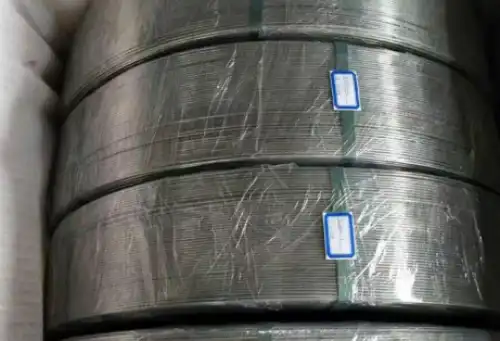
Understanding GR7 Titanium Wire: Properties and Manufacturing
Chemical Composition and Unique Palladium Enhancement
The deliberate alloying of Gr7 titanium wire makes it special. Gr7 contains 0.12%–0.25% palladium in its matrix, unlike Grade 2 commercially pure titanium. The material's electrochemical behavior under severe settings alters fundamentally with this modest increase. Palladium, a cathodic depolarizer, stabilizes the protective oxide layer even when hydrochloric acid and sulfuric acid levels are high, which would ordinarily damage titanium. This wire has the flexibility and weldability of Grade 2 but is less likely to corrode in fractures produced by deposits or tight circuits due to rigorous ASTM B863 and AWS A5.16 specifications.
Mechanical Properties and Performance Characteristics
Gr7 titanium wire has comparable mechanical properties to Grade 2 titanium. Minimum tensile strength is 50 ksi, yield strength 40 ksi. The material is flexible even when stretched beyond 20%, making it suitable for difficult shaping procedures in airplane fasteners and medical equipment. While Grade 5 titanium is stronger, Grade 7's unique balance of moderate strength, corrosion resistance, and biocompatibility sets it apart. Because of this equilibrium, the metal can't be employed when picking a material for several needs. The wire's structure remains constant from extremely cold to 400°C. Its proportions remain steady when heated and cooled repeatedly, damaging weaker materials.
Advanced Manufacturing and Quality Assurance Protocols
OEM gr7 titanium wire manufacturer demands careful supervision throughout production. After vacuum arc remelting, the palladium is uniformly distributed, and any intermediate contamination is removed. After numerous rounds of hot working and cold drawing, the billet is cut to 0.5mm to 6.0mm wire diameter, depending on the application. Chemical analysis utilizing optical emission spectroscopy, ASTM E8 tension testing, and rust resistance in a standard acidic medium are performed on each manufacturing batch. LINHUI TITANIUM exceeds ASTM standards with multilayer quality control. DNV, ABS, and Lloyd's Register endorse our factory, which is ISO 9001:2015 certified and PED 2014/68/EU approved. Third-party inspection agencies like SGS and TUV regularly verify materials to monitor them from raw material heat numbers to completed product approval. Our comprehensive quality infrastructure ensures that every spool of Gr7 titanium wire shipped to aerospace and medical OEMs satisfies their technical and regulatory criteria.
Comparative Analysis with Alternative Titanium Grades
Gr7 titanium wire should be used where operating setup and performance objectives dictate. Grade 5 titanium (Ti-6Al-4V) is approximately twice as strong as grade 4; it contains aluminum and vanadium, making it less biocompatible and unsuitable for medical use. Grade 9 titanium is a compromise. Although it contains less aluminum than grade 8 titanium, it lacks the palladium enhancement essential for corrosion resistance. Grade 2 commercially pure titanium is biocompatible and simple to form, but cracks erode in chloride-rich environments and don't function well in reducing acids. Application needs determine material choice. Medical implants employ Gr7 because it has the highest strength, biocompatibility, and long-term stability in physiological fluids. Aerospace parts exposed to sea air benefit from its salt-induced pitting resistance.
Aerospace Applications of GR7 Titanium Wire
Critical Aerospace Components and Structural Applications
Aerospace part manufacturers utilize Gr7 titanium wire for corrosion resistance and high technical standards. The metal is utilized in several aviation safety-wired fastening systems. De-icing, hydraulic, and marine atmospheres corrode these systems. Landing gear parts benefit from the material's stress corrosion cracking resistance in high-chloride maritime environments. The wire is employed in engine room spring clips, locking mechanisms, and electrical connections, where temperatures may range from frigid at high altitude to hot during operation. Fuel system parts made of Grade 7 titanium sheet and tube units need a wire filler. Using matching OEM Gr7 titanium wire for welding ensures material consistency throughout linked structures. APU (Auxiliary Power Unit) exhaust systems and bleed air ducts contain hot gases that erode metal surfaces, making this crucial. The material may be utilized for flight control system springs since it doesn't degrade quickly when loaded and unloaded. It retains its elasticity after millions of bending cycles.
Regulatory Compliance and Aerospace Certification Requirements
Gr7 titanium wire for aerospace applications requires extensive approval procedures that verify the material's history and manufacturing stability. NADCAP accreditation is the minimum seller qualification. It enforces business-specific procedures. Material tests must prove that the material fulfills aviation material standards like AMS and that the completed wire can be traced back to the ingot's heat chemistry. Proof packages must identify chemicals, mechanical properties, and surface quality tests for each manufacturing batch. Aerospace OEMs evaluate suppliers using quality management systems that exceed ISO 9001 and incorporate AS9100 aerospace requirements. LINHUI TITANIUM possesses PED pressure equipment certification and CCS, ABS, DNV, and BV approvals. Moody's, Lloyd's Register, and RINA review our papers. This provides independent verification that fulfills aerospace prime contractors' supplier approval standards. This certification system eliminates purchasing risk so aircraft manufacturers may obtain gr7 titanium wire knowing it will meet technical criteria.
Procurement Considerations for Aerospace Supply Chains
OEM Gr7 titanium wire for aerospace applications requires strategic planning around wait times, minimum order quantities, and supply chain resilience. For urgent program demands, manufacturing lead times might be lowered from 8 to 12 weeks. Wire diameter and surface finish determine lead times. Aerospace buyers assess the price of retaining items against the necessity to keep production moving when making blanket purchase arrangements with predetermined releases. Minimum order quantities vary by diameter but start at 100 kilos per size. This facilitates production plan integration. Diversifying suppliers reduces supply chain risk and maintains material quality. Aerospace manufacturers want suppliers with geographical variety and several raw material sources to prevent single-point-of-failure issues. LINHUI TITANIUM processes raw materials and draws wires. This reduces its dependence on non-Chinese supply chains. Our long-term logistical connections enable us to reliably transport to North American, European, and Asian aerospace facilities. Our technical assistance includes metallurgical guidance, application engineering, and swift quality resolution. OEM Gr7 titanium wire services provide aviation OEMs with more than simply material sales.
Medical Applications of GR7 Titanium Wire
Biocompatibility and Medical Device Manufacturing
Medical device manufacturers select OEM Gr7 titanium wire because it is biocompatible and mechanically reliable in physiological situations. After insertion, the material merges with the body like commercially pure titanium grades and causes little irritation. Nickel ions, which cause allergies and cancer, are slowly released by stainless steel substitutes. The palladium-enhanced titanium alloy remains medically safe for decades after implant. Biocompatible wire may be employed directly with bone in orthopedic fixation systems, everlasting cardiovascular implants, and dental restoration frameworks. Long-term material security affects patient outcomes in many circumstances. In chloride-rich bodily fluids, including blood, saliva, and interstitial fluids, the wire prevents corrosion. Mixing titanium grades with other metals might cause galvanic corrosion in implant devices. But gr7 titanium wire is electrochemically stable across a larger potential range. This allows it to be utilized to manufacture complex surgical instruments with multiple alloy pieces and implantable devices with titanium frames and cobalt-chromium wear surfaces. The material is mechanically flexible, so wire-form sutures may seal the chest following heart surgery. The patient may have discomfort while recovering from these strong, flexible sutures.
Specific Medical Applications Across Clinical Specialties
OEM Gr7 titanium wire is used in fracture repair, spine fusion, and bone transplant wire mesh cages. The material resists corrosion and can support weight throughout the crucial mending phase, keeping the structure sturdy for the patient's lifetime. The wire is utilized in dental arch wires, implant abutment fixtures, and portable partial denture frameworks. Cardiovascular specialists utilize the wire to manufacture heart valve frames, pacemaker wires, and sternal closures, which require the best corrosion resistance to avoid infections. Surgical instruments made from Gr7 titanium wire may be disinfected several times. After thousands of sterilizing cycles in an autoclave with high-temperature steam and chemical sterilants, palladium-enhanced metal does not break down. This prolongs instrument life, decreases replacement costs, and maintains performance throughout the product's lifespan. Wire sections in spinal cord stimulator arrays and electrodes for deep brain stimulation may lead to metal ions damaging nerve tissue. The material's electrical stability eliminates this danger, making it safe for long-term use in sensitive central nervous system areas.
Regulatory Pathways and the Certification of Medical Devices
Obtaining 7 titanium wires for medical devices requires understanding the FDA and international medical device requirements. Biocompatible materials must pass ISO 10993 tests for cytotoxicity, sensitivity, irritation, and systemic toxicity. Suppliers must maintain detailed documents linking wire production to raw material sources. These records must contain melt chemistry, processing parameters, and quality control outcomes. Medical device manufacturers frequently need suppliers to obtain ISO 13485 certification, which certifies medical device quality management systems from design to monitoring after sale. Linhui Titanium is ISO 14001:2015 and OHSAS 18001:2007 certified for environmental management and occupational safety, respectively. Medical device manufacture requires stringent operational controls, which the firm possesses. Our quality documentation packages include ASTM F67 and ASTM B863-compliant material safety data sheets, biocompatibility test results, and certificates of compliance. Certification bodies such as TUV, BSI, and AIB-VINÇOTTE provide independent verification for medical device regulatory filings. Medical OEMs using Gr7 titanium wire in 510(k) applications and CE marking technical papers may be confident of accurate material qualifying documentation.
OEM Customization Capabilities for Medical Applications
Medical device companies need OEM Gr7 titanium wire in custom combinations. Custom wire widths can meet the mechanical demands of tiny implants and sensitive surgical equipment. Surface treatments from bright annealed to chemically etched may meet polymer film bonding or osseointegration demands. Straightening and precision cutting provide wire parts with regulated length tolerances and little end distortion, reducing effort at a medical device plant. Medical OEMs enjoy design cooperation, metallurgical guidance, and dimension customization. Application engineering assistance from LINHUI TITANIUM helps medical device manufacturers pick wire thickness, compare forming processes, and handle production issues throughout product development. For assemblies using Gr7 titanium wire, our experts establish welding conditions to ensure joint stability satisfies medical device performance criteria. This consulting strategy transforms supplier relationships from one-time purchases to long-term collaborations that advance medical innovation from concept to mass manufacturing.
Comparative Analysis: GR7 Titanium Wire vs. Alternatives
Material Selection Trade-offs in High-Performance Applications
To choose between different types of materials and the 7 titanium wires, you have to look at more than just one performance factor. The tensile strength of grade 5 titanium (Ti-6Al-4V) is about 130 ksi, while grade 7 titanium's is only 50 ksi. This makes grade 5 titanium a clear winner in load-bearing uses. However, the aluminum-vanadium alloying makes it impossible for internal medical devices to work with the body's natural systems and makes them more likely to become weak when exposed to acidic environments. When rust resistance or biological inertness are needed, the higher strength doesn't matter—that's when Grade 7 shines, and Grade 5 fails totally.
Long-Term Cost Analysis and Total Ownership Considerations
When buying something, people who only look at the original cost of the material often don't think about the total costs of ownership, which include installation, upkeep, and replacement. Gr7 titanium wire costs more than widely pure titanium grades—usually 30% to 50% more per unit—but it doesn't fail because of rust, which causes much bigger problems that cost a lot more. Replacing an aerospace component requires taking an airplane out of service, hiring technicians, filling out paperwork, and checking to see if there are any effects on other activities in the fleet. When a medical gadget fails, it costs a lot to recall it, the government looks into it, the company could be sued, and its image takes a huge hit. These long-term effects are much bigger than differences in the cost of materials, so gr7 is the smart choice when operating stability has big consequences.
OEM Procurement Guide for GR7 Titanium Wire
Supplier Evaluation and Partnership Selection Criteria
To find trustworthy sources for gr7 titanium wire, you need to carefully OEM Gr7 titanium wire check each supplier's technical skills, quality control systems, and the strength of their supply chain. Checking the supplier's manufacturing method is the first step in the technical assessment process. Does the seller do their own melting and forging, or do they use semi-finished materials from a third party? Vertically integrated sources, such as LINHUI TITANIUM, keep an eye on quality from the base materials all the way through to the finished wire. This lowers variation and makes sure that performance is the same from lot to lot. When you evaluate a manufacturer's capacity, you should make sure that the production numbers match your purchasing needs and don't put a limit on supplies during times of high demand or allow competitors to get priority during sharing scenarios.
Strategic Procurement Considerations and Order Planning
The plan for getting OEM Gr7 titanium wire should weigh the costs of keeping goods against the risk of not being able to get enough and the chance of getting the best price. Standard wait times are between 8 and 14 weeks, but they depend on the diameter of the wire, the amount, and the difficulty of the specification. Setting up blanket purchase orders with planned releases keeps prices stable and lowers the cost of keeping supplies by coordinating just-in-time deliveries. People who commit to buying in bulk often get better prices. For example, if you buy more than 500 kilos a year, you can usually get 8% to 12% off the price compared to buying on the spot. When buyers can, they should join their needs across product lines so that they can negotiate better by using the combined number.
Value-Added Services and Technical Support Capabilities
In addition to providing base wire, top gr7 titanium wire providers also provide value-added services that cut down on the work customers have to do and speed up the time it takes to get their products to market. Precision cutting to exact lengths with tight tolerances gets rid of the need for extra work to be done at the OEM plant. This lowers the cost of handling and makes the accuracy of the dimensions better. Different surface treatments, such as pickling, passivation, and special coatings, can make something more resistant to rust or change its surface energy so that it can be bonded to something else. Wire straightening services give you material with managed leftover curvature, which is important for high-speed production equipment that feeds materials automatically.
Conclusion
Gr7 titanium wire is a specialized but necessary material in advanced manufacturing fields where the performance of the material directly affects the success of the operation. The palladium-enhanced metal solves important problems in aircraft corrosion protection and medical biocompatibility that can't be solved with regular materials in a cost-effective way. When purchasing OEM Gr7 titanium wire, buyers need to consider more than just the unit price. They also need to consider the total cost of ownership, the technical skills of the seller, and the dependability of the supply chain. This material's unique set of properties is used in many fields, from spacecraft propulsion to implanted cardiac devices. Choosing a source is a strategic choice that affects product performance, regulatory compliance, and the long-term survival of the business.
FAQ
1. What distinguishes GR7 titanium wire from standard commercially pure titanium grades?
The addition of 0.12% to 0.25% palladium to Grade 7 titanium wire makes it different from Grade 2 commonly pure titanium. This palladium addition changes the material's electrochemical behavior in a basic way. It stabilizes the passive oxide film in less acidic environments and stops crevice corrosion under deposits or in tight assemblies. Even though the mechanical qualities are the same as Grade 2, the better rust resistance makes a big difference in situations where hot hydrochloric acid, sulfuric acid, and chloride-rich environments are present. This is where regular titanium is attacked locally and eventually breaks.
2. Can GR7 titanium wire be welded, and what filler material should be used?
Gr7 titanium wire can be welded very well using normal TIG and MIG methods with an inert gas shield. It is very important to use matched Grade 7 filler wire (ERTi-7 per AWS A5.16) rather than pure titanium filler that is sold in stores. When you use filler that doesn't match, it forms a galvanic couple where the weld seam becomes anodic compared to the Grade 7 base metal. This makes the joint corrode more quickly, which is exactly what the palladium improvement was meant to stop. The right way to weld involves cleaning the surface well, making sure there is enough protective gas, and controlling the heat input to keep the grain growth from getting too big.
3. How does GR7 titanium wire pricing compare to alternative materials?
Due to the cost of adding palladium, OEM Gr7 titanium wire is usually 30% to 50% more expensive than Grade 2 titanium that is sold in stores. Gr7 wire costs about three to four times more per unit than stainless steel wire. Lifecycle cost analysis, on the other hand, shows that gr7 is often the better choice when you look at the costs of corrosion-related upkeep, replacing parts more often, and failure consequences. The material price is well worth it in aerospace and medical settings where failure of a material could lead to huge financial and legal problems. Negotiating discounts and improving operations, buying in bulk, and making long-term deals with sellers like LINHUI TITANIUM can lower the actual cost of goods.
Partner with a Trusted GR7 Titanium Wire Manufacturer
Your aerospace or medical production operations' ability to produce regular quality and reliable supplies depends on your choice of OEM Gr7 titanium wire supplier. LINHUI TITANIUM has more than 20 years of experience working with titanium alloys in tough situations around the world. Our long list of certifications, which includes PED 2014/68/EU, ISO 9001:2015, and approvals from DNV, ABS, Lloyd's Register, and CCS, shows that we can meet the most rigorous international standards. We keep our production vertically integrated, which means that we control quality from the raw materials to the finished wire. This makes sure that there is stability from lot to lot, which is important for medical and aerospace uses. Big energy companies and EPC contractors around the world use our gr7 titanium wire for mission-critical projects where failure of the material is not a choice. Get in touch with our technical team at linhui@lhtitanium.com to talk about your unique needs and see the difference that high-quality production and quick customer service can make.
References
1. ASM International, "Titanium: A Technical Guide, Second Edition," ASM International, Materials Park, Ohio, 2000.
2. Schutz, R.W. and Watkins, H.B., "Recent Developments in Titanium Alloy Application in the Energy Industry," Materials Science and Engineering A, Vol. 243, 1998, pp. 305-315.
3. American Society for Testing and Materials, "ASTM B863-20: Standard Specification for Titanium and Titanium Alloy Wire," ASTM International, West Conshohocken, Pennsylvania, 2020.
4. Semlitsch, M., "Titanium Alloys for Hip Joint Replacements," Clinical Materials, Vol. 2, Issue 1, 1987, pp. 1-13.
5. Boyer, R., Welsch, G., and Collings, E.W., "Materials Properties Handbook: Titanium Alloys," ASM International, Materials Park, Ohio, 1994.
6. Donachie, Matthew J., "Titanium: A Technical Guide, Second Edition - Chapter 5: Corrosion Resistance," ASM International, Materials Park, Ohio, 2000, pp. 69-108.